Early Life & Formation: From Noble Roots to Artistic Calling
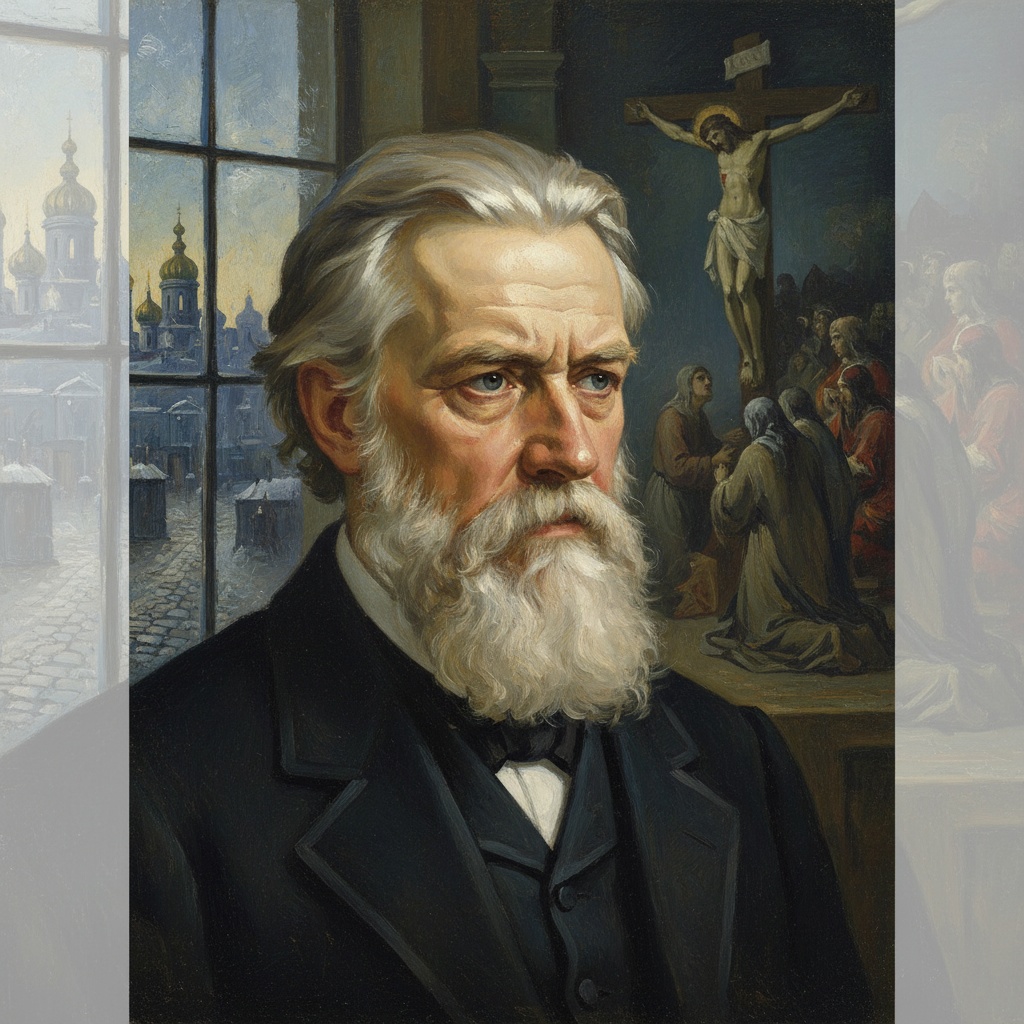
Nikolai Nikolaevich Ge, born into a family of Voronezh gentry in 1831, embarked on a life that would become synonymous with the turbulent spirit of 19th-century Russian art. His lineage, tracing back to a French nobleman who immigrated to Russia during the 18th century – originally spelled *Gay*, a detail often overlooked – hints at an early exposure to Western artistic traditions, though his formative years were steeped in the complexities of Russian society. A childhood marked by loss—his mother’s untimely death from cholera when he was just months old—shaped a sensitivity that would later permeate his canvases. Raised on the family estate near Popelukhy, Ge received a rigorous education, initially pursuing studies in physics and mathematics at Kiev University before ultimately succumbing to the irresistible pull of artistic expression.
This initial academic detour is crucial; it instilled in him a methodical approach to observation and composition that would distinguish his later work. He wasn’t merely interested in *representing* reality, but in dissecting it, understanding its underlying structures. His time at the Imperial Academy of Arts in Saint Petersburg under Pyotr Basin further honed his technical skills, yet Ge quickly demonstrated an impatience with conventional academic constraints. He sought something more profound than mere aesthetic beauty—a way to grapple with the weighty moral and spiritual questions that defined his era.
The Power of Realism: Ge's Revolutionary Depiction of Biblical Scenes
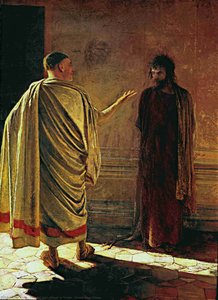
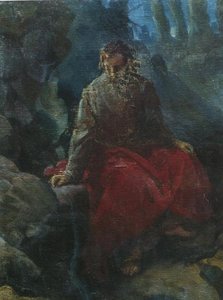 The Temptation of Christ
Experience Nikolai Ge’s "The Temptation of Christ." A powerful Russian realist painting depicting a biblical scene. Hand-painted reproductions available – elevate your art collection today!
Ge’s emergence as a leading figure in Russian realism wasn’t simply an adoption of style; it was a deliberate act of rebellion. He rejected the idealized, often saccharine depictions of biblical narratives prevalent at the time, opting instead for unflinching portrayals of human fallibility and emotional intensity. The Temptation of Christ, perhaps his most iconic work, exemplifies this approach. Unlike earlier renderings that focused on a dramatic confrontation between Jesus and Satan, Ge presents a deeply psychological scene—a solitary Christ, wrestling with doubt and inner turmoil in the stark wilderness.
This wasn’t merely about historical accuracy; it was about making the biblical story relevant to contemporary audiences. Ge stripped away the layers of religious iconography, revealing the raw humanity of Jesus as a man grappling with profound existential questions. The painting caused a sensation, not just for its technical brilliance but for its unsettling honesty. It challenged viewers to confront their own beliefs and anxieties, forcing them to see Christ not as an untouchable deity, but as a fellow human being.
Religious Turmoil & Moral Inquiry in Ge’s Masterpieces
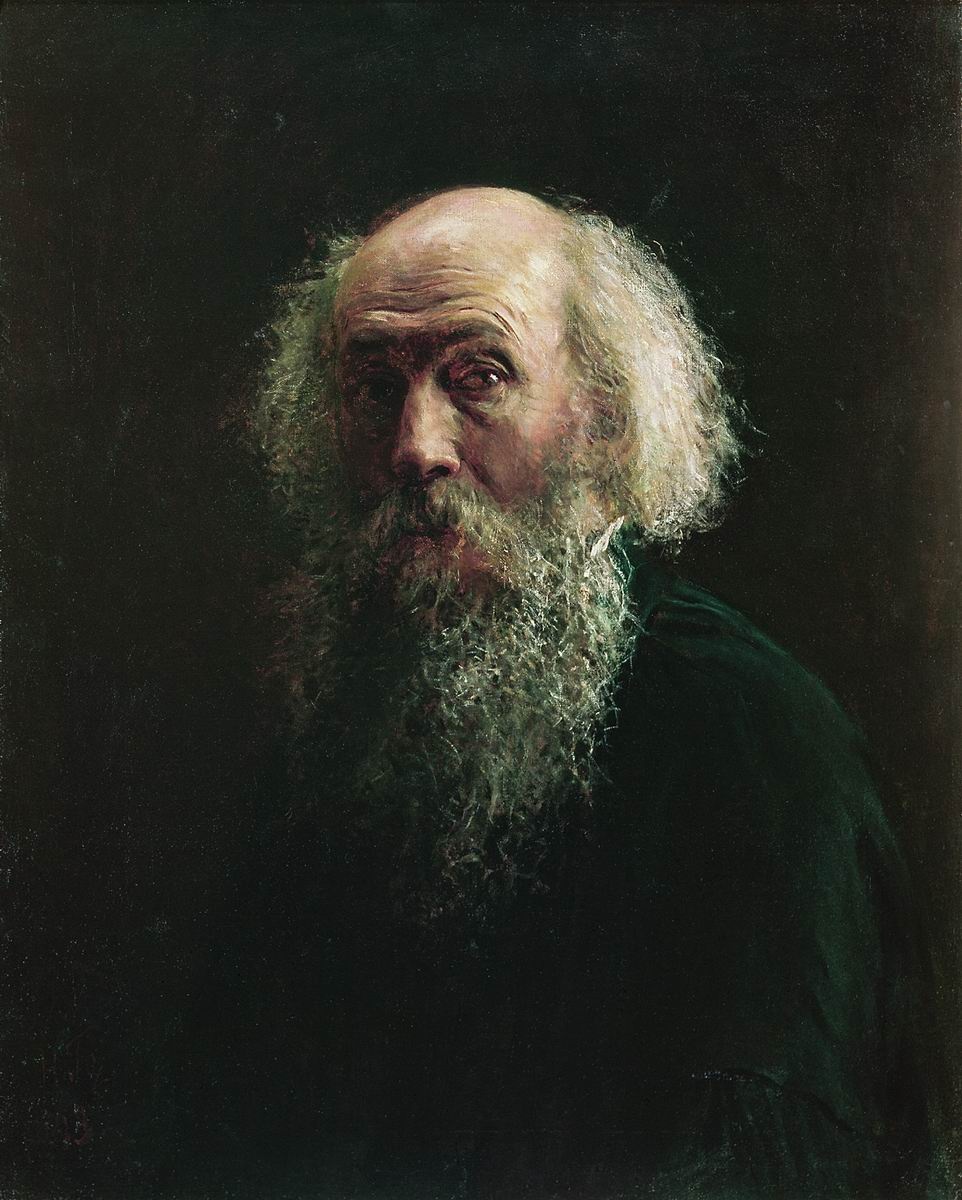 Wikipedia: Nikolai Ge
Nikolai Nikolaevich Ge (Russian: Николай Николаевич Ге; 27 February [O.S. 15 February] 1831 – 13 June [O.S. 1 June] 1894) was a Russian painter who was influential in the development of Russian symbolism. He was famous for his works on historical and...
The themes of religious doubt and moral responsibility continued to dominate Ge's oeuvre. His paintings weren’t simply illustrations of biblical events; they were explorations of the ethical dilemmas faced by individuals within a complex social and spiritual landscape. He often chose moments of intense internal conflict—Peter Interrogating Tsarevich Alexey, for example, is not just a depiction of a historical event but a study in power dynamics, guilt, and the burden of authority.
This period also saw Ge’s increasing engagement with the ideas of Leo Tolstoy, whose philosophical beliefs profoundly influenced his artistic vision. He began to question the very foundations of organized religion, advocating for a more personal and direct relationship with faith. This radical stance led to controversy; some of his later religious works were even banned by authorities for perceived blasphemy.
Portraying the Inner World: Psychological Depth in Ge’s Portraiture
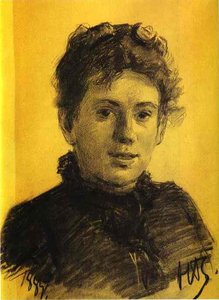
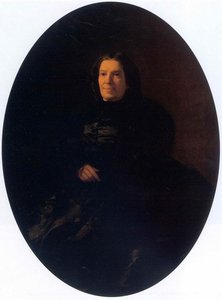
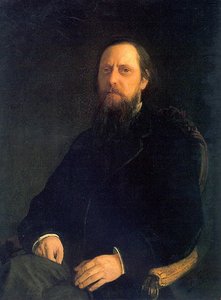
Beyond his historical and religious paintings, Ge was a masterful portraitist, renowned for his ability to capture not just the likeness but the very essence of his subjects. He wasn't interested in superficial flattery; he sought to reveal the inner lives of those he painted—their hopes, fears, and vulnerabilities. His portraits of Alexander Herzen, for instance, are remarkable for their psychological depth and emotional resonance.
Notably, Ge famously used a photograph taken by Herzen’s cousin, Sergei Lvitsky, as the primary source for his depiction of Christ in *The Last Supper*. This was a groundbreaking moment—one of the first instances where photography played such a central role in creating a major work of art. It speaks to Ge's willingness to embrace new technologies and his commitment to realism, even if it meant challenging artistic conventions.
Ge's Later Years and Enduring Legacy: A Symbolist Pioneer
In his later years, Ge retreated from the bustling art world, seeking solace on a small farm in Chernigov gubernia. He continued to paint, focusing increasingly on religious subjects and portraits, often working for modest commissions simply to make ends meet. Despite facing criticism and censorship, he remained steadfast in his artistic vision—a vision that blended realism with a growing sense of symbolism.
While initially categorized as a realist, Ge’s later works foreshadowed the emergence of Russian Symbolism, characterized by its emphasis on spiritual themes, emotional intensity, and subjective experience. His influence on subsequent generations of Russian artists is undeniable. He left behind a body of work that continues to challenge, provoke, and inspire—a testament to his unwavering commitment to truth, beauty, and the enduring power of the human spirit.
Collecting Nikolai Ge: Bringing Russian Realism to Your Home
Owning a piece of art by Nikolai Ge is more than simply acquiring a beautiful object; it’s possessing a window into a pivotal moment in Russian history and artistic thought. While original works are rare and highly sought after, ArtsDot offers meticulously crafted reproductions that capture the essence of his masterpieces. From the haunting intensity of *The Temptation of Christ* to the psychological depth of his portraits, these reproductions allow you to experience the power and beauty of Ge’s art firsthand.
Explore our collection today and discover how Nikolai Ge can enrich your home with a touch of Russian realism and enduring artistic vision. We offer a range of sizes and framing options to suit your individual taste and décor, ensuring that your chosen artwork becomes a cherished centerpiece for years to come. Contact us for personalized art consultation or appraisal services.