Introduction: The Cookham Visionary – Spencer’s Unique Place in British Art
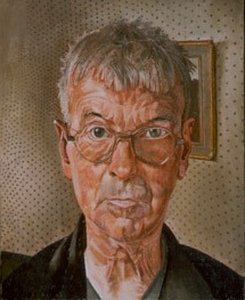 Sir Stanley Spencer
Explore the captivating works of Sir Stanley Spencer (1891-1959), a British painter renowned for his Pre-Raphaelite detail & unique depictions of biblical scenes set in his beloved Cookham village. Discover his influence on Lucian Freud.
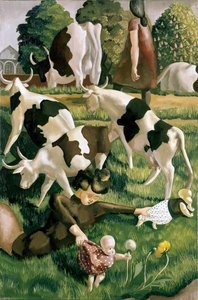
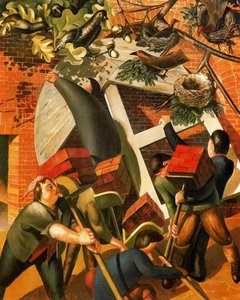
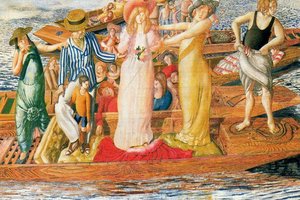
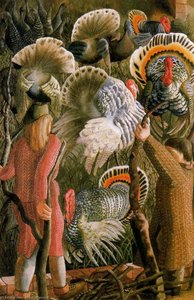
Sir Stanley Spencer occupies a singular position within 20th-century British art, an artist whose work defies easy categorization yet resonates with profound emotional and spiritual depth. He wasn't merely depicting scenes; he was constructing worlds—worlds born from the intimate landscape of his native Cookham, Berkshire, and infused with a deeply personal mythology. While contemporaries explored abstraction or social realism, Spencer forged a path uniquely his own, blending Pre-Raphaelite detail with an almost naive intensity, creating paintings that are simultaneously unsettling and profoundly moving. His vision wasn’t about grand historical narratives but the sacredness inherent in everyday life, transforming ordinary villagers into Gospel figures and humble settings into spaces of divine revelation. To understand Spencer is to enter a realm where the physical and spiritual intertwine, challenging conventional notions of faith, love, and human existence.
Early Life & Artistic Formation: From Slade School Roots to a Personal Mythology
Sir Stanley Spencer (30 June 1891 – 14 December 1959) was an English painter. Shortly after leaving the Slade School of Art, Spencer became well known for his paintings depicting Biblical scenes occurring as if in Cookham, Berkshire, the small villag...
Born in 1891, Spencer’s upbringing was steeped in literature, music, and—most significantly—religion. His father, a music teacher and church organist, instilled a deep familiarity with biblical stories, which would later become the cornerstone of his artistic expression. Though he attended the Slade School of Art from 1908 to 1912, Spencer remained tethered to Cookham, returning home each evening for dinner—a testament to the enduring power of his familial and local roots. This insularity wasn’t a limitation but rather the foundation upon which his unique artistic language was built. While at the Slade, he briefly aligned with the “Neo-Primitives,” a group seeking a return to simpler forms, yet Spencer quickly diverged, developing a style that blended meticulous observation with visionary fervor. His early works, such as John Donne Arriving in Heaven (1912), already hint at his characteristic blend of detailed realism and symbolic weight, foreshadowing the mature style that would soon captivate—and sometimes shock—the art world.
Biblical Scenes in Berkshire: Transforming the Everyday into the Sacred
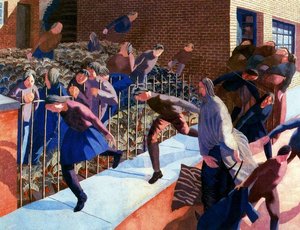 Christ's entry into Jerusalem
Witness Christ's triumphant entry into Jerusalem in Stanley Spencer’s vibrant Expressionist masterpiece. Dynamic figures & emotional intensity capture a pivotal biblical moment.
Spencer’s most recognizable works are undoubtedly those depicting biblical events transposed onto the familiar landscape of Cookham. He didn't simply illustrate scripture; he *localized* it, imbuing his village with a sense of holiness and transforming its inhabitants into archetypal figures. This wasn’t mere quaintness but a deliberate attempt to find the divine within the mundane. Fellow villagers became Christ, Mary Magdalene, or apostles, their faces rendered with an unflinching honesty that simultaneously elevated and demystified them. Paintings like Christ's Entry into Jerusalem (a vibrant example of his Expressionist tendencies) are not recreations of historical events but rather reinterpretations filtered through the lens of Spencer’s personal experience. He referred to Cookham as “a village in Heaven,” and within these scenes, the boundaries between earthly existence and spiritual aspiration blur, creating a uniquely compelling visual language.
War and Remembrance: Sandham Chapel and the Complexities of Experience
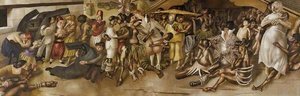
The First World War profoundly impacted Spencer, shattering his idyllic insularity. His experiences as an ambulance driver and hospital orderly led to a series of murals for the Sandham Memorial Chapel at Burghclere (1927-32), commissioned in memory of a soldier lost during the conflict. This monumental work stands as one of the most important artistic war memorials in Britain, yet it eschews traditional heroic depictions of battle. Instead, Spencer focused on the lives of ordinary soldiers—their routines, their anxieties, and their moments of quiet contemplation. The arrangement consciously echoes Giotto’s Arena Chapel, but Spencer employed oil paint rather than fresco, allowing for a greater degree of detail and emotional nuance. Scenes like The Dug-Out capture not glory or sacrifice, but the claustrophobia, boredom, and underlying humanity of wartime existence—a testament to his commitment to portraying truth over spectacle.
Sexuality, Spirituality, and Controversy: Unpacking Spencer’s Provocative Imagery
Spencer's work wasn’t solely defined by religious themes; sexuality was a constant undercurrent, often jarringly juxtaposed with the sacred. He sought to unite opposites—the body and spirit, the profane and the divine—in an attempt to reveal a more complete picture of life. However, his personal obsessions, fueled by unsatisfactory relationships, lent a particular intensity to these depictions. His paintings frequently explore the physical as well as the spiritual side of love, sometimes creating a perverse or sinister tone. The Leg of Mutton Nude (1937), a double portrait of Spencer and his second wife Patricia Preece, is perhaps the most notorious example, openly expressing both desire and vulnerability. These works provoked considerable shock and controversy during his lifetime, challenging societal norms and forcing viewers to confront uncomfortable truths about human nature. His later landscapes, while less overtly provocative, still retain an underlying erotic charge, suggesting a continued fascination with the interplay between flesh and spirit.
Legacy & Influence: Spencer's Enduring Impact on Modern British Painting
Despite periods of alienation and critical resistance, Stanley Spencer’s influence on modern British painting is undeniable. His meticulous detail, visionary compositions, and willingness to explore taboo subjects paved the way for subsequent generations of artists. His impact can be seen in the work of Lucian Freud, whose unflinching portraits share a similar commitment to honest observation and psychological depth. While his style remains uniquely his own—a synthesis of Post-Impressionism, Pre-Raphaelite detail, and early Italian painting—Spencer’s legacy extends beyond mere stylistic imitation. He challenged viewers to reconsider the relationship between faith, love, and everyday life, leaving behind a body of work that continues to provoke, inspire, and resonate with audiences today. Discovering Stanley Spencer is not simply appreciating beautiful paintings; it's embarking on a journey into a singular artistic vision—a world where the sacred and the profane coexist in harmonious tension.