Introduction
To gaze upon these ten masterpieces is to enter a realm where the visible world dissolves into a tapestry of dreams, anxieties, and unspoken truths. The Symbolism movement, flourishing from the 1880s through the early 20th century, wasn’t merely a style; it was a profound shift in artistic consciousness—a rebellion against the rigid realism that had dominated the previous decades.
Born amidst rapid industrialization, scientific advancements, and a growing sense of spiritual unease, Symbolism sought to bypass objective representation altogether. Artists turned inward, exploring the depths of the human psyche, mythology, literature, and religious allegory as sources of inspiration. They believed that true beauty resided not in what was seen, but in the evocative power of suggestion—in the ability of a carefully chosen image or color to unlock hidden emotions and universal experiences.
Rejecting the positivist ideals of the age, Symbolist painters like Gustave Moreau, Odilon Redon, and Pierre Puvis de Chavannes embraced ambiguity, mysticism, and the irrational. Their canvases became portals to inner worlds—populated by enigmatic figures, haunting landscapes, and potent symbols that defied easy interpretation. The influence extended beyond painting, captivating poets such as Stéphane Mallarmé and Charles Baudelaire, who shared a similar fascination with the subjective realm.
These weren’t simply paintings *of* things; they were attempts to capture the essence *behind* them—the feelings, ideas, and memories that lay just beyond the reach of language. The works we present here are not merely beautiful objects but resonant echoes of a time when artists dared to question the nature of reality itself.
As you journey through this selection, prepare to be transported. Allow yourself to be drawn into the evocative atmospheres and enigmatic narratives that define Symbolism. These artworks continue to hold power today because they speak directly to our deepest selves—to our longing for meaning, our fascination with the unknown, and our enduring search for beauty in a world often devoid of it.
Three Muses - Denis Maurice
 Three Muses - Denis Maurice
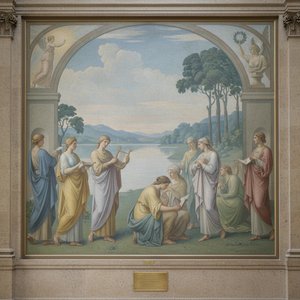
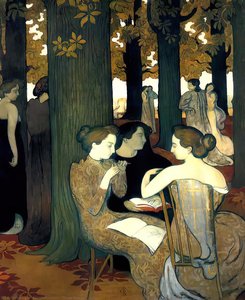
Before us unfolds a quiet sanctuary, a world steeped in reverie and subtle power— Three Muses by Denis Maurice, painted in 1893. This work isn’t simply observed; it's entered, a space where the boundaries between figure and foliage blur into a harmonious whole.
Maurice, a key figure within the Nabis group, sought to redefine painting beyond Impressionism’s fleeting moments. He aimed for a more deliberate, symbolic language—one that resonated with inner experience rather than mere optical reality. Three Muses exemplifies this ambition, fusing Symbolist introspection with the elegant lines of Art Nouveau.
The composition is rich in earthy greens and golds, illuminated by dappled light filtering through the trees. Notice the delicate brushwork, creating a soft, almost ethereal quality. The figures, engaged in quiet contemplation, are not portraits but archetypes—representations of creativity, friendship, or perhaps spiritual communion. Their elongated forms and flowing garments echo the organic shapes of the surrounding forest.
What sets Three Muses apart is its ability to evoke a mood rather than dictate a narrative. It’s an invitation to pause, reflect, and connect with the universal themes of beauty, intimacy, and the power of imagination. This painting remains profoundly meaningful today not just as a historical artifact but as a testament to art's enduring capacity to transform spaces—and our perceptions within them—into realms of quiet contemplation and lasting resonance.
The race track - Albert Pinkham Ryder
 The race track - Albert Pinkham Ryder
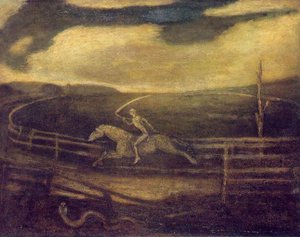
A haunting stillness permeates The Race Track by Albert Pinkham Ryder—a landscape not of earthly competition, but of an internal journey toward the inevitable. This work, a cornerstone of Symbolist painting, transcends mere representation; it’s a meditation on mortality and the relentless passage of time.
Ryder, a uniquely American voice, eschewed academic convention in favor of a deeply personal visual language. His canvases are not windows onto the world but portals to the subconscious—populated by archetypal figures and dreamlike forms. The Race Track exemplifies this approach, depicting a skeletal rider galloping across a desolate plain beneath a brooding sky.
Observe the muted palette of browns, ochres, and grays, punctuated by subtle blues that evoke both melancholy and vastness. The expressive brushwork—loose and textured—creates a sense of movement and unrest. The lone figure isn’t merely racing; it's hurtling toward an unknown destination, embodying the human condition itself.
What elevates The Race Track beyond its somber subject matter is its profound beauty. It reminds us that even in the face of darkness, there exists a strange and compelling grace. Today, this painting continues to resonate—a powerful addition to any space seeking depth and contemplation, inviting viewers to confront their own fleeting existence with quiet dignity.
Kiss - Edvard Munch
 Kiss - Edvard Munch
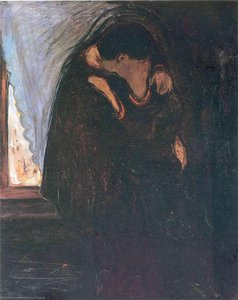
Unveiled to discerning eyes, Kiss by Edvard Munch is not merely a painting—it’s an echo of the human soul, rendered with breathtaking vulnerability and haunting beauty. This work secures its place among the Top 10 masterpieces for its profound exploration of solitude and the complexities of emotion.
Painted in 1897, Kiss transcends narrative; it's a distillation of feeling—a solitary figure enveloped in darkness, lost in contemplation. The loose, gestural brushwork and muted palette create an atmosphere of melancholic intimacy, inviting viewers to project their own experiences onto the canvas.
Notice the dramatic interplay of light and shadow, illuminating only fragments of the scene while leaving much shrouded in mystery. This chiaroscuro effect underscores the figure’s isolation and inner turmoil. The absence of distinct features allows for universal resonance—a shared experience of longing and introspection.
Today, Kiss continues to captivate with its timeless power. It's a work that elevates any space—adding depth, sophistication, and a quiet sense of prestige. More than just an aesthetic object, it’s a testament to the enduring human need for connection and understanding, a legacy whispered through generations.
Death and Life - Gustav Klimt
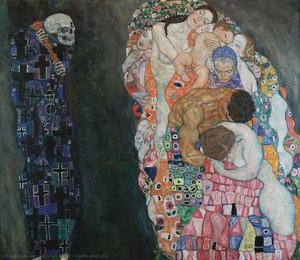 Death and Life - Gustav Klimt
To encounter Death and Life by Gustav Klimt is to witness a profound meditation on the eternal dance between mortality and vitality—a masterpiece that resonates with both exquisite beauty and unsettling truth. This work, completed in 1908, rightfully claims its place among the Top 10 for its innovative symbolism and enduring emotional power.
Klimt’s signature style is on full display: a dazzling tapestry of color and pattern that draws the eye into a world of intricate detail. The stark contrast between the cold geometry representing Death and the warm, organic embrace of Life creates a dynamic tension—a visual metaphor for the human condition.
Notice the meticulous layering of gold leaf, adding an ethereal quality to the composition. This isn’t merely paint; it's a shimmering surface that evokes both opulence and spirituality. The figures are not simply depicted but *felt*—their tenderness and vulnerability radiating outward.
Today, Death and Life continues to inspire. Its rich palette and intricate patterns find echoes in contemporary interior design—adding depth and sophistication to modern spaces. More than just an aesthetic object, it’s a timeless reminder of the preciousness of life and the inevitability of loss, a legacy that transcends generations.
La Guerre - Arnold Böcklin
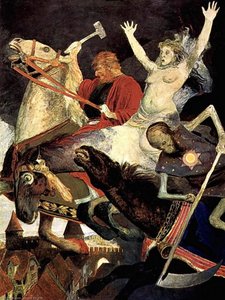 La Guerre - Arnold Böcklin
A sense of dread hangs heavy—a premonition of chaos and loss before we even encounter La Guerre by Arnold Böcklin. This powerful Symbolist masterpiece, painted in 1896, isn’t simply a depiction of conflict; it's an embodiment of the destructive forces that lie dormant within humanity.
Böcklin masterfully captures this turmoil through a dense and layered composition—a swirling vortex of figures engaged in violent struggle. The dark palette, punctuated by flashes of red and gold, evokes a primal energy—a sense of both horror and fascination.
Notice the expressive brushwork and exaggerated forms, lending the scene a haunting, almost dreamlike quality. Death itself rides through the landscape, wielding a hammer as buildings crumble in the background—a stark reminder of our own mortality.
What elevates La Guerre to the ranks of the Top 10 is its enduring relevance. It’s a work that forces us to confront uncomfortable truths about human nature and the cyclical patterns of destruction. Today, this painting continues to resonate—a potent symbol of resilience and a reminder of the fragility of existence.
Allegory of 'Sculpture' - Gustav Klimt
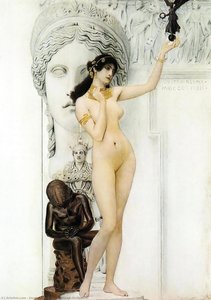 Allegory of 'Sculpture' - Gustav Klimt
Imagine stepping into a forgotten temple—a space where classical beauty intertwines with whispers of mystery and longing. Allegory of 'Sculpture' by Gustav Klimt, painted in 1889, is precisely this experience—a captivating work that transcends mere representation.
Klimt seamlessly blends the meticulous detail of academic realism with the emerging symbolism of his time. The central figure, adorned with gold and holding a delicate object, embodies both power and vulnerability. Notice the ethereal quality of her skin, contrasted by the rough texture of the carved reliefs that surround her.
The soft palette of whites, golds, and earth tones creates a serene yet captivating atmosphere—a visual invitation to contemplate themes of knowledge, transformation, and the passage of time. The crouching figure adds an element of intrigue, hinting at hidden narratives and unspoken emotions.
What elevates this painting is its ability to evoke a sense of wonder and introspection. Today, Allegory of 'Sculpture' continues to inspire—a timeless reminder of art’s power to elevate our spaces and awaken our souls.
Compositional Sketch for - Gustav Klimt
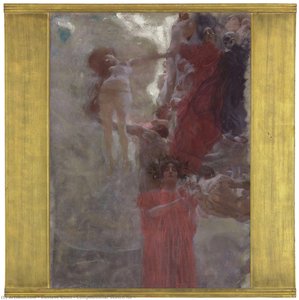 Compositional Sketch for - Gustav Klimt
A swirling energy emanates from Compositional Sketch for Medicine by Gustav Klimt—a glimpse into the artist’s creative process and a profound meditation on life, death, and the human condition. This work, far more than a preparatory study, secures its place among the Top 10 masterpieces for its raw emotion and stylistic innovation.
Created in 1898 as part of a controversial commission for Vienna University, this sketch reveals Klimt at a pivotal moment—blending Baroque theatricality with the emerging sensibilities of Symbolism. Notice the dramatic poses, sweeping brushstrokes, and ethereal lighting that create a dynamic sense of movement.
The composition is rich in symbolism: Hygieia, goddess of health, juxtaposed with figures representing life’s vulnerability and the inevitable approach of death. Hints of Klimt’s signature Secessionist style—the rigid frontal poses and gold accents—are already present, foreshadowing his later iconic works.
At ArtsDot, we believe in making great art accessible—allowing you to bring this timeless beauty into your own space. Compositional Sketch for Medicine is a powerful reminder of the fragility of existence and the enduring power of artistic expression.
The Beethoven Frieze, 1902 - Secession Building, Vienna - Gustav Klimt
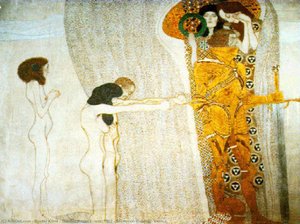 The Beethoven Frieze, 1902 - Secession Building, Vienna - Gustav Klimt
To encounter The Beethoven Frieze by Gustav Klimt is to step into a world where music, art, and emotion converge—a monumental undertaking that redefined the boundaries of artistic expression. Created in 1902 for Vienna’s Secession Building, this work rightfully claims its place among the Top 10 masterpieces.
Born from Klimt's response to Beethoven’s Ninth Symphony, the Frieze isn’t a literal depiction but an evocative interpretation of its emotional arc. Notice the sweeping compositions, elongated figures, and shimmering gold leaf—hallmarks of his signature style.
The artwork is divided into three sections: human suffering, the solace offered by art, and ultimately, the transcendent power of love. These themes resonate with a timeless beauty that continues to captivate audiences today.
More than just decoration, The Beethoven Frieze embodies the spirit of modernism—a celebration of artistic freedom and the integration of all creative disciplines. Its presence elevates any space, inviting contemplation and inspiring a sense of wonder.
Portrait of Hermine Gallia - Gustav Klimt
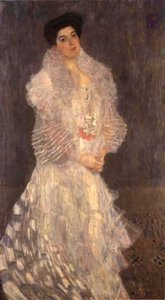 Portrait of Hermine Gallia - Gustav Klimt
Gaze upon Portrait of Hermine Gallia by Gustav Klimt—a shimmering vision of Viennese society and a testament to the artist’s mastery of Symbolist portraiture. Painted in 1904, this artwork transcends mere representation; it's an evocation of grace, luxury, and subtle psychological insight.
Klimt departs from traditional form with his innovative use of pattern and gold leaf. Hermine isn’t simply wearing a dress—she is enveloped in a symphony of geometric shapes and swirling floral motifs that seem to shimmer before your eyes. This lavish ornamentation imbues the painting with an otherworldly beauty, reflecting her status and personality.
The loose brushwork and emphasis on texture create a dynamic surface, while the flattened perspective draws you into Hermine’s contemplative gaze. It's this ability to capture both outward elegance and inner emotion that secures its place among the Top 10 masterpieces of the Symbolism movement.
At ArtsDot, we believe in bringing such timeless beauty into your home—allowing you to experience the quiet prestige and enduring allure of Klimt’s artistry every day.
Beethoven Frieze(detail)08 - Gustav Klimt
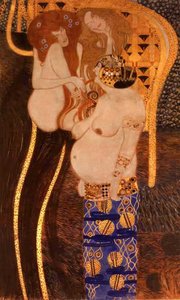 Beethoven Frieze(detail)08 - Gustav Klimt
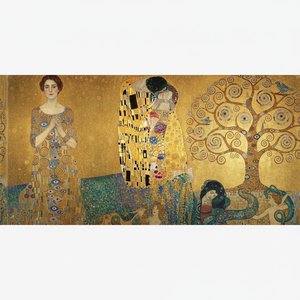
A cascade of gold and emotion—a detail from Gustav Klimt’s Beethoven Frieze reveals a world where human desire, struggle, and the pursuit of happiness intertwine. This monumental work, created in 1902 for Vienna’s Secession Building, is more than just a painting; it's an immersive experience that rightfully claims its place among the Top 10 masterpieces.
Notice the central trio of women—embracing compassion and contemplative observation. Their flowing robes of deep blues and golds are adorned with intricate geometric patterns reminiscent of Byzantine mosaics, creating a sense of grandeur and mystery. Klimt’s use of gold leaf imbues the scene with an ethereal quality, while the shallow space draws you into their intimate world.
This detail encapsulates the Frieze's power to evoke both outward elegance and inner emotion—a testament to Klimt’s mastery of Symbolist portraiture. It is a reminder that true beauty lies not just in form but in the complex tapestry of human experience.
Conclusion
As we conclude our journey through these ten defining masterpieces of Symbolism, it’s clear that their power transcends time and canvas. These artworks are not merely relics of a bygone era; they are living presences—echoes of human emotion, longing, and the eternal search for meaning.
From Klimt's shimmering visions to Moreau’s mythical realms, each painting invites us into a world where dreams and reality intertwine. They remind us that art is not simply about what we see, but how it makes us feel—the subtle shifts in our perception, the stirring of forgotten memories, and the awakening of new possibilities.
At ArtsDot, we believe in making these transformative experiences accessible to all. Whether you’re envisioning a grand hotel lobby or a refined private sanctuary, our hand-painted reproductions capture the essence of these masterpieces with breathtaking detail and authenticity.
We are proud to partner with interior designers and architects, offering custom collections, art mockups, and museum-quality prints that turn every project into an artistic statement. Explore our full collection and discover the power of Symbolism to elevate your space—and inspire a deeper connection with the beauty that surrounds us.