




Introduction: The Enduring Appeal of Detail
From the earliest cave paintings to the most ambitious contemporary installations, humanity has been captivated by detail. It is a fundamental impulse—the desire not merely to represent reality, but to recreate it, to capture its nuances and complexities with painstaking accuracy. This fascination isn’t simply about technical skill; it speaks to a deeper yearning for understanding, for connection, and for the preservation of moments in time. For the discerning collector, an artwork rich in detail offers not just aesthetic pleasure but a portal into another world, a testament to the artist's vision and dedication, and a tangible link to history itself.
The Renaissance Pursuit of Verisimilitude & Ornamentation
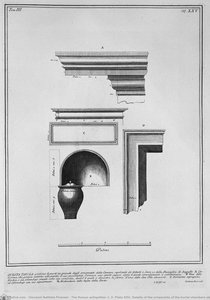 The Roman antiquities, t. 3, Plate XXV. Details of the ornaments of the burial chambers above (inc. by Girolamo Rossi).
The Italian Renaissance witnessed an explosion of artistic innovation fueled by a renewed interest in classical antiquity. Artists like Leonardo da Vinci and Michelangelo weren’t merely depicting figures; they were meticulously studying anatomy, perspective, and light to achieve unprecedented levels of realism. This pursuit of verisimilitude—truthfulness—was coupled with an equally fervent appreciation for ornamentation. Elaborate patterns, symbolic motifs, and intricate drapery adorned paintings and sculptures, transforming them into complex visual narratives. Consider the painstaking detail in a Botticelli masterpiece; each flower, each strand of hair, contributes to a larger allegorical meaning, inviting prolonged contemplation. The Renaissance artist wasn’t simply showing us what things looked like, but what they meant.
Pre-Raphaelite Realism: A Revival of Intricate Storytelling
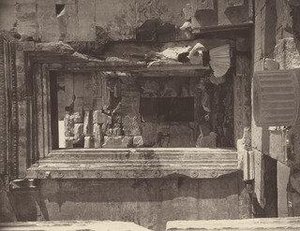 Gate of the Pandrosium, Showing Details of the Ornament
Explore William James Stillman’s ‘Gate of the Pandrosium.’ This 1869 grayscale photograph showcases Pre-Raphaelite realism & architectural detail. A unique glimpse into ritualistic devotion, perfect for art collectors.
Fast forward to mid-19th century England, and we encounter the Pre-Raphaelites—a group of artists who rebelled against the perceived artificiality of academic painting. Rejecting the conventions of their time, they sought inspiration in the art that predated Raphael, embracing a style characterized by intense realism, vibrant colors, and meticulous detail. William James Stillman’s ‘Gate of the Pandrosium,’ for example, exemplifies this dedication to Pre-Raphaelite realism. The grayscale photograph reveals an astonishing level of architectural precision and attention to symbolic ornamentation, offering a unique glimpse into ritualistic devotion. The movement wasn't just about replicating visual accuracy; it was about imbuing their work with moral seriousness and poetic intensity. Their paintings often drew upon literature and mythology, transforming familiar stories into visually arresting experiences.
19th-Century Academic Precision and the Rise of Hyperrealism
 Les Joueurs d'échec, huile sur panneau, Détail The Players of failure, oils on panel, Détail
Admire Daumier’s ‘Les Joueurs d’échec.’ This oil-on-panel portrait captures an old man lost in thought, showcasing the artist's realism & social commentary. Hand-painted reproductions available.
While the Pre-Raphaelites sought a return to earlier artistic principles, the 19th century also saw the flourishing of academic painting—a style that emphasized technical mastery and historical accuracy. Artists rigorously trained in anatomy and perspective produced works of breathtaking detail, often depicting grand historical scenes or portraits of aristocratic society. This emphasis on precision paved the way for the emergence of hyperrealism in the latter half of the 20th century. Artists like Chuck Close pushed the boundaries of realism even further, creating paintings that were virtually indistinguishable from photographs. Honore Daumier’s ‘Les Joueurs d'échec,’ even as a portrait capturing an old man lost in thought, demonstrates this commitment to realistic detail and social commentary—a precursor to the hyperrealistic focus on texture and emotion.
Magical Realism: Blurring Reality Through Detailed Fantasies
Magical realism, magic realism, or marvelous realism is a style or genre of fiction and art that presents a realistic view of the world while incorporating magical elements, often blurring the lines between speculation and reality. Magical realism is...
Emerging primarily in Latin American literature and art, magical realism presents a fascinating counterpoint to pure realism. This genre doesn’t reject detail; rather, it integrates fantastical elements into otherwise realistic settings, creating a dreamlike atmosphere that challenges our perceptions of reality. The power of magical realism lies in its ability to seamlessly blend the ordinary and the extraordinary, forcing us to question the boundaries between fact and fiction. While often associated with literature, the principles of magical realism—the meticulous depiction of everyday life interwoven with supernatural occurrences—can be found in visual art as well. The genre isn’t about escapism; it's about exploring deeper truths through symbolic imagery and evocative storytelling.
Contemporary Explorations of Detail & Materiality
Today, artists continue to explore the possibilities of detail in innovative ways. From hyperrealistic sculptures that defy belief to intricate paintings that capture the ephemeral beauty of light and shadow, contemporary art demonstrates a continued fascination with precision and materiality. Artists are experimenting with new techniques and technologies, pushing the boundaries of what is possible. The work of Monica Angel Rain, for example, showcases an astonishing level of skill in marble sculpture, creating pieces that appear almost too real to be true. This ongoing exploration reflects not only a desire to master technical skills but also a deeper engagement with questions of perception, representation, and the nature of reality itself. At ArtsDot.com, we are proud to offer reproductions of these masterpieces—and countless others—allowing you to bring the beauty and intricacy of art into your own home.