
Introduction: The Foundations of Visual Harmony
Renaissance art (1350 – 1620) is the painting, sculpture, and decorative arts of the period of European history known as the Renaissance, which emerged as a distinct style in Italy in about AD 1400, in parallel with developments which occurred in phi...
From the earliest cave paintings to the most ambitious canvases of the modern era, art has always been about more than simply *what* is depicted; it’s profoundly concerned with how it is depicted. This fundamental principle – the arrangement of elements within a visual field – is what we call composition, and its mastery separates mere representation from truly compelling artwork. It's an eloquence born not of chance, but of deliberate choices, a silent language spoken through line, form, color, and space. To understand art history is to trace the evolving strategies artists have employed to guide our eye, evoke emotion, and convey meaning. This exploration will journey through pivotal moments in Western art, from the ordered rationality of the Renaissance to the challenging innovations of Modernism, revealing how composition has shaped not only what we see but also how we feel.
Renaissance Composition: Order, Proportion, and Perspective
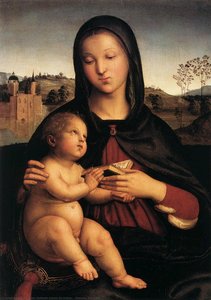
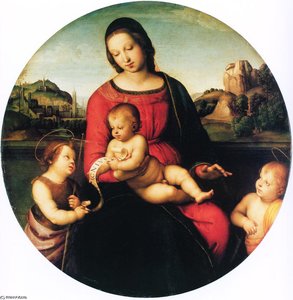 Madonna Terranuova
Discover Raphael’s ‘Madonna Terranuova’ (1505) – a stunning High Renaissance tondo! Admire its serene beauty & masterful composition. #Raphael #RenaissanceArt
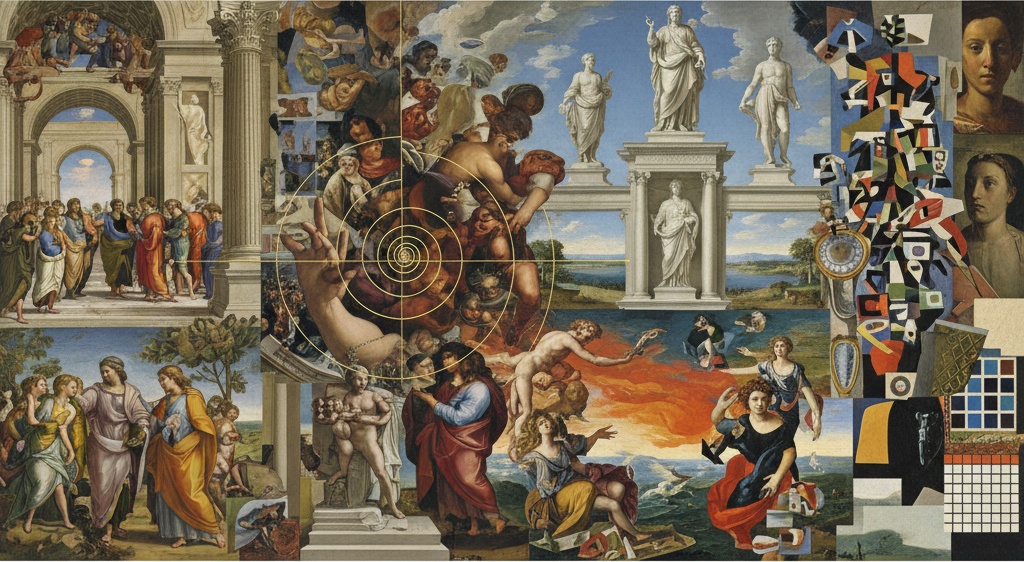
The Renaissance, a period steeped in rediscovery and humanistic ideals, witnessed a profound shift in artistic thinking. Artists sought to emulate the classical world, not merely copying its forms but understanding its underlying principles of harmony and balance. Central to this pursuit was a renewed focus on mathematical proportion – the belief that beauty resided in quantifiable relationships. Figures were meticulously placed within compositions governed by geometric structures, often employing the golden ratio to achieve visual equilibrium. Raphael’s ‘Madonna Terranuova’ (1505) exemplifies this beautifully; the serene arrangement of figures within the circular tondo creates a sense of calm and unity. The composition isn't accidental; it’s a carefully constructed pyramid, drawing the viewer’s eye towards the central figure of Mary and child. Simultaneously, the development of linear perspective revolutionized spatial representation. Artists like Raphael, in works such as ‘La Disputa’ within the Vatican Stanze, created illusions of depth that drew viewers into the scene, making them feel present within a sacred space. This wasn't simply about realism; it was about creating a believable world governed by rational order – a reflection of the Renaissance worldview itself.
Baroque Drama: Dynamic Composition and Emotional Impact
 Anunciación 1
Discover Francisco Zurbaran’s ‘Anunciación 1,’ a stunning Baroque oil painting depicting the Annunciation. Explore its rich details, divine symbolism & golden light. A masterpiece of faith and beauty.
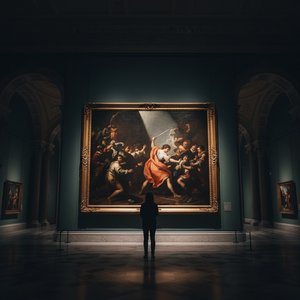
The Baroque period, emerging in the 17th century, represented a departure from the Renaissance’s emphasis on restraint. While still valuing technical skill, Baroque artists prioritized emotional intensity and dramatic impact. Compositionally, this translated into dynamic arrangements characterized by movement, asymmetry, and heightened contrast. Where Renaissance paintings often felt balanced and static, Baroque works surged with energy. Francisco de Zurbaran’s ‘Anunciación 1’ provides a striking example. The stark chiaroscuro – the dramatic interplay of light and shadow – immediately draws attention to the central figures, while the diagonal composition creates a sense of tension and anticipation. Unlike the symmetrical arrangements favored in earlier periods, Zurbaran employs a more asymmetrical balance, reflecting the emotional turmoil inherent in the scene. This wasn’t about intellectual contemplation; it was about visceral experience, engaging the viewer on an immediate, emotional level. The use of rich details and symbolic elements further amplified this effect, creating works that were both visually stunning and deeply spiritual.
The Shift to Modernity: Challenging Traditional Arrangements
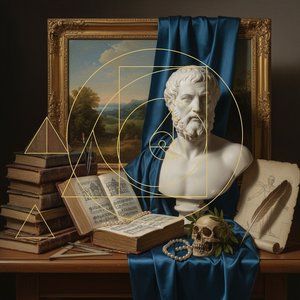 The Eloquence of Arrangement: Exploring Compositional Strategies in Western Art
Explore the evolution of compositional strategies in Western art from the Renaissance to Modernism. Discover how masters like Raphael & Zurbaran used perspective, proportion, and dynamic arrangement to create timeless masterpieces. Enhance your art a...
As art moved into the 19th and 20th centuries, traditional compositional rules began to be questioned and ultimately broken. Impressionism, with its focus on capturing fleeting moments of light and color, often abandoned formal structure in favor of spontaneity and subjective experience. Later movements, such as Cubism and Surrealism, actively sought to disrupt conventional perspectives and arrangements. Artists like Picasso deliberately fragmented forms and challenged the notion of a single viewpoint, creating compositions that were intentionally disorienting and ambiguous. This wasn’t simply about rejecting tradition; it was about reflecting the fragmentation and uncertainty of modern life. The very definition of composition expanded to encompass new possibilities – abstraction, non-representation, and the exploration of pure form. Artists began to prioritize emotional expression and conceptual ideas over realistic depiction, leading to a diverse range of compositional approaches that continue to influence art today.
Key Elements of Composition Across the Ages: Line, Shape & Color
Despite stylistic shifts, certain fundamental elements have remained central to composition throughout art history. Line, whether actual or implied, serves as a powerful tool for directing the viewer’s eye and creating movement. Renaissance artists used line to define forms and create spatial relationships, while Baroque painters employed dramatic diagonals to generate energy. Shape – both geometric and organic – contributes to visual balance and harmony. The careful arrangement of shapes within a composition can create a sense of stability or tension, depending on the artist’s intent. Finally, color plays a crucial role in evoking emotion and creating atmosphere. Renaissance artists often used color symbolically, while Impressionists explored the effects of light and shadow to capture fleeting moments of beauty. The interplay of these elements – line, shape, and color – is what gives each artwork its unique character and expressive power. Understanding how artists manipulate these tools allows us to appreciate the subtle nuances of their compositions and gain a deeper understanding of their artistic vision.
Conclusion: The Enduring Power of Arrangement in Art
From the ordered rationality of the Renaissance to the challenging innovations of Modernism, composition has remained a cornerstone of Western art. While stylistic approaches have evolved dramatically over time, the fundamental principles of visual harmony – balance, proportion, perspective, and dynamic arrangement – continue to resonate with artists and viewers alike. The eloquence of arrangement lies in its ability to transcend mere representation, engaging our emotions, shaping our perceptions, and conveying profound meaning. At ArtsDot.com, we celebrate this enduring power by offering high-quality reproductions that allow you to experience the beauty and artistry of these masterpieces firsthand. Explore our collection today and discover how composition can transform your space and enrich your life.