



Early Life & Artistic Beginnings: Shaping a Canadian Vision
 Thomas Thomson
Discover the evocative landscapes of Thomas Thomson, a Canadian artist known for bold colors & expressive brushstrokes capturing Ontario's beauty. Explore his legacy!
The story of Tom Thomson is not one of formal training within the hallowed halls of art academies, but rather a compelling narrative of self-discovery forged in the rugged landscapes of Ontario. Born in 1877 near Claremont, Ontario, Thomson’s early life was steeped in the practicalities of rural existence – a brief stint as a teacher, an apprenticeship with a business college, and even a period as a photographer and typesetter. These experiences, though seemingly disparate, laid the groundwork for his unique artistic perspective. He wasn't initially destined to be a painter; instead, he possessed a keen observational eye honed by necessity and a deep connection to the natural world that would ultimately define his oeuvre. His initial foray into art was largely self-taught, fueled by an innate talent and a growing fascination with capturing the essence of the Canadian wilderness. This early period saw him experimenting with watercolor and graphite, slowly developing a style that prioritized direct observation over academic convention.
The Algoma Wilderness Experience: A Crucible for Thomson’s Style
A pivotal moment in Thomson's artistic development arrived with his first extended trip to the Algoma region of Northern Ontario in 1912. Commissioned by the Board of Trade, he accompanied a group on an expedition to create promotional artwork showcasing the area’s potential for tourism and resource extraction. However, this commercial undertaking quickly transformed into something far more profound. The vastness and untamed beauty of Algoma – its dense forests, shimmering lakes, and dramatic rock formations – ignited a passion within Thomson that would irrevocably alter his artistic trajectory. He abandoned the meticulous detail favored by earlier landscape painters in favor of a bolder, more expressive approach. This wasn’t merely about *depicting* the wilderness; it was about conveying its raw energy, its spiritual presence, and its profound impact on the human psyche. The sketches produced during this period reveal a nascent style characterized by simplified forms, vibrant color palettes, and an increasingly confident handling of paint.
Bold Brushstrokes & Vibrant Hues: Defining Characteristics of Thomson's Landscapes
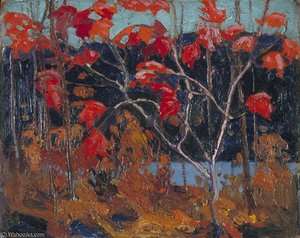 Red Leaves
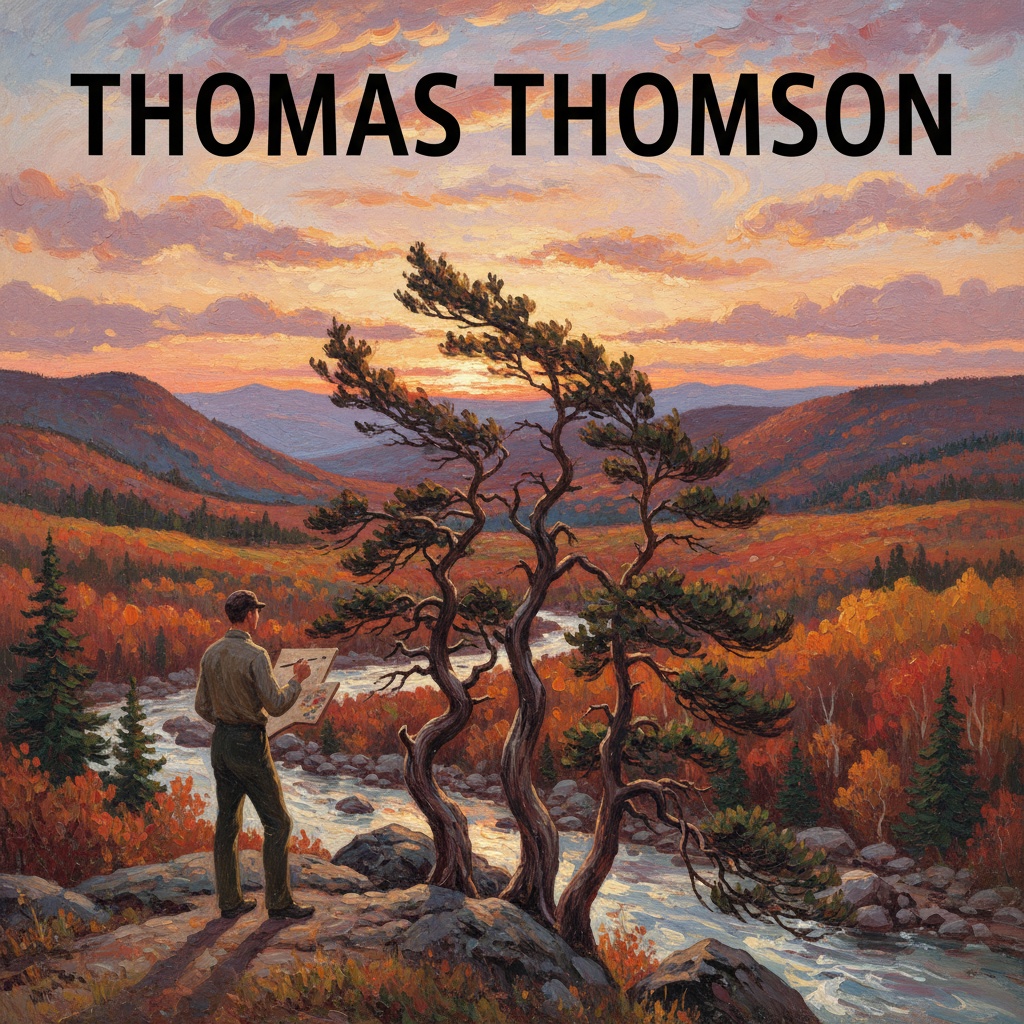
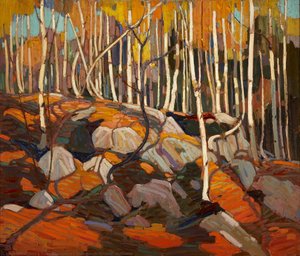
Thomson’s mature work is instantly recognizable for its distinctive aesthetic. He eschewed the muted tones often associated with traditional landscape painting, instead embracing a palette of intense blues, fiery oranges, and deep greens that captured the very essence of the Canadian light and atmosphere. His brushstrokes were equally revolutionary – thick, impasto applications of paint that created a tactile surface and conveyed a sense of movement and vitality. Split Rock, Georgian Bay, for example, exemplifies this approach; the rugged shoreline is rendered with dynamic energy, the water shimmering with reflected light, and the sky ablaze with color. Similarly, paintings like Red Leaves and Birches demonstrate his mastery of autumnal hues and his ability to distill complex natural forms into their most essential elements. He wasn’t interested in photographic realism; rather, he sought to capture the *feeling* of a place, its emotional resonance, through expressive color and form.
Thomson and the Group of Seven: Collaboration, Influence, and Legacy
While often considered the precursor to the Group of Seven, Thomson’s relationship with this influential collective was complex. He never officially joined the group, yet his artistic vision profoundly shaped their development. He worked closely with members like Lawren Harris, A.Y. Jackson, and Franklin Carmichael, sharing ideas, techniques, and a common desire to create a distinctly Canadian art. The Group of Seven built upon Thomson’s foundation, further exploring themes of nationalism and the wilderness in their own unique styles. His influence is undeniable; they adopted his bold color palettes, expressive brushstrokes, and commitment to depicting the raw beauty of the Canadian landscape. Tragically, Thomson died prematurely in 1917 under mysterious circumstances while canoeing on Canoe Lake, leaving behind a relatively small but incredibly impactful body of work.
Beyond Representation: Exploring Themes of Nationalism and the Canadian Spirit in His Work
Thomson’s art transcends mere landscape depiction; it is deeply imbued with themes of nationalism and the search for a uniquely Canadian identity. In the early 20th century, Canada was grappling with its place on the world stage, seeking to define itself apart from its colonial past. Thomson's paintings offered a powerful visual representation of this burgeoning national spirit – a celebration of the country’s vast wilderness, its rugged beauty, and its untamed character. His work resonated deeply with Canadians who were eager to embrace their own distinct cultural identity. He wasn’t simply painting pretty pictures; he was creating icons that embodied the essence of Canada itself. The starkness and grandeur of his landscapes spoke to a sense of resilience, independence, and connection to the land – qualities that continue to define the Canadian character today.
Preserving the Vision: Museums and Collections Dedicated to Tom Thomson’s Art
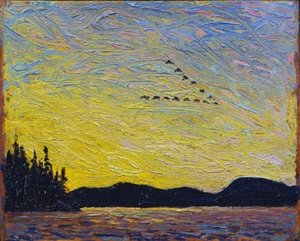 Tom Thomson Art Gallery
Discover Canadian landscape art at the Tom Thomson Art Gallery in Toronto! Explore a nationally significant collection of sketches & paintings by Tom Thomson, Canada’s iconic artist.
Fortunately, the legacy of Tom Thomson is well-preserved through numerous museums and collections across Canada. The McMichael Canadian Art Collection, located in Vaughan, Ontario, boasts an extensive collection of his work, alongside paintings by the Group of Seven and Indigenous artists. The Tom Thomson Art Gallery in Toronto offers a dedicated space for exploring his life and artistic achievements, while the Art Gallery of Ontario also houses significant examples of his oeuvre. These institutions provide invaluable opportunities to experience Thomson’s art firsthand and gain a deeper understanding of his profound impact on Canadian culture. Through these collections, future generations can continue to be inspired by his vision and appreciate the enduring beauty of the Canadian wilderness he so passionately captured.