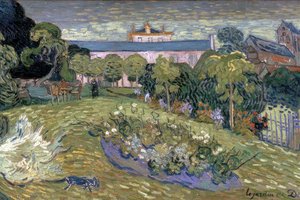
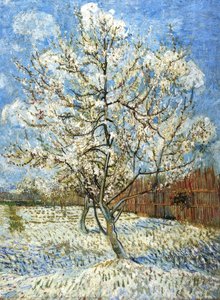
The Impressionist Foundation: From Fleeting Light to Lasting Emotion
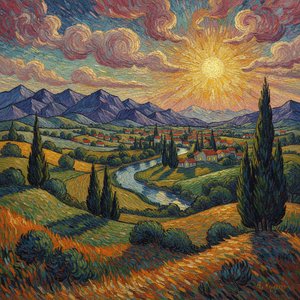 Beyond Impressionism: The Emotional Depth and Vibrant Evolution of Post-Impressionist Landscapes
The Impressionist Foundation: Capturing Light Before the Revolution Landscape painting Landscape painting, also known as landscape art, is the depiction in painting of natural scenery such as mountains, valleys, rivers, trees, and forests, especially...
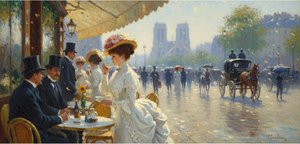
To truly appreciate the seismic shift that occurred at the close of the nineteenth century, one must first pause to admire the luminous world established by the Impressionists. In the mid-1800s, a group of rebels in France sought to dismantle the rigid, somative constraints of academic tradition, turning their gaze toward the ephemeral beauty of a sunbeam or the shimmering reflection on a river. They were masters of the optical moment, capturing the way light dances across a surface before it inevitably changes. Their work was a celebration of the present, a delicate recording of atmosphere and movement that felt as fresh as a morning breeze.
Yet, as we look closer at the evolution of art, we see a growing restlessness among those who found the purely optical concerns of Impressionism to be somewhat incomplete. While they admired the focus on light and color, a new generation of artists began to question the limitations of capturing only what is seen by the eye. They sought something more profound: an expression of inner emotion, symbolic meaning, and a deeper engagement with form. This was the dawn of Post-Impressionism—a movement that did not reject the brilliance of its predecessors but rather used it as a foundation to build a much more complex, subjective, and emotionally resonant architecture of vision.
The Soul of the Brushstroke: Decoding Post-Impressionist Texture and Impasto
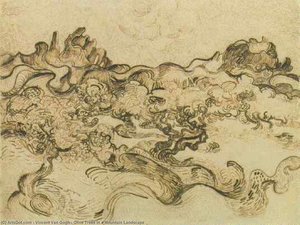 Olive Trees in a Mountain Landscape
A Symphony of Olive & Sky: Decoding Van Gogh’s Provençal Vision Vincent van Gogh's *Olive Trees in a Mountain Landscape* (1889) is more than just a depiction of the French countryside; it’s a visceral expression of his inner world during a period of ...
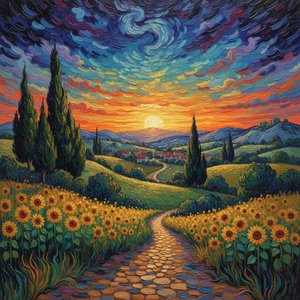
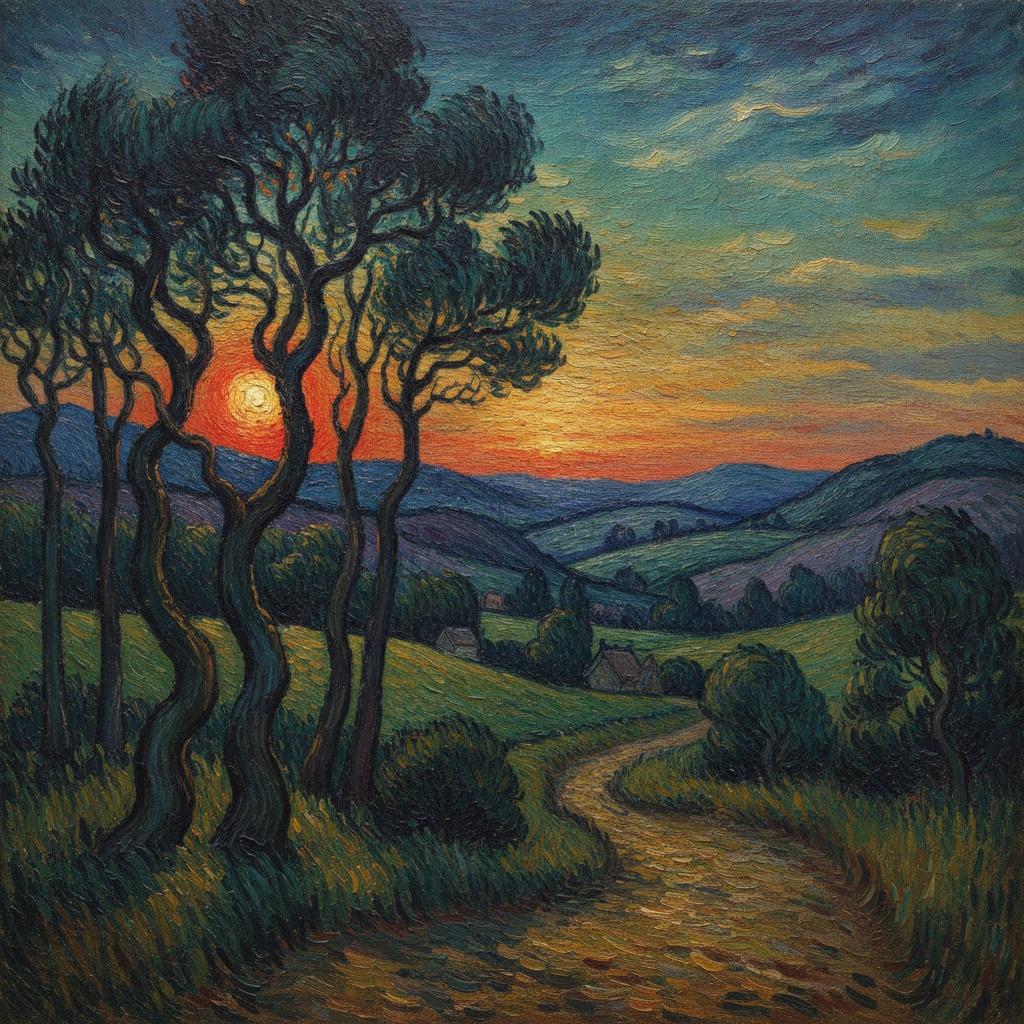
If Impressionism was about the lightness of air, Post-Impressionism was about the weight of feeling. This transition is most tangibly felt in the way paint meets canvas. We move away from the delicate, almost translucent touches of light toward a much more visceral application of medium. Consider the works of Vincent van Gogh, where the brushstroke ceases to be a mere tool for depiction and becomes a rhythmic, pulsing entity in its own right. He employed thick, impasto brushstrokes—layers of paint applied so generously that they create a sculptural, textured surface that catches the light and casts its own tiny shadows.
This tactile depth invites us to touch the canvas with our eyes. When we observe a piece like Olive Trees in a Mountain Landscape, we are not just seeing trees; we are witnessing the energetic movement of the artist's hand. The paint does not merely sit upon the surface; it writhes and twists, mirroring a restless spirit. This technique allows for a much deeper tonal range than any flat print could ever hope to achieve. It is in these ridges of dried oil and the visible traces of a master’s movement that the true soul of the painting resides, offering an immersive experience where nature and human emotion intertwation into a single, captivating visual narrative.
Nature as a Mirror: Landscapes of Inner Turmoil and Spiritual Solace
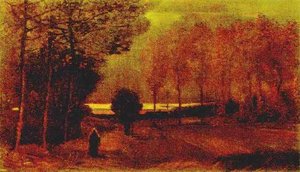 Autumn Landscape at Dusk
Introduction Vincent van Gogh 's Autumn Landscape at Dusk , painted in October-November 1885, is a remarkable piece of art that showcases the artist's mastery of color and texture. This painting, which is part of our collection at https://AllPainting...
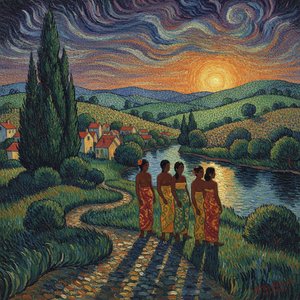
For the Post-Impressionist, the landscape was rarely just a geographical location; it was a psychological state. The natural world served as a profound mirror for the artist's internal landscape. During his time in Nuenen, Van Gogh’s early works reflected a somber, earthy connection to rural life, capturing the dignity and hardship of the peasantry through a more muted, realistic lens. However, as his journey took him through Paris and eventually to the sun-drenched landscapes of Provence, the scenery began to transform into something far more symbolic.
In the quietude of Saint-Rémy, amidst the intense emotional exploration of his later years, the landscape became a sanctuary. In works such as Autumn Landscape at Dusk, we see a meditation on the passage of time. The winding paths and the fading light of the setting sun are not merely seasonal observations; they are metaphors for the impermanence of all things. Even in moments of profound personal struggle, the artist sought solace in the rhythmic patterns of nature—the swirling clouds, the sturdy olive trees, and the vastness of the sky. The landscape became a vessel for spirituality, a way to find order and beauty amidst the turbulence of the human condition.
A Symphony of Color: The Emotional Language of the Post-Impressionist Palette
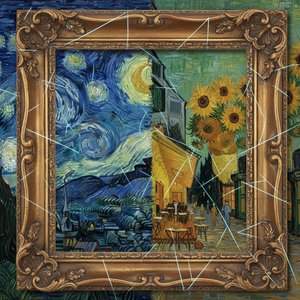 Van Gogh's Masterpieces: Explore 25 Iconic Paintings & Art for Your Home
Introduction To embark on a journey through Vincent van Gogh’s top 25 artworks is to step into a world painted with the very essence of human emotion. These canvases aren't merely depictions of landscapes, portraits, or still lifes; they are windows ...
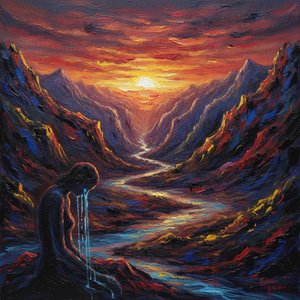
The true revolution of this era lies in the liberation of color. Moving beyond the naturalistic palettes of the past, Post-Impressionists began to use color as a direct language of emotion. They understood that a specific shade of blue could evoke melancholy, while a vibrant, sun-drenched yellow could radiate hope and vitality. This was not about painting the world as it appeared under a midday sun, but rather how it felt during a moment of intense passion or deep reflection.
This era saw an incredible experimentation with color theory, influenced by the discovery of complementary colors and the structural precision of Pointillism. We see this evolution clearly in Van Gogh’s transition from the dark, earthy tones of his Dutch period to the brilliant, contrasting hues of his time in Arles. By placing opposing colors side-by-side—such as deep blues against fiery oranges—the artists created a visual vibration that mimics the intensity of life itself. This use of color was not merely aesthetic; it was an attempt to capture the very essence of human feeling, transforming the canvas into a symphony of light and pigment.
Legacy of the Visionaries: How Post-Impressionism Redefined Modern Perception
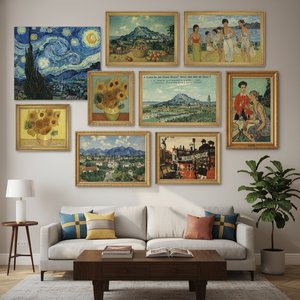 Post-Impressionism's 10 Defining Masterpieces: Art for Your Home |
Introduction Imagine stepping back in time to a world brimming with artistic revolution—a moment where painters dared to break free from the constraints of realism and embrace subjective vision. This is the essence of Post-Impressionism, a movement t...
The impact of these pioneers cannot be overstated. By breaking free from the constraints of realism and embracing a subjective vision, the Post-Impressionists paved the way for nearly every major movement that followed, most notably Expressionism. They taught us that art does not have to be a window into the world, but can instead be a window into the soul. Their courage to distort form and exaggerate color to achieve emotional truth changed the very definition of what a painting could accomplish.
Today, when we stand before these masterpieces—whether in the hallowed halls of the Van Gogh Museum in Amsterdam or within the intimate setting of our own homes—we are participating in a legacy of profound human expression. Their works continue to challenge our perceptions and invite us to look beyond the surface of things. They remind us that even in the face of adversity, there is a way to transform inner turmoil into enduring beauty, leaving behind a trail of light and color that will illuminate the world for generations to come.
At ArtsDot.com, we share this lifelong passion for the masters. We specialize in bringing the tactile, emotional depth of these era-defining works into your personal space through exquisite, hand-painted oil reproductions. Our artists, trained in the finest academies, meticulously recreate the impasto textures and vibrant palettes that define the Post-Impressionist spirit, ensuring that every brushstroke honors the legacy of the visionaries.