The Impressionist Legacy: A Foundation for Revolution
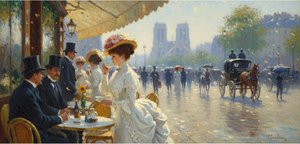
To understand the seismic shift brought about by the Post-Impressionists, one must first look back at the fleeting brilliance of their predecessors. The Impressionist movement, led by luminaries such as Monet and Renoir, had fundamentally altered the course of art history by capturing the ephemeral quality of light and the momentary sensations of a landscape. They sought to document the optical truth of a scene—the way sunlight dances upon water or how shadows shift during a summer afternoon. Their canvases were breath-taking studies in luminosity, yet they remained tethered to the immediate perception of the external world.
While the Impressionists broke the shackles of academic realism, they left behind an unanswered question regarding the permanence and emotional weight of the subject matter. The movement was a celebration of the transient; it was beautiful, certainly, but it often lacked a structured, underlying permanence. As the late 19th century progressed, a new generation of artists began to feel that the spontaneous brushstrokes of Impressionism, while revolutionary, were perhaps too fleeting to capture the profound psychological and structural complexities of existence. This tension between the seen and the felt would become the catalyst for one of the most vibrant eras in art history.
Breaking the Surface: The Emergence of Post-Impressionist Expression
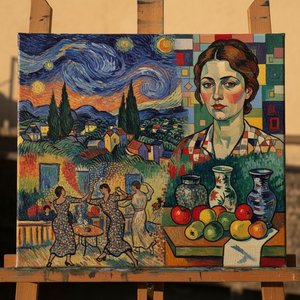
The transition from Impressionism to Post-Impressionism was not a clean break, but rather an evolution—a movement toward a more deliberate and expressive use of the medium. Artists like Paul Cézanne, Georges Seurat, and Vincent van Gogh did not abandon the bright palettes or the visible brushwork of their predecessors; instead, they repurposed these tools to explore deeper realms of meaning. They moved beyond the mere recording of light to investigate the structural essence of objects and the subjective intensity of human emotion.
This era marked a departure from naturalism toward a more symbolic and structured reality. Where an Impressionist might paint a field to show how the sun hits the wheat, a Post-Impressionist would use that same field to convey a sense of cosmic energy, loneliness, or rhythmic vitality. The world was no longer just something to be observed; it became something to be interpreted. This shift allowed for a more profound connection between the artist's internal psyche and the external landscape, turning the canvas into a stage for psychological drama and formal experimentation.
Mastering Light and Emotion: Van Gogh’s Textured Landscapes
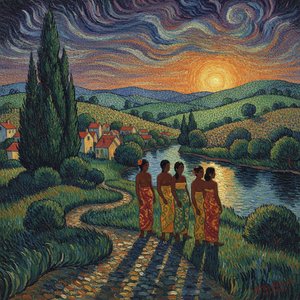
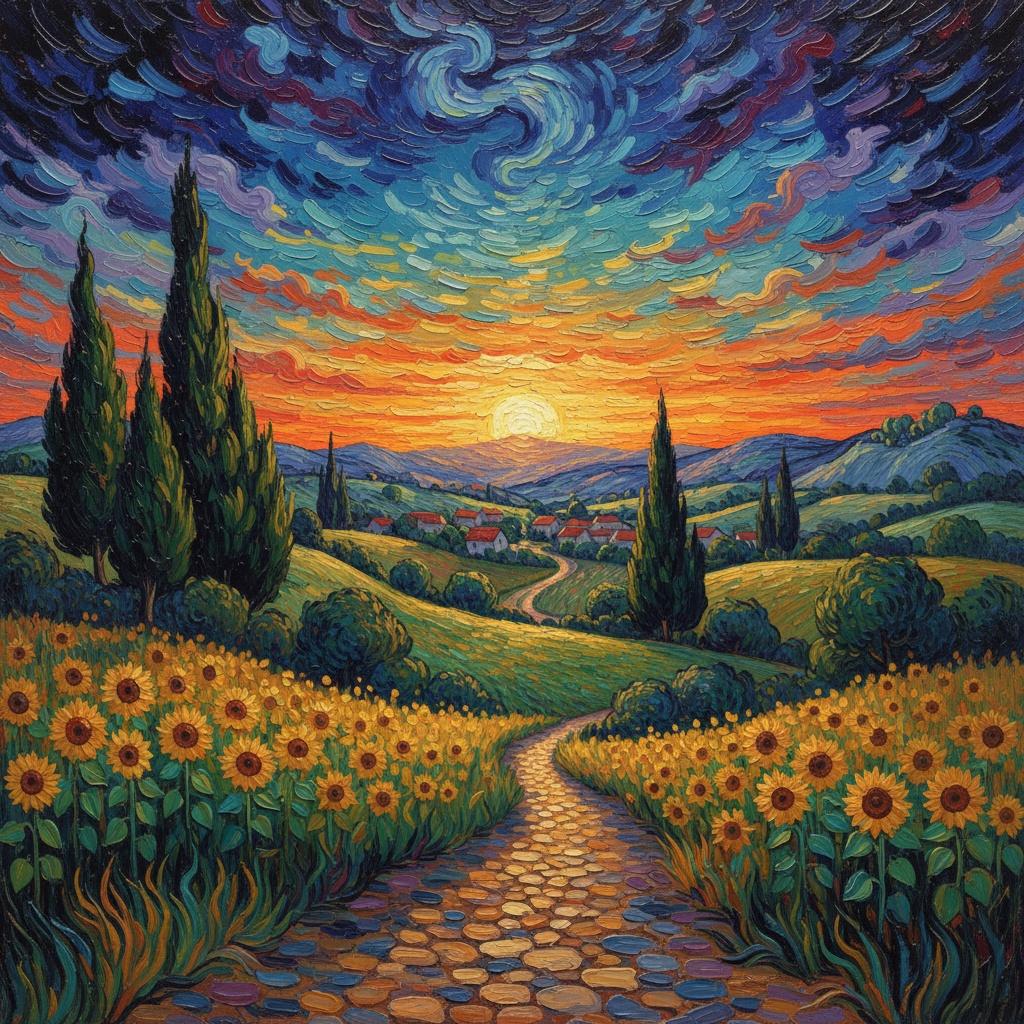
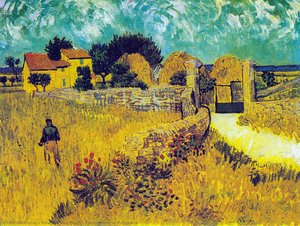
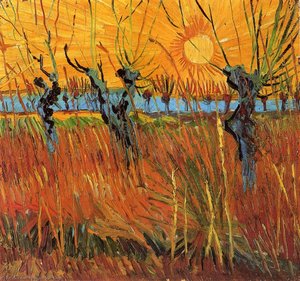
No figure embodies this emotional revolution more powerfully than Vincent van Gogh. His landscapes are far more than topographical studies; they are visceral experiences of the soul. In works such as Autumn Landscape at Dusk, we see a masterclass in how light can be used not just to illuminate, but to agitate and inspire. The winding paths and golden hues of his setting suns do not merely suggest a time of day; they create a sense of movement and depth that pulls the viewer into a swirling, rhythmic universe.
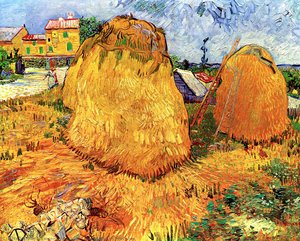
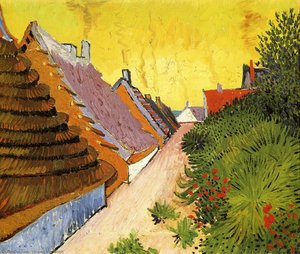
Van Gogh’s genius lay in his ability to imbblat a landscape with a sense of life that feels almost sentient. In his Farmhouses Among Trees, there is a profound stillness, yet it is a heavy, textured tranquility achieved through muted hues and thick applications of oil. Even in his more serene series, such as the Cottages of Drenthe, the viewer can sense the underlying pulse of the earth. His brushwork acts as a conductor, directing the eye through a landscape that feels as much like a dreamscape as it does a physical location.
Color as Language: Beyond Naturalism to Symbolic Depth
In the hands of the Post-Impressionists, color ceased to be a descriptive tool and became a language of its own. The movement moved away from the "optical mixing" of Impressionism toward a more symbolic use of pigment. Colors were chosen for their emotional resonance rather than their accuracy to nature. A sky might be rendered in an intense, unnatural cobalt to evoke melancholy, or a field might glow with an aggressive yellow to represent divine energy.
This use of color allowed artists to communicate complex ideas without the need for explicit narrative. By manipulating temperature and saturation, they could manipulate the viewer's mood. This liberation of color paved the way for much of 20th-century modernism, establishing the idea that an artist’s palette is a direct extension of their emotional state. The landscape became a canvas for chromatic experimentation, where every shade served a purpose in the broader architecture of feeling.
The Tactile Canvas: Exploring Impasto and Structural Form
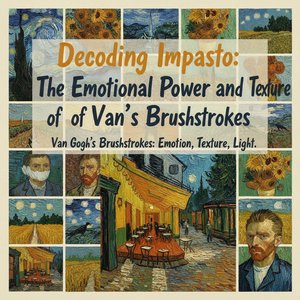
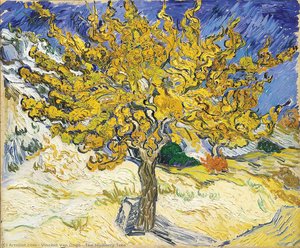
One of the most enduring legacies of this period is the emphasis on the physical presence of paint itself. The technique of impasto—the thick, heavy application of pigment—transformed the canvas from a window into a sculptural object. When we look at a Post-Impressionist landscape, we are not just looking at a scene; we interacting with the physical ridges and grooves left by the artist's hand. This texture provides a three-dimensional quality that catches actual light within the room, creating a "living" surface.
This tactile approach served two purposes: it provided structural integrity to the composition and added an element of raw, human energy. The visible struggle of the brush against the canvas adds a layer of authenticity that flat, smooth surfaces lack. This emphasis on form and texture ensured that even when depicting simple subjects like a rural cottage or a cluster of trees, the artwork possessed a monumental presence that commanded attention through its sheer material depth.
Preserving the Vision: Bringing Post-Impressionist Mastery into Modern Interiors
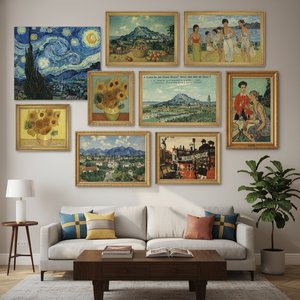
Today, the vibrant energy of Post-Impressionism continues to find a profound place in contemporary homes and galleries. The movement's ability to balance intense emotion with structural beauty makes it uniquely suited for modern interior design, where art serves as both a focal point and an emotional anchor. Whether through museum-quality reproductions or custom oil commissions, bringing these textures into a living space allows for a continuous dialogue with art history.
For the true enthusiast, the appeal lies in the ability to experience the tactile soul of the work. A high-quality reproduction that honors the original impasto technique can transform a room, offering a sense of depth and historical weight that mass-produced prints cannot replicate. By selecting pieces that celebrate the bold colors and rhythmic brushstrokes of this era, collectors can curate environments that are not only aesthetically sophisticated but also deeply evocative of the human spirit's enduring capacity for wonder.
At ArtsDot.com, we specialize in preserving this extraordinary legacy. Our artisans meticulously recreate these masterpieces using traditional oil painting techniques, ensuring that every textured stroke and vibrant hue is captured with academic precision. From custom portraits to breathtaking landscape reproductions, we bring the profound beauty of the Post-Impressionist world directly into your collection.