
The Pulse of Modernity: Defining the Futurist Revolution
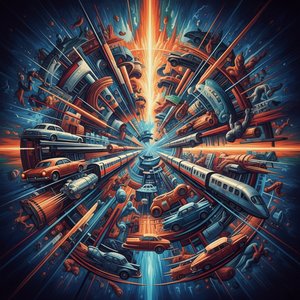 Speed, Power, and Motion: A Collector's Guide to the Dynamic World of Futurism
The Manifesto of Modernity: Understanding the Futurist Revolution At the dawn of the twentieth century, a seismic shift occurred within the European avant-garde, one that sought to shatter the stagnant traditions of the past and embrace the frenetic ...
To step into the world of Futurism is to abandon the quiet, sun-drenched stillness of a Monet landscape and instead embrace the roar of an engine and the frantic heartbeat of a city in motion. At the dawn of the twentieth century, a seismic shift occurred within the European avant-garde, a profound ideological rebellion that sought to shatter the stagnant traditions of the past. This was not merely a change in aesthetic preference; it was a fervent rejection of the heavy weight of classical antiquity and the nostalgic reverence for Renaissance beauty that had long anchored the art world.
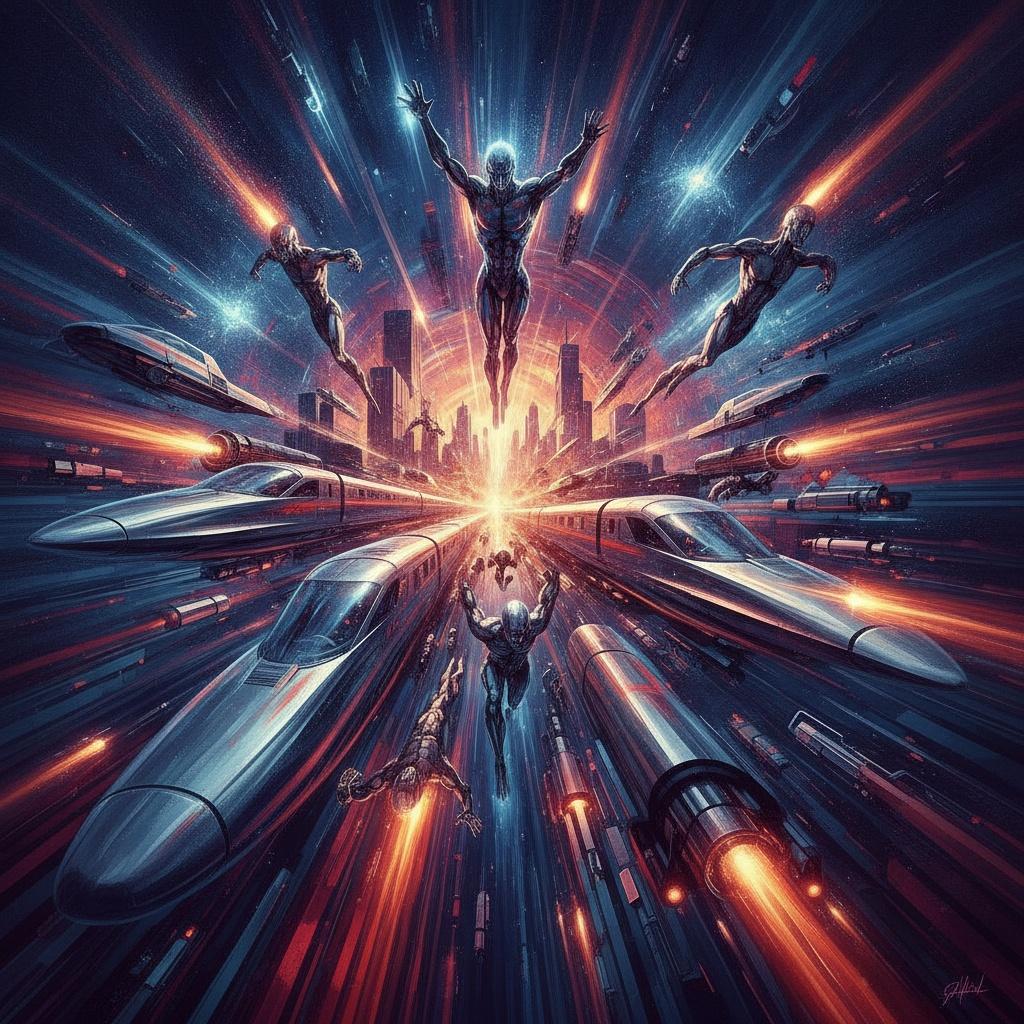
Born from the fiery manifestos of Italian intellectuals, most notably Filippo Tommaso Marinetti in 1909, Futurism arrived as a clarion call for modernization. The movement celebrated the beauty of speed, asserting that a roaring automobile was more beautiful than the ancient Winged Victory of Samothrace. It looked toward the horizon of the industrial age, finding divinity in the airplane, the locomotive, and the pulsating urban landscape. For the art enthusiast, understanding Futurism requires a willingness to embrace this sense of destruction—the deliberate dismantling of academies and museums to make way for a cultural rejuvenation fueled by technology, youth, and the raw energy of the machine.
Dynamics of the Machine Age: Speed, Technology, and Urban Energy
Futurism was an early 20th-century artistic movement that began in Italy. It embraced dynamism, speed, energy, and the power of the machine, ...
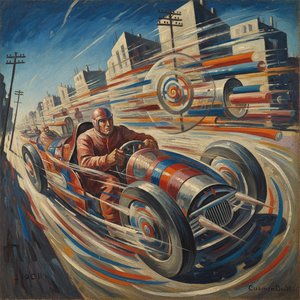
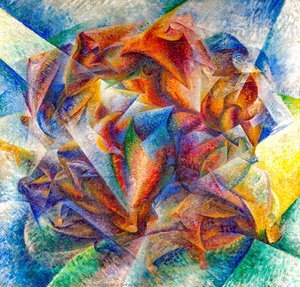
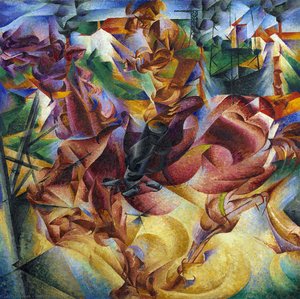
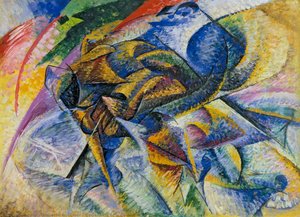
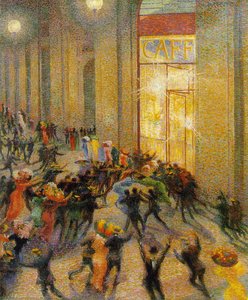
The essence of the Futurist vision lies in its obsession with dynamism. Where traditional art sought to capture a frozen moment of eternal grace, the Futurists sought to depict the very sensation of movement itself. This was achieved through a complex interplay of light, color, and fragmented forms that mimicked the sensory overload of the modern industrial city. Artists such as Umberto Boccioni, Giacomo Balla, and Gino Severini worked tirelessly to translate the invisible forces of energy into visible brushstrokes.
In works like Balla’s Abstract Speed + Sound, we see the attempt to paint not just an object, but the vibration and frequency of its passage through space. The movement glorified the objects of a new era—the car, the airplane, and the factory—viewing them as symbols of a liberated future. This fascination with technology brought a new vocabulary to the canvas, one characterized by sharp contrasts, overlapping planes, and a sense of rhythmic repetition. It was an art of the senses, designed to make the viewer feel the friction of wheels against pavement and the whistling wind of a propeller, capturing the exhilarating, often violent, pulse of a world being rebuilt in real-time.
Beyond Italy: The Vibrant Echoes of Russian Cubo-Futurism
 David Burliuk: A Pioneer of Russian Avant-Garde & His Enduring Legacy
The Genesis of Cubo-Futurism: A Revolt Against Tradition The early decades of the 20th century witnessed a seismic shift in artistic expression, and at the heart of this revolution lay Russia. While European art movements like Cubism and Futurism wer...
While the movement found its initial spark in Italy, it found an incredibly potent and uniquely radical echo within the Russian landscape. As European modernism gained momentum, the Russian avant-garde began to coalesce into a phenomenon known as Cubo-Futurism. This was not a mere imitation of Western styles but a brilliant, transformative synthesis that blended the geometric deconstruction of French Analytical Cubism with the aggressive dynamism of Italian Futurism.
In Russia, this movement became a tool for reimagining a nation in flux. Artists like David Burliuk, a true provocateur and architect of the movement, pushed against academic constraints to forge a new artistic language. The Russian landscape provided a fascinating backdrop where the technological fervor of Futurism met a deep-seated connection to folk motifs and primitive energy. This era saw the rise of groups like the Hylaeans, who issued manifestos that were as much about linguistic experimentation as they were about visual rebellion. Through Cubo-Futurism, the boundaries of representation were pushed to their breaking point, creating a bridge between the structured geometry of the new age and the raw, unbridled spirit of a revolution.
Fragmented Realities: Deconstructing Form through Light and Motion
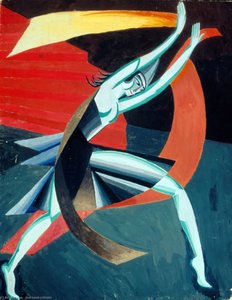 Costume design for Salome
The Costume design for Salome by Aleksandra Ekster is a captivating piece of art that showcases the artist's skill in capturing the essence of movement and energy. Created in 1917, this oil on canvas painting measures 66 x 52 cm and is a testament to...
To observe a Futurist masterpiece is to witness reality being dismantled and reconstructed. The movement utilized fragmentation as a primary tool to express the interconnectedness of all things in motion. By breaking down solid forms into intersecting planes and lines of force, artists were able to suggest that an object does not end where its outline meets the air; rather, it bleeds into its environment through a continuous exchange of energy.
This deconstruction is perhaps most beautifully realized in the works of Aleksandra Ekster, whose Cubo-Futurist style captured the very essence of movement and action. In her designs, the subject’s pose and the surrounding elements create a sense of kinetic tension. Similarly, the emergence of Rayonism—pioneered by Mikhail Larionov and Natalia Goncharova—offered a new language of light and color, where the focus shifted from the object to the rays of light reflecting off it. This era of experimentation allowed for a breathtaking exploration of pure feeling and geometric construction, where the subject matter began to dissolve into an exhilarating dance of light, shadow, and pure, unadulterated motion.
The Legacy of Movement: How Futurism Reshaped the Artistic Horizon
 Futurism
Futurism (Italian: Futurismo [futuˈrizmo]) was an artistic and social movement that originated in Italy, and to a lesser extent in other countries, in the early 20th century. It emphasized dynamism, speed, technology, youth, violence, and objects suc...
Though the height of the Futurist movement was relatively brief, its impact on the trajectory of modern art is immeasurable. The movement’s radical embrace of technology, speed, and the destruction of tradition paved the way for a multitude of subsequent styles, including Art Deco, Constructivism, and even the fragmented dreamscapes of Surrealism. It taught the world that art could be more than a window into a static reality; it could be an active participant in the chaos and creativity of the present moment.
Today, we look back at the Futurists not just as rebels, but as pioneers who dared to find beauty in the unprecedented. They captured the soul of an era defined by transition, leaving behind a legacy of works that continue to vibrate with the same intensity they possessed a century ago. For the collector and the enthusiast, the study of Futurism remains a profound journey into the very heart of modernity—a reminder that even in our most fragmented moments, there is a powerful, underlying energy that connects us all to the relentless march of progress.
At ArtsDot.com, we celebrate the enduring power of these historical movements. While our hearts will always belong to the soft, luminous light of the Impressionists, we hold a deep reverence for the bold, transformative energy of the Avant-Garde. Whether you seek a hand-painted oil reproduction of a delicate Monet or wish to explore the dynamic textures of a modern masterpiece, our master artists are dedicated to preserving human creativity for generations to come.