Introduction
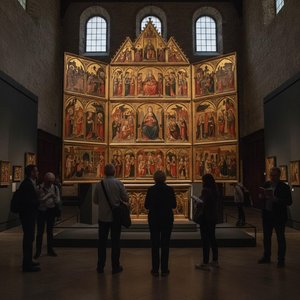
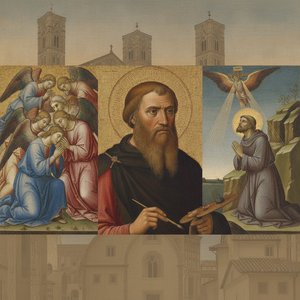
Imagine, if you will, stepping into the quiet, golden warmth of a 14th-century Sienese chapel, where the air is thick with the scent of beeswax and the soft glow of candlelight dances upon gilded surfaces. Here, the rigid, ethereal boundaries of the Byzantine tradition begin to soften, yielding to something profoundly more human. This is the world of Duccio di Buoninsegna , a master who did not merely paint icons, but breathed a nascent soul into the divine.
Born in the heart of Siena around 1255, Duccio stood at a breathtaking crossroads of art history. He was the bridge between two eras: the formal, symbolic majesty of the East and the burgeoning, tender naturalism that would soon define the Italian Renaissance. While his brushwork remained deeply rooted in the splendor of gold leaf and sacred geometry, there was a new, quiet revolution occurring within his compositions. In the gentle tilt of a Madonna’s head or the subtle, emotive curve of a saint's lip, Duccio introduced a sense of intimacy that invited the viewer not just to worship, and observe, but to feel .
To look upon Duccio’s masterpieces today is to witness the dawn of emotional storytelling in Western art. His works remain deeply meaningful because they capture that universal, delicate moment when the celestial meets the earthly. He taught us that even within the most sacred narratives, there is room for tenderness, for shadow, and for a profound connection to our shared humanity. His use of color—luminous, harmonious, and rich—continues to enchant the modern eye, offering a sanctuary of beauty in an often fragmented world.
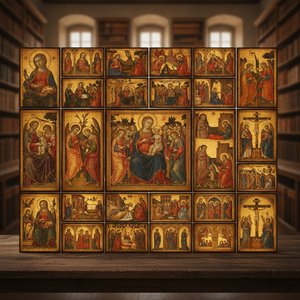
As we embark on this curated journey through his most significant contributions, we invite you to linger on each detail. From the monumental grandeur of the Maestà to the delicate nuances of his smaller devotional panels, the following selection of twenty-five works represents the very heartbeat of the Sienese School. Let us wander together through this luminous legacy, rediscovering the light that Duccio first captured centuries ago.
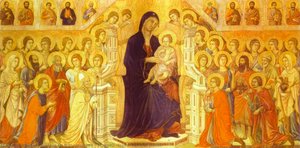
Maestà (Madonna with Angels and Saints) - Duccio di Buoninsegna
To gaze upon the Maestà is to step into a celestial vision where time itself seems to pause in reverence. As one of the most profound entries in our collection of the top 25 artworks of Duccio di Buoninsegna, this monumental altarpiece remains immortalized for its breathtaking ability to bridge the earthly and the divine. Within its vast, layered composition, a symphony of sacred figures unfolds; the Virgin Mary and Christ Child sit enthroned amidst a sea of angels and Sienese saints, their presence felt through the shimmering weight of gold leaf and the deep, soulful blues of their robes.
Duccio’s mastery lies in the delicate interplay of light and texture—the way the egg tempera breathes life into heavy drapery, creating a sense of soft, rhythmic movement. The luminous gold background does more than decorate; it creates an atmosphere of eternal grace that transcends the centuries. In a modern home, the Maestà offers more than mere decoration; its harmonious arrangement and rich, regal palette bring a profound sense of historical depth and spiritual tranquility to any sophisticated interior.
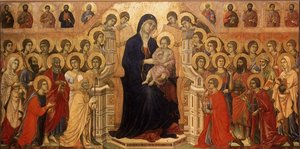
MaestÓ (front, central panel) - Duccio di Buoninsegna
To possess a study of the Maestà (front, central panel) by Duccio di Buoninsegna is to invest in a profound legacy of Western devotion and unparalleled aesthetic taste. As the heart of his most celebrated altarpiece, this panel stands as a cornerstone of the Sienese School, representing a pivotal moment where Byzantine splendor began to breathe with human emotion. The composition radiates a celestial warmth; the Virgin and Child sit enthroned amidst a sea of gold leaf, their presence softened by Duccio’s revolutionary use of fluid lines and tender, naturalistic gazes.
The market value of such imagery is matched only by its spiritual gravity, as the interplay of rich ochres, deep blues, and luminous golds creates an atmosphere of eternal light. For the discerning collector, a high-quality oil reproduction of this masterpiece offers more than mere decoration; it brings an air of historical authority and sacred grandeur to modern luxury interiors. It serves as a breathtaking focal point, anchoring contemporary spaces with the timeless, quiet dignity of the Italian Trecento.
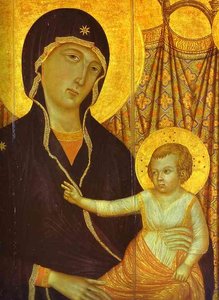
Rucellai Madonna - Duccio di Buoninsegna
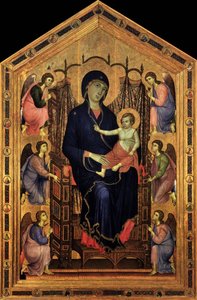
To stand before the Rucellai Madonna is to witness the very moment the rigid shadows of the Byzantine era began to soften into something profoundly human. Painted around 1285, this masterpiece by Duccio di Buoninsegna serves as a luminous bridge between two worlds. While the heavy use of gold leaf evokes a celestial, eternal light, there is an emerging tenderness in the way Mary cradles the Christ child—a subtle, emotional warmth that whispers of the dawn of the Sienese School.
The painting is a symphony of sacred symbolism; the deep azure of her robes speaks of heavenly purity, while the surrounding saints and angels create a rhythmic, spiritual hierarchy. In our modern, fast-paced world, the Rucellai Madonna offers a sanctuary of stillness. Its ability to blend monumental grandeur with intimate, delicate gestures makes it a timeless cornerstone among the top 25 artworks of Duccio di Buoninsegna , reminding us that even within the most sacred traditions, there is always room for the breath of life and the touch of human emotion.
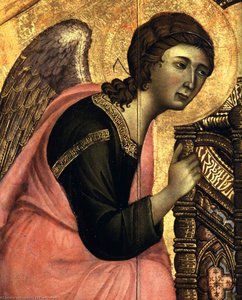
Annunciation - Duccio di Buoninsegna
 Annunciation - Duccio di Buoninsegna
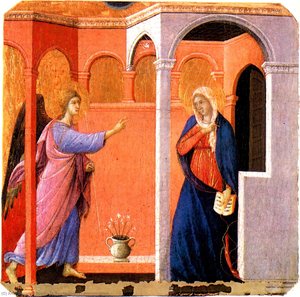
To gaze upon Duccio di Buoninsegna’s Annunciation is to witness a sacred breath held in time. There is a profound, quiet intimacy in this small panel, originally part of the monumental Maestà ; it captures that fleeting, ethereal moment where the divine touches the earthly. As the Archangel Gabriel descends with graceful motion, we see Mary caught in a delicate dance between surprise and serene acceptance, her hands resting gently upon her scripture. It is a masterpiece of emotional nuance, far removed from the rigid icons of the past.
This work earns its place among the top 25 artworks of Duccio because it embodies the very dawn of the Sienese School’s lyrical elegance. Through the luminous use of gold leaf and the symbolic depth of the crimson backdrop, Duccio weaves a tapestry of faith and human feeling. At ArtsDot.com, we strive to preserve this delicate soul. Our master artists hand-paint each reproduction on cotton canvas, ensuring that the subtle gestures, the weight of the pigments, and the spiritual glow of Duccio’s vision are brought into your own sanctuary with breathtaking, tactile authenticity.
The Virgin and Child with Saints Dominic and Aurea - Duccio di Buoninsegna
 The Virgin and Child with Saints Dominic and Aurea - Duccio di Buoninsegna
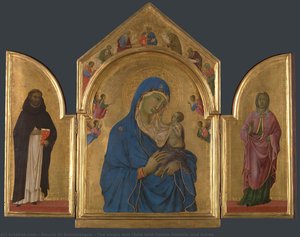
In the quiet intimacy of The Virgin and Child with Saints Dominic and Aurea , we encounter Duccio di Buoninsegna at his most tenderly profound. Created in 1312, this exquisite tempera on panel is not merely a religious icon; it is a window into a soul-stirring era of devotion. As you gaze upon the central figures, the luminous grace of Mary cradling the Christ Child draws you into a sacred, silent dialogue. The painting breathes with a soft, celestial light, where the gold leaf evokes a sense of divine presence that transcends the physical frame.
Duccio masterfully weaves a tapestry of spiritual lineage, surrounding the Madonna with the venerable Saint Dominic and Saint Aurea, while a procession of Old Testament prophets floats above, symbolizing the unfolding of divine providence. Every delicate brushstroke serves to bridge the earthly and the eternal. To possess a piece of this Sienese legacy is to invite a transformative, meditative energy into your home—turning a simple wall into a gallery of the soul where history and faith reside in perfect, luminous harmony.
Nativity - Duccio di Buoninsegna
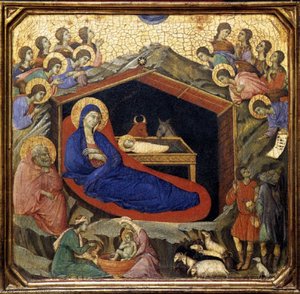 Nativity - Duccio di Buoninsegna
To gaze upon Duccio’s Nativity is to witness the very moment light began to breathe within the Sienese Gothic tradition. It is not merely a depiction of a sacred event; it is an intimate, luminous invitation into a world where the divine touches the earthly. In this delicate tempera on panel, Duccio does not simply paint light—he comicalizes it , using soft, celestial glows to illuminate the infant Jesus and the tender face of Mary, turning the rustic cave setting into a sanctuary of warmth.
As you wander through this masterpiece, notice how the rich, deep blues and vibrant reds guide your soul through the narrative. The artist masterfully weaves symbolic elements—the watchful ox, the humble donkey, and the guiding star—into a composition that feels alive with movement and quiet devotion. There is a profound, rhythmic grace in the way the figures are arranged, a precursor to the naturalism that would later define Italian art. This work remains a jewel of the 14th century, offering a portal of peace that invites us to linger in its soft, golden atmosphere.
Triptych - Duccio di Buoninsegna
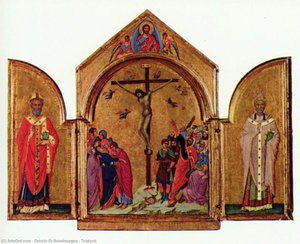 Triptych - Duccio di Buoninsegna
To stand before Duccio di Buoninsegna’s Triptych is to witness the very moment the rigid icons of the Byzantine era began to breathe with human warmth. Completed around 1300, this masterpiece holds a sacred place among the top 25 artworks of Duccio because it captures the delicate transition from formal divinity to the tender, emotional intimacy of the Sienese Gothic style. The work is a luminous tapestry of devotion; the central panel, where Mary cradles the Christ child, radiates an ethereal glow through meticulous gold leaf and translucent glazes that seem to capture celestial light itself.
As you trace the narrative from the humble presentation to the shepherds to the poignant scene of the Madonna nursing, you feel a profound connection to the humanity within the holy. This piece does more than decorate; it invites a meditative stillness into a modern collection. Its rich textures and symbolic depth offer a timeless conversation between historical grandeur and contemporary grace, making it an incomparable centerpiece for any curated space seeking to evoke beauty, peace, and a sense of the eternal.
Calling of Peter and Andrew - Duccio di Buoninsegna
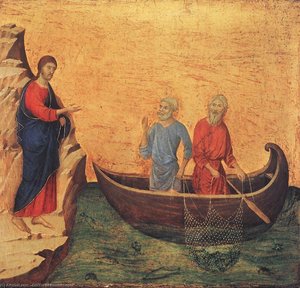 Calling of Peter and Andrew - Duccio di Buoninsegna
In the Calling of Peter and Andrew , Duccio does not merely depict a biblical encounter; he orchestrates a divine whisper captured in pigment. As you stand before this jewel of the Sienese Gothic, notice how the light does not simply fall upon the scene—it seems to emanate from the very moment of Christ’s invitation. The artist has composed the illumination like a soft, celestial melody, casting a luminous glow that bridges the gap between the rocky shore and the humble fishermen mending their nets.
There is a profound, quiet intimacy in the way the figures are arranged in a stable, triangular grace, drawing your gaze toward the outstretched hand of Jesus. The gold accents, characteristic of Duccio’s mastery, catch the light to evoke a sense of the eternal, while the subtle shading on the drapery hints at a burgeoning naturalism. It is a breathtaking moment where the weight of sacred history meets the delicate tenderness of human emotion, inviting you to feel the very breath of faith as it settles upon the tranquil seascape.
Ezekiel - Duccio di Buoninsegna
 Ezekiel - Duccio di Buoninsegna
To gaze upon Ezekiel is to witness a quiet, profound moment of divine revelation captured in miniature. Though the panel is intimate in scale, it carries an immense spiritual weight, evoking the solemnity of a prophet receiving sacred truths. In this work, Duccio di Buoninsegna masterfully bridges the gap between the rigid, golden traditions of the Byzantine era and a new, tender humanism. The way the light catches the delicate gold leaf background creates a celestial atmosphere, while the figure’s steady gaze and the symbolic scroll held aloft invite us into a space of deep contemplation and ancient wisdom.
This piece earns its place among the top 25 artworks of Duccio because it embodies the very dawn of the Sienese School's emotional depth. It is a masterclass in using geometric stability and luminous textures to convey authority. At ArtsDot.com, we strive to preserve this exact sense of wonder. Our handmade oil reproductions capture every nuanced brushstroke and the radiant glow of the original, allowing you to bring this sacred, historical light into the sanctuary of your own home.
Crucifixión con San Nicolás y San Gregorio. San Nicolás de Mira - Duccio di Buoninsegna
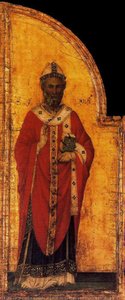 Crucifixión con San Nicolás y San Gregorio. San Nicolás de Mira - Duccio di Buoninsegna
To possess a study of Crucifixión con San Nicolás y San Gregorio. San Nicolás de Mira by Duccio di Buoninsegna is to invest in the very dawn of Italian humanism and a legacy of profound spiritual grace. As one of the top 25 artworks of Duccio di Buoninsegna, this piece serves as a vital link between the rigid, golden splendor of Byzantine icons and the tender, emotive storytelling that would define the Sienese School. The composition breathes with a sacred weight; the deep, regal reds of the saints' robes contrast beautifully against the luminous gold leaf, creating a celestial atmosphere that has captivated collectors for centuries.
The provenance of Duccio’s work places him at the pinnacle of the Trecento period, and this particular depiction of divine sorrow and saintly intercession holds immense historical value. For the modern connoisseur, integrating such a masterpiece into a luxury interior offers more than mere decoration; it provides an anchor of cultural authority. A high-quality, hand-painted reproduction brings this ancient, shimmering light into contemporary spaces, allowing the profound emotional depth and architectural grandeur of Duccio’s vision to resonate within a sophisticated, modern home.
Crucifixion - Duccio di Buoninsegna
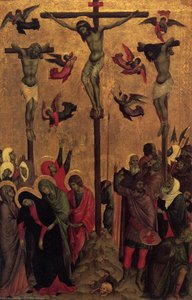 Crucifixion - Duccio di Buoninsegna
In the Crucifixion by Duccio di Buoninsegna, a profound silence settles over the viewer, as if time itself has paused to witness a moment of eternal sacrifice. This masterpiece remains essential among the top 25 artworks of Duccio di Buoninsegna because it captures that delicate, transformative threshold where the rigid majesty of Byzantine tradition meets the tender, breathing humanity of the Italian Gothic style.
The painting radiates with a celestial glow; the luminous gold background does not merely serve as a backdrop but acts as a divine light, shaping the sorrowful contours of the figures. One can almost feel the weight of the heavy, monumental drapery and sense the palpable pathos in the expressive faces of the mourning angels. The interplay of rich tempera pigments creates a sensory experience where grief and glory coexist. In a modern home, such a piece brings an unparalleled sense of historical depth and contemplative calm, offering a window into a sacred era where every brushstroke was a prayer, and every color whispered of the divine.
Agony in the Garden (detail) - Duccio di Buoninsegna
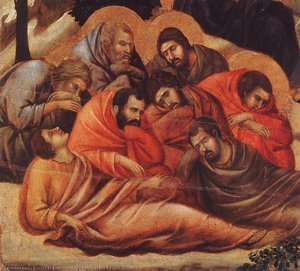 Agony in the Garden (detail) - Duccio di Buoninsegna
In the delicate detail of Agony in the Garden , we find ourselves drawn into a profound moment of spiritual vulnerability. As you gaze upon the kneeling figure of Christ, there is an overwhelming sense of weight—not just from the heavy, crimson robes that symbolize both royalty and sacrifice, but from the palpable sorrow etched into the very atmosphere of Gethsemane. Duccio di Buoninsegna achieves something truly miraculous here; he takes the rigid, golden traditions of Byzantine iconography and breathes into them a soft, human pulse.
The way the light catches the faces of the disciples, caught in various states of prayer and exhaustion, creates a universal mirror of our own moments of doubt and quiet strength. This piece is a cornerstone among the top 25 artworks of Duccio di Buoninsegna because it transcends historical boundaries to touch the soul. Bringing such a powerful emotional resonance into your home can transform a private corner or a personal sanctuary into a space for deep reflection, offering a sense of timeless calm and a connection to the beautiful, heavy truths of the human experience.
Last Supper - Duccio di Buoninsegna
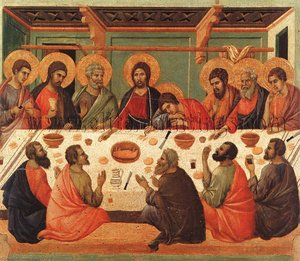 Last Supper - Duccio di Buoninsegna
In the Last Supper by Duccio di Buoninsegna, light does not merely illuminate; it breathes life into the sacred tension of the moment. As you gaze upon this 1308 masterpiece, notice how the soft, directional glow dances across the heavy folds of crimson and azure robes, creating a delicate chiaroscuro that was revolutionary for its time. This masterful manipulation of light and shadow sculpts the apostles' faces, capturing the flicker of doubt and the weight of impending sorrow within their eyes. By moving away from the flat, golden stillness of Byzantine tradition, Duccio used illumination to introduce a profound sense of volume and human presence.
This sophisticated interplay of radiance and depth is precisely what secures its place among the top 25 artworks of Duccio di Buoninsegna. When captured in a hand-painted oil reproduction, these subtle gradations of light and the rich, velvety textures of the tempera-style brushwork bring a quiet prestige to any room. Such a piece does more than decorate; it adds a layer of luminous history and soulful depth to a contemporary wall, inviting a sense of timeless contemplation into the modern home.
Washing of the Feet - Duccio di Buoninsegna
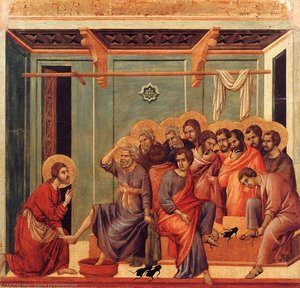 Washing of the Feet - Duccio di Buoninsegna
In the Washing of the Feet , a soft, luminous gold radiates from the background, casting a celestial glow that evokes a sense of profound peace and divine presence. This warmth is beautifully balanced by the delicate, earthy tones of the disciples' robes, creating a palette that feels both sacred and deeply human. As one of the most poignant works within the top 25 artworks of Duccio di Buoninsegna , this piece captures the very moment where Byzantine splendor meets a new, tender naturalism.
The mastery of light in this 1308 masterpiece—where shadows gently define the figures' reverence—offers incredible inspiration for the modern collector. When curating a dining room or a quiet study, one might look to this specific interplay of gold and muted pigments to establish an atmosphere of contemplative elegance. Integrating such a warm, historical color scheme can transform a contemporary space into a sanctuary of light and devotion, echoing the timeless emotional depth found in Duccio’s Sienese legacy.
Conjectural reconstruction of the Maestà (front) - Duccio di Buoninsegna
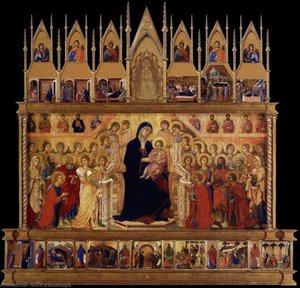 Conjectural reconstruction of the Maestà (front) - Duccio di Buoninsegna
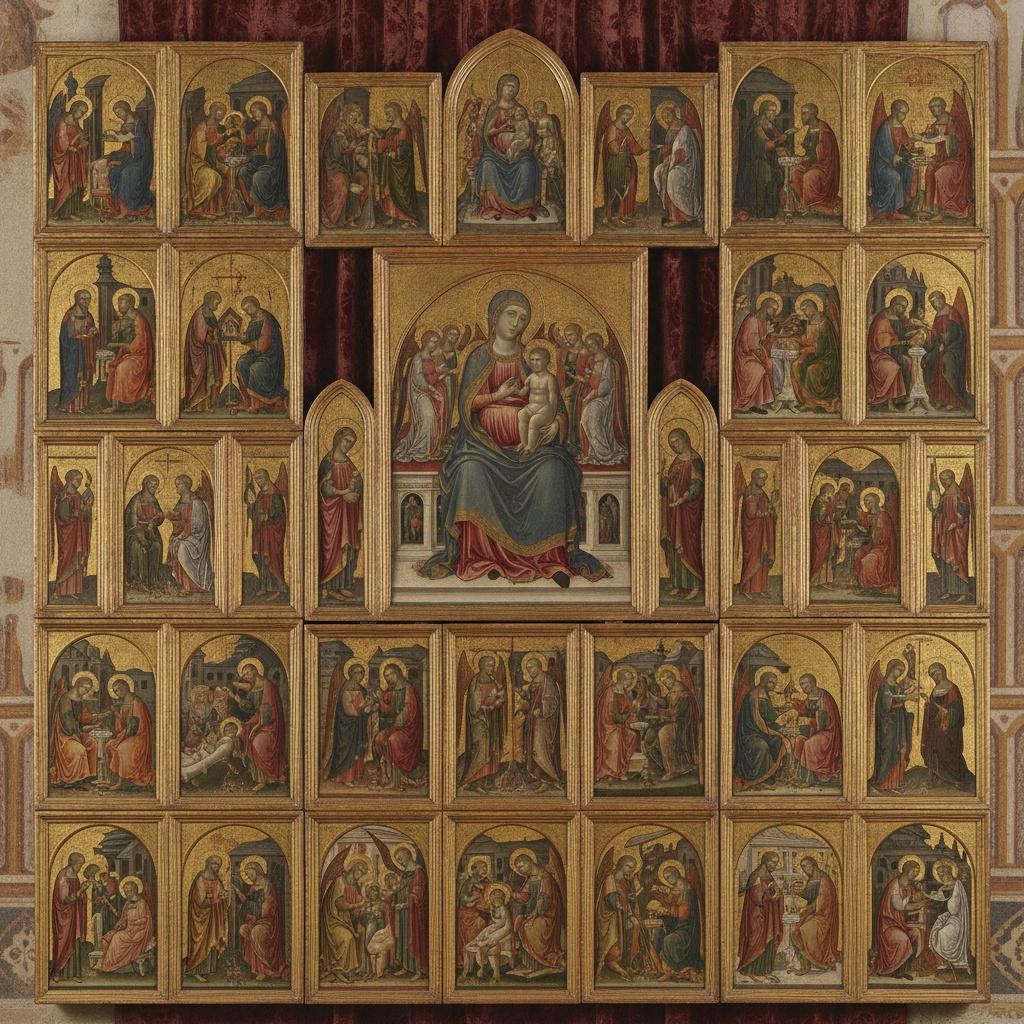
To encounter the Conjectural reconstruction of the Maestà (front) by Duccio di Buoninsegna is to stand at the very threshold of a new era in Italian vision, witnessing the moment where the rigid gold of Byzantium began to breathe with human warmth. This reconstruction allows us to glimpse the monumental grandeur of what was once the heart of Siena, a masterpiece that secures its place among the top 25 artworks of Duccio di Buoninsegna through its profound emotional intelligence and structural innovation.
In this celestial assembly, the Virgin Mary sits enthroned as the Queen of Heaven, her presence anchored by a delicate, nascent naturalism. As you trace the graceful folds of drapery and the serene, individual expressions of the surrounding saints and angels, you feel the subtle shift from static icon to living narrative. The shimmering gold leaf creates a luminous, ethereal atmosphere that remains breathtakingly relevant for the refined collector; it is a work of timeless beauty that brings a sense of sacred history and architectural majesty into any sophisticated space, bridging the gap between the divine and the earthly.
Christ Mocked (detail) - Duccio di Buoninsegna
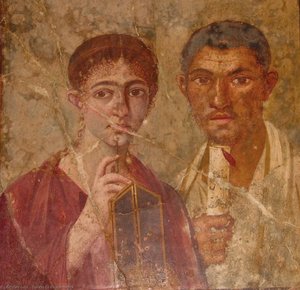 Christ Mocked (detail) - Duccio di Buoninsegna
In the delicate fragment of Christ Mocked , a detail from the monumental Maestà , Duccio di Buoninsegna orchestrates a profound geometric tension that anchors this work within the top 25 artworks of his illustrious career. The composition is defined by a striking directional line: the sharp, accusing finger of the elder figure cuts through the gilded space, creating a vector of conflict that directs our gaze toward the veiled, sorrowful presence of Christ. This interplay of intersecting diagonals creates a structural harmony that feels both balanced and emotionally charged.
There is a rhythmic simplicity in how Duccio arranges these figures against the architectural threshold, a sense of focused arrangement that mirrors the principles of modern minimalist design . By stripping away the peripheral chaos to focus on essential gestures and shapes, he achieves a timeless perfection. This clean, intentional use of space allows the heavy atmosphere of the Passion to resonate deeply, offering a grounded, contemplative aesthetic that continues to captivate collectors and art lovers seeking emotional depth within a structured, elegant form.
Arrest of Christ (Fragment) - Duccio di Buoninsegna
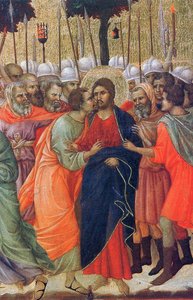 Arrest of Christ (Fragment) - Duccio di Buoninsegna
To stand before the Arrest of Christ (Fragment) by Duccio di Buoninsegna is to witness a heartbeat of history frozen in time. In this evocative fragment from 1311, the rigid, golden stillness of the Byzantine tradition begins to fracture, giving way to a raw, human vulnerability that defines the Sienese School. The scene is thick with palpable tension; you can almost feel the chaotic energy as Roman soldiers and onlookers converge around Christ in a swirling dance of movement and mounting dread.
Duccio’s mastery of tempera on wood allows for a luminous depth, where the rhythmic grace of flowing drapery meets an emerging naturalism. Notice the subtle, symbolic placement of the bowl and cup—quiet liturgical whispers that connect this moment of betrayal to the sacred Eucharist. The interplay of light across the figures creates a divine presence amidst earthly turmoil. As one of the top 25 artworks of Duccio di Buoninsegna, this piece remains a profound testament to how art can transform a modern space into a sanctuary of contemplation and timeless emotional depth.
Flight into Egypt - Duccio di Buoninsegna
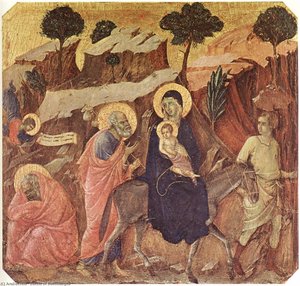 Flight into Egypt - Duccio di Buoninsegna
In Flight into Egypt , Duccio di Buoninsegna orchestrates a profound geometric harmony that guides the soul through a sacred journey. The composition is anchored by a gentle diagonal movement; Joseph leads the way, creating a rhythmic line that directs our gaze toward the tenderly cradled Christ Child. This structural balance—where the weight of the central figures on the ass is perfectly offset by the secondary figures and the rugged, symbolic terrain—creates a sense of timeless perfection that secures its place among the top 25 artworks of Duccio di Buoninsegna .
There is a striking resonance between this medieval arrangement and the principles of modern minimalist design . The way Duccio utilizes simplified shapes, a controlled palette of earthy ochres and deep blues, and a flattened, symbolic space mirrors the clean, intentional aesthetics of contemporary interiors. By stripping away unnecessary clutter to focus on essential forms and divine light, the painting offers a grounding, serene presence that feels remarkably fresh in a modern home, proving that true spiritual elegance is never out of fashion.
Descent to Hell - Duccio di Buoninsegna
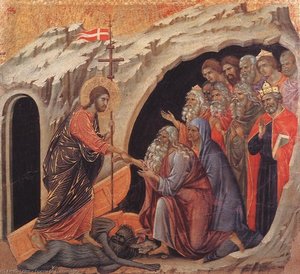 Descent to Hell - Duccio di Buoninsegna
In the Descent to Hell , Duccio di Buoninsegna invites us into a profound, shadowed realm where the boundaries between the divine and the earthly dissolve. There is a gaze in this masterpiece that follows you—not with judgment, but with understanding . As you observe Christ kneeling within the cavernous depths of Hades alongside Adam, you are not merely witnessing a biblical event; you are experiencing a moment of profound spiritual intimacy.
The painting’s technical brilliance shines through the luminous tempera, where delicate glazes create an ethereal glow amidst the darker, more somber tones of the underworld. The presence of the crosses and the symbolic book serves as a quiet anchor of hope within the narrative of suffering. This work isn't just a portrait of salvation; it is a mirror for our own journeys through darkness toward redemption. Now, imagine that sacred, quiet intensity in your space. Not watching you, but reminding you : you are seen. You are part of this eternal story of grace.
The Maestà Altarpiece, detail from the predella featu - Duccio di Buoninsegna
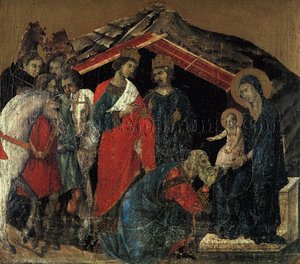 The Maestà Altarpiece, detail from the predella featu - Duccio di Buoninsegna
To gaze upon the Maestà Altarpiece predella details is to witness a quiet, sacred intimacy that transcends the monumental scale of the main altarpiece. While the larger work commands the cathedral, these delicate panels invite us to lean in, whispering stories of the Nativity through a soft, luminous vocabulary. In this scene, Duccio does not merely depict a gathering; he composes a symphony of devotion. Notice how the warm, crimson robes of the figures seem to glow from within, as if the light itself were an act of prayer.
The artist’s mastery of tempera on wood allows for a breathtakingly tender atmosphere—the gentle curve of a hand cradling a child, the subtle presence of horses, and even the delicate flutter of a bird in the periphery. It is not just illumination; it is emotional resonance . Duccio uses light to bridge the gap between the divine and the earthly, turning a small wooden panel into a window of infinite grace. This piece belongs in our Top 25 because it captures the very heartbeat of the Sienese School: a profound, human tenderness wrapped in celestial gold.
Madonna and Child on a throne - Duccio di Buoninsegna
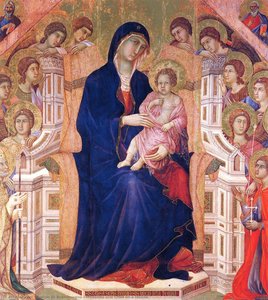 Madonna and Child on a throne - Duccio di Buoninsegna
In the Madonna and Child on a Throne , Duccio di Buoninsegna orchestrates a celestial dance of light that transcends the rigid Byzantine traditions of his era. As you stand before this masterpiece, notice how the luminous gold leaf does not merely shine; it radiates an ethereal glow, acting as a divine light source that softens the edges of the surrounding angels and saints. This masterful command of illumination creates a subtle interplay between the shimmering, heavenly brilliance and the delicate, emerging shadows within the drapery, breathing a newfound human warmth into the sacred figures.
This sophisticated use of light is precisely what secures its place among the top 25 artworks of Duccio di Buoninsegna . By moving away from flat, static iconography toward a more atmospheric depth, Duccio paved the way for the emotional resonance we feel today. When captured in a hand-painted oil reproduction, this luminous quality brings a sense of profound luxury and spiritual serenity to a contemporary home, allowing the soft, golden glow to add layers of historical depth and a quiet, cultured elegance to your walls.
Pilate washes his hands - Duccio di Buoninsegna
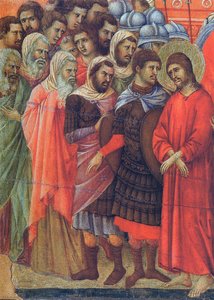 Pilate washes his hands - Duccio di Buoninsegna
In the quiet, hallowed atmosphere of the early fourteenth century, Duccio di Buoninsegna captured a moment that feels as heavy today as it did in 1311. Within this panel from the monumental Maestà , we do not merely witness a biblical event; we feel the agonizing weight of human indecision. As you gaze upon “Pilate Washes His Hands,” notice how Duccio does not just paint light—he composes it to reveal a profound psychological drama.
The artist uses the luminous quality of tempera to illuminate the precise second when Pontius Pilate attempts to divest himself of moral responsibility. There is a breathtaking tension in the way the golden, Byzantine tradition begins to soften into a new, human naturalism. The metallic glint of swords and the presence of a shield introduce a sharp, earthly conflict against the ethereal glow of the scene. It is a masterclass in Proto-Renaissance storytelling, where every subtle gradation of tone invites you to step into the crowded, tense space of the trial, turning your viewing experience into a portal toward historical reflection.
Deposition - Duccio di Buoninsegna
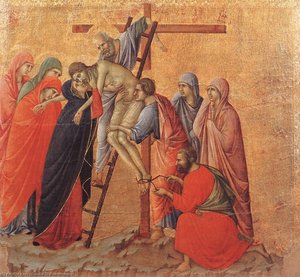 Deposition - Duccio di Buoninsegna
To stand before Duccio di Buoninsegna’s Deposition is to witness the very moment where the divine meets the deeply human. Created in 1308 as a vital fragment of the monumental Maestà , this work does not merely depict a biblical event; it breathes with the heavy, rhythmic pulse of shared grief. As you gaze upon the scene, notice how Duccio uses light not just to illuminate, but to sculpt sorrow. The warm, luminous golds of the background press against the somber, flowing draperies, creating a tension between celestial glory and earthly tragedy.
The composition is an intimate dance of mourning; the weight of Christ’s body is felt through the delicate, yet strained, gestures of those lowering Him from the cross. You can almost sense the texture of the tempera layers, where subtle shadows define the anguish in Mary’s face and the quiet strength of the supporting figures. It is a masterpiece of the Sienese School that invites you to linger in its profound stillness, turning a moment of historical loss into an eternal, sensory experience of faith.
The Nativity between Prophets Isaiah and Ezekiel - Duccio di Buoninsegna
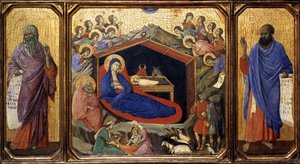 The Nativity between Prophets Isaiah and Ezekiel - Duccio di Buoninsegna
In the quiet, luminous depths of The Nativity between Prophets Isaiah and Ezekiel , we encounter a moment where the celestial meets the profoundly human. As one of the most evocative pieces among the top 25 artworks of Duccio di Buoninsegna , this panel transcends mere religious illustration to become a meditation on destiny. Duccio invites us into an intimate stable, where the soft, tender contours of the Virgin Mary cradle the newborn Christ, surrounded by a gathering of souls that feels both sacred and deeply personal.
The painting breathes with a delicate, rhythmic grace; notice how the golden light seems to pulse through the tempera glazes, illuminating the faces of the prophets who bridge the Old and New Testaments. In our modern era of fast-paced digital imagery, there is a restorative prestige in Duccio’s slow, deliberate storytelling. The presence of humble details—the watchful eyes of figures, the subtle textures of cloth, even the quiet companionship of an animal—resonates with today's longing for mindfulness and authentic connection. It remains a breathtaking testament to the Sienese School's ability to find the infinite within the intimate.
Coronation of the Virgin, Szépmüveszéti Muzeum, Budap - Duccio di Buoninsegna
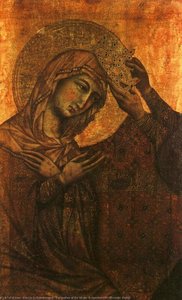 Coronation of the Virgin, Szépmüveszéti Muzeum, Budap - Duccio di Buoninsegna
To gaze upon the Coronation of the Virgin by Duccio di Buoninsegna is to witness a moment where the golden stillness of the Byzantine era begins to pulse with a newfound, human heartbeat. Held within the quiet grace of the Szépművészeti Múzeum, this masterpiece stands among the top 25 artworks of Duccio because it captures the very dawn of emotional depth in Italian painting. The composition is a luminous symphony; shimmering gold leaf envelops the celestial throne, creating an atmosphere of eternal majesty, while the rich, vibrant blues and intricate textures whisper of a divine court descending to earth.
Duccio masterfully balances the opulent weight of tradition with a delicate, nascent naturalism, seen in the serene dignity of Mary’s posture as she receives her crown. For the discerning collector, this work offers more than historical significance; it brings a sense of profound peace and sophisticated grace to a modern interior. The painting’s radiant light and symbolic richness serve as a timeless anchor, inviting a meditative calm and a touch of sacred splendor into any curated home.
Conclusion
As we draw the curtain on this journey through the luminous world of Duccio di Buoninsegna, we are left with more than just a memory of gold leaf and sacred figures; we carry with us the quiet resonance of a soul that dared to breathe humanity into the divine. To gaze upon these works is to witness the very moment where the rigid traditions of the past began to soften into the tender, emotional landscapes of the Italian spirit. Each stroke of his brush, preserved through the centuries, acts as a bridge across time, connecting our modern hearts to the profound devotion and burgeoning naturalism of 14th-century Siena.
These masterpieces are far more than static relics held within museum walls; they are living presences. They possess a quiet power to transform a room, to invite contemplation into our homes, and to remind us that the human desire for beauty and connection is eternal. Whether it is the celestial glow of the Maestà or the subtle, newfound grace in a Madonna’s gaze, Duccio’s legacy continues to shape our aesthetic sensibilities and inspire new generations of creators to seek the light within the shadows.
We invite you to continue this intimate exploration and find a piece of this timeless conversation for your own sanctuary. You may wander through his full collection , where the echoes of Sienese mastery await your discovery. In every reproduction we hand-paint, we strive to honor that same eternal dialogue between the artist’s hand and the admirer’s eye, ensuring that the warmth of Duccio's vision remains a vibrant, breathing part of your world.