
Introduction
To step into the world of Duccio di Buoninsegna is to witness the very moment the rigid, golden stillness of the Byzantine era began to breathe with human emotion. As you wander through this curated selection of his most profound works, you are not merely looking at relics of the 13th and 14th centuries; you are observing the dawn of a new Italian vision. Born in the vibrant heart of Siena, Duccio acted as a master bridge, connecting the ethereal, symbolic grandeur of the East with a burgeoning sense of naturalism that would eventually pave the way for the Renaissance.
His canvases—and even more impressively, his massive altarpieces—serve as a sensory journey through a period of immense cultural transition. Through his use of luminous gold leaf and a palette that finds harmony in both divinity and earthliness, Duccio transformed sacred narratives into intimate human experiences. One can almost feel the weight of the heavy brocades and the subtle, tender tilt of a Madonna’s head, movements that suggest a soul stirring beneath the iconographic tradition.
These works remain deeply meaningful today because they capture the universal struggle between the eternal and the temporal. In an age of digital perfection, Duccio’s ability to infuse gold-grounded divinity with a nascent sense of psychological depth offers a profound connection to our shared human history. His mastery lies in that delicate balance: maintaining the reverence of the sacred while introducing the warmth of the human touch.
In the following list, we invite you to explore twenty-five of his most significant contributions to art history. From the monumental scale of the Maestà to the intimate grace of his smaller devotional panels, each piece offers a window into the luminous spirit of Sienese mastery. Prepare to encounter the works that redefined the boundaries of color, space, and emotion in the late Middle Ages.
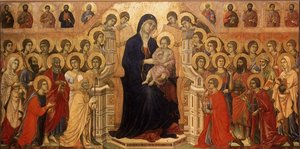
Maestà (Madonna with Angels and Saints) - Duccio di Buoninsegna
In the Maestà (Madonna with Angels and Saints) by Duccio di Buoninsegna, one is immediately met with a gaze of profound, maternal tenderness that transcends the gilded boundaries of the 14th century. As a cornerstone of the top 25 artworks of Duccio di Buoninsegna, this monumental altarpiece functions as more than a religious icon; it is a psychological window into the transition from Byzantine rigidity to human emotion. The composition breathes through a symphony of deep blues, rich reds, and an expansive, luminous gold leaf that seems to radiate its own celestial light.
The layered arrangement of saints and angels creates a sense of divine hierarchy, yet Duccio’s mastery lies in the subtle modeling of drapery and the soft, humanized expressions that invite personal connection. For collectors and decorators, integrating a high-quality reproduction of this masterpiece into a private sanctuary or corporate lounge can transform a space into an area of profound reflection and calm. The Maestà offers a timeless aesthetic of opulence and serenity, making it an essential selection for those seeking to anchor their interiors with historical depth and spiritual grace.
MaestÓ (front, central panel) - Duccio di Buoninsegna
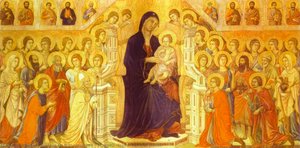 MaestÓ (front, central panel) - Duccio di Buoninsegna
While many view the Maestà as a static religious icon, its creation was actually a monumental civic undertaking that transformed Siena into an artistic epicenter. The central panel of this 1311 masterpiece serves as the definitive bridge between rigid Byzantine formality and the burgeoning humanism of the Italian Gothic style. Duccio di Buoninsegna utilized tempera on panel to achieve a luminous, ethereal glow, where rich golds and warm ochres interact with fluid, organic lines to breathe life into the Virgin and Child.
The technical genius lies in his ability to layer symbolic depth—such as the radiant halos and celestial assembly of saints—with an emerging sense of spatial intimacy. This profound balance of grandeur and grace makes it one of the top 25 artworks of Duccio di Buoninsegna . For the modern professional, the structured yet luminous composition of this piece offers more than historical value; its sense of divine order and focused majesty provides an ideal inspiration for a sophisticated, productive atmosphere in a high-end home office or executive study.
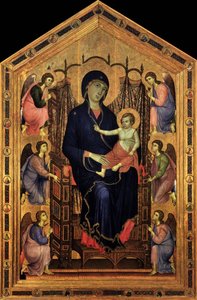
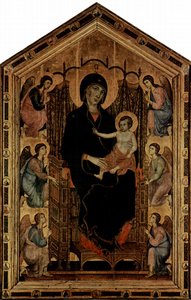
Rucellai Madonna - Duccio di Buoninsegna
To stand before the Rucellai Madonna by Duccio di Buoninsegna is to witness the precise moment when the rigid formality of the Byzantine tradition began to breathe with human warmth. Created around 1285, this monumental altarpiece serves as a cornerstone in our collection of the top 25 artworks of Duccio di Buoninsegna, marking his ascent as the master of the Sienese School. The painting radiates a celestial glow, achieved through meticulous tempera layers on wood that catch the light like a shimmering prayer. As your eyes move across the vast composition, you encounter a symphony of gold leaf and deep azure, where the Virgin Mary cradles the Christ child amidst a sacred assembly of saints and angels.
Duccio’s brilliance lies in his ability to blend divine majesty with an emerging naturalism; notice the subtle, tender gazes that break through the iconographic stillness. The rich textures of the ornate throne and the flowing drapery create a tactile sense of devotion. This masterpiece does more than record history; it continues to transform any space it inhabits, offering a timeless window into the profound emotional depth of the Italian Gothic era.
Annunciation - Duccio di Buoninsegna
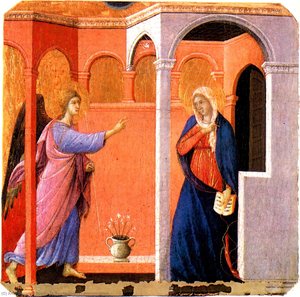 Annunciation - Duccio di Buoninsegna
To stand before the Annunciation by Duccio di Buoninsegna is to witness the precise moment where the rigid formality of the Byzantine era began to breathe with human warmth. Created in 1308 as part of the monumental Maestà predella, this intimate panel captures a sacred intersection of the divine and the earthly. The scene unfolds with a quiet, rhythmic grace: the Archangel Gabriel descends with outstretched wings, his movement met by the serene, poised figure of Mary, who holds her scripture with delicate reverence.
Duccio’s mastery lies in his ability to weave symbolic depth into a lyrical palette. The rich, crimson backdrop serves as a profound symbol of future sacrifice, while the ethereal gold leaf evokes a celestial light that transcends the physical plane. Through subtle gestures and a burgeoning sense of spatial depth, Duccio moves beyond mere iconography toward emotional storytelling. This work remains a cornerstone of the top 25 artworks of Duccio di Buoninsegna because it embodies the dawn of Italian Gothic naturalism, offering a timeless sense of peace that continues to transform any space with its profound, quiet dignity.
The Virgin and Child with Saints Dominic and Aurea - Duccio di Buoninsegna
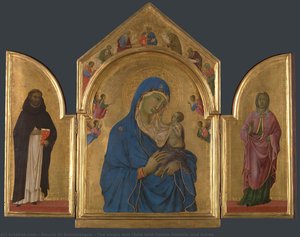 The Virgin and Child with Saints Dominic and Aurea - Duccio di Buoninsegna
In The Virgin and Child with Saints Dominic and Aurea , Duccio di Buoninsegna captures a moment of profound, quiet intimacy that transcends the centuries. There is a gaze in this masterpiece that follows you—not with judgment, but with understanding . As you stand before this 1312 treasure, it feels less like a mere portrait and more like a mirror , reflecting the eternal connection between the divine and the human spirit.
The composition is a masterclass in Gothic elegance, where the luminous gold leaf creates a celestial atmosphere, enveloping Mary, Christ, and the flanking saints in a soft, sacred light. Duccio weaves a complex tapestry of symbolism, from the presence of Saint Dominic to the prophetic figures ascending above, all rendered with a delicate, rhythmic grace. The painting’s scale is intimate, designed for private devotion, yet its emotional depth is monumental. To possess a reproduction of this work is to invite that same sense of serene contemplation into your space, reminding you that even in the stillness, you are part of a much larger, beautiful story.
Nativity - Duccio di Buoninsegna
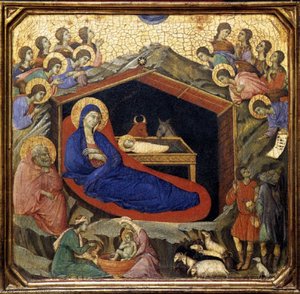 Nativity - Duccio di Buoninsegna
In Duccio di Buoninsegna's Nativity , one is immediately struck by the profound sense of quietude and maternal tenderness radiating from the central figures. The gaze shared between the weary Mary and the newborn Christ captures a universal moment of vulnerability and divine grace, making this piece a cornerstone among the top 25 artworks of Duccio di Buoninsegna . As you observe the rich, deep blues of the drapery contrasted against the warm, earthy tones of the rustic cave, the painting transcends its 1308 origins to become a mirror of human emotion.
The composition, bustling yet solemn, utilizes a nascent sense of perspective and dramatic lighting to guide the viewer through a landscape of sacred symbols—from the watchful ox and donkey to the guiding star above. Integrating such a masterpiece into your collection can transform a private study or a quiet corner of a home into a sanctuary for profound reflection. The emotional resonance of this Sienese Gothic jewel offers a timeless calm, inviting anyone who views it to pause and contemplate the intersection of the earthly and the divine.
Triptych - Duccio di Buoninsegna
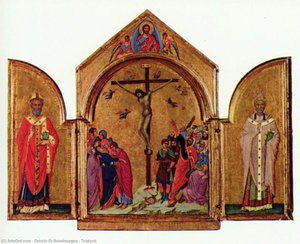 Triptych - Duccio di Buoninsegna
To stand before the Triptych by Duccio di Buoninsegna is to witness the precise moment where the rigid formality of the Byzantine era began to soften into the human emotion of the Sienese Gothic. Completed around 1300, this masterpiece serves as a profound window into medieval devotion, capturing a period of intense spiritual transition in Italy.
The work is a sensory triumph; Duccio utilizes luminous gold leaf and meticulous tempera glazes to create an ethereal glow that seems to radiate from within the wood panels. As your eyes move across the narrative, you encounter the tender intimacy of the Virgin nursing Jesus and the humble presentation of the Christ child to the shepherds. The palette, rich with divine light and deep pigments, guides the viewer through a sacred pilgrimage of faith. This piece is essential to our collection of the top 25 artworks of Duccio di Buoninsegna because it demonstrates his unique ability to blend celestial majesty with palpable human compassion. Even today, the Triptych’s ability to evoke awe and quiet reflection continues to transform any space it inhabits.
Calling of Peter and Andrew - Duccio di Buoninsegna
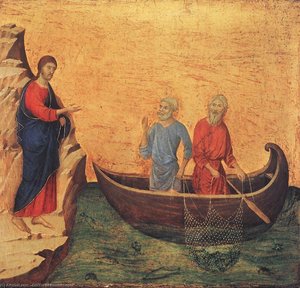 Calling of Peter and Andrew - Duccio di Buoninsegna
In the Calling of Peter and Andrew , Duccio di Buoninsegna achieves a profound structural harmony that remains a cornerstone of his legacy within the top 25 artworks of Duccio di Buoninsegna. The composition is anchored by a masterful use of geometric stability; the figures in the boat form a steady triangular arrangement that directs the viewer's gaze toward Christ’s transformative gesture on the shore. This careful balance of linear forms and geometric shapes—from the rectangular hull of the vessel to the rugged, angular rocks—creates a sense of timeless perfection and spiritual stillness.
There is an enduring, quiet strength in this arrangement that resonates with the principles of modern minimalist design. Much like contemporary aesthetics that rely on clean lines and uncluttered space to ground a room, Duccio’s use of simplified forms and a focused, symbolic landscape provides a sense of calm and order. This ability to convey deep narrative weight through balanced, essential shapes is exactly why this piece continues to captivate collectors and decorators seeking art with both historical depth and a sophisticated, contemporary soul.
Ezekiel - Duccio di Buoninsegna
 Ezekiel - Duccio di Buoninsegna
In the intimate 1308 panel Ezekiel by Duccio di Buoninsegna, the eye is immediately drawn to the luminous interplay between the delicate tempera glazes and the heavy, radiant gold leaf. One can almost sense the meticulous layering of pigment that defines this Sienese masterpiece; the artist uses subtle light and shadow to model the drapery, transforming a flat surface into a vessel for divine presence. The texture of the scroll, held with prophetic authority, serves as a tactile reminder of the transition from rigid Byzantine icons to a more human, emotive Renaissance style.
This profound sense of materiality—the way the light catches the gilded background and the soft contours of the figure—is exactly what we strive to capture. At ArtsDot.com, our hand-painted oil reproductions are engineered to preserve this tactile, three-dimensional quality . By utilizing authentic brushstrokes and heavy impasto techniques on 100% cotton canvas, we ensure that the spiritual weight and historical depth of Duccio’s top works are brought into a modern collection with uncompromising fidelity.
Crucifixión con San Nicolás y San Gregorio. San Nicolás de Mira - Duccio di Buoninsegna
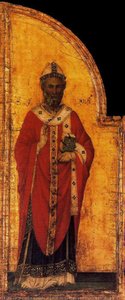 Crucifixión con San Nicolás y San Gregorio. San Nicolás de Mira - Duccio di Buoninsegna
In the Crucifixión con San Nicolás y San Gregorio. San Nicolás de Mira , Duccio di Buoninsegna achieves a profound structural harmony that anchors this work within the top 25 artworks of Duccio di Buoninsegna. The composition is governed by a deliberate verticality, where the central figure of the Crucifixion acts as a spiritual axis, balancing the flanking presence of Saint Nicholas and Saint Gregory. This geometric precision creates a sense of timeless perfection, guiding the viewer's eye through a rhythmic arrangement of draped robes and gilded halos.
The painting’s internal balance offers a striking parallel to the principles of modern minimalist design; much like contemporary aesthetics, Duccio utilizes a focused palette and clear, decisive lines to eliminate visual clutter, allowing the emotional weight of the scene to resonate. The interplay of rich crimson tones against the luminous gold background provides a sophisticated contrast that grounds even the most modern, clean architectural spaces. It is this seamless blend of sacred geometry and emotive depth that ensures its enduring appeal in any curated collection.
Crucifixion - Duccio di Buoninsegna
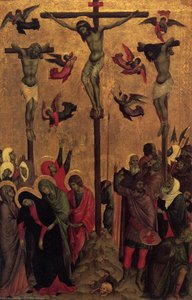 Crucifixion - Duccio di Buoninsegna
In the Crucifixion (circa 1310), Duccio di Buoninsegna does not merely depict a historical event; he composes a profound visual sonata of grief and divinity. As you stand before this masterpiece, the light does not simply hit the surface—it seems to emanate from within the gold leaf background, a celestial glow that transforms the panel into a portal of spiritual transcendence. This work is a cornerstone of the Sienese School, representing a pivotal moment where the rigid, formal elegance of Byzantine tradition begins to breathe with the warmth of Italian naturalism.
The composition is a masterful study in emotional depth. While the monumental drapery and gilded atmosphere recall the splendor of Constantinople, Duccio introduces a palpable sense of human pathos through the expressive, sorrowful faces surrounding the central cross. The presence of angels, caught in gestures of compassion and benediction, creates a dialogue between the earthly suffering of the figures and the eternal grace of the divine. It is this delicate balance of light, color, and emerging humanism that secures its place among the top 25 artworks of Duccio di Buoninsegna.
Agony in the Garden (detail) - Duccio di Buoninsegna
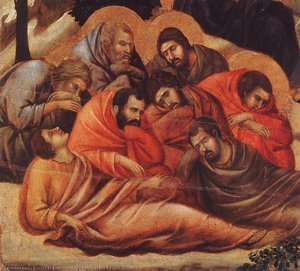 Agony in the Garden (detail) - Duccio di Buoninsegna
In the Agony in the Garden (detail) by Duccio di Buoninsegna, one is immediately drawn to the profound weight of spiritual exhaustion and the quiet intensity of Christ’s gaze. As a pivotal piece within the top 25 artworks of Duccio di Buoninsegna, this detail captures a moment where divine destiny meets human vulnerability. The rich, symbolic red robes of the figures glow with a soft, tempera-driven luminosity, while the surrounding disciples are rendered with an emerging naturalism that breathes life into the rigid Byzantine traditions of the era.
The painting transcends its biblical narrative to become a universal mirror of human struggle and contemplative solitude. The way Duccio utilizes subtle musculature and delicate facial expressions creates a palpable psychological depth that is rare for the 1308 period. For collectors and decorators, integrating such a powerful emotional resonance into a home or corporate space can transform a room into a sanctuary for profound reflection. It serves as a masterclass in Sienese storytelling, offering a serene yet heavy atmosphere that invites the viewer into a state of quiet, soulful calm.
Last Supper - Duccio di Buoninsegna
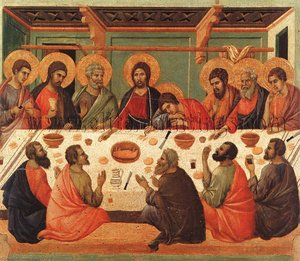 Last Supper - Duccio di Buoninsegna
In the Last Supper by Duccio di Buoninsegna, the composition achieves a profound structural harmony that anchors its place among the top 25 artworks of this Sienese master. The geometry of the scene is anchored by the central placement of Christ, creating a stable, pyramidal focal point that directs the eye through a rhythmic arrangement of the twelve apostles. This deliberate balance of figures around the table creates a sense of timeless perfection, where the tension of the narrative is held in check by a rigorous, almost architectural, spatial order.
The painting’s internal equilibrium offers a striking parallel to the principles of modern minimalist design; much like contemporary aesthetics that rely on clean lines and purposeful negative space, Duccio uses the weight of deep reds and celestial blues to ground the viewer. The interplay of light and shadow—the early use of modeling—sculpts the figures with a volume that feels both sacred and human. For the discerning collector, this work represents a foundational moment where mathematical precision meets emotional depth, making it an enduring icon of the Trecento period.
Washing of the Feet - Duccio di Buoninsegna
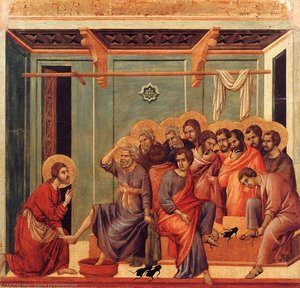 Washing of the Feet - Duccio di Buoninsegna
A profound sense of humility and quiet devotion radiates from Washing of the Feet by Duccio di Buoninsegna, a work that captures a sacred moment of service with unparalleled tenderness. As part of our mission to democratize beauty, we recognize this piece as an essential entry in the top 25 artworks of Duccio di Buoninsegna due to its revolutionary role in transitioning from rigid Byzantine icons to the emotional naturalism of the early Renaissance.
Created in 1308 for the monumental Maestà altarpiece, this painting utilizes delicate tempera on wood to depict Christ washing the feet of his apostles. Duccio’s mastery is evident in the subtle interplay of light and shadow, the varied expressions of reverence among the disciples, and the tranquil presence of birds that add a layer of divine peace. The composition moves beyond mere religious instruction, offering a humanized narrative of leadership through love. Today, the timeless grace of this Sienese masterpiece continues to inspire, allowing collectors to bring its transformative, contemplative presence into any home, office, or personal gallery through our high-fidelity hand-painted reproductions.
Conjectural reconstruction of the Maestà (front) - Duccio di Buoninsegna
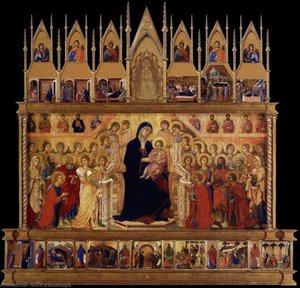 Conjectural reconstruction of the Maestà (front) - Duccio di Buoninsegna
To encounter the Conjectural Reconstruction of the Maestà (front) by Duccio di Buoninsegna is to witness the precise moment where the rigid formality of Byzantine tradition began to breathe with human emotion. As one of the most significant entries in our collection of the top 25 artworks of Duccio di Buoninsegna , this reconstruction captures the monumental scale and spiritual gravity of the Sienese master’s vision. The scene is a breathtaking mosaic of devotion: the Virgin Mary, enthroned as Queen of Heaven, cradles the Christ Child amidst a celestial assembly of saints and angels.
Duccio’s mastery lies in his ability to balance shimmering gold leaf with a nascent naturalism—the subtle drape of fabric and the tender, individualized expressions that foreshadow the Renaissance. This work serves as a profound meditation on the intersection of the divine and the earthly. For the modern collector or professional decorator, integrating such a masterpiece into a curated space offers more than mere decoration; it introduces a timeless dialogue of grace, architectural grandeur, and historical depth that elevates any sophisticated interior.
Christ Mocked (detail) - Duccio di Buoninsegna
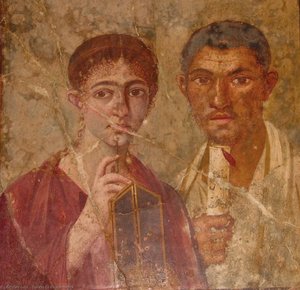 Christ Mocked (detail) - Duccio di Buoninsegna
Within the vast, narrative expanse of the Maestà , this detail of Christ Mocked serves as a profound emotional anchor. Duccio di Buoninsegna does not merely depict a scene of cruelty; he composes a language of light and shadow to articulate divine humility. The illumination here is not just a reflection on gold leaf, but a deliberate tool used to highlight the sharp, accusatory gesture of the elder figure against the quiet, veiled sorrow of those surrounding Christ. This interplay of light creates a palpable tension, turning a fragment of history into a living, breathing moment of human tragedy.
As you observe the subtle modeling of the faces and the heavy, textured drapery, you witness the bridge between Byzantine formality and the emerging Gothic naturalism. The way the light catches the furrowed brow of the accuser and the resigned stillness of the holy figures invites a deep, sensory connection. This piece is essential to the top 25 artworks of Duccio di Buoninsegna because it captures the very moment where sacred iconography meets raw, human emotion, offering a window into the soul of the Sienese School.
Arrest of Christ (Fragment) - Duccio di Buoninsegna
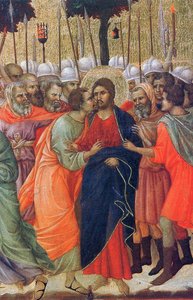 Arrest of Christ (Fragment) - Duccio di Buoninsegna
While many view the Arrest of Christ (Fragment) as a mere remnant of a larger altarpiece, it actually captures the precise moment Duccio di Buoninsegna broke away from static Byzantine icons to introduce human drama into Sienese art. In this 1311 masterpiece, the tension is visceral; you can almost feel the chaotic energy of the Roman soldiers and the weight of the unfolding tragedy through the swirling composition of figures.
Duccio’s technical genius lies in his use of tempera on wood, which allows for a luminous depth of color and fine detail. He masterfully balances rhythmic, formal drapery with an unprecedented emotional vulnerability in the faces of the onlookers. Notice how symbolic elements, like the cup near Christ, connect this moment of betrayal to the sacred Eucharist. This profound layering of history and theology makes it one of the most significant works among the top 25 artworks of Duccio di Buoninsegna. Integrating such a powerful narrative into a modern study or executive office provides an atmosphere of intellectual depth and focused, historical gravity.
Flight into Egypt - Duccio di Buoninsegna
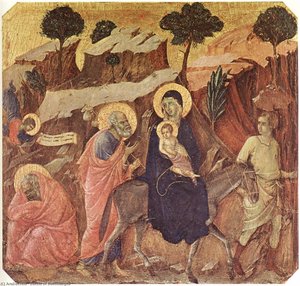 Flight into Egypt - Duccio di Buoninsegna
Imagine a world hushed by the weight of a desperate journey, where the only sound is the rhythmic tread of an ass against rocky terrain and the quiet breath of a family in hiding. In Flight into Egypt , Duccio di Buoninsegna captures this profound moment of sanctuary and survival. This 1308 masterpiece serves as a pivotal entry in our collection of the top 25 artworks of Duccio di Buoninsegna because it perfectly embodies the transition from Byzantine rigidity to Renaissance humanism.
The painting breathes with a solemn, spiritual gravity; the luminous gold background evokes divine protection, while the earthy ochres and muted reds ground the Holy Family in their earthly struggle. As you observe the delicate craquelure on the tempera panel, you feel the pulse of history. This work transcends its era, offering a timeless meditation on resilience and faith. Integrating such a profound narrative into a modern space provides more than mere decoration; it introduces a sense of historical depth and serene contemplation, inviting a moment of stillness amidst the chaos of contemporary life.
Descent to Hell - Duccio di Buoninsegna
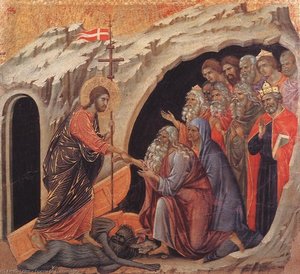 Descent to Hell - Duccio di Buoninsegna
To gaze upon Duccio di Buoninsegna’s Descent to Hell is to witness a profound moment of spiritual tension, where the weight of human mortality meets the promise of divine redemption. The scene pulls the viewer into a somber, subterranean realm, capturing the heavy atmosphere of Hades through a masterful use of tempera on wood. As Christ kneels beside Adam within the shadows of a cave, the painting transcends its small scale to evoke a monumental sense of empathy and cosmic struggle.
This work earns its place among the top 25 artworks of Duccio di Buoninsegna because it marks a pivotal transition in art history; Duccio moves away from rigid Byzantine flatness toward a more human, emotive narrative. The luminous skin tones and intricate drapery reflect a technical brilliance that breathes life into sacred figures. In a modern setting, such a piece serves as a powerful anchor for reflection, bringing a sense of historical depth and quiet, contemplative strength to any professional or private space.
The Maestà Altarpiece, detail from the predella featu - Duccio di Buoninsegna
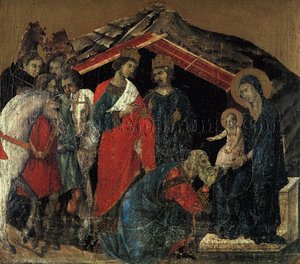 The Maestà Altarpiece, detail from the predella featu - Duccio di Buoninsegna
The Maestà Altarpiece, detail from the predella by Duccio di Buoninsegna serves as a profound window into the intimate narratives of the Sienese School. While the larger altarpiece commanded the grandeur of Siena Cathedral, these smaller predella panels offer a more human, tactile connection to the divine. In this specific scene, the vibrant reds of the figures' garments draw the eye toward the tender central focus: the Nativity. The delicate interplay of light on the figures and the presence of horses and birds create a sense of lived reality that was revolutionary for its time.
As one of the top 25 artworks of Duccio di Buoninsegna, this detail showcases his mastery of tempera on wood, utilizing translucent glazes to achieve an ethereal luminosity. In contemporary interior curation, such works are highly valued for their ability to introduce historical depth and a sense of quiet contemplation into modern spaces. The transition from rigid Byzantine iconography to a more emotive, naturalistic language makes this piece a timeless masterpiece of the Trecento period.
Madonna and Child on a throne - Duccio di Buoninsegna
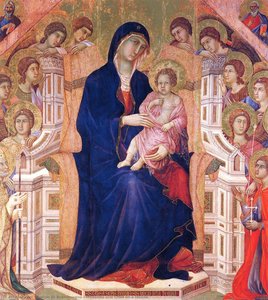 Madonna and Child on a throne - Duccio di Buoninsegna
To encounter the Madonna and Child on a Throne by Duccio di Buoninsegna is to witness the precise moment where the rigid formality of the Byzantine era dissolved into the tender humanity of the Italian Renaissance. As one of the most significant entries in our collection of the top 25 artworks of Duccio di Buoninsegna, this 1311 masterpiece serves as a bridge between two worlds, replacing static icons with a profound, breathing emotional intelligence.
Duccio masterfully utilizes tempera and luminous gold leaf to create a celestial atmosphere that feels both regal and intimate. The throne, draped in intricate textures, anchors a composition populated by reverent angels and figures, all bathed in a light that suggests divine grace. For the discerning collector or designer, this work offers more than historical value; its harmonious palette of deep golds and soft pigments provides a timeless aesthetic anchor for refined, luxury interiors. It is a profound study in balance, where the weight of religious tradition meets the delicate beauty of emerging naturalism, making it an eternal symbol of sophisticated taste.
Pilate washes his hands - Duccio di Buoninsegna
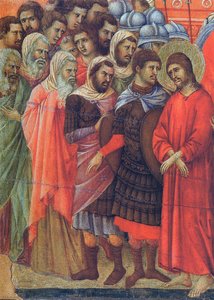 Pilate washes his hands - Duccio di Buoninsegna
In the heavy, silent tension of a courtroom where destiny is decided, we encounter Pilate Washes His Hands by Duccio di Buoninsegna . As a vital component of the monumental Maestà altarpiece, this work stands as a pinnacle in the top 25 artworks of Duccio di Buoninsegna due to its profound psychological gravity. The scene captures the precise moment of moral evasion, where the luminous gold leaf of the Byzantine tradition begins to yield to a more human, emotive naturalism.
Duccio utilizes tempera on panel to create a palette that feels both ethereal and grounded. The viewer is drawn into the crowded, somber space, noticing the sharp metallic glint of swords and the symbolic weight of the shield, all contributing to an atmosphere of impending judgment. Through subtle gradations of tone and emerging perspective, Duccio imbue the figures with a palpable sense of doubt and duty. This masterpiece does more than illustrate scripture; it brings a timeless, contemplative energy to any space, reminding us of the eternal human struggle between conscience and authority.
Deposition - Duccio di Buoninsegna
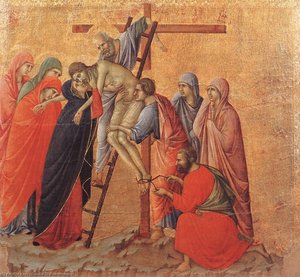 Deposition - Duccio di Buoninsegna
In the Deposition by Duccio di Buoninsegna, one is immediately struck by the heavy, palpable weight of grief that anchors the composition. As Christ’s body is lowered from the cross, the viewer is not merely a witness to a biblical event, but an intimate participant in a profound moment of human loss. The painting captures a spectrum of sorrow, from the etched anguish on the Virgin Mary’s face to the rhythmic, flowing drapery that seems to pulse with the collective lamentation of the surrounding figures.
As one of the most significant pieces among the top 25 artworks of Duccio di Buoninsegna , this work serves as a universal mirror for the human experience of mourning and resilience. The rich interplay of warm golds, deep reds, and somber shadows creates an atmosphere of sacred intimacy. Integrating such a powerful emotional resonance into a home or professional space can transform a room into a sanctuary for profound reflection, offering a quiet, contemplative strength that transcends time.
The Nativity between Prophets Isaiah and Ezekiel - Duccio di Buoninsegna
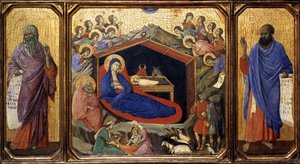 The Nativity between Prophets Isaiah and Ezekiel - Duccio di Buoninsegna
While the history of The Nativity between Prophets Isaiah and Ezekiel is shrouded in the quiet mysteries of the Trecento, its visual impact remains a profound revelation of Sienese mastery. In this 1308 panel, Duccio di Buoninsegna achieved a breathtaking technical leap, moving beyond the rigid, flattened icons of the Byzantine tradition to embrace a tender, breathing naturalism. Through the meticulous application of tempera glazes, he creates a luminous atmosphere where the soft contours of the Virgin Mary meet the weight of prophetic history.
The composition is a rich tapestry of sacred symbolism; the presence of Isaiah and Ezekiel anchors the divine event within a lineage of ancient vision, while the subtle inclusion of earthly details—a watchful dog, a simple bowl, and the delicate textures of fabric—brings the celestial into the human realm. The interplay of gold leaf and deep, emotive tones offers a sense of quiet prestige and spiritual depth. Much like this masterpiece, integrating such profound historical gravity into a modern study or executive office can foster an environment of focused ambition and sophisticated contemplation, turning a workspace into a sanctuary of intellectual inspiration.
Coronation of the Virgin, Szépmüveszéti Muzeum, Budap - Duccio di Buoninsegna
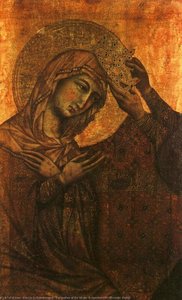 Coronation of the Virgin, Szépmüveszéti Muzeum, Budap - Duccio di Buoninsegna
In the Coronation of the Virgin by Duccio di Buoninsegna, the interplay of light serves as the primary architect of divinity. The work is defined by a radiant, celestial glow that emanates from the shimmering gold leaf, creating a luminous backdrop that seems to pulse with eternal life. This masterful command of illumination does more than decorate; it dissolves the boundaries between the earthly and the divine, casting a soft, ethereal light upon Mary’s serene features. The way the light catches the intricate gold accents and rich pigments is precisely what secured this piece's place among the top 25 artworks of Duccio di Buoninsegna.
For the discerning decorator or collector, a faithful reproduction of this luminous technique offers unparalleled depth to a contemporary interior. When placed on a wall, the sophisticated play of light and shadow creates a sense of profound luxury and spiritual stillness. The vibrant blues and radiant golds act as a focal point, bringing a layered, multidimensional texture to any professional space or private gallery, transforming a simple room into a sanctuary of historical elegance.
Conclusion
To wander through the works of Duccio di Buoninsegna is to witness the very moment light began to find its way into the human heart. His canvases do not merely exist as relics of a distant Sienese past; they act as windows, inviting us to look beyond the rigid boundaries of tradition and into a world where divinity meets the soft, breathing reality of our own existence. Each stroke of gold leaf and each subtle shift in color serves as a quiet testament to the enduring power of grace, reminding us that even in the most sacred of narratives, there is room for tenderness, depth, and profound human connection.
As we close this visual journey, let us remember that these masterpieces were never meant to be confined solely to the hushed corridors of museums. They possess a vitality that thrives when they are brought into our daily lives—into the quiet corners of our homes, the grand halls of our workspaces, and the intimate spaces where we seek inspiration. By surrounding ourselves with the textures of his devotion and the luminous warmth of his vision, we allow these historical treasures to become living presences, shaping our environments with a sense of timelessness and peace. We invite you to explore the full collection and find a piece of this eternal light to call your own, turning your personal space into a sanctuary of enduring beauty and creative wonder.