![Scrovegni - [04] - Joachim's Sacrificial Offering — Giotto Di Bondone](/media/artworks/images-thumb/85/cb/85cba77879acc746c1bc3d282e1153fe.jpg)

Introduction
Imagine standing in a quiet, sun-drenched chapel in Padua, where the walls don't just hold paint, but breathe with human emotion. Before the era of hyper-realistic digital renders or cinematic depth, there was Giotto di Bondone —the visionary who broke the flat, gilded silence of the Middle Ages to introduce the raw, heavy, and beautiful reality of the human experience. Legend says he began as a shepherd boy sketching lifelike sheep on stones, but his true legacy was sketching the very soul of humanity onto the walls of history.
In an era dominated by the rigid, ethereal icons of the Byzantine style, Giotto staged a quiet revolution. He traded gold-leafed abstraction for weight, volume, and shadow. He gave his figures anatomy, gravity, and—most importantly—the ability to weep, to grieve, and to love. Through his brush, the divine became tangible; the sacred stories of the Bible were no longer distant symbols but lived dramas unfolding in a space we could almost touch.
Today, these works remain profoundly impactful because they represent the first heartbeat of the Renaissance. Giotto’s mastery of narrative and his ability to use light to sculpt form laid the groundwork for every master who followed, from Masaccio to Michelangelo. His art is not merely a relic of 14th-century Italy; it is a testament to the moment art learned to look human.
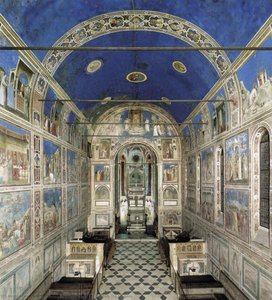
As we journey through this curated selection of his top 25 artworks , prepare to witness the evolution of storytelling itself. From the breathtaking fresco cycles of the Scrovegni Chapel to his transformative early works, each piece serves as a window into a world where paint first learned to capture the weight of a tear and the strength of a human gaze.
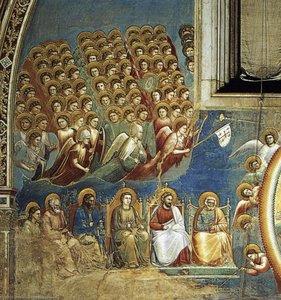
Last Judgment (detail 3) (Cappella Scrovegni (Arena Chapel), Padua) - Giotto di Bondone
Step into the cosmic drama of Giotto di Bondone's Last Judgment , a fragment of pure celestial energy pulled from the legendary Scrovegni Chapel. This isn't just a fresco; it is a high-impact visual manifesto that shattered the flat, static traditions of the Byzantine era to introduce something much more visceral: human emotion and physical weight .
In this breathtaking detail, Giotto orchestrates a divine hierarchy using a palette of deep, soulful blues and luminous golds that command the eye. You can almost feel the movement in the flowing drapery and the tension in the angelic messengers as they herald the final reckoning. By utilizing light and shadow to sculpt three-dimensional forms, Giotto breathes life into the divine, transforming a religious narrative into a tangible, cinematic experience. To own a piece of this legacy is to invite a profound sense of gravity and spiritual grandeur into your space. It is more than an artwork; it is a window into the moment history shifted from the symbolic to the real.
Stigmatization of St Francis - Giotto di Bondone
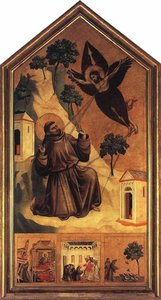 Stigmatization of St Francis - Giotto di Bondone
A divine rupture of light and spirit, Stigmatization of St Francis by Giotto di Bondone captures the exact moment where the earthly meets the eternal. This masterpiece earns its place in our Top 25 because it represents a seismic shift in visual storytelling; Giotto moves beyond the flat, golden icons of the Byzantine era to introduce a raw, human weight that feels startlingly modern. Through the delicate use of light and shadow, he sculpts the figure of St. Francis, imbuing the saint with a tangible, physical presence and an emotional vulnerability that resonates across centuries.
The painting’s profound symbolism—the miraculous wounds and the surrounding celestial messengers—creates a dramatic tension that continues to captivate the contemporary eye. It is this very ability to command a room with spiritual gravity and sculptural depth that makes it a timeless choice for collectors. At ArtsDot.com, we believe in democratizing this level of profound beauty. By bringing a high-fidelity, hand-painted reproduction of this Giotto treasure into your home or office, you invite a transformative, soulful energy into your personal gallery, turning any modern space into a sanctuary of historical depth.
No. 19 Scenes from the Life of Christ: 3. Presentation of Christ at the Temple - Giotto di Bondone
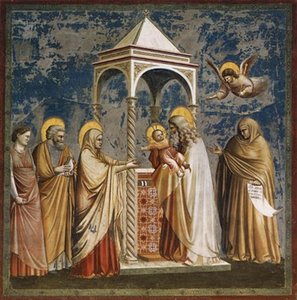 No. 19 Scenes from the Life of Christ: 3. Presentation of Christ at the Temple - Giotto di Bondone
In Presentation of Christ at the Temple , Giotto di Bondone executes a masterclass in early chiaroscuro , using light not just to illuminate, but to sculpt. The way light catches the heavy, sculptural folds of the figures' garments creates a profound sense of weight and physical presence that was revolutionary for 1304. This interplay of shadow and soft, diffused radiance breathes life into the characters, transforming a flat Byzantine tradition into a three-dimensional drama of human emotion. As you trace the light falling upon the infant Christ and the reverent faces of Simeon and Anna, you witness the very moment art moved toward realism.
This sophisticated command of illumination is why this piece remains a cornerstone in any collection of the top 25 artworks of Giotto di Bondone . When captured in a high-quality oil reproduction, the depth of these shadows and the warmth of the earthy ochres provide an incredible architectural impact. Bringing this level of tonal complexity into a modern space adds a layer of soulful luxury and historical gravity, making it a centerpiece that commands attention through pure visual weight.
The Stefaneschi Triptych (recto) - Giotto di Bondone
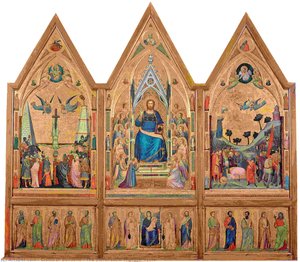 The Stefaneschi Triptych (recto) - Giotto di Bondone
Step into the hallowed atmosphere of the Pinacoteca Vaticana, where The Stefaneschi Triptych (recto) by Giotto di Bondone breathes life into the divine. This masterpiece marks a seismic shift in visual history, moving away from flat, golden abstractions toward a world that feels tangible and heavy with human emotion. It earns its place in our top 25 because it is the moment art began to truly inhabit three-dimensional space, using light and shadow to sculpt figures out of the ether.
Giotto’s use of gold leaf creates an eternal, shimmering backdrop that contrasts sharply with the realistic weight of the drapery and the profound, soulful expressions of the saints. The composition guides your eye through a sacred hierarchy, blending celestial majesty with earthly presence. At ArtsDot.com, we believe such transformative beauty should not be confined to Vatican halls. Through our high-fidelity, hand-painted oil reproductions, you can capture this revolutionary spirit and bring Giotto’s monumental, light-drenched narrative into your own modern home or curated gallery space.
Ognissanti Madonna (detail) - Giotto di Bondone
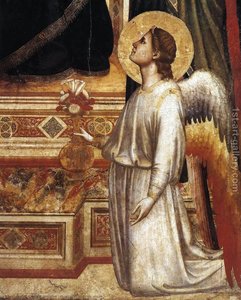 Ognissanti Madonna (detail) - Giotto di Bondone
Imagine standing before a vibrant, crimson void that suddenly breathes with life. There is a profound weight to the air when you encounter the Ognissanti Madonna (detail) ; it is the feeling of witnessing the exact moment history shifted from the flat, golden icons of the Middle Ages into the breathing, three-dimensional reality of the Renaissance. Giotto di Bondone breaks the silence of the Byzantine era by imbuing the Virgin Mary with tangible mass and human tenderness.
This piece earns its place among the top 25 artworks of Giotto di Bondone because it captures a revolution in texture and emotion. Through masterful tempera techniques, Giotto uses light and shadow to sculpt drapery and flesh, making the divine feel accessible and earthly. The striking red background doesn't just frame the scene; it pulses with a modern, high-impact energy. Bringing such a masterpiece into a contemporary space does more than decorate a wall—it introduces a sense of grounded permanence and soulful depth, reminding us that even in our fast-paced digital age, there is immense power in the heavy, beautiful reality of the human form.
Descent into Limbo - Giotto di Bondone
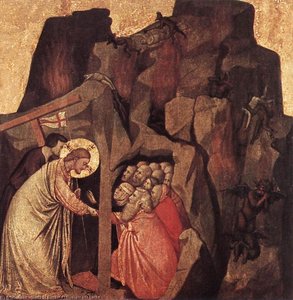 Descent into Limbo - Giotto di Bondone
Before the world went flat and stylized, Giotto di Bondone brought the weight of humanity back to the canvas. In Descent into Limbo , we aren't just looking at a religious icon; we are witnessing a cinematic moment of divine intervention. Created around 1320, this masterpiece captures the heavy, solemn atmosphere of Christ descending to liberate righteous souls from the shadows of Limbo.
Giotto breaks away from the rigid Byzantine tradition, using light and shadow to sculpt figures that possess real, palpable volume. You can almost feel the tension in the air as angels lower the cross, surrounded by witnesses whose faces ripple with raw, human emotion. The composition is punctuated by ethereal details—a soaring bird and a silent watcher perched on stone—that bridge the gap between the earthly and the divine. This isn't mere decoration; it is a profound exploration of transition and redemption. To own a piece of this legacy is to invite a sense of monumental history and spiritual depth into your personal sanctuary.
St. Paul - Giotto di Bondone
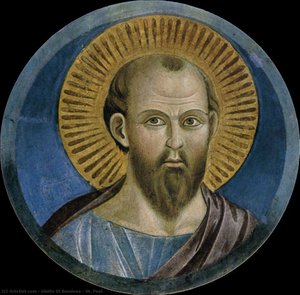 St. Paul - Giotto di Bondone
Step into the presence of St. Paul , a work where Giotto di Bondone stops time itself. In this masterpiece from circa 1300, light isn't just an effect; it is a language . Giotto doesn't merely depict a saint; he composes illumination to sculpt a soul. As you gaze upon the apostle, notice how the subtle shading around his eyes and the weight of his features break away from the flat, golden rigidity of the Byzantine era. He isn't an ethereal icon trapped in a gilded void—he is a man with a pulse, standing before you with a startling, direct gaze that demands a connection.
The deep blue backdrop and strategic gold accents act like a visual sonata, pulling your eyes toward the divine authority radiating from his face. This fragment from the Basilica of Saint Francis captures the very moment naturalism was born. It is this raw, emotional depth—the ability to make the celestial feel palpably human—that secures its place among the top 25 artworks of Giotto di Bondone . To bring this piece into your space is to invite a portal of profound, historical inspiration into your home.
Navicella (mosaic fragment) - Giotto di Bondone
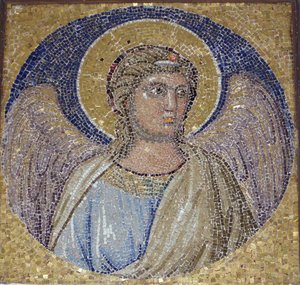 Navicella (mosaic fragment) - Giotto di Bondone
A fragment of divinity captured in stone and light, the Navicella (mosaic fragment) by Giotto di Bondone serves as a breathtaking portal into the dawn of human emotion in art. At ArtsDot.com, we believe that true masterpieces should not be confined to the Vatican Grotto; they belong in the spaces where we live, breathe, and create. This piece earns its place in our Top 25 for its sheer revolutionary impact, marking the precise moment when the flat, golden icons of the Byzantine era began to breathe with the weight and soul of the Renaissance.
The fragment reveals a striking figure—often identified as the Virgin Mary—adorned with ethereal wings, her gaze direct and commanding. The interplay of deep blues and shimmering golds, punctuated by the delicate presence of a small bird, creates a visual tension between the celestial and the earthly. It is this very ability to infuse sacred symbols with palpable, three-dimensional life that continues to inspire modern design. By bringing a high-fidelity reproduction of this Giotto masterpiece into your home or office, you invite a transformative, historical energy that anchors any contemporary interior with profound narrative depth.
Badia Polyptych - Giotto di Bondone
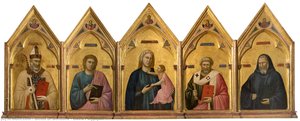 Badia Polyptych - Giotto di Bondone
When you lean into the Badia Polyptych by Giotto di Bondone, the first thing that hits you isn't just the gold—it’s the weight of the figures. You can almost feel the heavy, deliberate texture of the tempera on wood, where Giotto broke away from flat Byzantine icons to sculpt bodies with light and shadow. This isn't just a collection of saints; it is a masterclass in early naturalism. The way the drapery folds around Saint Peter and the serene, grounded presence of the Virgin Mary create a sense of three-dimensional reality that was unheard of in 1300.
This piece earns its spot in the top 25 artworks of Giotto di Bondone because it captures that precise, electric moment where art moved from the ethereal to the human. At ArtsDot.com, we are obsessed with preserving this exact tactile energy. Our hand-painted oil reproductions focus on capturing those revolutionary brushstrokes and the profound emotional depth of the original, bringing the soul of the Proto-Renaissance into a bold, contemporary space.
Saints John the Evangelist and Mary Magdalene - Giotto di Bondone
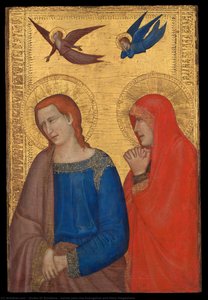 Saints John the Evangelist and Mary Magdalene - Giotto di Bondone
Step into the luminous glow of the Neapolitan Diptych, a piece that proves Giotto di Bondone wasn't just painting figures; he was composing raw, human emotion. In Saints John the Evangelist and Mary Magdalene , the light doesn't just hit the surface—it feels as though it emanates from within the gold leaf itself. This isn't the flat, distant divinity of the Byzantine era; this is a visceral, heavy reality. You can almost feel the weight of the saints' grief in their postures, a revolutionary shift toward psychological realism that paved the way for the Renaissance.
The visual impact is high-octane Gothic splendor: vibrant blues and deep reds are layered with meticulous glazes, while celestial angels—rendered as striking, colorful birds—hover above, mirroring the saints' attire. The intricate gold patterns create a shimmering, textured backdrop that transforms the panel into a portal of spiritual intensity. For any collector seeking a piece that balances opulent, high-impact design with profound narrative depth, this work stands as a masterclass in how light and color can invent a sense of sacred presence.
Daedalus - Giotto di Bondone
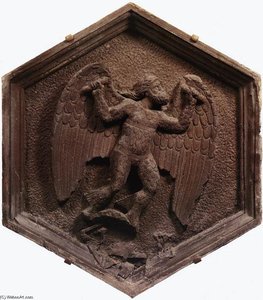 Daedalus - Giotto di Bondone
Before the era of digital hyper-realism, Giotto di Bondone was already mastering the art of the high-impact moment. In his marble relief Daedalus , we see a proto-Renaissance master capturing raw, cinematic tension that feels strikingly modern. This isn't just a static sculpture; it is a study in movement and psychological weight. The figure of Daedalus, with wings etched into the stone, embodies that universal, restless human drive to break free from constraints—a theme that resonates deeply in our own era of constant disruption and boundary-pushing.
Giotto moves away from flat, symbolic icons toward a visceral, textured reality. The deep relief carving creates a play of light and shadow that gives the musculature and feathered wings a heavy, tactile presence. For the contemporary collector, Daedalus stands as a cornerstone among the top 25 artworks of Giotto di Bondone because it bridges the gap between ancient myth and human emotion. It’s a bold, sculptural statement of strength and anxiety that brings an undeniable edge to any curated space.
Crucifixion - Giotto di Bondone
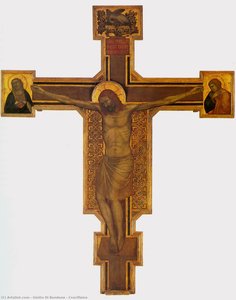 Crucifixion - Giotto di Bondone
In the Crucifixion by Giotto di Bondone, we witness a seismic shift where structural geometry meets raw, human pulse. The composition is anchored by a powerful pyramidal arrangement, a masterclass in balance that directs the eye from the heavy, grounded figures at the base toward the central, agonizing verticality of the cross. This deliberate use of weight and symmetry creates a sense of timeless perfection, making it an essential pillar among the top 25 artworks of Giotto di Bondone .
There is a profound, quiet prestige in how Giotto utilizes space; his early use of aerial perspective introduces a depth that feels remarkably modern. Much like the principles of modern minimalist design , the work relies on essential forms and a stripped-back, impactful narrative to ground its emotional intensity. The way the figures are distributed creates a rhythmic, architectural stability that resonates with today's clean, contemporary aesthetic. It is not just a religious icon; it is a masterwork of visual equilibrium, where every line serves to amplify the visceral, textured sorrow of the scene.
Campanile - Giotto di Bondone
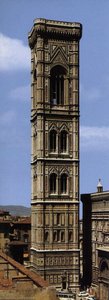 Campanile - Giotto di Bondone
Owning Campanile by Giotto di Bondone isn’t just a purchase; it’s an inheritance of the very moment Western art found its soul. As one of the most powerful entries in our collection of the top 25 artworks of Giotto di Bondone, this piece captures the monumental transition from flat, Byzantine abstraction to a world defined by weight, volume, and human presence. The tower rises with a palpable sense of solemn grandeur, its brickwork and textures rendered with a pioneering naturalism that makes the stone feel tangible.
Giotto uses light and shadow not merely as decoration, but to sculpt form, creating an atmospheric perspective that pulls the viewer into the heart of Florence. The verticality of the structure serves as a profound symbol of spiritual ascent and civic ambition. When you bring this masterpiece into your space, you aren't just hanging a painting; you are establishing a lineage of taste, inviting the revolutionary spirit of the proto-Renaissance to resonate within your own modern walls.
The Entombment of Mary - Giotto di Bondone
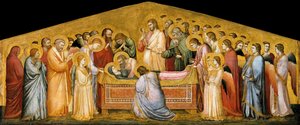 The Entombment of Mary - Giotto di Bondone
In The Entombment of Mary , Giotto di Bondone delivers a raw, cinematic punch that shatters the flat, gold-leafed traditions of his era. This isn't just a religious scene; it is a masterclass in human drama and heavy, palpable emotion. As one of the most vital entries in our list of the top 2ons artworks of Giotto di Bondone, this fresco captures the crushing weight of grief through anatomical realism and a revolutionary use of light. You can almost feel the physical gravity in the slumped figures of Christ and his mourners, a stark departure from the ethereal, floating icons of the Byzantine style.
Giotto uses subtle tonal gradations and a dramatic chiaroscuro effect to sculpt bodies out of shadow, creating a sense of three-dimensional space that feels incredibly modern. For today’s design-conscious collector, this piece offers more than historical depth; it brings an intense, soulful atmosphere to any space. The way Giotto manipulates light and shadow provides a blueprint for high-impact visual storytelling, making it a timeless inspiration for anyone obsessed with mood, texture, and the profound beauty of the human condition.
Scrovegni - [11] - Marriage of the Virgin - Giotto di Bondone
![Scrovegni - [11] - Marriage of the Virgin](/media/artworks/images-thumb/09/93/0993bcf27eb6693be09506b28bfe6988.jpg) Scrovegni - [11] - Marriage of the Virgin - Giotto di Bondone
Scrovegni - [11] - Marriage of the Virgin - Giotto di BondoneThere is a profound sense of presence in Scrovegni - [11] - Marriage of the Virgin by Giotto di Bondone that pulls you directly into the sacred moment. This isn’t just a historical fresco; it is a mirror reflecting the dawn of human emotion in art. As you gaze upon the clasped hands of Mary and Joseph, you feel the weight of their union, anchored by the miraculous blooming staff and the soft, divine descent of the dove above.
Giotto breaks away from the flat, gold-heavy traditions of the Byzantine era, introducing a revolutionary naturalism . You can almost feel the architectural depth of the temple grounds and the heavy, tactile folds of the figures' drapery. The characters possess a solid, three-dimensional gravity that makes them feel grounded in our world, not just floating in a spiritual void. To have this piece in your collection is to invite a sense of quiet prestige and eternal storytelling into your space—a reminder that even the most monumental shifts in history begin with a single, deeply human connection.
View of the choir of towards the west - Giotto di Bondone
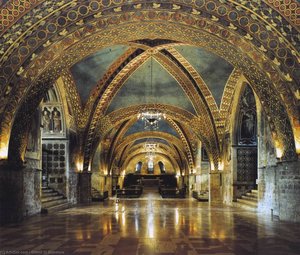 View of the choir of towards the west - Giotto di Bondone
When you look closely at the View of the Choir towards the West by Giotto di Bondone , the true magic lies in the raw, tactile energy of the fresco technique. You can almost feel the grit of the pigment as it was pressed into the damp plaster, creating a surface where light and shadow don't just sit on the wall—they sculpt the very architecture of the space. This isn't the flat, gilded abstraction of the Byzantine era; it is a revolution of volume and weight. Giotto uses subtle tonal shifts to transform a two-dimensional plane into a majestic, vaulted cathedral, capturing a sense of atmospheric depth that was unheard of in 1320.
This masterpiece earns its place among the top 25 artworks of Giotto di Bondone because it marks the precise moment art began to breathe with human realism. At ArtsDot.com, we celebrate this exact materiality. Our high-end, hand-painted oil reproductions are designed for the modern connoisseur who craves that same three-dimensional soul, bringing the profound textures and historical gravity of Giotto’s monumental vision directly into your contemporary space.
Allegory of Chastity (detail)2 - Giotto di Bondone
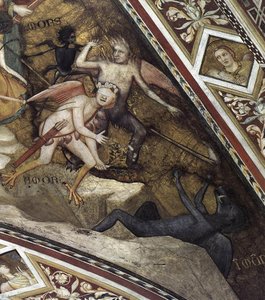 Allegory of Chastity (detail)2 - Giotto di Bondone
In the Allegory of Chastity (detail)2 , Giotto di Bondone delivers a high-voltage masterclass in visual drama that feels surprisingly modern. This fragment isn't just a relic; it is a cinematic explosion of movement and moral tension. We see a winged youth caught in a mid-air struggle, flanked by the dark, jagged silhouette of a horned demon and the sharp, defensive stance of a warrior. The composition pulses with a raw, kinetic energy that predates the high-octane aesthetics of contemporary street art and graphic illustration.
Giotto breaks away from flat, static icons to introduce a heavy, tactile realism. Through masterful use of light and shadow, he sculpts flesh and drapery, creating a sense of weight that grounds the supernatural conflict in reality. The gilded accents and intense facial expressions turn a theological debate into a visceral human experience. For today's design-conscious collector, this piece stands as a cornerstone among the top 25 artworks of Giotto di Bondone , offering a timeless blueprint for how to use contrast and composition to command any contemporary space.
Dream of Innocent III - Giotto di Bondone
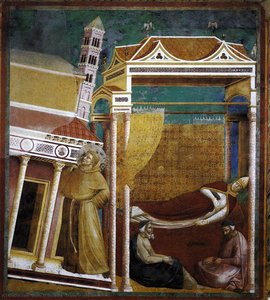 Dream of Innocent III - Giotto di Bondone
Before he became the titan of the proto-Renaissance, Giotto was a legend whispered about in the streets of Florence—a boy whose sketches of sheep on rocks were so lifelike they caught the eye of the great Cimabue. This raw, naturalistic energy explodes in Dream of Innocent III , a fresco found within the Basilica of Saint Francis of Assisi. In this scene, Giotto breaks the flat, golden shackles of Byzantine tradition to capture something far more visceral: the heavy, human weight of a dream.
The composition is a masterclass in movement; while Pope Innocent III reclines in a state of deep reverie, the space around him vibrates with life. You can almost feel the texture of the rich reds and golds as Giotto uses light and shadow to sculpt figures that possess real volume and emotional gravity. The inclusion of scattered birds adds a layer of spontaneous, living detail to the sacred narrative. This level of focused, visionary storytelling is exactly what you want in a curated space. Bringing the depth of Giotto’s top 25 artworks into a modern study or home office creates an atmosphere of profound intellectual ambition and timeless sophistication.
Políptico Baroncelli - Giotto di Bondone
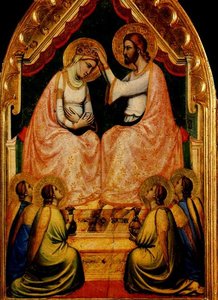 Políptico Baroncelli - Giotto di Bondone
What story does the sacred atmosphere of the Políptico Baroncelli by Giotto di Bondone tell to the modern observer? Emerging from the transition between Byzantine rigidity and Renaissance realism, this monumental altarpiece captures a world where the divine begins to touch the earthly. While his predecessors relied on flat, golden icons, Giotto used this piece to introduce unprecedented naturalism , sculpting figures with weight, musculature, and genuine human tenderness.
The composition—featuring the Coronation of the Virgin amidst rich red accents and gilded frames—offers a masterclass in emotional storytelling. Each figure, from the kneeling Mary to the surrounding angels, possesses a psychological depth that pulls you into their solemn reverence. For the contemporary collector seeking an escape from the digital noise, integrating such a piece into a curated space evokes a sense of profound history and stillness. As one of the top 25 artworks of Giotto di Bondone , the Baroncelli Polyptych isn't just religious iconography; it is a window into a revolutionary era where art first learned to breathe, making it an essential cornerstone for any high-impact, soulful collection.
Frescoes in the fourth bay of the nave - Giotto di Bondone
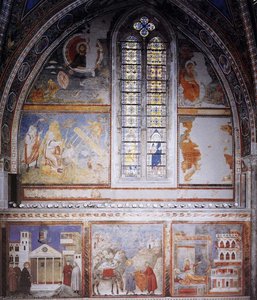 Frescoes in the fourth bay of the nave - Giotto di Bondone
Step into the heavy, soulful atmosphere of the Frescoes in the fourth bay of the nave , a cornerstone in our countdown of Giotto di Bondone’s top 25 masterpieces. Located within the breathtaking Florence Cathedral , these works represent the exact moment art broke free from flat, golden Byzantine icons to embrace raw, human reality. Giotto injects a cinematic weight into these scenes from the life of Saint Francis, using light and shadow to sculpt figures that feel physically present in our space.
The visual impact is undeniable; the way Giotto utilizes deep, earthy tones and structural depth creates an architectural rhythm that resonates with modern minimalist design. For the contemporary collector, this isn't just history—it’s a masterclass in using composition to command a room. The interplay of heavy drapery and expressive gestures offers a timeless aesthetic that bridges the gap between medieval devotion and the bold, graphic energy we crave in high-end urban interiors today.
No. 46 The Seven Virtues: Hope - Giotto di Bondone
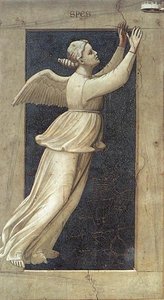 No. 46 The Seven Virtues: Hope - Giotto di Bondone
In the quiet shadows of the Scrovegni Chapel, The Seven Virtues: Hope by Giotto di Bondone exists as a frozen moment of raw, human striving. This isn't just another religious fresco; it is a masterclass in emotional weight that secures its place among the top 2ical works of Giotto. While his contemporaries were lost in flat, gilded Byzantine patterns, Giotto used light and shadow to sculpt a figure that feels heavy with reality. The angel’s upward reach—set against a moody, dark blue-grey void—captures a sense of tension and grit that resonates even today.
The palette is somber and sophisticated, utilizing muted tones and directional lighting to create a chiaroscuro effect that breathes life into the flowing drapery. For the modern collector, this piece offers more than historical depth; it brings a profound, meditative energy to a contemporary space. It serves as a visual anchor of resilience, where the textured, painterly strokes remind us that even in darkness, the impulse to reach upward remains an eternal, beautiful constant.
joachim's dream - Giotto di Bondone
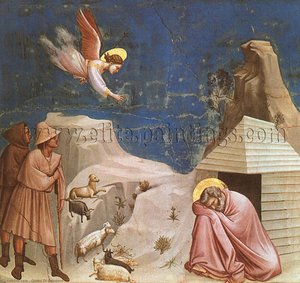 joachim's dream - Giotto di Bondone
A profound stillness settles over the soul when encountering Joachim’s Dream by Giotto di Bondone, a moment where divine prophecy meets human vulnerability. As part of our mission to democratize beauty, we invite you to experience this cornerstone of the Scrovegni Chapel, a work that stands in our Top 25 for its revolutionary departure from flat, Byzantine icons toward a world of weight, shadow, and palpable emotion.
Giotto breaks the mold here, using light to sculpt the pink robes of the kneeling Joachim and casting a soft glow over a scene populated by attentive figures, a loyal dog, and wandering sheep. This isn't just religious storytelling; it is the birth of naturalism, where every fold of fabric and weary expression feels grounded in our own reality. The masterpiece captures a spiritual awakening that remains as visually arresting today as it was in 1305. By bringing a high-fidelity reproduction of this fresco into your home or office, you invite that same transformative, contemplative energy into your personal gallery, bridging the gap between medieval mysticism and modern interior elegance.
The Last Judgement, detail of Jesus, 1305-13, Fresco, - Giotto di Bondone
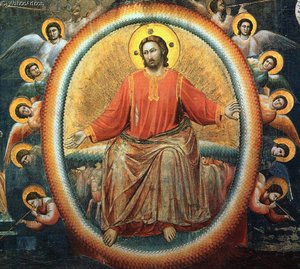 The Last Judgement, detail of Jesus, 1305-13, Fresco, - Giotto di Bondone
A celestial, radiant gold dominates the detail of The Last Judgement by Giotto di Bondone, casting an aura of divine authority and eternal light that instantly commands any room. This isn't just a color; it is a mood of profound transcendence. As one of the most essential pieces in our collection of the top 25 artworks of Giotto di Bondone , this fresco detail showcases his mastery of a palette that moves away from flat Byzantine gold toward a more luminous, atmospheric glow. The way the light interacts with the angelic forms creates a sense of physical weight and cosmic drama.
For the modern interior enthusiast, integrating this piece into a design scheme allows you to anchor a space with high-impact, spiritual energy. Imagine this work as a focal point in a contemporary dining room or a sophisticated lounge; its rich, warm tones can be used to curate an atmosphere of prestige and contemplative depth. By pairing the vibrant, frescoed textures with minimalist, dark architectural elements, you create a striking visual tension that celebrates the intersection of historical mastery and bold, modern luxury.
Alegoría de la Pobreza - Giotto di Bondone
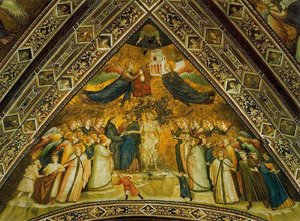 Alegoría de la Pobreza - Giotto di Bondone
In Alegoría de la Pobreza , the lines aren’t merely painted; they are choreographed . This fresco is not a static religious scene; it is a dance frozen in time , where fourteen figures move through a sacred space with a weight and presence that shattered the flat, golden illusions of the Byzantine era. Giotto pulls us into the Basilica of Saint Francis of Assisi, replacing ethereal icons with raw, human gravity.
The composition breathes through a palette of muted earth tones—ochre, umber, and deep crimson—that ground the spiritual narrative in a tangible, physical reality. Through masterful sculptural modeling, Giotto gives every fold of drapery and every weary gesture a sense of anatomical truth. It is a masterclass in naturalism unleashed , where light and shadow sculpt emotion directly onto the plaster. As you contemplate this pivotal work among the top 25 artworks of Giotto di Bondone, ask yourself: what if your own walls could hold this same profound balance? What if your space could breathe rhythm and historical soul?
Ascension of Christ (Upper Church, San Francesco, Assisi) - Giotto di Bondone
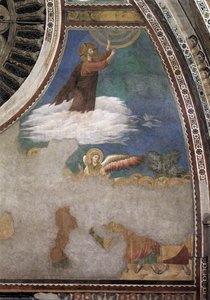 Ascension of Christ (Upper Church, San Francesco, Assisi) - Giotto di Bondone
There is a gaze in Ascension of Christ (Upper Church, San Francesco, Assisi) by Giotto di Bondone that follows you—not with judgment, but with understanding . This isn't just a fresco; it’s a mirror reflecting the moment humanity touches the divine. As one of the most powerful entries in our collection of the top 25 artworks of Giotto di Bondone, this piece breaks the flat, golden stillness of the Byzantine era to introduce something radical: weight , emotion , and space .
Imagine the cool, ethereal blues and whites of the heavens descending into your room, anchored by the grounded, earthy ochres of the figures below. Giotto uses light not just as a decoration, but as a force, radiating from Christ to sculpt heavy, realistic drapery and create a palpable sense of depth. The composition pulls your eyes upward through layered planes, making the spiritual ascent feel physically real. When you hang a piece with this much narrative gravity, it doesn't just watch you; it reminds you that you are part of a much larger, breathtaking story.
Conclusion
As the light fades on this journey through Giotto’s revolutionary world, we are left with more than just a catalog of historical milestones; we carry away the weight of his humanity. To look upon these works is to witness the very moment art learned to breathe, to weep, and to occupy the same physical space as ourselves. Giotto did not merely paint figures; he sculpted emotions out of pigment, breaking the gilded stillness of the medieval era to invite us into a realm of tangible depth and profound connection.
These masterpieces are far from frozen relics locked in the shadows of the past. They remain living, breathing forces that continue to pulse through our modern consciousness, whispering secrets of resilience and beauty into the spaces we inhabit today. Whether it is the quiet gravity of a gesture or the dramatic narrative of a fresco, his vision serves as a timeless reminder that the most powerful art is that which reflects our own shared vulnerability and strength.
As you step away from these storied halls, let the echoes of his brushwork linger in your mind. If you feel moved to bring this enduring spirit into your own contemporary sanctuary, we invite you to explore the full collection and discover how the dawn of the Renaissance can illuminate the modern home.