
Introduction
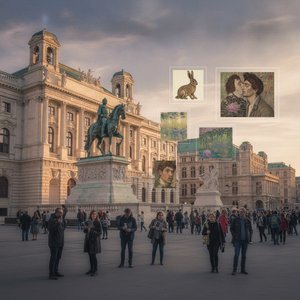
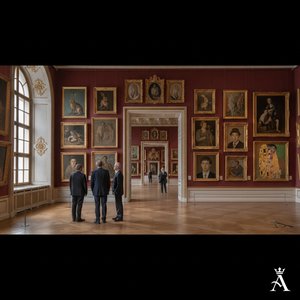
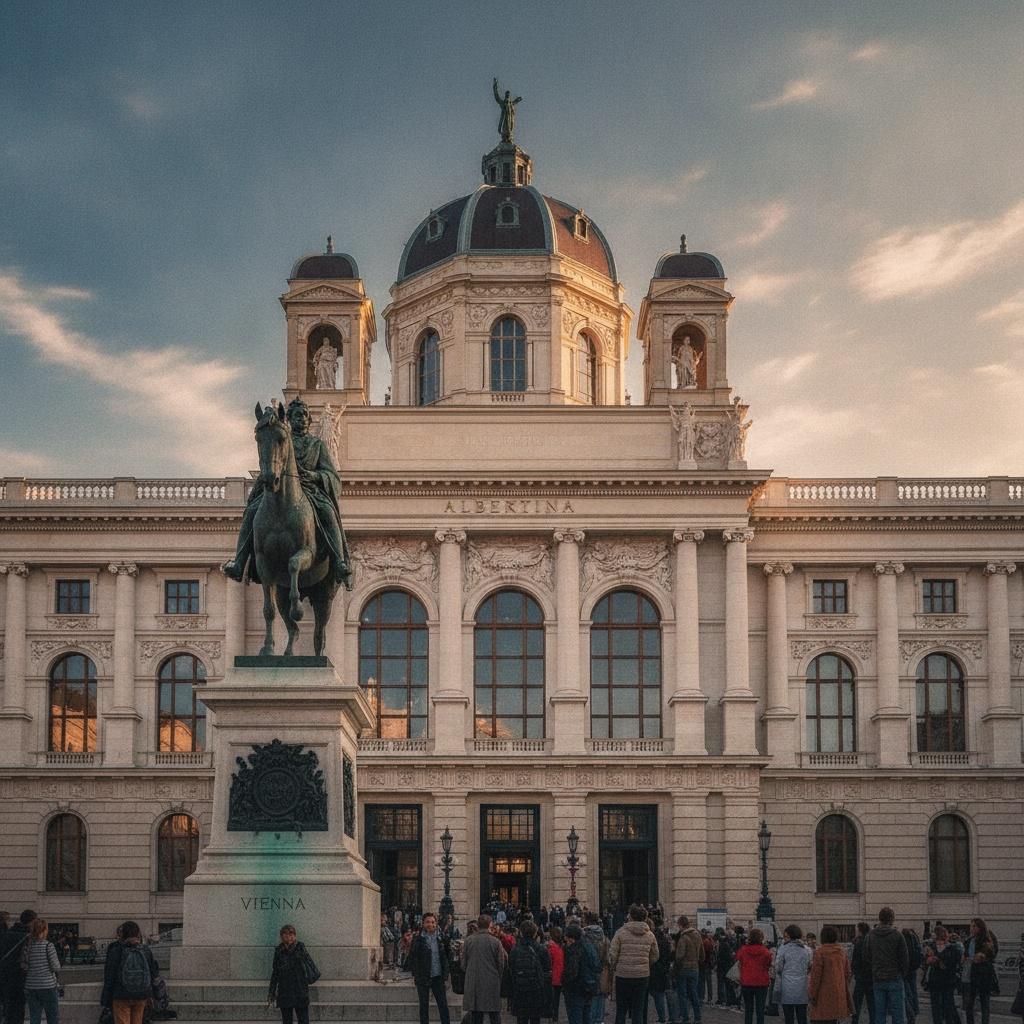
To step into the Albertina is to wander through a living tapestry of time, where the echoes of the Habsburg dynasty meet the quiet, profound whispers of the artist’s hand. Nestled in the heart of Vienna’s historic Innere Stadt, this magnificent palace does not merely house art; it breathes it. As you move through its halls—from the stately Baroque grandeur of its ancestral rooms to the striking, modern titanium canopy designed by Hans Hollein—you are participating in a centuries-old dialogue between imperial ambition and the delicate intimacy of the human spirit.
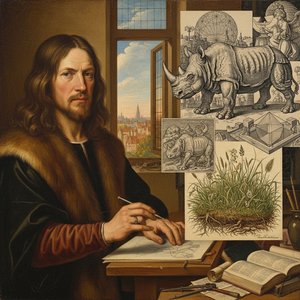
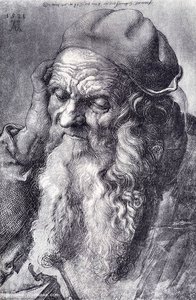
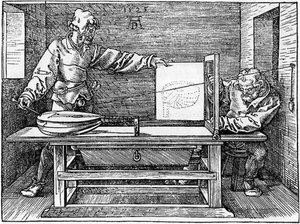
The Albertina is, at its very soul, a sanctuary for the graphic arts. It holds within its walls an almost overwhelming devotion to the beauty of the line: over one million old master prints and 65,000 drawings that capture the fleeting essence of light, shadow, and emotion. There is something deeply moving about standing before a work where the artist’s original stroke remains visible, a direct connection to a moment of creation from centuries past. Whether it is the meticulous, observational precision of a Dürer or the sweeping, emotive gestures of later masters, these works remind us that while empires may rise and fall, the impulse to capture beauty is eternal.
In our modern, often hurried world, these masterpieces remain vital because they offer us a rare opportunity for stillness. They invite us to slow our breath and notice the 'large clumps of grass' or the subtle curve of a silhouette, much like the Impressionists we so dearly love. They are not mere relics of history; they are mirrors reflecting our shared capacity for wonder.
In the following pages, we shall embark on a curated journey through this extraordinary collection. We have selected twenty-five profound works that represent the pinnacle of the Albertina’s treasures—pieces that define the museum's legacy and continue to stir the hearts of collectors and dreamers alike. Prepare to lose yourself in the delicate textures and timeless narratives of Vienna’s most precious artistic inheritance.
Young Hare - Albrecht Dürer
 Young Hare - Albrecht Dürer
In the quiet stillness of Albrecht Dürer’s 1502 masterpiece, Young Hare , one is immediately met by the creature's wide, luminous eye—a gaze that captures a fleeting moment of profound alertness. As you stand before this jewel of the Albertina collection in Vienna, the tension between the hare's delicate vulnerability and its sharp, instinctive presence creates a psychological depth that transcends mere animal portraiture. It is a mirror to our own moments of quiet contemplation and sudden awareness.
Dürer’s Northern Renaissance precision is nothing short of miraculous; through meticulous pen and ink work and soft watercolor washes, he renders every individual strand of fur with such tactile reality that you can almost feel the warmth of the animal. The muted palette of ochre, russet, and cream brings a sense of organic tranquility to any room. Integrating this level of naturalistic beauty into your home can transform a personal sanctuary into a space for profound reflection, inviting the serene, rhythmic pulse of the natural world into your daily life.
Head of a Man in Profile (Illustration for - Gustav Klimt
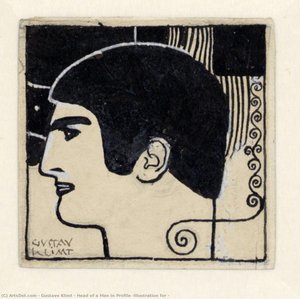 Head of a Man in Profile (Illustration for - Gustav Klimt
In the quiet corners of the Albertina, Head of a Man in Profile by Gustav Klimt offers a breathtaking departure from his famous golden opulence, inviting us into a world of monochrome introspection. Created around 1898, this striking illustration captures the very heartbeat of the Vienna Secession. Rather than the shimmering mosaics of The Kiss , we encounter a masterclass in graphic precision, where bold, angular lines and geometric simplicity distill the human essence into a modern icon.
As one of the top 25 artworks in Albertina, Vienna, this piece serves as a vital bridge between classical portraiture and the dawn of modern design. Its rhythmic, flowing contours and the delicate interplay of light and shadow resonate deeply with contemporary minimalist aesthetics. For the modern collector, such a work brings an air of sophisticated mystery and intellectual depth to a space, echoing the elegant, structural silhouettes found in high-end fashion and avant-garde interior styling today.
Portrait of a Lady with Cape and Hat - Gustav Klimt
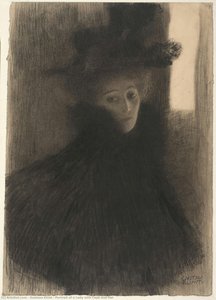 Portrait of a Lady with Cape and Hat - Gustav Klimt
To stand before Gustav Klimt’s 1898 masterpiece, Portrait of a Lady with Cape and Hat , is to witness the very moment light begins to transform into emotion. In this exquisite work from the Albertina collection, Klimt does not merely depict a woman; he composes a visual sonata of texture and soul. You can almost feel the weight of her heavy, embroidered cape and the soft, luminous glow of her skin, rendered with a precision that hints at his legendary Golden Period.
The light in this portrait is a language of its own—a shimmering, ethereal presence that seems to emanate from within the canvas itself. Through the delicate use of tempera and early traces of gold-like brilliance, Klimt invites us into the psychological depth of the Viennese Secession. The lady’s gaze, directed toward an unseen horizon, creates a sense of quiet prestige and profound stillness. It is a piece that does not just reflect light; it invents it, offering a portal of inspiration that can turn any home into a sanctuary of grace and historical splendor.
Lamentation (recto), c. 1530 - Michelangelo Buonarroti
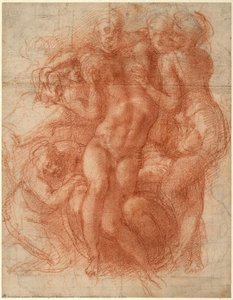 Lamentation (recto), c. 1530 - Michelangelo Buonarroti
In the quiet, hallowed halls of the Albertina, Vienna, few works command the soul quite like Lamentation (recto), c. 1530 by Michelangelo Buonarroti. This is not merely a preparatory sketch; it is a raw, visceral distillation of human sorrow. Rendered with an intensity that transcends its medium, the drawing captures a profound moment of connection through the heavy, expressive weight of charcoal and red chalk. The way the figures intertwine—their limbs suggesting both the limpness of death and the desperate strength of an embrace—offers a masterclass in the anatomy of grief.
As one of the top 25 artworks in the Albertina collection, this piece stands as a testament to Michelangelo’s ability to infuse stone-like muscularity with liquid emotion. For the modern collector, there is a striking resonance in its monochromatic drama; the stark, tonal contrasts and rhythmic, broken lines find a beautiful parallel in contemporary minimalist interiors, where a single, powerful focal point can anchor an entire room's emotional atmosphere. It remains a timeless study of how light and shadow can articulate the deepest reaches of the human spirit.
The Lonely Ones - Edvard Munch
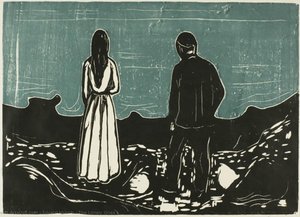 The Lonely Ones - Edvard Munch
To stand before Edvard Munch’s The Lonely Ones within the hallowed halls of the Albertina is to encounter a profound silence that speaks volumes. Painted in 1899, this haunting monochrome masterpiece transcends simple landscape; it is a visceral map of the human psyche. As you gaze upon the two figures adrift on a nocturnal beach, their averted gazes and turned backs evoke a poignant sense of detachment—a shared presence defined by an unmistakable emotional distance.
Munch utilizes his signature Expressionist language, where swirling, turbulent lines and a somber palette of greys and blacks mirror the internal anxieties of the fin de siècle . The scattered birds, caught in flight or resting near the tide, serve as delicate symbols of vulnerability and the fleeting nature of connection. Owning a piece of this emotional depth isn’t merely a purchase; it is an inheritance of a lineage of taste. While the original resides in Vienna, the spirit of Munch’s mastery can be brought to your own sanctuary through our hand-painted oil reproductions, allowing you to invite this timeless, introspective elegance into your daily life.
Young Woman in a Shirt, 1918 - Amedeo Clemente Modigliani
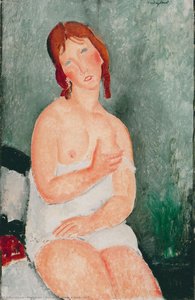 Young Woman in a Shirt, 1918 - Amedeo Clemente Modigliani
In the quiet, evocative realm of Amedeo Modigliani’s 1918 masterpiece, Young Woman in a Shirt , we encounter more than a mere portrait; we enter a profound meditation on the human soul. As one of the most hauntingly beautiful treasures within the Albertina, Vienna, this work captures a moment of stillness that feels both timeless and deeply intimate. The subject, seated with arms crossed in a pose of quiet repose, embodies a delicate tension between vulnerability and contemplative strength.
Modigliani’s singular vision is on full display through his signature elongated features—the swan-like neck and stylized facial contours that transcend literal representation. The palette is a sophisticated arrangement of subdued, earthy tones: soft greens, muted pinks, and warm creams that coalesce into an atmosphere of gentle melancholy. Through fluid, organic lines and a diffused, ethereal glow, the artist weaves together the primal power of African sculpture with the grace of Italian Renaissance portraiture. To behold this painting is to witness a brilliant fusion of tradition and modernity, transforming any space into a true gallery of the soul.
View of Arkona with Rising Moon, c. 1805-1806 - Caspar David Friedrich
 View of Arkona with Rising Moon, c. 1805-1806 - Caspar David Friedrich
In the quietude of View of Arkona with Rising Moon by Caspar David Friedrich, time seems to hold its breath, suspended in that ethereal moment between twilight and the infinite night. As one of the most profound treasures within the Albertina, Vienna’s collection, this masterpiece captures the very essence of the Romantic sublime—a delicate dance of light and shadow that speaks directly to the soul. The sky, bruised with deep, moody tones, yields to the pale, silver luminescence of a crescent moon, casting a ghostly glow over the turbulent Baltic waves and the rugged coastline.
Friedrich’s mastery lies in his ability to turn landscape into liturgy; the textures of the salt-sprayed rocks and the hazy, atmospheric layers of oil paint evoke a sense of profound solitude and spiritual longing. For the modern collector, bringing such a work into a home offers more than mere decoration; it introduces a focal point of meditative calm and intellectual depth. It is a piece that invites contemplation, turning a contemporary living space into a sanctuary of quiet prestige and timeless emotional resonance.
Self-Portrait with Eyelid Pulled Down, 1910 - Egon Schiele
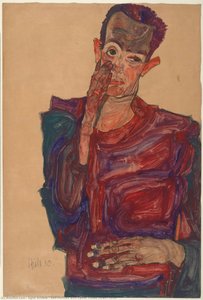 Self-Portrait with Eyelid Pulled Down, 1910 - Egon Schiele
To stand before Egon Schiele’s Self-Portrait with Eyelid Pulled Down is to encounter a raw, unsettling excavation of the human psyche. In this 1910 masterpiece, part of the Albertina, Vienna's most profound treasures, we do not merely see a face; we feel a soul in mid-tremor. The artist’s gaze, partially obscured by a hand and a deliberately lowered eyelid, speaks of a guarded sorrow—a visceral attempt to shield oneself from an overwhelming emotional burden. Schiele uses the watercolor medium with a frantic, expressive energy, employing muted ochres and somber grays that mirror his internal landscape of loss and mortality.
As one of the top 25 artworks in Albertina, Vienna, this piece serves as a universal mirror for our own moments of vulnerability. Bringing such intense psychological depth into your home can transform a personal sanctuary into a space for profound reflection. It invites a quiet, contemplative stillness, allowing the heavy, beautiful tension of Schiele’s lines to anchor your surroundings in truth and emotional resonance.
Desidia (Sloth), 1557 - Pieter Bruegel the Elder
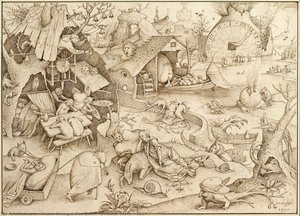 Desidia (Sloth), 1557 - Pieter Bruegel the Elder
To possess a study of Desidia (Sloth) by Pieter Bruegel the Elder is to invest in a profound legacy of human observation and timeless taste. As one of the most significant works within the Albertina, Vienna, this 1557 masterpiece stands as a cornerstone of Northern Renaissance achievement. Its position among the top 25 artworks in the Albertina collection is secured by its unparalleled narrative complexity; Bruegel weaves a labyrinthine world where every figure, from weary travelers to sluggish animals, serves as a moral mirror for the soul's inertia.
The painting’s historical influence is immense, offering a masterclass in using sprawling landscapes to explore deep psychological states. For the discerning collector, the work’s enduring market value lies in its ability to provoke thought through its meticulous detail and symbolic depth. In a modern luxury interior, a high-quality oil reproduction of this masterpiece brings an unmatched aesthetic authority. It serves as a sophisticated focal point, where the heavy, atmospheric textures and rich, historical storytelling command the room, echoing the prestige of the world's finest galleries.
The Prophet Jonah before the Walls of Nineveh, c. 1655 - Rembrandt van Rijn
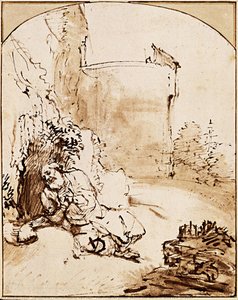 The Prophet Jonah before the Walls of Nineveh, c. 1655 - Rembrandt van Rijn
What story do the heavy shadows and imposing stone walls tell in The Prophet Jonah before the Walls of Nineveh by Rembrandt van Rijn? As one of the most profound entries among the top 25 artworks in Albertina, Vienna, this 1655 masterpiece captures a soul suspended between divine reckoning and human despair. Emerging from the height of the Dutch Golden Age, Rembrandt breaks away from mere biblical illustration to explore the psychological weight of prophecy through his legendary use of chiaroscuro.
The painting’s atmosphere—a palpable blend of cool stone textures and a light that seems to emerge from an unseen, spiritual source—offers a breathtaking escape for the modern collector. The solitary, bowed figure of Jonah invites us into a moment of deep, quiet contemplation, making this piece much more than historical documentation. For those curating a home with emotional depth, bringing a reproduction of this dramatic scene into your space creates a sanctuary of history and light, allowing the heavy silence and monumental scale of Nineveh to transform a contemporary room into a place of timeless reflection.
Two Nude Studies of a Man Storming Forward and Another Turning to the Right (verso), c. 1504 - Michelangelo Buonarroti
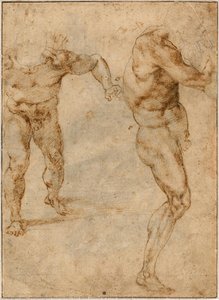 Two Nude Studies of a Man Storming Forward and Another Turning to the Right (verso), c. 1504 - Michelangelo Buonarroti
In the quiet intimacy of a chalk sketch, one finds the rawest expression of a master's soul. Michelangelo Buonarroti’s “Two Nude Studies of a Man Storming Forward and Another Turning to the Right (verso)” , dating to approximately 1504, is a profound window into the creative furnace of the High Renaissance. As one of the most captivating pieces among the top 25 artworks in 'Albertina, Vienna', it serves as a rhythmic exploration of human vitality rather than a mere drawing.
Through the delicate yet decisive application of chalk, Michelangelo captures a kinetic energy that vibrates off the page; one figure surges with unstoppable momentum while the other offers a contemplative, twisting grace. This mastery of anatomical precision and sfumato creates a sculptural depth that feels remarkably modern. For the contemporary collector or interior designer, such works bring an unparalleled sense of structural elegance and classical grandeur to a space. The interplay of light and shadow provides a sophisticated focal point, bridging the gap between Renaissance humanism and the refined, minimalist aesthetics of today's most curated homes.
Standing Pair of Lovers, Seen from the Side - Gustav Klimt
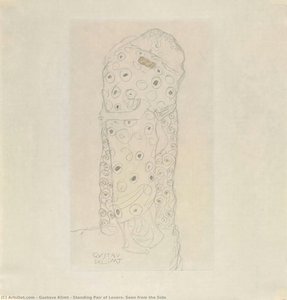 Standing Pair of Lovers, Seen from the Side - Gustav Klimt
In the quiet corners of the Albertina, Gustav Klimt’s Standing Pair of Lovers, Seen from the Side (1908) offers a breathtakingly tender departure from his more famous, gilded opulence. While many recognize Klimt for the heavy gold leaf of his 'Golden Phase,' this exquisite drawing reveals the soul of the Vienna Secession through a much more intimate lens. Executed with graphite, red pencil, and whispers of gold paint, the work captures a profound moment of human connection that remains deeply resonant today.
The piece earns its place among the top 25 artworks in Albertina, Vienna, through its masterful use of symbolic movement; the swirling circular motifs surrounding the embrace create a rhythmic, pulsing energy, as if the very air is celebrating their bond. It invites us to reflect on the sanctity of privacy and the protective nature of love. For the modern collector, this work serves as a timeless inspiration, proving that true beauty often lies in restraint and the delicate, flowing lines of emotional truth, making it a foundational masterpiece for any curated collection of fine art.
Head of an Old Man; Seated Female Nude, Seen from Behind; Detail of a Female Torso (Studies for the first version of - Gustav Klimt
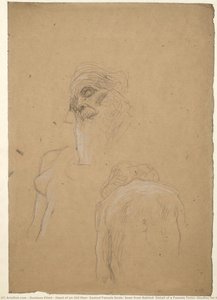 Head of an Old Man; Seated Female Nude, Seen from Behind; Detail of a Female Torso (Studies for the first version of - Gustav Klimt
To stand before Head of an Old Man; Seated Female Nude, Seen from Behind; Detail of a Female Torso is to witness the very heartbeat of Gustav Klimt’s creative evolution. This intimate collection of studies, dating from 1901, offers a rare, whispered glimpse into the master's mind as he prepared for his monumental work, Medicine . Within these delicate lines, we find the profound tension that defines the Vienna Secession: the juxtaposition of the weathered, bearded visage of age against the soft, vulnerable curves of the female form.
As one of the most captivating highlights among the top 25 artworks in Albertina, Vienna, this piece transcends mere preparatory sketching. It is a masterclass in symbolic duality, where Klimt’s meticulous shading breathes life into themes of wisdom and innocence. For the discerning collector, such works represent the pinnacle of refined aesthetics; they possess an emotional intelligence that resonates deeply within a sophisticated interior, bringing a sense of historical legacy and timeless, soulful beauty to any curated space.
St. Anna (Portrait of Agnes Dürer) - Albrecht Dürer
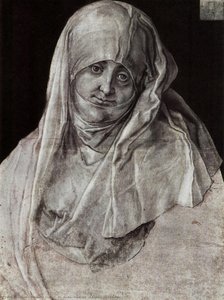 St. Anna (Portrait of Agnes Dürer) - Albrecht Dürer
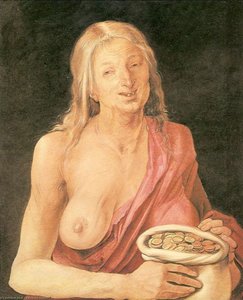
In the quiet intimacy of 1519, Albrecht Dürer turned his legendary precision toward a figure of profound personal significance: his daughter-in-law, Agnes. While many celebrate Dürer for his grand religious engravings, St. Anna (Portrait of Agnes Dürer) offers a more whispered, soulful encounter. This monochrome masterpiece, held within the prestigious Albertina collection in Vienna, transcends mere portraiture to become an exercise in spiritual stillness.
Dürer’s technical genius is palpable in every stroke; through masterful hatching and cross-hatching, he sculpts light from shadow, transforming a grayscale palette into a tactile experience of velvet blacks and luminous whites. The delicate veil draped over Agnes serves as a poignant symbol of piety and modesty, her gaze directed outward in a moment of deep, introspective grace. There is a rhythmic beauty in the way the organic curves of her face meet the sharp, disciplined lines of her drapery. To possess such a work—or even to contemplate its presence—is to invite a sense of focused, scholarly calm into one's own study, fostering an atmosphere of profound intellectual and creative clarity.
Preliminary Drawing for - Gustav Klimt
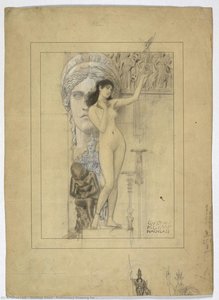 Preliminary Drawing for - Gustav Klimt
To stand before Gustav Klimt’s Preliminary Drawing for The Kiss is to witness the very first heartbeat of a legend. Before the gold leaf and the intoxicating opulence of his Golden Phase took hold, there was this: a delicate, searching line that captures the raw, psychological tension of the Vienna Secession. In this 1889 sketch, we find ourselves peering through a veil into the artist's private laboratory of thought. The scene is hauntingly intimate—a nude woman contemplating her reflection in a mirror, surrounded by figures caught in moments of quiet, sensual introspection.
The drawing breathes with the spirit of Symbolism, where every element serves as a whisper of deeper meaning. Notice the subtle presence of a bird in the corner, a recurring motif of transcendence that would later find its home in his most famous masterpiece. In our modern era, where we are constantly lost in digital reflections, Klimt’s exploration of identity and the duality of the self feels profoundly contemporary. As one of the most captivating highlights among the top 25 artworks in Albertina, Vienna, this drawing remains a vital, emotional bridge between the classical past and the expressive freedom of the modern soul.
Three Standing Men in Wide Cloaks Turned to the Left (recto), c. 1492-1496 - Michelangelo Buonarroti
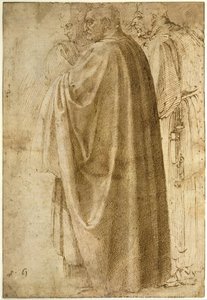 Three Standing Men in Wide Cloaks Turned to the Left (recto), c. 1492-1496 - Michelangelo Buonarroti
Imagine standing in the quiet, hallowed halls of the Albertina, where the air seems to hold its breath before a master’s touch. Before your eyes, the heavy, rhythmic folds of dark drapery begin to stir, as if the very shadows are breathing. In Three Standing Men in Wide Cloaks Turned to the Left , we encounter a young Michelangelo at the precipice of greatness, translating his sculptor’s soul onto paper.
This preparatory sketch is far more than a study of form; it is a profound meditation on human presence and gravity. Through meticulous shading, Michelangelo imbues these figures with a monumental weight, making the ink feel as substantial as carved Carrara marble. As part of the top 25 artworks in Albertina, Vienna, this piece captures the dawn of the High Renaissance, where humanist intellect met anatomical precision. To witness such strength and contemplative stillness is to be reminded that even in our hurried modern lives, there is a sacred beauty in pause and permanence. Bringing the spirit of such Renaissance mastery into one's home allows us to surround ourselves with a sense of enduring grace and quiet dignity.
Standing Female Nude (Study for - Gustav Klimt
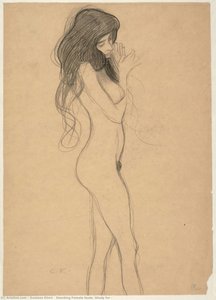 Standing Female Nude (Study for - Gustav Klimt
To stand before Gustav Klimt’s Standing Female Nude (Study for) is to witness the very first breath of a legend. Before the world knew his name through the shimmering gold leaf of his later masterpieces, there was this: a moment of profound, quiet intimacy captured in 1901. As you gaze upon the charcoal strokes, you don't just see a figure; you feel the artist composing light and shadow like a delicate, silent sonata.
Klimt uses the charcoal pencil to compose a language of vulnerability. The way the light clings to the soft contours of the torso and the graceful arc of the limbs reveals a master in the making. There is no gold here to distract the eye—only the raw, emotive power of line and the symbolic weight of her hands pressed against her face, shielding a world of private thought. This study is a vital piece of the Albertina’s collection, capturing the intellectual ferment of Vienna’s Secessionist era. It is an invitation to find beauty in restraint, a portal of inspiration that brings the soulful depth of Art Nouveau directly into your own contemplative space.
The Combat of Diomedes,1776 - Jacques-Louis David
 The Combat of Diomedes,1776 - Jacques-Louis David
Imagine standing before a canvas where the air itself seems to vibrate with the clash of steel and the heavy breath of fallen heroes. In The Combat of Diomedes , Jacques-Louis David invites us into a visceral moment of mythological upheaval. As one of the most arresting works within the Albertina, Vienna’s collection, this painting captures the precise second where classical heroism meets raw, human struggle. The scene is a masterclass in chiaroscuro ; pools of intense, dramatic light illuminate the muscular precision of the warriors, while deep, velvety shadows swallow the chaos of the battlefield.
There is a profound, cinematic energy in David’s brushwork—a transition from the soft Rococo era toward the stark, moral weight of Neoclassicism. The presence of hovering angels adds a celestial, almost haunting layer to the earthly violence. Bringing such a piece into one's personal sanctuary offers more than mere decoration; it provides a focal point for reflection on strength and resilience. Its powerful composition and dramatic light can transform a quiet corner of a home into a space of profound inspiration and intellectual depth.
Half-Length Figure of an Apostle, 1493-1495 - Leonardo da Vinci
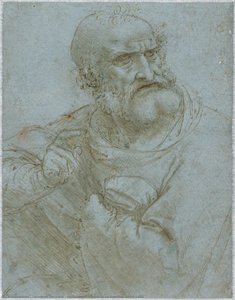 Half-Length Figure of an Apostle, 1493-1495 - Leonardo da Vinci
To gaze upon the Half-Length Figure of an Apostle by Leonardo da Vinci is to step into a quiet sanctuary of the soul, where light and shadow perform a delicate, eternal dance. This masterpiece earns its place among the top 25 artworks in the Albertina, Vienna, not merely for its historical prestige, but for the profound psychological intimacy it radiates. Through his legendary sfumato technique, Leonardo dissolves harsh boundaries, using translucent glazes to create an ethereal, luminous atmosphere that feels almost breathing.
The figure emerges from the darkness with a gaze of intense contemplation, embodying the Renaissance spirit of humanist inquiry and spiritual reverence. It is a work that transcends time, capturing a moment of divine connection through the subtle movement of light across a bearded, dignified countenance. Just as this painting once inspired the halls of Florentine palaces, its transformative emotional power can be brought into your own private sanctuary. Through our high-fidelity, hand-painted oil reproductions, you can invite this same sense of timeless grace and intellectual depth into your home or personal gallery, making the sublime accessible to the modern collector.
Pietà, c.1530-1536 - Michelangelo Buonarroti
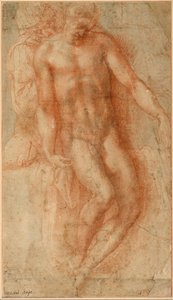 Pietà, c.1530-1536 - Michelangelo Buonarroti
To encounter Michelangelo’s Pietà within the Albertina is to stand at the very precipice of human emotion and divine grace. Though the world often remembers his marble triumphs in Rome, this profound meditation on grief and sanctity captures the High Renaissance at its most spiritually resonant. The sculpture transcends the coldness of stone, presenting a moment of devastating intimacy where the Virgin Mary cradles the lifeless Christ with a tenderness that feels almost breathable. It is a masterclass in anatomical precision and idealized beauty , where the weight of sorrow is balanced by an ethereal, luminous peace.
As one of the top 25 artworks in Albertina, Vienna, this piece serves as a timeless anchor for any curated collection. It invites us to reflect on the intersection of suffering and hope, reminding us that true beauty often emerges from our most vulnerable moments. For those seeking to infuse a modern space with historical depth, the Pietà offers an enduring dialogue between the sacred past and contemporary elegance, bringing a sense of monumental serenity to any sophisticated interior.
Two Studies of a Child Being Held (Studies for - Gustav Klimt
 Two Studies of a Child Being Held (Studies for - Gustav Klimt
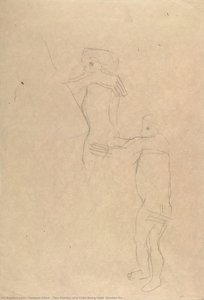
In the quiet, charcoal-etched intimacy of Two Studies of a Child Being Held by Gustav Klimt, we find a profound structural harmony that resonates deeply within the Albertina’s collection. Before the gilded opulence of his Golden Phase, Klimt mastered the delicate geometry of the human form. The composition relies on a rhythmic balance of soft, sweeping curves and precise, dark lines that cradle the figures in a state of eternal tenderness. This interplay of light and shadow creates a sense of timeless perfection, where the weight of the maternal embrace is felt through the very tension of the black chalk.
There is a striking parallel to be found between Klimt’s restrained, monochromatic precision and the principles of modern minimalist design; the way he strips away the superfluous to focus on essential form provides a grounding, sophisticated aesthetic that feels remarkably contemporary. As one of the top 25 artworks in Albertina, Vienna, these studies offer more than just a glimpse into Symbolism—they invite us into a sanctuary of pure, emotional essence, where every stroke serves the soul of the subject.
Floating Female Figure with One Arm Hanging and One Outstretched (Study for the oil sketch of - Gustav Klimt
 Floating Female Figure with One Arm Hanging and One Outstretched (Study for the oil sketch of - Gustav Klimt
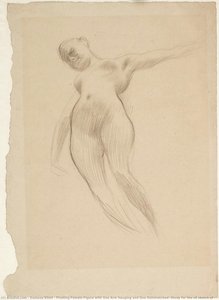
To stand before Gustav Klimt’s Floating Female Figure with One Arm Hanging and One Outstretched is to witness a quiet, breathless moment of creative genesis. This delicate study, born from the late 1890s, serves as a haunting precursor to his monumental work for the University of Vienna. In this ethereal sketch, Klimt captures a soul suspended between worlds; the figure’s outstretched arm reaches toward aspiration, while the hanging limb suggests a profound surrender to fate.
The mastery lies in the soft, rhythmic use of chalk, where light and shadow dance across the paper to create a sense of weightless luminosity. It is a work steeped in the psychological tension of Viennese Symbolism—a movement that sought to map the unseen landscapes of dreams and desire. Owning such a vision from the Albertina’s collection isn’t merely a purchase; it is an inheritance of the Golden Phase's very soul. At ArtsDot, we believe this lineage of taste belongs in your sanctuary, allowing you to bring the delicate, emotive tension of Klimt’s genius to your own walls.
Profile of Clothed Pregnant Woman with Her Face Turned to the Viewer (Study for - Gustav Klimt
 Profile of Clothed Pregnant Woman with Her Face Turned to the Viewer (Study for - Gustav Klimt
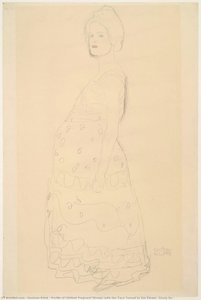
In the quiet, contemplative corners of the Albertina, Vienna, Gustav Klimt’s Profile of Clothed Pregnant Woman with Her Face Turned to the Viewer emerges as a profound meditation on the eternal cycles of existence. As a vital study for his larger masterpiece, Hope II , this work transcends mere sketching; it is a soulful exploration of femininity, fertility, and the delicate boundary between life and mortality. Klimt utilizes the soft, rhythmic precision of graphite to weave a narrative that feels both intimate and monumental.
This piece earns its place among the top 25 artworks in the Albertina through its masterful use of Symbolist language. The way the subject’s gaze meets ours—vulnerable yet resilient—invites a deep reflection on the human condition and the sacred mystery of creation. For the discerning collector, the essence of this work offers a timeless inspiration; its delicate textures and emotive depth can transform a modern interior into a sanctuary of grace, fostering a continuous, elegant conversation between historical mastery and contemporary decor.
Two Silver Birches, the Front One Fallen, c. 1629 - Nicolas Poussin
 Two Silver Birches, the Front One Fallen, c. 1629 - Nicolas Poussin
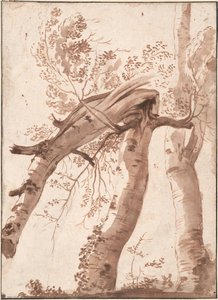
In the quiet corners of the Albertina, Two Silver Birches, the Front One Fallen by Nicolas Poussin stands as a profound meditation on the delicate balance between life and decay. Painted around 1629, this work captures a moment of stillness that feels both ancient and intimately modern. The luminous, silvery bark of the upright birch contrasts with the heavy, fallen trunk, creating a visual poem about the passage of time and the inevitability of nature's cycles.
As one of the top 25 artworks in Albertina, Vienna, this piece is essential for its mastery of minimalist composition. Poussin strips away seasonal distractions, leaving only the skeletal beauty of the trees to evoke a sense of melancholic grace. For the contemporary collector, this painting offers a timeless aesthetic; its muted palette and serene, structural harmony resonate perfectly with modern minimalist interiors, where light and form are paramount. It is not merely a landscape, but an emotional sanctuary of light and shadow.
Mother and Child - Gustav Klimt
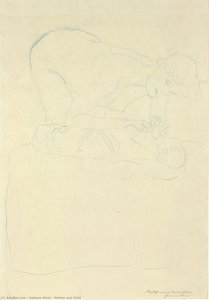 Mother and Child - Gustav Klimt
In the quiet, luminous embrace of Gustav Klimt’s Mother and Child , one feels the very pulse of tenderness captured in a single, breathless moment. As we journey through the top 25 artworks in the Albertina, Vienna, this 1908 masterpiece stands as an essential pillar of emotional depth and Symbolist innovation. It is far more than a mere depiction of maternal instinct; it is a profound exploration of intimacy, where the soft contours of the reclining figures meet the opulent, decorative spirit of Klimt’s legendary Golden Phase.
Klimt weaves a tapestry of light and shadow, using shimmering textures that evoke a sense of divine grace and spiritual richness. This work earns its place among the Albertina's greatest treasures through its ability to transform a private, tender gesture into something universal and sublime. At ArtsDot, we believe such beauty should not be confined to museum walls. Through our meticulous, hand-painted oil reproductions, you can capture this transformative presence—the warmth, the gold, and the eternal peace—and bring the soul of Viennese Modernism into your own cherished home or personal gallery.
Conclusion
As the golden light of a Viennese dusk settles over the titanium curves of the Albertina, we are reminded that these masterpieces are far more than mere relics of a Habsburg past; they are living, breathing presences. Each stroke of Dürer’s precision and every luminous layer of an Impressionist sky serves as a quiet heartbeat within the halls of history, continuing to stir the soul and ignite the imagination of all who wander through their gaze. These works do not belong solely to the museum walls; they belong to the human spirit, offering a timeless connection that transcends the centuries.
At ArtsDot.com , we believe this profound beauty deserves a place in our own intimate sanctuaries. We serve as a dedicated creative partner for interior designers, architects, and connoisseurs of fine living, helping to translate the grandeur of the Albertina into the soul of a modern villa, a boutique hotel, or a refined private estate. Whether you are seeking to curate a bespoke collection of hand-painted oils that capture the light-drenched essence of a movement, or require professional digital mockups to visualize how a sweeping multi-panel landscape might transform a grand hallway, we are here to bring that vision to life with academic excellence and meticulous care.
Our mission is to ensure that the textures, the depth, and the emotional resonance of these historic treasures can be woven into the very fabric of your architectural projects. We invite you to explore our full collection and discover how our museum-quality reproductions can turn any space into a profound artistic statement, preserving the magic of the masters for generations to come.