Early Life & Artistic Heritage: The Foundations of Polenov’s Vision
1 June 1844 – 18 July 1927) was a Russian landscape painter associated with the Peredvizhniki movement of realist artists.
Vasily Dmitrievich Polenov, born in 1844 into a distinguished St. Petersburg family, was not merely an artist but a product of a uniquely enlightened upbringing. His father, Dmitri Vasilevich Polenov, a respected archaeologist and bibliographer, instilled within him a deep reverence for history and the ancient world. Childhood journeys across Russia – to Novgorod, Rostov, Yaroslavl – weren’t simply geographical explorations; they were formative artistic pilgrimages, sketching expeditions guided by a father who understood the power of visual documentation. This early exposure to the remnants of Old Russia, its churches, monasteries, and landscapes, would become a recurring motif in Polenov's oeuvre. Equally influential was his mother, Maria Alekseevna, a painter herself, who nurtured his artistic talent alongside a broader intellectual curiosity fostered by family traditions steeped in literature, music, and scientific inquiry. The Polenov household wasn’t simply *artistic*; it was a crucible of humanist ideals, shaping a worldview that would define both the subject matter and spirit of his work.
The influence extended to his maternal grandmother, Vera Voeikova, whose stories of the Napoleonic Wars and appreciation for Russian literature further enriched young Vasily’s imagination. This lineage – scholars, artists, and patriots – created a fertile ground for Polenov's later synthesis of European artistic techniques with a distinctly Russian sensibility.
The Peredvizhniki Movement & Polenov's Realist Style
Polenov entered the Imperial Academy of Arts in 1863, simultaneously pursuing law studies – a testament to his family’s emphasis on intellectual breadth. It was during this period that he became associated with the Peredvizhniki, or Wanderers, a group of realist artists who rejected the academic constraints of the official art establishment. The Peredvizhniki sought to depict Russian life authentically, focusing on social issues and the lives of ordinary people. While Polenov embraced their commitment to realism, his approach was uniquely tempered by a lyrical sensibility that set him apart. He wasn’t interested in stark social commentary; rather, he aimed to capture the beauty inherent in everyday scenes, imbuing them with a sense of harmony and spiritual resonance.
His friendship with Rafail Levitsky further solidified his artistic direction. Their correspondence reveals a shared passion for innovation and a critical engagement with contemporary art movements. Polenov’s early works demonstrate a mastery of academic technique, but he quickly moved beyond mere imitation, seeking to express his own emotional response to the world around him.
Lyrical Landscapes: Capturing the Beauty of the Russian Countryside
Landscape painting, also known as landscape art, is the depiction in painting of natural scenery such as mountains, valleys, rivers, trees, and forests, especially where the main subject is a wide view—with its elements arranged into a coherent compo...
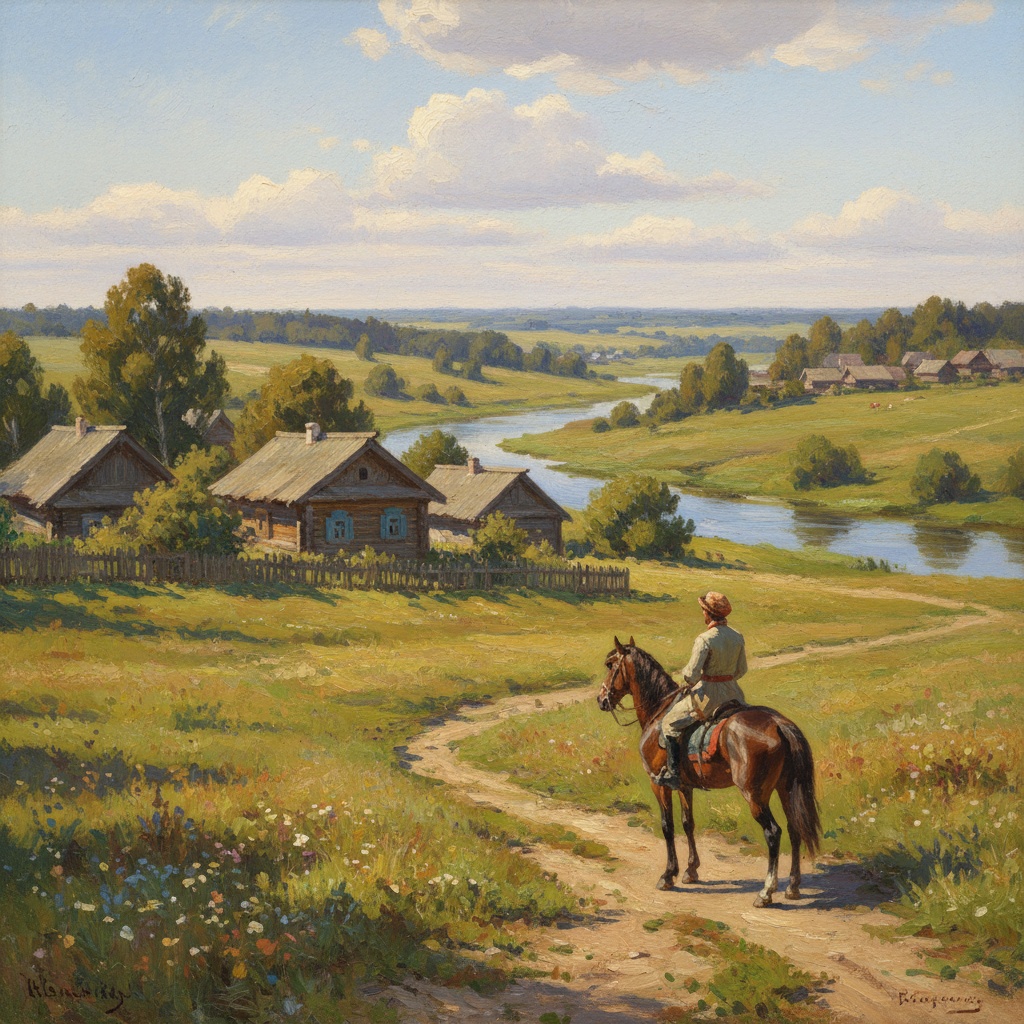
Polenov's true passion lay in landscape painting. He possessed an extraordinary ability to capture the subtle nuances of light and atmosphere, transforming ordinary scenes into evocative meditations on nature’s beauty. Paintings like “Pond” (1880) exemplify his Impressionistic brushwork and earthy tones, creating a tranquil forest scene that invites contemplation. His landscapes weren't simply representations of physical reality; they were imbued with a sense of spiritual presence, reflecting his belief in the inherent goodness of nature.
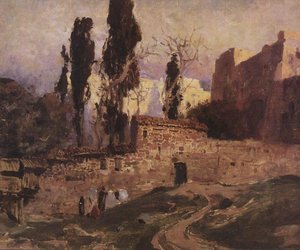
Works such as “Cityscape” (1875), depicting Roman ruins, reveal a fascination with history and the passage of time. However, even in these historical settings, Polenov’s focus remains on the atmospheric effects – the play of light and shadow, the melancholic beauty of decay. He wasn't interested in grand narratives or heroic depictions; instead, he sought to capture the quiet dignity of forgotten places.
Polenov’s Biblical Series: A Harmonious Blend of Faith and Art
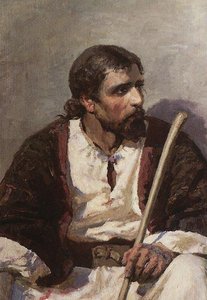
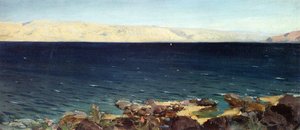
Perhaps Polenov’s most ambitious undertaking was his series of paintings on the life of Christ. Rejecting traditional iconographic representations, he approached these subjects with a remarkable degree of realism and humanism. He travelled to Palestine to study the landscapes firsthand, striving for historical accuracy in his depictions. However, his primary goal wasn't simply archaeological precision; it was to create a series of paintings that would convey the emotional and spiritual depth of Christ’s teachings.
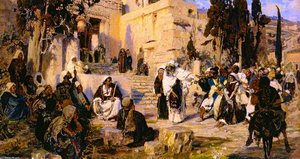
“Christ and the Woman Taken in Adultery” is a prime example of this approach. Polenov depicts the scene with sensitivity and compassion, focusing on the humanity of both Christ and the woman. The painting avoids sensationalism or moral judgment, instead emphasizing forgiveness and understanding. This series demonstrates Polenov’s ability to seamlessly blend historical research, artistic technique, and profound spiritual conviction.
‘Knight of Beauty’: Polenov as Teacher and Advocate for Artistic Ideals
Polenov earned the affectionate moniker “Knight of Beauty” from his contemporaries – a testament to his unwavering belief in the power of art to uplift and inspire. He wasn’t merely a painter; he was an educator, tirelessly advocating for artistic ideals and nurturing the talents of future generations. His teaching at the Moscow School of Painting profoundly influenced a new wave of Russian artists.
He believed that art should “promote happiness and joy,” and his pedagogical approach reflected this conviction. He encouraged his students to embrace both European techniques and Russian traditions, fostering a spirit of innovation and experimentation. Polenov’s estate at Imotchensy, transformed into an artistic haven, became a gathering place for artists, writers, and intellectuals, further solidifying his role as a cultural leader.
Legacy & Influence: Polenov's Enduring Impact on Russian Painting
Vasily Polenov’s legacy extends far beyond his exquisite paintings. He bridged the gap between the Golden Age of Russian art and the burgeoning Symbolism and Art Nouveau movements, paving the way for a new generation of artists who sought to create a synthesis of beauty, spirituality, and national identity. His harmonious blend of realism, Impressionism, and Old Russian traditions continues to resonate with audiences today.
Polenov’s influence can be seen in the works of numerous subsequent Russian painters, and his commitment to artistic education ensured that his ideals would endure for generations. He remains a pivotal figure in Russian art history – a “Knight of Beauty” whose vision continues to inspire awe and admiration. Discover more about Polenov's captivating landscapes and harmonious compositions at ArtsDot.com, where museum-quality reproductions bring the masterpieces of history into your home.