The Golden Age of Vienna: An Introduction to Austrian Artistry
To understand the heart of Central European aesthetics, one must wander through the gilded corridors of history that define the Austrian tradition. This was not merely a period of political significance, but a profound era of psychological and visual awakening. At the turn of the 20th century, Vienna stood as a crucible of intellectual fervor, where the boundaries between the subconscious mind and the visible world began to dissolve. The art emerging from this region was characterized by an unparalleled tension between classical rigor and a radical, almost feverish, pursuit of new forms. It was a time when the weight of tradition met the lightness of modernism, creating a visual language that spoke of both decadologial excess and deep, existential longing.
The mastery found in Austrian works lies in their ability to marry decorative splendor with profound emotional depth. Unlike the purely academic movements of the previous century, the Austrian masters sought to capture the ephemeral—the shimmer of light on water, the delicate curve of a silhouette, and the intricate patterns of nature. This era birthed a unique aesthetic where every line held intention and every color served a symbolic purpose, inviting the viewer into a contemplative state that transcends mere observation. It was an age where art became a mirror to the soul, reflecting the complexities of a society on the precipice of a new, modern identity.
Gustav Klimt and the Secessionist Revolution: Symbolism and Gold
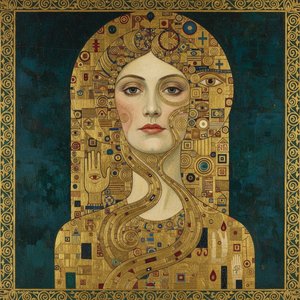
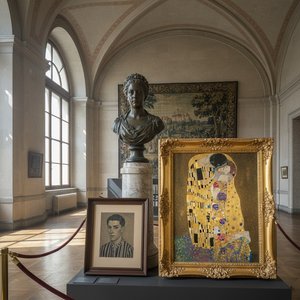
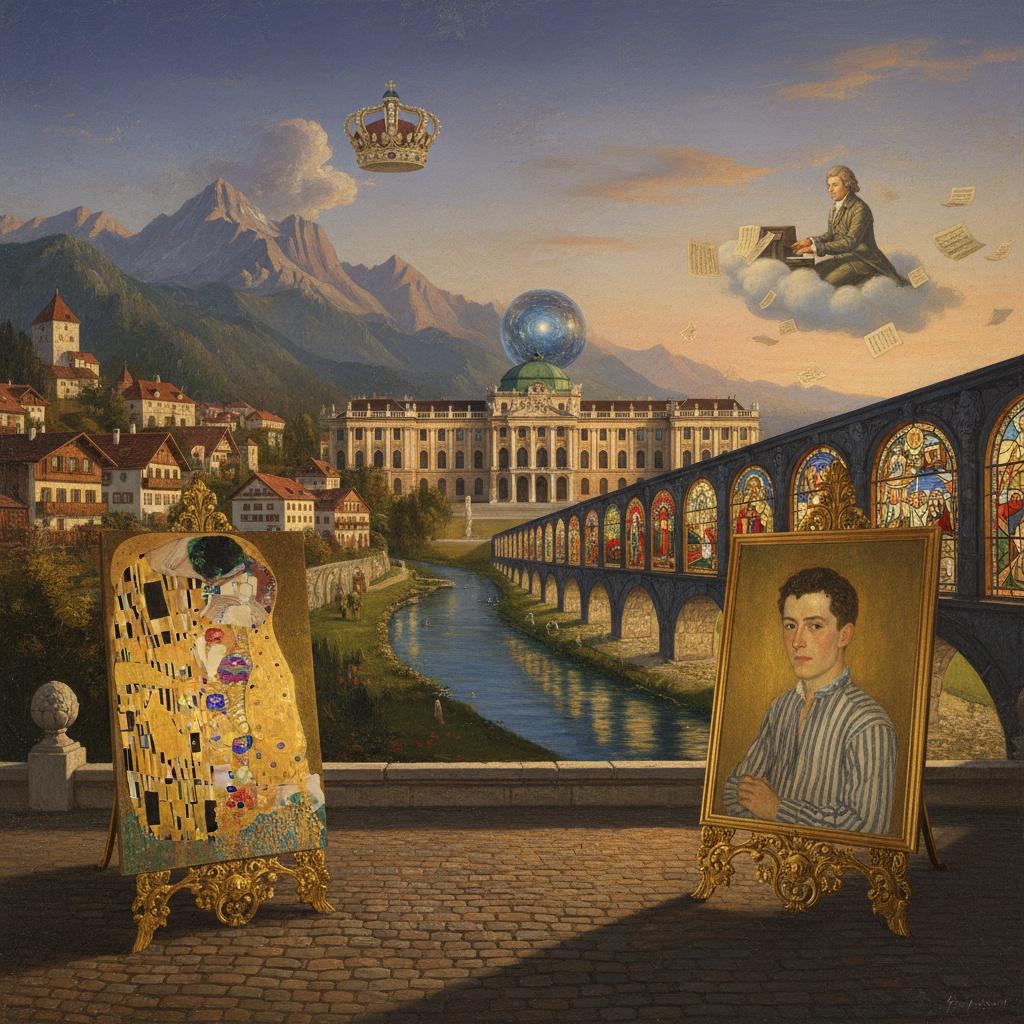
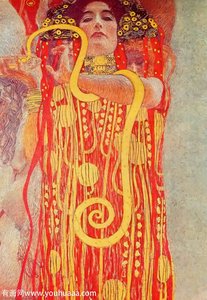
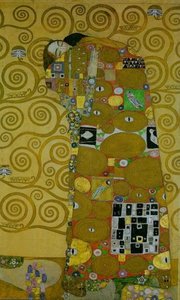
No name resonates with more profound authority in the annals of Austrian art than Gustav Klimt. As a leading figure of the Vienna Secession, Klimt orchestrated a rebellion against the stifling constraints of the Künstlerhaus, seeking instead an artistic freedom that embraced the decorative and the symbolic. His work represents a pinnacle of the Art Nouveau movement, where the use of gold leaf transformed the canvas into something more than mere paint; it became a sacred icon of light and luxury. In masterpieces such as The Friends, one observes a captivating interplay of elegance and intimacy, where the subjects are enveloped in an ornamental embrace that blüsses the line between human form and abstract pattern.
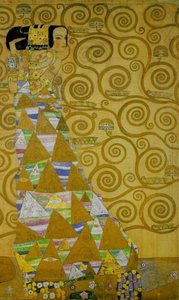
Klimt’s genius resided in his ability to utilize symbolism to navigate the complexities of Eros and Thanatos—love and death. His canvases often feature intricate floral motifs and geometric abstractions that serve as a labyrinth for the eye, leading the viewer toward deeper psychological truths. The shimmering textures, achieved through meticulous layering of gold and pigment, evoke a sense of timelessness. To gaze upon a Klimt-inspired composition is to enter a dreamscape where the physical world is gilded by the divine, making his legacy an eternal cornerstone for any serious collector of fine art.
Beyond the Gilded Frame: The Intricate Textures of Art Nouveau
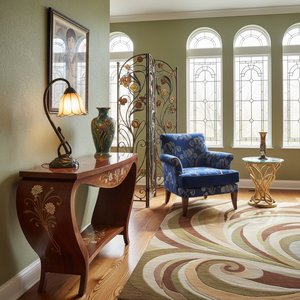
The aesthetic of the Vienna Secession extended far beyond the singular canvas, permeating the very fabric of daily life through the principles of Art Nouveau. This movement championed the idea of the Gesamtkunstwerk, or the total work of art, where architecture, furniture, and painting existed in a seamless, organic harmony. The visual language was defined by sinuous, flowing lines—often referred to as "whiplash" curves—that mimicked the rhythmic growth of vines and flowers. This organicism provided a soft, natural counterpoint to the industrializing world, offering a sense of grace and fluidity that remains deeply captivating to the modern eye.
In exploring this style, one must appreciate the tactile nature of the movement. The beauty of Art Nouveau lies in its complexity; it is found in the delicate repetition of patterns and the deliberate use of negative space to create balance. Whether observing a detailed print or a heavy oil reproduction, the emphasis remains on the interplay of texture and form. This era taught us that ornamentation is not merely additive but essential to the narrative of the piece, providing a rhythmic heartbeat to the compositions that define the Central European spirit.
Landscape and Light: Capturing the Serenity of the Danube and Attersee
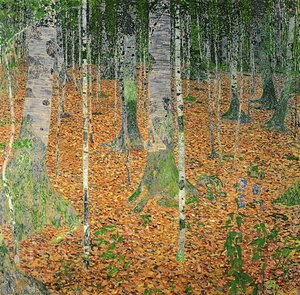
While the urban centers of Vienna provided the intellectual spark, the Austrian landscape offered the spiritual breath. The natural world served as a vital sanctuary for artists seeking to capture the fleeting nuances of light and atmosphere. The banks of the Danube and the tranquil shores of Lake Attersee became recurring motifs, representing a pastoral ideal that contrasted with the bustling metropolises. Artists often sought to translate the shimmering reflections on the water and the soft, dappled sunlight through forests into a visual poetry of color and movement.
These landscapes are characterized by a profound sense of serenity and a meticulous attention to atmospheric perspective. The way light interacts with the landscape—often rendered with a delicate, almost ethereal touch—creates a sense of depth that pulls the viewer into the scene. These works are not merely depictions of geography; they are meditations on the permanence of nature versus the transience of human existence. Through the careful application of pigment and the study of natural light, the Austrian masters turned the landscape into a stage for the sublime.
The Legacy of the Masters: Preserving Central European Heritage for Modern Collectors
The enduring allure of Austrian masterpieces lies in their ability to remain relevant across centuries. For the contemporary enthusiast, these works offer a bridge to a period of unparalleled creativity and emotional honesty. The preservation of this heritage is not merely an academic pursuit but a way to bring the profound beauty of the past into the modern living space. Whether through the acquisition of museum-quality prints or the commissioning of bespoke oil reproductions, the spirit of the Secession continues to inspire new generations of collectors.
As we look toward the future of art appreciation, the integration of traditional craftsmanship with modern accessibility ensures that these historical treasures are never lost. The textures, the gold, and the symbolic depth of the Austrian masters continue to provide a sense of luxury and intellectual stimulation. To surround oneself with such works is to participate in a continuous dialogue with history, ensuring that the soul of Central European art remains vibrant, breathing, and eternally profound.
At ArtsDot.com, we are dedicated to this very mission of preservation and accessibility. Our studio specializes in creating exquisite, hand-painted oil reproductions that honor the meticulous techniques of the Old Masters. From the heavy, tactile brushstrokes of a Klimt-inspired landscape to custom commissions that reimagine personal memories through the lens of historical styles, we provide a gateway for collectors worldwide to experience the majesty of art history within their own homes.