The Botanical Voyager: Marianne North’s Extraordinary Life and Legacy
To step into the world of Marianne North is to embark on a voyage through time, traversing the sun-drenched jungles and verdant landscapes of the nineteenth century. Born into an era of profound scientific curiosity and colonial expansion, North was far more than a mere observer of nature; she was a pioneer who defied the restrictive social conventions of the Victorian age. While her contemporaries were often confined to the domestic spheres of drawing rooms and gardens, North sought the untamed edges of the map. Her life was a relentless pursuit of the exotic, driven by an insatiable hunger to document the botanical wonders of the globe through the medium of oil on canvas.
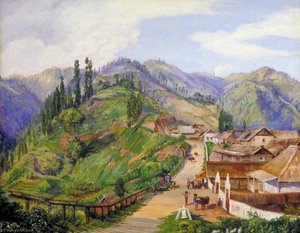
Her legacy is not merely found in the pigments she applied to fabric, but in her unique position as both artist and explorer. Unlike many botanical illustrators of her time who focused on sterile, white-background specimens, North sought to capture plants within their living, breathing ecosystems. This holistic approach allowed her to bridge the gap between fine art and natural history, creating a visual record that remains as much a testament to her adventurous spirit as it is to the flora she encountered. Her travels took her across continents, leaving behind a vibrant trail of color that continues to captivate the modern connoisseur.
A Canvas of Flora: Analyzing the Detail and Technique of Her Oil Paintings
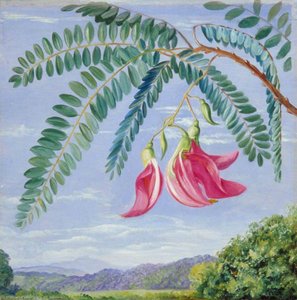
The technical brilliance of Marianne North lies in her ability to marry the precision of scientific observation with the expressive freedom of the oil medium. While many botanical artists relied on the delicate, linear clarity of watercolor, North embraced the rich, tactile possibilities of oil paint. This choice allowed for a profound depth of color and a sense of physical presence that few of her peers could replicate. Her brushwork often possesses a rhythmic vitality, where the heavy application of pigment creates a three-dimensional texture that mimics the waxy surface of a tropical leaf or the velvety petal of a rare bloom.
In examining her technique, one observes an extraordinary attention to detail that borders on the microscopic. She possessed a remarkable ability to render the intricate architecture of a flower—the way light filters through a translucent membrane or how dew clings to a stem. Yet, she never allowed this precision to descend into mere clinical documentation. There is a palpable warmth in her palette, a mastery of light and shadow that imbue her subjects with a sense of life and movement. Each stroke serves to celebrate the organic complexity of the natural world, making her works feel less like static images and more like windows into a living, breathing reality.
Global Expeditions: Exploring the Exotic Landscapes of Brazil and Jamaica
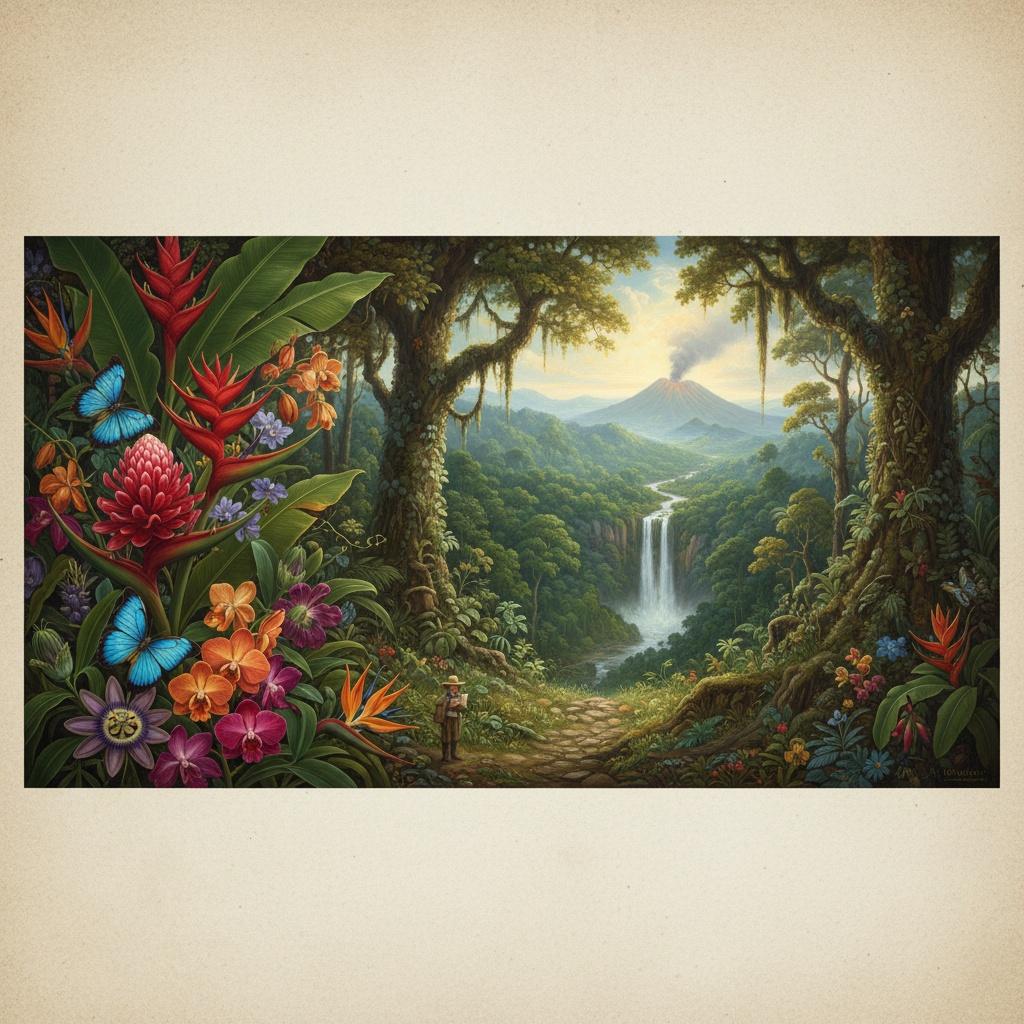
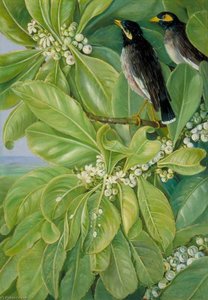
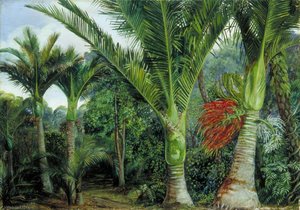
North’s expeditions were much more than mere sightseeing tours; they were profound immersions into the heart of distant ecosystems. In the lush, humid expanses of Brazil, her work captures the overwhelming abundance of the South American tropics. One can almost feel the heat radiating from her depictions of Brazilian flora, where the interplay of dense foliage and striking butterflies creates a sense of organized chaos. Her paintings from this region, such as her exquisite studies of the citron, showcase a magnificent ability to balance still-life intimacy with the broader context of a tropical paradise.
Similarly, her journey through Jamaica offered a different yet equally captivating palette. In works like Flowers of a Shrubby Convolvulus, North captures the specific character of Jamaican flora with a stunning clarity that reflects her deep connection to the landscape. These paintings are not merely portraits of plants; they are atmospheric records of a specific time and place. Through her eyes, we see the Caribbean not as a distant colonial outpost, but as a vibrant, essential component of the Earth's biological tapestry, rendered with a reverence that transcends the boundaries of geography.
Nature's Wonders: From Carnivorous Plants to Tropical Still Lifes
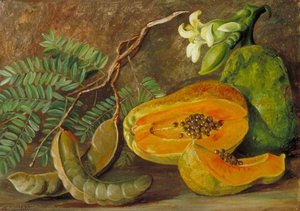
One of the most fascinating aspects of North’s oeuvre is her willingness to explore the more unusual and even predatory aspects of the botanical world. Her fascination with North American carnivorous plants reveals a scientific curiosity that was ahead of its time. In these works, she captures the tension between beauty and danger, showcasing diverse carnivorous species alongside fruits and vegetables in a way that highlights the fascinating complexity of evolutionary adaptation. This ability to find aesthetic value in the "strange" or "fearsome" is a hallmark of her artistic maturity.
Beyond the predatory, there is a profound tenderness in her botanical still lifes. She had a gift for isolating a single moment of beauty—a butterfly resting upon a fruit, or the delicate arrangement of a flowering shrub. These compositions allow the viewer to contemplate the ephemeral nature of life. By focusing on the minute details of fruit, foliage, and insects, she elevates the humble elements of the natural world to the status of high art, reminding us that even the smallest corner of a forest holds infinite wonder.
The Victorian Naturalist: Bridging Art and Scientific Discovery
Marianne North occupied a unique intersection of two burgeoning disciplines: the fine arts and the natural sciences. During the Victorian era, the line between an artist’s observation and a scientist’s data was often blurred, and North navigated this boundary with unparalleled skill. Her paintings served as vital visual supplements to the botanical discoveries of her age. While she may not have been a trained botanist in the academic sense, her work provided a level of ecological context that many written descriptions lacked, documenting how plants interacted with their pollinators and their environment.
This synthesis of art and science gave her work an enduring authority. She was documenting the "truth" of nature through the lens of aesthetic beauty. Her ability to capture the essence of a species—its color, its form, its habitat—made her a significant contributor to the visual culture of natural history. In an era before widespread photography, her canvases were essential records of biodiversity, preserving the likeness of species that would later face the threats of habitat loss and environmental change.
Preserving the Vibrant World: Bringing North’s Masterpieces into Modern Interiors
Today, the works of Marianne North continue to resonate with a modern audience that finds solace in the organic and the authentic. In an age dominated by digital perfection, there is a profound longing for the tactile, the textured, and the deeply human. Her paintings, with their visible brushstrokes and rich, layered pigments, offer a sensory experience that transcends the screen. Bringing such works into a contemporary home or gallery space allows for a reconnection with the natural world and a celebration of historical exploration.
Whether through high-quality oil reproductions that capture the impasto texture of her original canvases or museum-grade Giclée prints that preserve her vibrant color palette, North’s vision remains accessible. Her art serves as a bridge between the past and the present, inviting us to slow down and appreciate the intricate beauty of the world around us. To display her work is to invite a sense of adventure, scientific wonder, and timeless elegance into one's personal sanctuary, ensuring that her journey through the exotic landscapes of the world continues to inspire generations to come.
About ArtsDot.com
Since 2004, ArtsDot has been a global leader in bringing the world's most cherished masterpieces to life. From meticulously handcrafted oil reproductions that capture every tactile brushstroke to museum-quality Giclée prints, we specialize in making art history accessible and enduring. Our mission is to preserve human creativity through exceptional craftsmanship, offering everything from custom portrait commissions to large-scale architectural murals for collectors and professionals worldwide.