The Genesis of Agitation: The Historical Roots of German Expressionism
To understand the seismic shift brought about by German Expressionism, one must look toward the turbulent landscape of early 20th-century Europe. It was an era defined by profound societal upheaval, the rapid industrialization of the German landscape, and a growing sense of alienation within the modern urban experience. As the comforts of the old world dissolved into the mechanical roar of progress, artists felt a desperate need to move beyond the mere imitation of reality. They sought not to capture how the world looked, but how it felt in its most raw, unadulterated state.
This movement was not merely an aesthetic choice; it was a psychological necessity. The burgeoning tension of pre-war Europe and the subsequent trauma of World War I acted as a crucible, forging a new way to communicate the anxieties, fears, and spiritual yearnings of the human soul. By rejecting the polished naturalism of previous eras, these artists embraced a visceral language of agitation, using the canvas as a site for emotional exorcism. The historical weight of this period is etched into every jagged line and clashing hue, marking the birth of a movement that prioritized subjective truth over objective observation.
A Visual Language of Distortion: Key Characteristics and Techniques
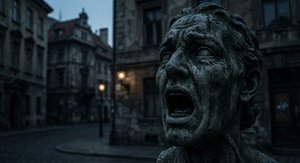
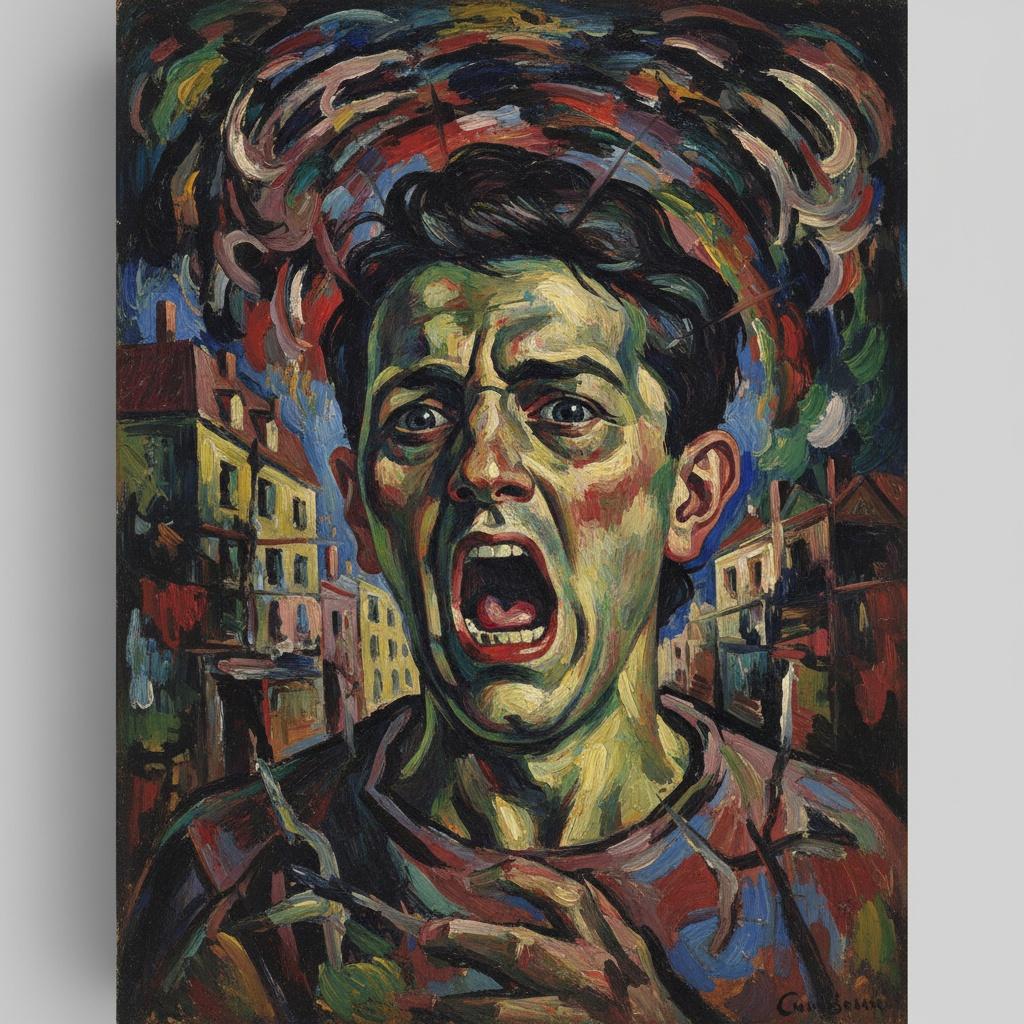
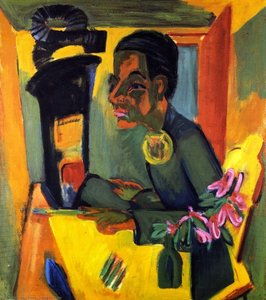
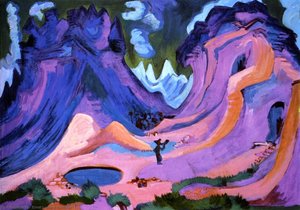
The hallmark of Expressionist mastery lies in its deliberate abandonment of traditional perspective and anatomical accuracy. In the hands of an Expressionist, the physical world is subject to the whims of emotion. Shapes are elongated, landscapes are tilted at dizzying angles, and faces are often rendered with mask-like intensity. This intentional distortion serves a singular purpose: to amplify the psychological resonance of the subject matter. When a figure is twisted or a sky is rendered in an unnatural, bruised violet, the viewer is forced to confront the underlying emotional turbulence that reality alone cannot convey.
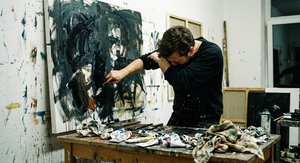
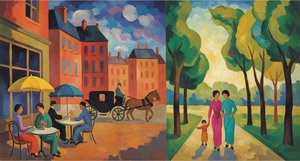
Color, too, underwent a radical transformation during this period. Moving away from the harmonious palettes of Impressionism, Expressionists utilized bold, non-naturalistic colors to evoke specific moods. A face might be painted in sickly greens to suggest decay or profound sickness, while a sunset might explode in aggressive reds and oranges to signal passion or impending doom. The application of paint itself became more tactile and energetic. Through thick impasto and visible, frantic brushstrokes, the very movement of the artist’s hand becomes part of the narrative, creating a three-dimensional texture that breathes with life and unrest.
The Vanguard of Emotion: Exploring Die Brücke and Der Blaue Reiter
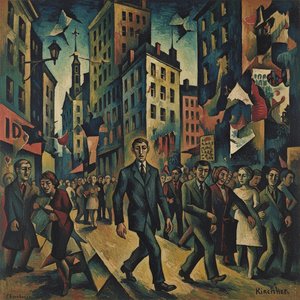
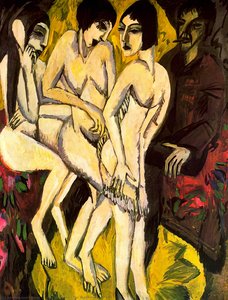
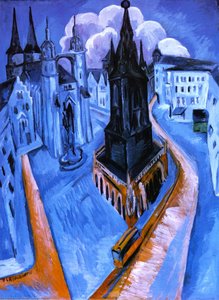
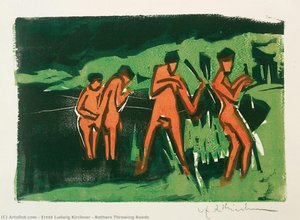
The Expressionist movement was primarily driven by two distinct yet philosophically linked groups: Die Brücke (The Bridge) and Der Blaue Reiter (The Blue Rider). The members of Die Brücke, centered in Dresden and later Berlin, sought to create a bridge between the past and the future. Artists such as Ernst Ludwig Kirchner utilized sharp, angular forms and jarring color contrasts to depict the gritty, often unsettling reality of urban life. Their work is characterized by a certain primitive intensity, capturing the friction of modern existence with a raw, almost confrontational energy.
In contrast, Der Blaue Reiter, led by visionaries like Wassily Kandinsky and Franz Marc, pursued a more spiritual and lyrical path. While Die Brücke focused on the social and psychological tensions of the city, Der Blaue Reiter sought to transcend the material world entirely. Their approach was deeply rooted in abstraction, using color and form as musical elements to evoke cosmic or spiritual truths. For Kandinsky, color was a direct conduit to the soul, capable of bypassing the intellect to touch the divine. Together, these two groups provided the dual pillars of Expressionism: one anchored in the visceral reality of human struggle, the other reaching toward the infinite mysteries of the spirit.
Masterpieces of the Unconscious: Iconic Works and Their Symbolic Depth
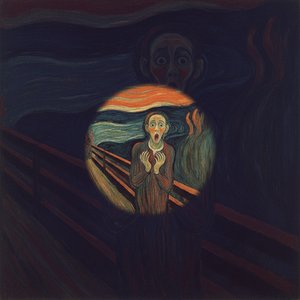
The true power of Expressionist art is perhaps most profoundly felt when contemplating its most iconic masterpieces. While Edvard Munch is often viewed as a precursor to the movement, his work, such as the hauntingly intimate Kiss IV, laid the essential groundwork for the Expressionist exploration of intimacy and dread. His ability to use woodcut-like starkness and symbolic imagery to convey deep-seated psychological states became a blueprint for those who followed. These works do not merely depict scenes; they act as windows into the unconscious mind.
Every element within these paintings carries a heavy symbolic burden. A solitary figure in a desolate landscape is rarely just a person; it is an emblem of existential loneliness. The use of certain motifs, such as the jagged silhouettes of urban architecture or the primal energy of animal forms, serves to deepen the narrative complexity. By studying these works, one discovers a complex web of symbols that speak to universal human experiences—fear, ecstasy, isolation, and rebirth. These paintings demand an active engagement from the viewer, inviting us to decode the layers of meaning hidden beneath the surface of the pigment.
The Enduring Legacy: How Expressionism Reshaped Modern Art and Aesthetics
The impact of German Expressionism extends far beyond the early 20th century; it fundamentally altered the DNA of modern art. By legitimizing the use of distortion and non-naturalistic color as tools for emotional truth, the movement paved the way for subsequent developments in Abstract Expressionism, Neo-Expressionism, and even much of contemporary figurative art. The freedom to prioritize the artist's internal vision over external reality remains one of the most significant legacies of this era.
Today, we see the echoes of Expressionist boldness in everything from graphic design to cinema. The movement taught us that art can be a powerful vehicle for social critique and psychological exploration. It challenged the boundaries of what is considered "beautiful," replacing classical harmony with a more complex, often uncomfortable, aesthetic of truth. As we continue to navigate our own era of rapid change and uncertainty, the raw, emotive power of German Expressionism remains as relevant and resonant as ever, reminding us of the enduring strength of the human spirit in the face of chaos.
At ArtsDot.com, we celebrate this profound legacy of human creativity. We specialize in bringing these powerful historical movements into the modern home through museum-quality reproductions and bespoke oil paintings. Whether you are drawn to the jagged intensity of Kirchner or the spiritual abstractions of Kandinsky, our master artists use traditional techniques—applying multiple layers of oil paint to create tactile, living textures—to ensure that the emotional soul of every masterpiece is preserved for generations to come.