
The Essence of Flemish Baroque: A Symphony of Motion and Emotion
To step into the world of the Flemish Baroque is to surrender oneself to a sensory deluge, where the stillness of canvas is replaced by an eternal, rhythmic pulse. Unlike the balanced, often static serenity of the High Renaissance, the Flemish Baroque movement emerged as a profound celebration of vitality, capturing life in its most turbulent and magnificent states. It was an era defined by a deliberate departure from restraint, favoring instead a theatricality that sought to stir the very soul of the observer. This period was not merely about depicting scenes; it was about orchestrating experiences through a symphony of motion and emotion.
The movement flourished in the vibrant, culturally rich territories of Flanders, serving as a visual manifestation of the era's religious fervor and burgeoning prosperity. Artists sought to bridge the gap between the divine and the earthly, using sweeping gestures and complex, swirling compositions to guide the eye through narratives of epic proportions. Every brushstroke seemed imbued with a sense of urgency, as if the subjects were caught in a fleeting moment of transformation. This inherent dynamism created a profound psychological connection with the viewer, inviting them to participate in the drama rather than merely witness it from a distance.
Ultimately, the essence of this movement lies in its ability to harmonize the chaotic with the beautiful. Through the masterful use of scale and energy, Flemish masters transformed historical, mythological, and religious subjects into living, breathing entities. It remains a testament to the power of art to capture the ephemeral nature of human existence, frozen forever in a state of exquisite, moving grace.
Chiaroscuro and the Divine: The Mastery of Light and Shadow
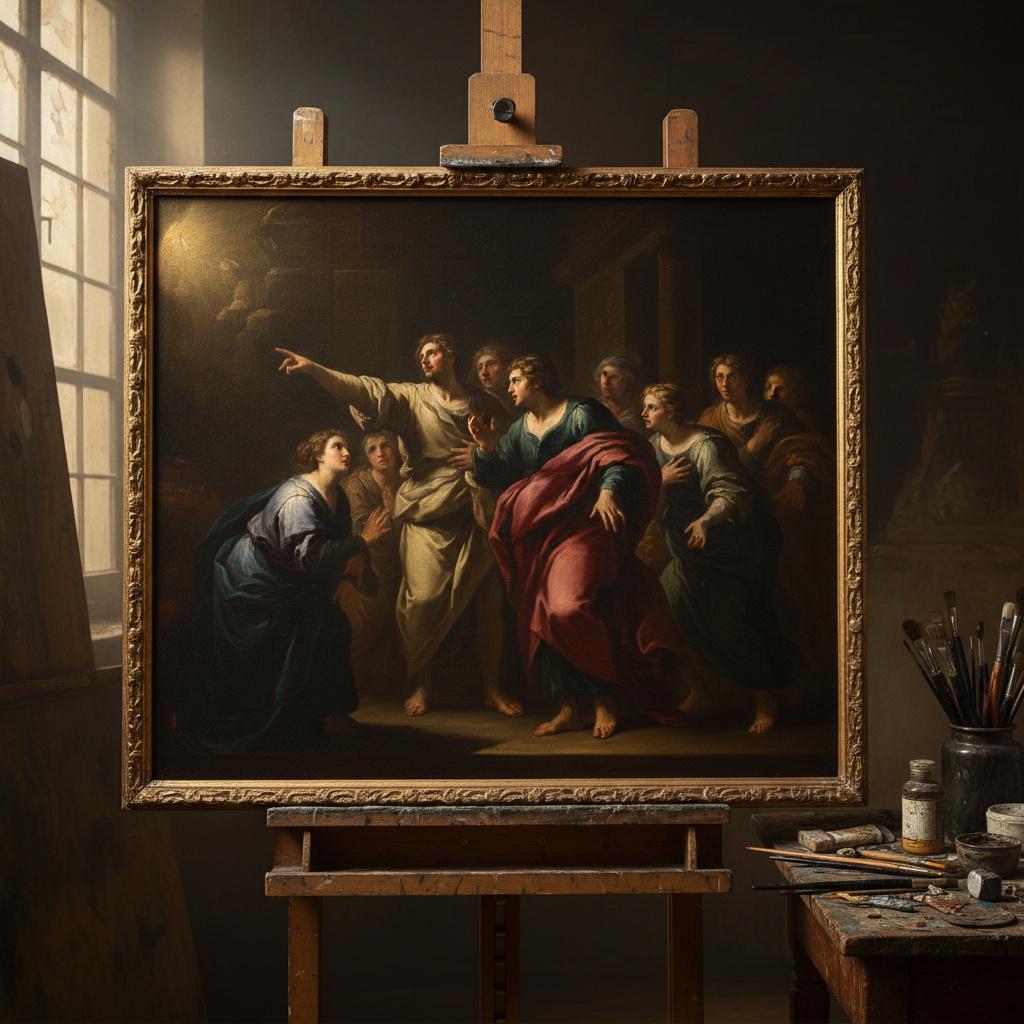
At the heart of the Flemish Baroque’s dramatic impact lies one of the most potent technical innovations in art history: chiaroscuro. This sophisticated manipulation of light and shadow serves as the movement's primary narrative engine, providing depth, volume, and a sense of profound mystery. By casting deep, velvety shadows against brilliant, focused highlights, artists were able to sculpt figures out of the darkness, imbuing them with a three-dimensional presence that feels almost tactile.
This interplay of light was never merely decorative; it was deeply symbolic. In many works, a sudden shaft of light descending from an unseen source functions as a divine intervention, illuminating a saint’s face or a martyr's struggle, thereby sanctifying the scene through pure luminosity. The shadows, conversely, represent the unknown, the earthly, and the weight of mortality. This stark contrast creates a visual tension that mirrors the spiritual struggles of the era, making the canvas a battlefield between clarity and obscurity, grace and sin.
The mastery of this technique required an unparalleled understanding of pigment and translucency. By layering thin glazes of oil paint, Flemish masters could achieve a glow that seems to emanate from within the subject itself. This luminous quality ensures that even in the darkest corners of a composition, there is a lingering sense of presence. Through chiaroscuro, the light does not just reveal form; it reveals meaning, turning every painting into a profound meditation on the duality of the human condition.
Peter Paul Rubens: The Architect of Baroque Grandeur
No discussion of the Flemish Baroque would be complete without an exploration of its most towering figure, Sir Peter Paul Rubens. A true polymath—diplomat, scholar, and painter—Rubens acted as the architect of a new visual grandeur. His work embodies the very zenith of Baroque splendor, characterized by a robust physicality and a color palette so vibrant it seems to pulse with life. Rubens possessed an uncanny ability to organize complex, multi-figure compositions into a cohesive whole, where every limb, drapery fold, and facial expression contributes to a singular, overwhelming impact.
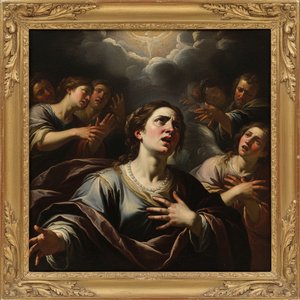
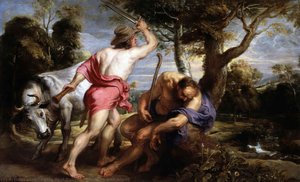
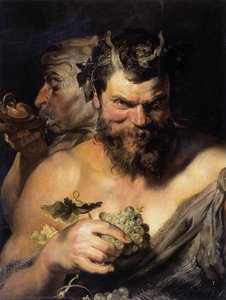
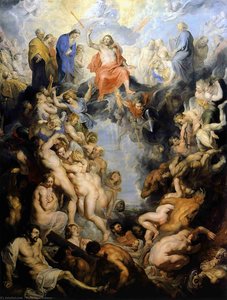
In masterpieces such as Saint Peter or his depictions of mythological battles, one observes the signature Rubensian style: a celebration of flesh, movement, and muscularity. His figures are rarely static; they twist, strain, and interact with an energy that defies the boundaries of the frame. This was achieved through a masterful command of impasto and fluid brushwork, allowing him to capture the sheen of skin and the heavy weight of silk with equal virtuosity. Rubens did not just paint history; he breathed life into it, making the ancient legends feel contemporary and urgent.
Beyond his individual genius, Rubens’ influence was structural. He established a standard of excellence that redefined European taste, blending the classical traditions of Italy with the rich, textural sensibilities of the North. His ability to marry the intellectual depth of Renaissance humanism with the raw, emotional intensity of the Baroque ensured that his legacy would remain an eternal cornerstone of Western art, inspiring generations of artists to pursue the sublime.
Sensuality and Symbolism: Decoding the Flemish Visual Language
The Flemish Baroque is often celebrated for its sensuality, a quality that manifests in the lush textures and fleshy, lifelike depictions of the human form. This was not an aimless pursuit of beauty, but rather a sophisticated language of symbolism. In works like the Portrait of Isabella Brandt, the artist utilizes a soft, tactile approach to skin and fabric to convey status, intimacy, and the ephemeral nature of earthly delights. The sensuality of the era is deeply intertwined with the concept of memento mori—the reminder of mortality—where the very richness of life serves to highlight its fleetingness.
Every element within a Flemish composition often carries a hidden layer of meaning. A wilting flower, a discarded piece of jewelry, or the specific way light hits a piece of fruit can all serve as allegories for virtue, vanity, or the passage of time. This layered approach invites the discerning viewer to engage in a process of decoding, turning the act of looking into an intellectual exercise. The beauty on the surface is merely the gateway to a deeper, more complex theological and philosophical discourse.
This marriage of the physical and the metaphysical is what gives Flemish art its enduring allure. It celebrates the tangible world—the weight of velvet, the warmth of skin, the brilliance of gold—while simultaneously pointing toward the eternal. By mastering this visual vocabulary, Flemish artists created works that are as intellectually stimulating as they are aesthetically breathtaking, ensuring that their narratives resonate far beyond the era in which they were painted.
The Legacy of the Workshop: Craftsmanship and Artistic Continuity
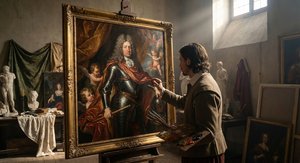
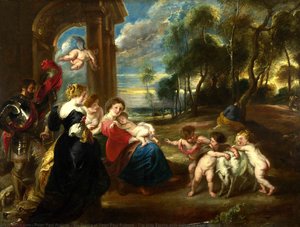
The grandeur of the Flemish Baroque was not solely the product of isolated geniuses; it was the result of a highly organized and sophisticated system of artistic production. The Workshop of Peter Paul Rubens, for instance, functioned as a powerhouse of creativity and technical excellence. These workshops were essential ecosystems where master artists directed a legion of skilled specialists—painters of landscapes, drapery, and portraits—to execute large-scale commissions that required immense logistical coordination.
This collaborative environment ensured the continuity of style and the preservation of high-level craftsmanship across decades. Apprentices learned the meticulous science of pigment preparation, the delicate art of glazing, and the complex mathematics of composition under the watchful eyes of masters. This rigorous training meant that even works produced by the workshop maintained a standard of "Master" level quality, contributing to a cohesive movement that could dominate the European art market.
Today, this legacy lives on through the preservation of these techniques and the continued admiration for their technical brilliance. At ArtsDot.com, we honor this tradition of academic excellence by providing hand-painted reproductions that capture the very soul of the Old Masters. Our artists, many holding degrees from prestigious Fine Arts academies, utilize the same layered oil techniques and premium pigments to ensure that the tactile depth, the vibrant colors, and the dramatic light of the Flemish Baroque are brought into the modern home, allowing the splendor of the past to remain a living part of our present.