The Architect of the Grand Style: Defining an Era
To understand the trajectory of British art, one must first encounter the formidable presence of Sir Joshua Reynolds. As the inaugural President of the Royal Academy, Reynolds was far more than a mere chronicler of faces; he was the deliberate architect of a movement known as the Grand Style. In an era where portraiture often risked descending into mere vanity or superficial likeness, Reynolds sought to elevate the medium to the heights of classical antiquity. He believed that a portrait should not simply capture the physical contours of a sitter but should instead evoke their moral character and social significance through a sophisticated language of allegory and historical resonance.
This ambition required a profound departure from the literalism of his contemporaries. By drawing inspiration from the masters of the Renaissance and the sculptural dignity of classical antiquity, Reynolds infused his subjects with an air of timelessness. His work became a bridge between the ephemeral nature of human life and the eternal ideals of virtue and nobility. Through this lens, every brushstroke served a higher purpose, transforming the burgeoning British aristocracy into icons of enduring grace. It was a period where art did not merely reflect society but actively shaped its cultural identity, establishing a standard of excellence that would resonate through the centuries.
Chiaroscuro and Command: The Dramaturgy of Light
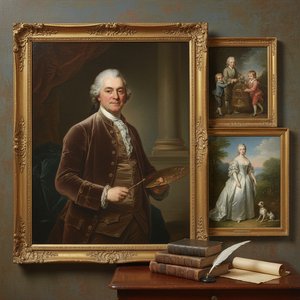
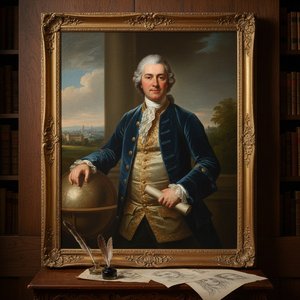
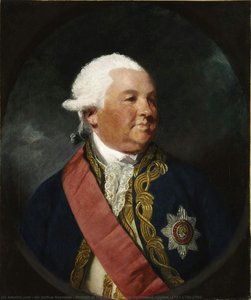
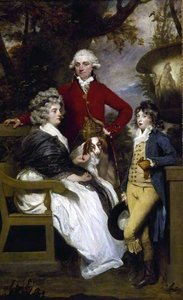
The true soul of a Reynolds masterpiece lies in his unparalleled mastery of light. He utilized chiaroscuro—the dramatic interplay between profound shadow and brilliant illumination—not merely as a technical device, but as a narrative tool to command the viewer's gaze. In works such as the portrait of Sir William Fawcett, one observes how light is deployed with theatrical precision. The illumination does not merely rest upon the surface; it carulated the textures of military attire and the authoritative contours of the face, creating a sense of three-dimensional presence that feels almost palpable.
This manipulation of light serves to create a psychological depth that transcends the canvas. By casting portions of the composition into mysterious obscurity, Reynolds invites the observer to contemplate what remains unseen, fostering an intimate dialogue between the subject and the spectator. The light often emerges from an indeterminate source, much like a spotlight on a darkened stage, highlighting the textures of silk, the sheen of armor, or the softness of skin with equal virtuosity. This controlled luminosity is the heartbeat of his technique, providing the rhythmic pulse that gives his portraits their characteristic vitality and dramatic tension.
Nobility in Oil: Analyzing Reynolds' Iconic Portraits
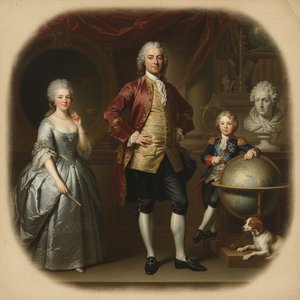
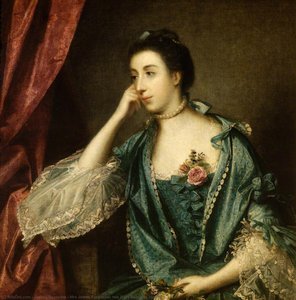
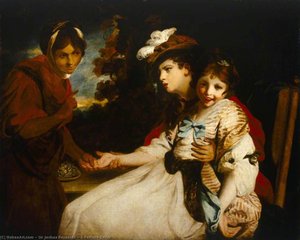
When we examine the breadth of Reynolds’ oeuvre, we see a fascinating spectrum of human dignity. His portraits range from the delicate, ethereal beauty found in the Portrait of Miss Anne Mead to the more rugged, commanding presence seen in his depictions of the landed gentry. In each instance, there is an unmistakable sense of poise. He possessed a singular ability to balance the specific details of a sitter's identity—the lace of a collar or the luster of a pearl—with a generalized, idealized elegance that stripped away the mundane and replaced it even with the monumental.
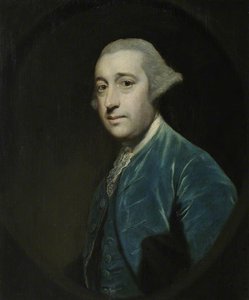
Even in his more intimate studies, such as the captivating Edward Kinaston, the influence of his academic rigor is evident. There is a deliberate composition at play, where every element, from the tilt of a head to the placement of a hand, contributes to an overall sense of equilibrium and grace. These portraits function as much as psychological studies as they do social documents. He captured the essence of an era's confidence, utilizing oil paint to build layers of meaning that suggest a life lived with purpose and a status earned through lineage and merit.
Legacy of the Academy: Influence on British Portraiture
The influence of Sir Joshua Reynolds extends far beyond the frames of his individual canvases. As the leader of the Royal Academy, he established the pedagogical foundations upon which generations of British artists would build. His theoretical writings, though sometimes controversial for their insistence on classical precedents, provided a roadmap for the development of a national school of painting. He encouraged his pupils to look toward the "Great Style," fostering an environment where technical proficiency was inseparable from intellectual depth.
This legacy is also visible in the works of those who followed and even those who sought to interpret him, such as the evocative engravings by George Keating after Reynolds. The tradition of high-society portraiture in Britain owes its structural integrity and its penchant for dramatic narrative to his early leadership. Even as art moved toward more naturalistic and eventually impressionistic modes, the standard of excellence and the emphasis on compositional hierarchy established by Reynolds remained a benchmark against which all subsequent portraitists were measured.
Preserving the Masterpiece: Bringing 18th-Century Elegance to Modern Interiors
In the contemporary era, the allure of the Old Masters remains undiminished. For the modern collector, bringing a piece of this historical grandeur into a private residence offers an opportunity to anchor a space with profound cultural weight. The dramatic lighting and rich textures characteristic of Reynolds' style provide a sophisticated focal point that complements both classical and modern architectural settings. Whether through a meticulously hand-painted oil reproduction or a high-fidelity Giclée print, the presence of such works introduces a sense of permanence and narrative depth to a home.
Integrating these historical aesthetics requires an appreciation for the tactile nature of art. A true reproduction, much like the originals, thrives on the visible movement of the brush and the interplay of light across the canvas surface. By selecting pieces that honor the Grand Style, one does not merely decorate a wall; one curates an atmosphere of intellectual curiosity and timeless elegance. It is a way to bridge the gap between the storied past and the present day, ensuring that the luminous mastery of Sir Joshua Reynolds continues to illuminate our modern world.
At ArtsDot.com, we are dedicated to preserving this artistic heritage. Our studio specializes in creating exquisite, hand-painted oil reproductions that capture the very soul of the Old Masters. From the complex layering of pigments to the meticulous recreation of historical textures, our artists strive to bring the grandeur of Reynolds into your personal collection with unparalleled authenticity and passion.