
Introduction
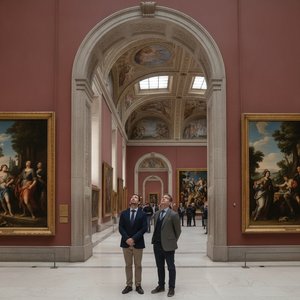
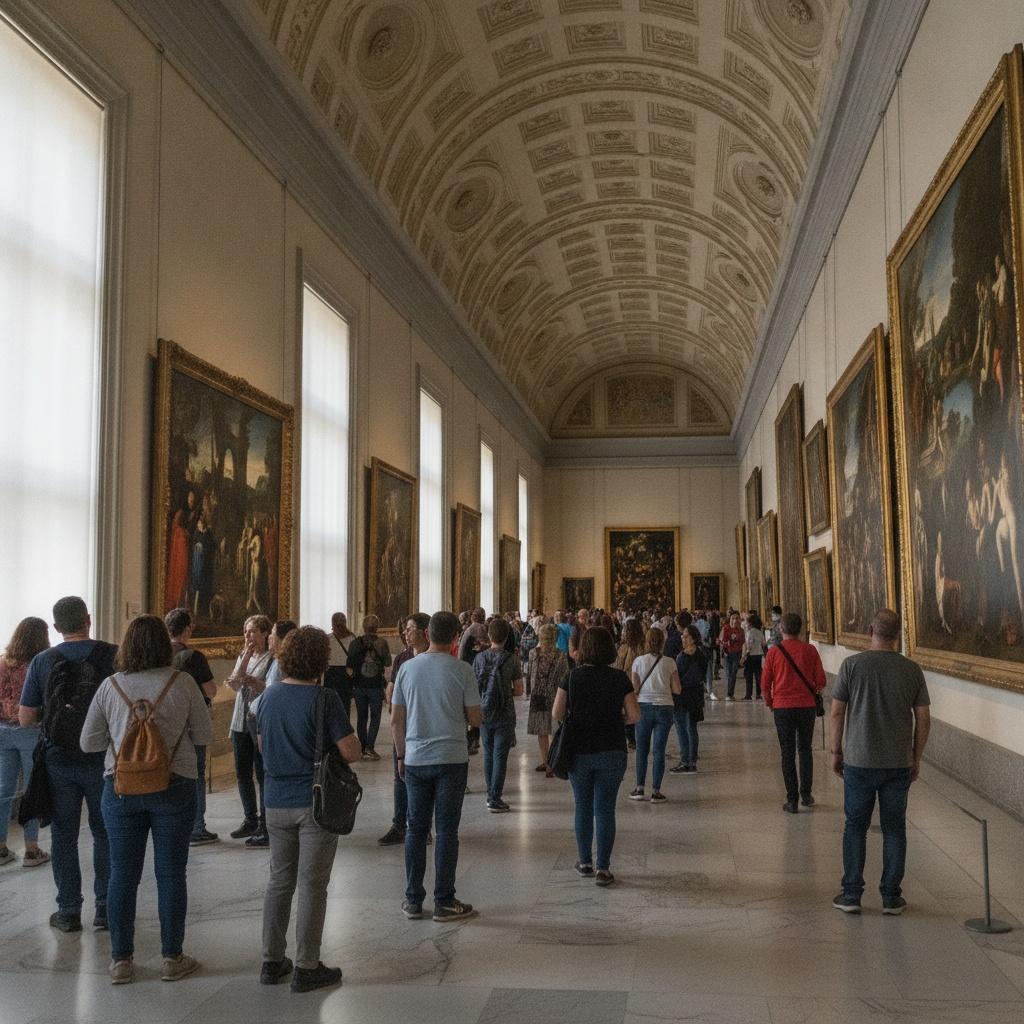
To step across the threshold of the Museo Nacional del Prado is to surrender oneself to a profound dialogue with history. Located in the heart of Madrid, this magnificent palace does not merely house paintings; it breathes with the spirit of centuries, acting as a living chronicle of Spain’s royal grandeur and its deep-seated connection to the European soul. As you wander through Juan de Villanueva’s neoclassical halls, where light is orchestrated to dance upon gilded frames, you are not just observing art—you are witnessing the very evolution of human emotion, captured in pigment and oil.
The Prado stands as a testament to a transformative era, born from Ferdinand VII’s vision to move beyond a mere cabinet of natural history toward a sanctuary for the sublime. Within these walls, the heavy shadows of the Spanish Baroque meet the ethereal, spiritual intensity of El Greco, and the dramatic chiaroscuro of Caravaggio finds its resonance in the works of Velázquez and Goya. It is a collection where the textures of velvet, the glint of steel, and the haunting depth of a gaze remain as visceral today as they were when the brushes first touched the canvas.
These masterpieces endure because they transcend their era; they speak to our universal experiences of power, tragedy, divinity, and light. Whether it is the meticulous psychological depth of a royal portrait or the turbulent energy of a landscape, each work offers a window into the collective consciousness of mankind. In the following curation, we invite you to embark on a guided journey through the top 25 artworks that define this incomparable institution—a selection designed to stir the senses and illuminate the unparalleled heritage of the Prado.
The Surrender of Breda (Las Lanzas) - Diego Velázquez
 The Surrender of Breda (Las Lanzas) - Diego Velázquez
In the hallowed halls of the Museo del Prado, few works command the room with such quiet, profound dignity as The Surrender of Breda by Diego Velázquez. Beyond its historical significance as a chronicle of the Eighty Years’ War, this masterpiece serves as a moving meditation on the nobility of the human spirit amidst the chaos of conflict. Velázquez transcends the typical triumphalism of royal commissions, replacing the harshness of conquest with a breathtaking moment of mutual respect between the Spanish and Dutch commanders.
The visual language is nothing short of hypnotic; the artist employs a masterful alla prima technique, where loose, atmospheric brushstrokes and a muted palette of ochres and grays create a sense of lived reality. The verticality of the lances—the namesake Las Lanzas —provides a rhythmic structure that guides the eye toward the central, tender exchange of keys. In today’s curated interiors, this painting remains a powerful cultural touchstone, offering a sophisticated study in balance, light, and the enduring grace found within historical narratives.
The Triumph of Death - Pieter Bruegel the Elder
 The Triumph of Death - Pieter Bruegel the Elder
In the hallowed halls of the Museo del Prado, few works command the visceral attention of The Triumph of Death by Pieter Bruegel the Elder. Created around 1562, this masterpiece serves as a hauntingly profound meditation on the fragility of existence, reflecting the profound societal anxieties of the Northern Renaissance. As one of the top 25 artworks in Madrid's most prestigious museum, its placement is earned through Bruegel’s unparalleled ability to weave a narrative of apocalyptic chaos within a meticulously detailed landscape.
The eye wanders through a desolate expanse where an army of skeletons relentlessly pursues humanity, from lowly peasants to high-ranking monarchs. Through a somber palette of ochre, bone-white, and sudden, violent splashes of crimson, Bruegel captures the indiscriminate nature of mortality. This work transcends its historical era; it invites us to reflect on the transience of power and the shared human condition. For the discerning collector or interior designer, the painting’s dramatic chiaroscuro and profound emotional depth offer a powerful, intellectual anchor for any curated collection, sparking a timeless conversation between historical gravity and modern aesthetic sophistication.
The Annunciation - Fra Angelico
 The Annunciation - Fra Angelico
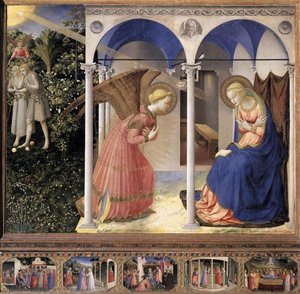
To stand before The Annunciation by Fra Angelico is to witness the precise moment where the earthly realm meets the divine. As one of the most profound highlights within the top 25 artworks in Museo del Prado, Madrid , this masterpiece captures the celestial encounter between the Archangel Gabriel and the Virgin Mary with unparalleled spiritual clarity. The artist, often revered as the 'Angelic Painter,' employs a luminous palette of soft blues, rich golds, and earthy greens that seem to glow from within the panel.
The composition is a masterclass in Early Renaissance precision; the architectural arches guide the eye through a sacred space, while the delicate use of light creates an atmosphere of profound tranquility. Every detail—from the symbolic lily representing purity to the meticulous drapery—invites deep contemplation. This work transcends mere religious iconography, offering a sensory experience of grace and stillness. Even centuries later, the painting’s ability to evoke reverence makes it a timeless inspiration, capable of transforming any sophisticated interior into a sanctuary of peace and historical depth.
Las Meninas (The Maids of Honor) or the Royal Family - Diego Velázquez
 Las Meninas (The Maids of Honor) or the Royal Family - Diego Velázquez
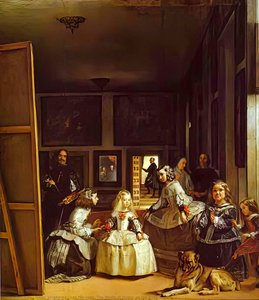
To stand before Las Meninas is to step into a breathing moment of 17th-century Spanish court life, where the boundaries between the observer and the observed dissolve. Diego Velázquez orchestrates a complex dance of light and shadow, casting a luminous glow upon the Infanta Margaret Theresa amidst her entourage of maids, dwarfs, and watchful chaperones. The atmosphere is thick with the scent of oil and aged canvas, characterized by a rich palette of deep ochres, warm browns, and regal silvers that emerge from the velvety shadows of the Alcázar palace.
Velázquez’s mastery of the Baroque style lies in his ability to manipulate perspective; through the subtle reflection in a distant mirror, he invites King Philip IV into the very room where we stand. This profound interplay of reality and illusion creates a cinematic depth that continues to captivate the modern eye. For the discerning collector or interior designer, bringing the essence of this masterpiece into a home offers more than mere decoration; it introduces a sense of historical grandeur and intellectual depth, transforming a contemporary space into a sanctuary of quiet contemplation and timeless elegance.
Deposition - Rogier van der Weyden
 Deposition - Rogier van der Weyden
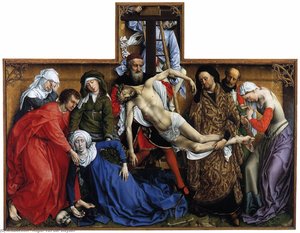
To stand before Rogier van der Weyden’s Deposition is to witness the very pinnacle of Northern Renaissance emotion. This is not merely a painting; it is a profound, sculptural drama frozen in time. Van der Weyden masterfully orchestrates a symphony of grief, where the figures are compressed into a shallow, stage-like space, forcing the viewer to confront the raw, visceral weight of the moment Christ is lowered from the cross.
The technical brilliance lies in the meticulous Netherlandish detail—the luminous glazes that catch the light, the heavy textures of velvet and brocade, and the heartbreakingly realistic tears tracing paths down sorrowful faces. Note the poignant visual echo between the slumped form of Christ and the swooning Virgin Mary; their shared silhouette creates a devastating spiritual connection. With a palette dominated by somber blues, deep crimsons, and earthy shadows, this masterpiece transcends its 15th-century origins. For the discerning collector, bringing a reproduction of this work into a home is an act of transformation, turning a private sanctuary into a gallery of the soul where history and human empathy reside.
Triptych of Garden of Earthly Delights (detail) (23) - Hieronymus Bosch
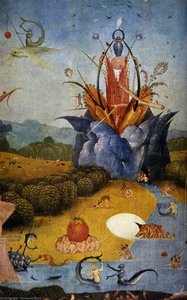 Triptych of Garden of Earthly Delights (detail) (23) - Hieronymus Bosch
To gaze upon the details of Hieronymus Bosch’s Triptych of Garden of Earthly Delights is to step into a fever dream where the boundaries of reality and nightmare dissolve. One does not simply view this work; one becomes lost within its labyrinthine symbolism. This particular detail captures a moment of profound surrealism, where a poised woman sits amidst a menagerie of the strange—lions, dragons, and oversized birds emerging from a landscape of unsettling beauty. It is a masterful exploration of human desire, temptation, and the fragile equilibrium between the divine and the demonic.
As one of the most essential pieces among the top 25 artworks in Museo del Prado, Madrid , Bosch’s masterpiece earns its place through its unparalleled ability to provoke introspection. The meticulous Netherlandish precision and the haunting interplay of light and shadow create a sensory experience that transcends centuries. Bringing such a profound piece into a modern collection—whether through a hand-painted oil reproduction or a curated print—allows one to invite this timeless, intellectual depth into the home, transforming a living space into a sanctuary of historical mystery and philosophical wonder.
Christ Washing the Feet of His Disciples - Jacopo Tintoretto
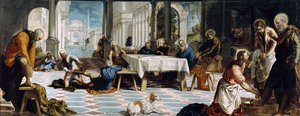 Christ Washing the Feet of His Disciples - Jacopo Tintoretto
To encounter Christ Washing the Feet of His Disciples by Jacopo Tintoretto is to witness a masterclass in Venetian drama, an experience that feels less like viewing a canvas and more like stepping into a sacred, breathing moment. As one of the most profound highlights among the top 25 artworks in Museo del Prado, Madrid, this monumental work captures the very essence of spiritual humility through a revolutionary use of light and shadow.
Tintoretto, often called Il Furioso for his energetic brushwork, employs a breathtaking chiaroscuro that sculpts figures from the darkness, drawing the eye to the radiant white linen and the serene dignity of Christ. The composition is a sophisticated dance of earth tones and sudden, brilliant highlights, creating an architectural depth that commands any space it inhabits. For the discerning collector or designer, this painting offers more than historical significance; it provides a timeless aesthetic of emotional intelligence and grandeur. Its ability to balance heavy, dramatic shadows with luminous textures makes it a definitive masterpiece of the Venetian Renaissance, embodying a legacy of prestige that remains unparalleled in the halls of the Prado.
The Seven Deadly Sins - Hieronymus Bosch
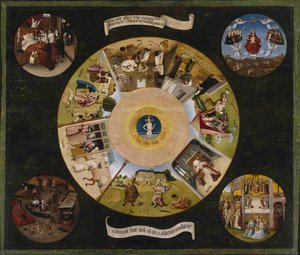 The Seven Deadly Sins - Hieronymus Bosch
To encounter The Seven Deadly Sins by Hieronymus Bosch is to step into a fever dream of medieval morality, where every meticulously rendered figure serves as a mirror to the human soul. As one of the most profound highlights among the top 25 artworks in Museo del Prado, Madrid , this masterpiece transcends mere religious instruction; it is a complex psychological map of temptation and consequence. Bosch utilizes a striking circular composition—a visual manifestation of the Wheel of Fortune—to illustrate how easily prosperity can dissolve into ruin.
The palette, rich with deep reds and luminous golds set against an abyssal dark background, creates a dramatic tension that feels remarkably modern. In an era of digital saturation and fleeting trends, Bosch’s exploration of the cyclical nature of vice and virtue resonates deeply within contemporary curated spaces, offering a meditative pause on the permanence of our choices. The work remains a captivating cultural talking point, inviting viewers to navigate its intricate, surrealist landscapes and find meaning in the delicate balance between earthly desire and spiritual salvation.
St Cecilia - Nicolas Poussin
 St Cecilia - Nicolas Poussin
To encounter St. Cecilia by Nicolas Poussin is to step into a realm where divine melody meets classical order. Painted in 1627, this masterpiece stands as a cornerstone among the top 25 artworks in Museo del Prado, Madrid , capturing a moment of profound spiritual harmony. Poussin orchestrates a breathtaking scene: the patron saint of music sits poised at her organ, her presence anchored by grand, architectural columns that lend a sense of eternal stability to the composition.
The visual narrative is a delicate dance of light and innocence; children are scattered across the canvas, their youthful forms creating a rhythmic interplay with the saint’s serene focus. Poussin’s brushwork achieves a sublime balance between realism and idealization, using a rich palette to evoke an atmosphere of sacred contemplation. The way the light catches the textures of the instrument and the soft drapery invites the viewer into a silent symphony. This work remains essential for any collection, reminding us how the mastery of the Baroque era continues to transform modern spaces with its timeless, emotive grace.
Portrait of a Woman Revealing Her Breasts - Jacopo Tintoretto
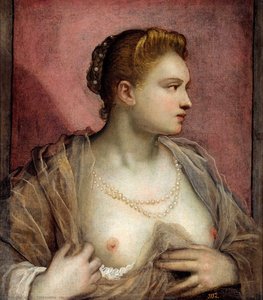 Portrait of a Woman Revealing Her Breasts - Jacopo Tintoretto
In the Portrait of a Woman Revealing Her Breasts , the lines of Jacopo Tintoretto are not merely drawn; they are choreographed . This is not a static composition, but a dance frozen in time, where the soft glow of Renaissance skin meets the dramatic, flickering energy of Venetian light. Painted around 1570, this work captures the very essence of 'Il Furioso,' utilizing rapid, rhythmic brushstrokes that breathe life into the subject's contemplative gaze.
The interplay of light and shadow—Tintoretto’s signature chiaroscuro —creates a palpable depth, pulling the viewer into an intimate encounter with femininity and grace. Against a muted, rose-hued backdrop, the subject emerges with an elegance that feels both vulnerable and profoundly confident. As one of the most captivating highlights among the top 25 artworks in Museo del Prado, Madrid , this masterpiece invites you to consider how such a balance of intensity and serenity could transform your own environment. What if your walls could hold this same rhythm? What if your space could breathe with the quiet, soulful intensity of the masters?
The Story of Nastagio degli Onesti (second episode) - Sandro Botticelli
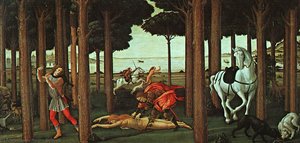 The Story of Nastagio degli Onesti (second episode) - Sandro Botticelli
What haunting secrets lie within the shadowed groves of Botticelli’s The Story of Nastagio degli Onesti (second episode) ? As one of the most captivating narratives among the top 25 artworks in Museo del Prado, Madrid, this masterpiece transports us into the chilling world of Boccaccio’s Decameron . The scene unfolds with a deceptive elegance; beneath the refined, courtly banquet, a spectral violence looms. Botticelli masterfully utilizes his signature linear grace and vibrant tempera tones to depict Nastagio hosting his beloved, unaware that a supernatural reenactment of a knight's tragic demise is about to pierce their tranquil evening.
The painting’s atmospheric tension—where lush, Renaissance greenery meets the visceral dread of a ghostly pursuit—offers a profound sense of historical escape. For the discerning collector, bringing such a piece into a curated space evokes a powerful connection to the drama of the Italian Renaissance. It is more than a depiction of folklore; it is an invitation to contemplate the intersection of beauty and terror, making it an essential cornerstone for any serious appreciation of the Prado’s unparalleled treasures.
Man with a Golden Lace - Jacopo Tintoretto
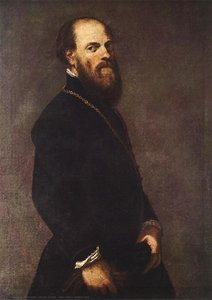 Man with a Golden Lace - Jacopo Tintoretto
To stand before Jacopo Tintoretto’s Man with a Golden Lace is to experience a sudden, breathless encounter with the sixteenth century. Before the eyes even register the intricate textures of the subject's attire, one feels the weight of a profound, silent gaze that bridges the centuries. This portrait, a cornerstone of the top 25 artworks in Museo del Prado, Madrid , captures more than a mere likeness; it captures an enduring human dignity.
Tintoretto, famously known as Il Furioso , employs a masterful chiaroscuro to sculpt the sitter from the velvety darkness. The dramatic light catches the shimmering gold of the lace collar and the heavy chain, creating a sensory feast of texture and prestige. This work earns its place among the Prado's greatest treasures through its ability to command stillness, inviting modern viewers to find a moment of introspection amidst the chaos of contemporary life. Bringing such historical gravity into a curated space allows one to surround themselves with the quiet authority and opulent soul of the Venetian Renaissance.
Descent from the Cross 1 - Rogier van der Weyden
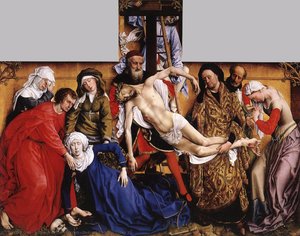 Descent from the Cross 1 - Rogier van der Weyden
In the hallowed corridors of the Museo del Prado, Madrid, Rogier van der Weyden’s Descent from the Cross (c. 1435) does not merely depict a biblical moment; it orchestrates a symphony of profound human sorrow. To stand before this masterpiece is to witness light that has been meticulously composed rather than simply reflected. Van der Weyden, a master of the Early Netherlandish tradition, uses light as a sacred language, illuminating the translucent textures of skin and the heavy, sculptural folds of crimson and ultramarine drapery.
The painting’s brilliance lies in its emotional architecture. The artist captures the agonizing weight of Christ’s body with such visceral precision that you can almost feel the tension in the straining muscles of Joseph of Arimathea. Every jewel-like pigment—from the luminous whites of the shroud to the deep, blood-red robes—serves to guide your soul through a landscape of grief and divinity. It is this unparalleled ability to invent light and emotion that secures its place among the top 25 artworks in the Prado, offering a portal of spiritual inspiration that transcends centuries.
Triptych of Haywain (central panel) - Hieronymus Bosch
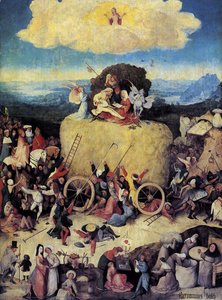 Triptych of Haywain (central panel) - Hieronymus Bosch
While many view the works of Hieronymus Bosch as mere fever dreams, few realize that his meticulous compositions were deeply rooted in a profound, scholarly study of contemporary morality and religious allegory. In the central panel of the Triptych of Haywain , Bosch achieves a conceptual leap that transcends the Northern Renaissance, presenting a panoramic nightmare where a massive hay wagon—symbolizing the fleeting nature of earthly wealth—is pulled through a teeming, chaotic crowd by demonic forces. The technical genius lies in his ability to balance microscopic detail with an overwhelming sense of movement; one can almost feel the grit of the hay and the frantic energy of the thirteen figures struggling amidst grotesque monsters.
To stand before this masterpiece among the top 25 artworks in Museo del Prado, Madrid, is to witness a masterclass in symbolic storytelling. The sheer intellectual ambition required to weave such complex narratives serves as a profound inspiration; much like Bosch’s focused precision, incorporating a high-quality oil reproduction of such a monumental work can cultivate an atmosphere of deep contemplation and sophisticated intellect within a modern home office or private study.
Judith and Holofernes (detail) - Jacopo Tintoretto
 Judith and Holofernes (detail) - Jacopo Tintoretto
In the detail of Judith and Holofernes by Jacopo Tintoretto, a profound and somber midnight blue dominates the composition, casting an atmosphere of heavy, nocturnal tension. This deep, velvety shade does more than merely clothe the heroine; it anchors the psychological weight of the biblical moment, setting a mood of resolute, quiet strength amidst the surrounding chaos. As one of the top 25 artworks in Museo del Prado, Madrid, this piece earns its prestige through Tintoretto’s revolutionary use of color to drive narrative drama. His mastery lies in how these cool, dark tones collide with sudden, piercing highlights, creating a chiaroscuro effect that feels almost cinematic.
For the discerning interior designer or collector, integrating this specific palette into a modern living space can transform a room into a sanctuary of sophisticated drama. Utilizing deep indigos and shadowed textures in a dining room or study evokes the same emotional depth found in the Venetian Renaissance, allowing for a curated environment that feels both timeless and intellectually stimulating. It is an invitation to embrace the beauty of shadow and the power of light.
Self-Portrait (detail) - Titian
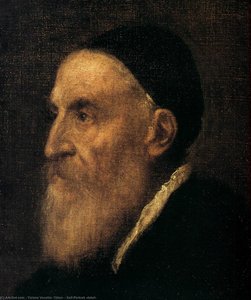 Self-Portrait (detail) - Titian
In the 1566 detail of his Self-Portrait , Tiziano Vecellio—the legendary Titian—does not merely capture a likeness; he composes a profound meditation on the dignity of age. To stand before this work in the Museo del Prado is to witness a master orchestrating light as if it were a silent sonata. The illumination does not simply rest upon his weathered features; it emerges from within, dancing across the cascading white of his beard and the deep, velvety shadows of his black robe.
Titian utilizes a masterful sfumato technique, blurring the boundaries between skin and atmosphere to create an emotional depth that feels startlingly modern. The palette of muted ochres and somber tones invites a quiet, introspective journey, revealing a man who has traded youthful idealism for psychological truth. This piece is essential among the top 25 artworks in Madrid because it transcends mere portraiture; it is a visceral experience of time itself. As you observe the expressive, textured brushstrokes, imagine this luminous gravity bringing a sense of historical soul and timeless authority to your own curated collection.
The Cure of Folly (Extraction of the Stone of Madness) - Hieronymus Bosch
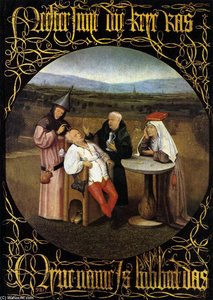 The Cure of Folly (Extraction of the Stone of Madness) - Hieronymus Bosch
To encounter The Cure of Folly (Extraction of the Stone of Madness) by Hieronymus Bosch is to step directly into a fever dream of the late Middle Ages. This work does not merely depict a scene; it captures the palpable tension between burgeoning humanism and deep-seated religious anxiety. As one of the most profound highlights among the top 25 artworks in Museo del Prado, Madrid, Bosch’s masterpiece redefines the boundaries of surrealism long before the term existed. Through his meticulous Northern Renaissance technique, he presents a bizarre surgical procedure that serves as a biting satire on human irrationality and intellectual pretension.
The painting’s inclusion in this prestigious collection is essential, as it challenges the viewer to find meaning within its grotesque figures and symbolic flora. At ArtsDot, we believe such evocative narratives belong in the modern sanctuary. Imagine this profound exploration of the human psyche rendered as a hand-painted oil reproduction in your own study or gallery; it transforms a mere wall into a window onto history’s most captivating mysteries, ensuring your space remains a sophisticated statement of intellectual depth.
Paradise and Hell - Hieronymus Bosch
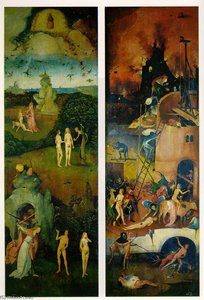 Paradise and Hell - Hieronymus Bosch
In the silent corridors of the Museo del Prado, Hieronymus Bosch’s Paradise and Hell exists as a profound duality, a vision where the serenity of creation meets the visceral terror of the abyss. This monumental double-sided masterpiece is immortalized among the top 25 artworks in Museo del Prado, Madrid, because it captures the eternal tension between divine grace and human frailty with unparalleled psychological depth.
To behold this work is to experience a sensory metamorphosis: one moment, you are bathed in the lush, verdant greens and soft, Edenic light of Adam and Eve’s innocence; the next, you are thrust into an inferno of suffocating blacks, fiery reds, and grotesque, writhing shadows. Bosch’s meticulous brushwork breathes life into every fantastical creature and symbolic bloom, creating a landscape that feels both ancient and hauntingly surreal. For the modern collector or designer, such a piece serves as a powerful conversation starter—a dramatic study in contrast and narrative complexity that brings an intellectual, avant-garde soul to any sophisticated interior.
Virgin and Child (Durán Madonna) - Rogier van der Weyden
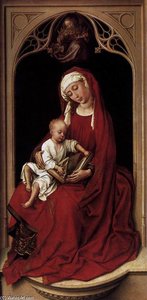 Virgin and Child (Durán Madonna) - Rogier van der Weyden
In the hallowed halls of the Museo del Prado, Madrid, few works command a silence as profound as the Virgin and Child , famously known as the Durán Madonna . Painted around 1440 by the Early Netherlandish master Rogier van der Weyden , this masterpiece transcends simple religious iconography to offer a window into the very soul of spiritual intimacy. The painting is a triumph of technical precision; through the sophisticated use of oil glazing, Van der Weyden achieves a luminous, ethereal glow that makes the crimson robes of the Virgin appear almost tactile.
As one of the top 25 artworks in the Prado, its relevance persists in contemporary design through its celebration of texture and light. The meticulous rendering of the architectural niche and the heavy, symbolic books creates a sense of grounded realism that resonates with today's appreciation for hyper-detailed, soulful aesthetics. It is not merely a portrait of divinity, but a masterclass in how light and shadow can evoke an enduring, emotional presence that continues to captivate the modern collector.
Pietà - Rogier van der Weyden
 Pietà - Rogier van der Weyden
To stand before Rogier van der Weyden’s Pietà is to witness a profound, silent dialogue between human grief and divine grace. Completed around 1450, this masterpiece transcends mere religious iconography; it captures the visceral, heavy stillness of a mother cradling her lifeless son. The painting belongs among the top 25 artworks in Museo del Prado, Madrid, because of its unparalleled ability to evoke compassio —a shared, empathetic suffering that resonates across centuries. Van der Weyden’s background in goldsmithing is evident in the meticulous textures of the heavy drapery and the luminous, almost sculptural quality of the figures.
The emotional depth and technical brilliance of this Early Netherlandish treasure offer a timeless window into the soul. At ArtsDot.com, we believe such profound beauty should not be confined to museum walls. Our master artists specialize in creating hand-painted oil reproductions that preserve every delicate glint of light and emotive brushstroke, allowing you to bring this sacred, historical elegance into your own private collection with authentic, museum-grade craftsmanship.
St Andrew and St Francis - El Greco
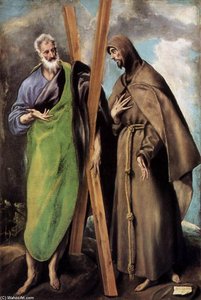 St Andrew and St Francis - El Greco
To stand before El Greco’s St Andrew and St Francis is to witness a profound dialogue between the earthly and the divine. Within the hallowed halls of the Museo del Prado, this 1595 masterpiece emerges from a dramatic, swirling sky, where light and shadow perform a sacred dance known as chiaroscuro. The figures, rendered with El Greco’s signature elongated grace, possess an ethereal intensity that transcends mere portraiture; they are vessels of spiritual fervor.
The composition is anchored by the weathered texture of the wooden cross, a symbol of sacrifice that draws the eye through layers of rich, earthy ochres and deep, contemplative blues. Through masterful impasto , the artist breathes life into the heavy drapery and solemn expressions, creating a tactile experience that feels almost sculptural. Owning a hand-painted reproduction of such a work is not merely an acquisition; it is an inheritance of a lineage of taste. At ArtsDot, we invite you to bring this legacy of Spanish Mannerism into your own space, where the dramatic light of El Greco can illuminate your walls with the same timeless devotion found in Madrid.
Birth of St John the Baptist - Artemisia Gentileschi
 Birth of St John the Baptist - Artemisia Gentileschi
In the hallowed halls of the Museo del Prado, Artemisia Gentileschi’s Birth of St John the Baptist emerges as a profound meditation on the intersection of human vulnerability and divine grace. This 1635 masterpiece transcends simple biblical illustration; it is a visceral exploration of femininity and resilience. Through her masterful command of tenebrismo , Gentileschi utilizes dramatic chiaroscuro to pierce the shadows, directing our gaze toward the radiant, tender moments of life unfolding amidst the darkness.
The painting’s visual language—marked by stark contrasts and deep, emotive tones—resonates powerfully with contemporary sensibilities that value authentic, raw storytelling. As one of the top 25 artworks in Museo del Prado, Madrid, it serves as a cultural touchstone, reflecting modern dialogues surrounding female agency and the strength found in domestic sanctity. Every element, from the symbolic bowl of nourishment to the solemn posture of the onlookers, contributes to a narrative of profound emotional depth. To stand before this canvas is to witness a pioneer of the Baroque era reclaiming the spotlight, turning a moment of biological reality into an eternal, spiritual triumph.
Blind Musician - Georges de la Tour
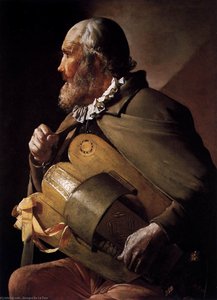 Blind Musician - Georges de la Tour
In the quietude of a candlelit studio, Georges de La Tour once mastered the art of seeing without sight, a feat mirrored in his profound masterpiece, Blind Musician . While many Baroque painters sought the theatricality of grand historical epics, De La Tour turned inward, utilizing a singular, disciplined approach to tenebrism that transformed a simple portrait into a spiritual meditation. In this work, the artist employs a breathtakingly intimate chiaroscuro , where the soft glow illuminates the musician's weathered features and the textures of his brown coat against a deep, resonant red backdrop.
The technical genius lies in the way light interacts with the subject's stillness, suggesting that true harmony is felt rather than seen. This mastery of shadow and focused intensity makes it one of the most captivating pieces among the top 25 artworks in Museo del Prado, Madrid . Much like the quiet concentration required to compose such a soulful melody, bringing a De La Tour-inspired aesthetic into a modern home office or study can foster an atmosphere of profound focus, intellectual depth, and sophisticated serenity.
Battle between Turks and Christians - Jacopo Tintoretto
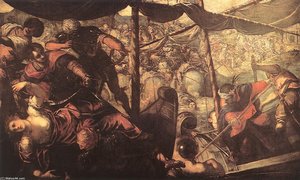 Battle between Turks and Christians - Jacopo Tintoretto
Acquiring a piece as profound as Battle between Turks and Christians by Jacopo Tintoretto is an investment in a legacy of dramatic mastery and uncompromising taste. As one of the most commanding works within the top 25 artworks in 'Museo del Prado, Madrid', this 1588 masterpiece serves as a cornerstone of Venetian Renaissance history. Its presence in the Prado's permanent collection confirms its immense cultural value, offering a window into the geopolitical tensions between the Ottoman Empire and European powers through Tintoretto’s signature 'Il Furioso' style.
The canvas is a visceral whirlwind of motion; Tintoretto employs a breathtaking chiaroscuro to illuminate the carnage, where flashes of gold and white pierce through deep, earthy ochres and blood-red tones. The composition is intentionally chaotic, pulling the viewer into a claustrophobic struggle of swords and shadows. For the discerning decorator, this painting offers unparalleled aesthetic authority. A high-quality, hand-painted oil reproduction of this scale brings a sense of historical weight and cinematic drama to modern luxury interiors, providing a sophisticated focal point that commands the room with the same prestige as the original masterpiece.
St Agnes with the Donor (right wing, detail) - Hieronymus Bosch
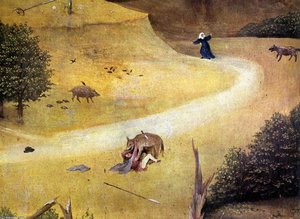 St Agnes with the Donor (right wing, detail) - Hieronymus Bosch
In the profound shadows of the Museo del Prado, St Agnes with the Donor (right wing, detail) by Hieronymus Bosch emerges as a hauntingly beautiful fragment of Northern Renaissance mastery. This work captures a visceral tension between spiritual purity and the encroaching darkness of the world. As one of the top 25 artworks in 'Museo del Prado, Madrid', it stands as an enduring enigma, where the delicate innocence of St. Agnes and her lambs is juxtaposed against a landscape fraught with symbolic peril.
Bosch’s meticulous technique—layering oil pigments to create textures ranging from soft animal fur to the rugged, desolate terrain—offers a sensory experience that transcends time. For the modern collector or interior designer, this piece provides a masterclass in using high-contrast drama and symbolic depth to anchor a space. The interplay of light and shadow within this detail evokes a sophisticated, moody ambiance, perfect for those seeking to introduce a sense of historical gravity and intellectual intrigue into contemporary architectural settings.
Conclusion
To wander through the halls of the Museo del Prado is to realize that greatness never truly fades; it merely waits for a new pair of eyes to rediscover its pulse. As we conclude our journey through these twenty-five masterpieces, we find that the profound shadows of Velázquez and the haunting emotional depths of Goya are far more than relics of a Spanish golden age. They are living presences, whispers of human truth that continue to breathe within our modern consciousness. These works do not belong solely to the marble galleries of Madrid; they belong to the very fabric of our shared human experience, echoing through the centuries to remind us of our capacity for beauty, tragedy, and transcendence.
In the quiet corners of a contemporary home or the grand halls of a curated estate, these paintings serve as more than mere decoration. They act as windows into the eternal, bringing a sense of heritage, weight, and soul to our personal sanctuaries. When we invite the light of a Titian or the dramatic tension of a Baroque master into our daily lives, we participate in an ongoing dialogue between history and the present moment. We allow the textures of the past to soften the edges of the modern world, creating spaces that feel anchored, intentional, and deeply resonant.
Whether you are moved by the meticulous craftsmanship of a hand-painted oil reproduction or find inspiration in the sweeping narratives of the Old Masters, we invite you to continue this exploration. Let these timeless visions inspire your next design endeavor or become the centerpiece of your personal collection. We invite you to discover the full collection and bring the enduring spirit of the Prado into your own world.