Adriaen Isenbrandt: The Shadowy Master of Bruges
The name Adriaen Ysenbrandt—or, as he’s sometimes known, Isenbrant—holds a peculiar place in the annals of Northern Renaissance art. For centuries, his identity remained frustratingly elusive, shrouded in mystery and speculation. He operated within a vibrant artistic milieu – Bruges during the late 15th and early 16th centuries – yet remarkably few verifiable works definitively bear his hand have surfaced. This ambiguity has fueled intense debate among scholars, transforming him into something of an enigma: a prolific workshop master whose true individual style remains largely obscured, a ghost in the gallery of Northern Renaissance giants.
Born sometime between 1480 and 1490 (the exact date lost to history), Adriaen’s early life is almost entirely undocumented. Theories suggest he may have begun his artistic training in Haarlem or Antwerp, cities renowned for their burgeoning art scenes at the time. What *is* known with relative certainty is that by 1510, he had established himself firmly in Bruges, acquiring burghership – a crucial step signifying full citizenship and professional standing within the city’s guilds. This marked the beginning of his career as both a painter and a respected member of the community, holding various positions within the Painters' Guild of St. Luke and the Goldsmiths’ guild of St. Elooi.
A Workshop of Faith: Style and Production
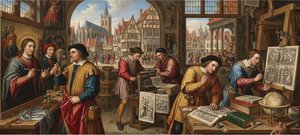
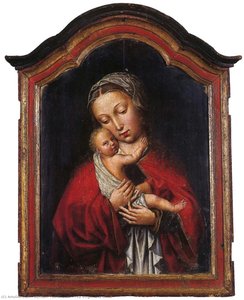
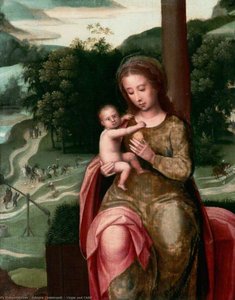
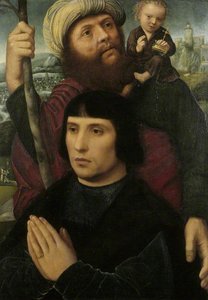
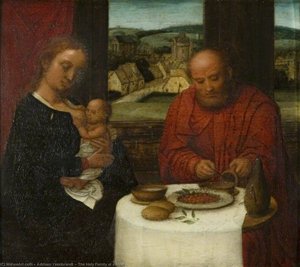
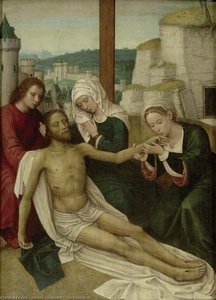
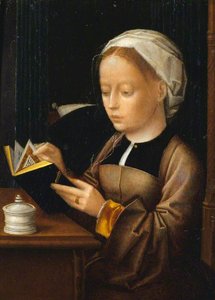
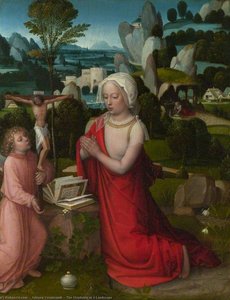
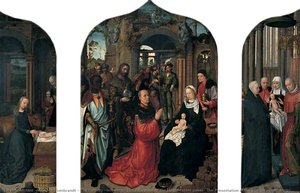
Despite the scarcity of signed works, art historians overwhelmingly agree that Adriaen presided over a remarkably large and successful workshop in Bruges. This wasn’t merely a studio; it was a sophisticated production center specializing almost exclusively in religious subjects and devotional paintings – altarpieces, panel paintings depicting scenes from the lives of Christ and Mary, and smaller, intimate works intended for private devotion. His style is often described as conservative, firmly rooted in the traditions of Early Netherlandish painting, yet subtly infused with the nascent influences of the Renaissance.
The work produced within his workshop demonstrates a meticulous attention to detail, particularly in rendering fabrics, jewels, and facial features. He skillfully employed glazing techniques – layering thin, translucent layers of paint – to achieve luminous effects and create a sense of depth and realism. While not pushing the boundaries of innovation like Jan van Eyck or Rogier van der Weyden, Adriaen’s paintings possess a quiet dignity and devotional power that resonated deeply with his patrons—primarily wealthy merchants and civic officials seeking to adorn their homes and churches.
Interestingly, evidence suggests that Adriaen wasn't solely responsible for every brushstroke. Georges Hulin de Loo famously proposed that he was the same individual as the anonymous “Master of the Seven Sorrows of the Virgin,” a designation based on stylistic similarities. While this theory remains debated, it highlights the possibility that Adriaen relied heavily on assistants and apprentices to execute much of the work produced under his name. The sheer volume of paintings attributed to him—often dozens in a single year—suggests a large workforce operating within his workshop.
Patronage and Context
Bruges during Adriaen’s time was a thriving commercial center, fueled by extensive trade networks connecting Europe with the East. This economic prosperity created a wealthy class of merchants and civic leaders eager to invest in art as symbols of their status and piety. Adriaen catered specifically to this clientele, producing works commissioned for private chapels, family altarpieces, and devotional panels intended for personal use. He was also involved in supplying paintings to other artists in Bruges, a testament to his reputation and the demand for his work.
His appointment as an agent for Adriaen Provoost, a prominent Antwerp painter, further underscores his position within the regional art market. This role facilitated the distribution of Provoost’s works throughout Flanders and beyond, expanding Adriaen's influence and solidifying his workshop’s reputation.
Legacy and Historical Significance
Despite the persistent mystery surrounding his individual style, Adriaen Isenbrandt remains a significant figure in Northern Renaissance art. He represents a crucial transitional phase between the intensely innovative Early Netherlandish masters and the more overtly expressive styles of the High Renaissance. His workshop’s prolific output contributed significantly to the artistic landscape of Bruges, supplying countless devotional images that shaped religious practice throughout Flanders.
The ongoing debate surrounding his identity—whether he was a solitary genius or simply a highly skilled workshop master—only adds to his enduring fascination. While definitive answers may remain elusive, Adriaen Isenbrandt’s legacy as a pivotal figure in the development of Northern Renaissance painting continues to be explored and debated by art historians today.