The Dramatic Vision of Francesco Villamena
In the twilight of the Italian Renaissance, a period defined by both profound spiritual fervor and intense political upheaval, the works of Francesco Villamena emerged as a powerful testament to the era's theatrical spirit. Born in the sacred atmosphere of Assisi in 1564, Villamena was shaped by the very landscape that birthed Saint Francis, an environment where the divine and the earthly were perpetually intertwined. His artistic journey was not merely one of technical mastery but a profound exploration of human emotion and historical tension. As he moved through the intellectual corridors of Perugia University, his education in humanist scholarship provided him with a deep reservoir of narrative complexity, allowing him to approach the canvas as both a scholar and a storyteller.
The evolution of Villamena’s style reveals a fascinating intersection of diverse influences. While some accounts link his early training to the luminous and meticulous traditions of Umbrian painting under Maestro Benedetto Buonaiuti, others suggest a more international connection, noting his studies under the renowned engraver Cornelis Cort or his alignment with the stylistic currents of Agostino Carracci. This blend of local tradition and broader European trends allowed him to develop a unique visual language—one that utilized the precision of disegno to anchor his compositions while embracing a dramatic, almost cinematic use of light and shadow.
Mastery of Narrative and Technique
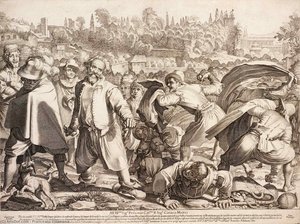
Villamena’s true distinction lies in his ability to transform static religious and historical subjects into breathing, pulse-pounding dramas. He was a master of the chiaroscuro technique, using stark contrasts to direct the viewer's eye through complex, multi-layered scenes. His most celebrated achievement, The Brawl of Bruttobuono, serves as a quintessential example of his prowess. In this monumental work, the violence of papal factionalism is rendered with such physical intensity and psychological depth that the canvas becomes a stage for the intellectual anxieties of the late 16th century. Through his skillful use of perspective and form, he did not merely depict combat; he captured the very essence of struggle and spiritual authority.
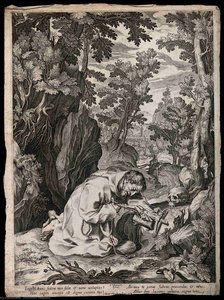
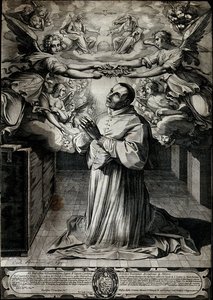
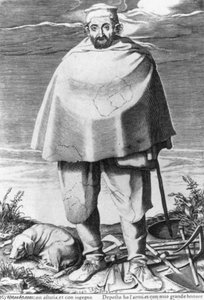
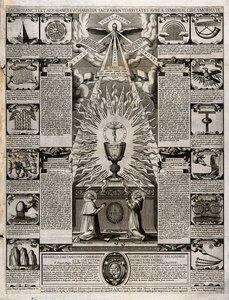
Beyond the grand scale of his paintings, Villamena’s talent extended into the delicate realm of printmaking and drawing. As an accomplished engraver and draftsman, he possessed a rare ability to translate complex textures and emotional nuances into the medium of line. His work often involved:
- Religious Iconography: Reconstructing biblical episodes with a palpable sense of piety and human vulnerability.
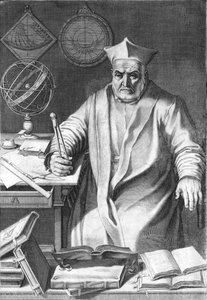
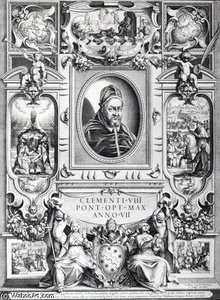
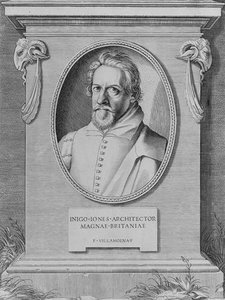
- Historical Documentation: Utilizing his skill as an engraver to interpret significant historical figures and events, such as his notable depictions related to the life of Galileo Galilei.
- Artistic Pedagogy: Serving as a drawing teacher, passing on the rigorous standards of Italian draftsmanship to the next generation of artists.
Legacy and Historical Significance
Though his life was relatively short, ending in Rome in 1624, the impact of Francesco Villamena resonated far beyond the borders of Italy. His ability to infuse religious narratives with a sense of theatrical urgency helped bridge the gap between the balanced harmonies of the High Renaissance and the more emotive, turbulent energy of the burgeoning Baroque period. He was an artist who understood that art could serve as both a window into the divine and a mirror to the political chaos of his time.
Today, Villamena is remembered not just as a prolific creator of images, but as a sophisticated intellectual whose work captured the soul of a changing world. His legacy lives on through the enduring power of his compositions, which continue to invite viewers into a space where history, faith, and human drama collide with breathtaking intensity.