Johann Friedrich Lamoureux: The Conical Cup Maestro of Riga
Born in Riga, Latvia in 1728, Johann Friedrich Lamoureux’s life and career unfolded within the vibrant, burgeoning Baltic trade network of the late 18th century. His story is not one of grand palaces or courtly patronage, but rather a testament to the skill and artistry honed within the workshops of a thriving commercial center – Riga, then a crucial hub for silver production in Europe. Lamoureux’s legacy rests primarily on his mastery of the conical cup, an object that transcends mere functionality and embodies a unique blend of Baltic design, German technical influence, and a touch of enigmatic symbolism.
Lamoureux's early years remain somewhat shrouded in historical detail, though it is known he apprenticed under a master silversmith. The distinctive mark – “BZ Riga” followed by the letter ‘E’ (1768-1780) – provides crucial evidence of his training and workshop affiliation during this formative period. This marking system, common amongst Riga’s silversmiths at the time, served as a vital identifier for provenance and quality control within the bustling marketplace. His work quickly gained recognition, establishing him as a leading figure in the production of silver tableware, particularly those celebrated conical cups, or “Russian hats” as they became known. These weren't simply drinking vessels; they were miniature works of art, often adorned with intricate engravings, floral motifs, and, increasingly, coats of arms – a reflection of the growing demand for personalized luxury goods.
The Conical Cup: Form and Function
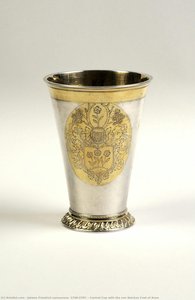
The conical cup is undeniably Lamoureux’s signature piece. Its elegant, slightly flared form, resembling a miniature Russian hat, immediately sets it apart from more conventional silverware designs. The technique involved was remarkably complex, requiring precise hammering, shaping, and polishing to achieve the smooth, rounded surface characteristic of these objects. While the exact origins of this particular shape remain debated – some speculate influences from Russian or Eastern European design – Lamoureux’s adaptation and refinement cemented its place as a distinctly Baltic style. The cups were typically made from sterling silver, often featuring delicate scrolling patterns, stylized foliage, and occasionally, scenes depicting hunting or pastoral life—themes popular during the era.
The “Russian hat” designation itself is somewhat misleading. While the shape evokes imagery of Russian military headwear, the cups’ popularity extended far beyond Russia. They were highly sought after throughout Europe, particularly in aristocratic circles, and became a status symbol indicative of wealth and refined taste. Lamoureux's skill lay not only in replicating this form but also in imbuing each cup with subtle variations in design and execution, ensuring that no two were exactly alike.
Symbolism and Decoration
Beyond the simple beauty of their shape, Lamoureux’s conical cups are rich in symbolic meaning. The intricate engravings often depicted coats of arms – family crests representing noble lineages – demonstrating a keen awareness of his clientele's social standing. Floral motifs, particularly roses and lilies, were frequently employed, carrying associations with love, purity, and beauty. The use of different metals—often combining silver with gold accents—further enhanced the visual appeal and signaled increased wealth. The ‘E’ marking, signifying the years 1768-1780, suggests a period of intense creative output and experimentation within his workshop.
Legacy and Historical Significance
Johann Friedrich Lamoureux died in 1797, leaving behind a remarkable body of work that continues to fascinate collectors and historians today. His conical cups are not merely decorative objects; they offer a valuable window into the social, economic, and artistic landscape of 18th-century Riga. They represent the culmination of Baltic silverworking traditions, blending German technical expertise with local design sensibilities. Lamoureux’s influence extended beyond his own lifetime, inspiring subsequent generations of silversmiths in Riga and contributing significantly to the city's reputation as a center for exquisite craftsmanship. The “Conical Cup with the von Nolcken Coat of Arms” (as documented on ArtsDot.com) exemplifies this legacy – a testament to the enduring beauty and historical significance of this remarkable silversmith’s creations.
Further exploration can be found at ArtsDot.com, where a comprehensive archive details his life and work.