The Weaver of Memory and Iconography
In the quiet, historic landscapes of Georgia, where the past often feels as tangible as the red clay beneath one's feet, the work of Joni Lee Mabe emerges as a profound meditation on the threads that bind personal identity to cultural myth. Born in 1957, Mabe has cultivated a career that transcends the traditional boundaries of fine art, positioning herself as a master of the book arts and an architect of immersive installations. Her creative journey is not merely a pursuit of aesthetic beauty but an obsessive, beautiful exploration of how memory, obsession, and the pervasive power of pop culture iconography—most notably that of Elvis Presley—intertwine to shape our collective consciousness.
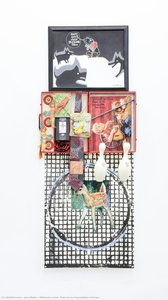
Mabe’s artistic foundation was forged through rigorous academic training at the University of Georgia’s MFA program. It was within this scholarly environment that she began to refine her signature mixed-media techniques, developing a style characterized by the delicate yet complex layering of materials. Her approach to the "artist's book" allows her to treat the page as a site of excavation, where collage, found objects, and photographic imagery are used to disrupt conventional narratives. By integrating these disparate elements, she challenges the viewer to look beyond the surface and confront the fragmented nature of reality itself.
The Everything Elvis Museum: A Monument to Devotion
Perhaps the most breathtaking manifestation of Mabe’s artistic vision is her magnum opus, the Everything Elvis Museum. Located within the historic Laudermilk Boarding House in Cornelia, Georgia—a structure dating back to 1908 and listed on the National Register of Historic Places—this installation is far more than a mere collection of memorabilia. It is a sprawling, immersive landscape of devotion. Within this sacred space, Mabe has curated over 30,000 items related to the life and legacy of the King of Rock and Roll, ranging from rare handwritten letters and vintage concert posters to intimate artifacts that breathe life into the legend.
This museum serves as a profound commentary on the intersection of personal passion and global celebrity. For Mabe, Elvis is not just a musical icon but a central figure in a larger dialogue about how we consume and preserve cultural legends. The installation functions as a living archive, where the boundaries between the artist's private fascination and the public's shared history become beautifully blurred. Through this monumental effort, she has transformed her family home into a pilgrimage site for those moved by the same enduring magic of American musical history.
Influences and Artistic Legacy
The depth of Mabe’s conceptual work is rooted in a rich tapestry of intellectual and artistic influences. She draws inspiration from the transformative collage techniques of Robert Rauschenberg, the literary explorations of memory found in the works of Marcel Proust, and the vibrant, emotive color palettes of Henri Matisse. These influences are evident in her ability to weave together disparate textures and histories into a cohesive visual language that speaks to both the ephemeral and the eternal.
Mabe’s significance in the contemporary art world is underscored by her participation in prestigious international exhibitions, which have brought her unique vision to audiences across the globe. Her notable achievements include:
- Art ex Libris at Artspace Gallery in Richmond, Virginia, showcasing her singular artist's books.
- The Honolulu Academy of Arts’ Elvis + Marilyn exhibition, which highlighted her ability to bridge pop culture with fine art.
- Her inclusion in the 2019 Atlanta Biennial at Atlanta Contemporary, where her work was recognized as a vital part of the evolving Southern artistic identity.
- Exhibitions such as The Alternative Page and Southern Values, which cemented her reputation as an artist capable of challenging the boundaries of regional art.
Through her relentless pursuit of the intersection between the personal and the iconic, Joni Mabe continues to create works that act as mirrors for our own obsessions, reminding us that art is often found in the very things we refuse to let go.