A Legacy Forged in Clay: The Enduring Story of Manifattura Ginori
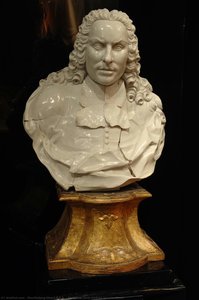
The story of Manifattura Ginori S.p.A., a name synonymous with Italian porcelain artistry, is one that unfolds over nearly three centuries—a narrative woven with aristocratic vision, innovative technique, and an unwavering commitment to beauty. Founded in 1735 by Marchese Carlo Andrea Ginori near his villa in Doccia, nestled close to Florence, the manufactory wasn’t merely intended as a business venture; it was conceived as a testament to Italian ingenuity and a challenge to the established dominance of German and French porcelain production. Ginori's ambition extended beyond simply replicating existing styles. He sought to create something uniquely Italian, drawing inspiration from the rich artistic heritage of Florence and its celebrated sculptors.
Initially, Manifattura Ginori distinguished itself by producing porcelain versions of statuettes and small sculptures—replicas cast from earlier bronze works created by Florentine masters like Giovanni Battista Foggini and Massimiliano Soldani. This focus on sculptural forms set it apart from many contemporary factories primarily dedicated to tableware. The early success was fueled by innovative techniques pioneered under Ginori’s direction, establishing a reputation for excellence that quickly spread beyond the Tuscan hills. However, following the Marchese's death in 1757, the factory underwent a shift, gradually adopting more conventional wares and embracing stylistic influences from across Europe—particularly Germany and France—while still maintaining its commitment to quality.
Artistic Collaborations and the Flourishing of Style
Throughout its history, Manifattura Ginori benefited immensely from collaborations with a diverse array of artists. These partnerships infused the manufactory’s output with fresh perspectives and broadened its artistic scope. Names like Thomas Moran, William James Glackens, Gilbert Munger, and Jean-François Raffaelli became associated with Ginori, contributing to designs that ranged from intricate floral patterns to evocative landscapes. The factory's ability to translate complex compositions onto porcelain was particularly evident in pieces such as “Cappella del Succorpo (Cappella Carafa)” by Thomas Malvern (Malvico) and the ambitious reproduction of Caravaggio’s "The Flagellation of Christ," demonstrating a remarkable technical skill and artistic sensitivity. Beyond these specific commissions, works like Andrea Belvedere's delicate "Flowers", Arthur B. Davies’ atmospheric “On the Cliffs”, Jacopo Sansovino’s classical “St James” and Tino di Camaino’s graceful “Charity” showcase the breadth of Ginori’s aesthetic range.
These creations weren’t confined to private collections; they found their way into prestigious museums like the Museo Nazionale di Capodimonte and the Duomo della Vergine Assunta, solidifying Manifattura Ginori's place within the canon of European art. The factory wasn’t simply producing decorative objects; it was crafting pieces that were recognized for their artistic merit and historical significance.
Innovation in Materials and Technique
The technical achievements of Manifattura Ginori are as noteworthy as its artistic contributions. Around 1750, the factory transitioned to hard-paste porcelain production—a significant advancement that required mastering a complex process. The precise composition of the porcelain mixture – kaolin (50%), feldspar (25%), and quartz (25%) – was carefully guarded, reflecting the importance placed on quality control. The firing process itself was equally demanding, involving two distinct stages: bisque firing at 1000°C followed by glaze firing at a much higher temperature of 1400°C.
But it wasn’t just about the materials; it was also about the skill of the artisans who brought those materials to life. Techniques like decal application, gilding, airbrushing, and meticulous hand-painting were employed to enhance the porcelain's beauty, transforming a raw material into objects of exquisite refinement. This dedication to artisanal craftsmanship remained a hallmark of Manifattura Ginori throughout its long history.
From Aristocratic Enterprise to Modern Luxury
Manifattura Ginori’s story isn’t without its complexities. The factory's management, deeply rooted in aristocratic tradition, influenced its long-term strategies and organizational structure. While this approach fostered a commitment to quality and innovation, it also contributed to periods of financial instability. Despite its rich heritage, the company faced bankruptcy in 2013, a poignant moment that underscored the challenges facing traditional manufacturing in a rapidly changing global market.
However, the story didn’t end there. The acquisition by Gucci signaled a new chapter for the brand, recognizing the enduring appeal of its legacy and the potential to reposition it within the luxury goods sector. Today, the name “Ginori 1735” is proudly used, acknowledging the factory's long history while embracing a contemporary vision. Although the Museo Richard Ginori della Manifattura di Doccia remains temporarily closed to visitors as of 2019, its collection stands as a testament to the enduring influence of this remarkable Italian manufactory—a legacy forged in clay and destined to inspire for generations to come.