The Visionary Brush of Marie François Firmin-Girard
In the heart of a transformative era, where the romanticism of the past met the rigorous scientific inquiries of the modern age, Marie François Firmin-Girard emerged as a profound voice in French painting. Born in Ponceau, France, in 1838, Girard was destined for a life steeped in the aesthetics of form and materiality. As the son of the sculptor Jean-Baptiste Firmin Girard, his earliest memories were likely shaped by the tactile nature of clay and stone, an inheritance that instilled in him a lifelong reverence for structure and detail. This foundational upbringing provided more than just technical instruction; it offered a deep-seated understanding of how light interacts with substance, a skill that would later define his mastery over the ephemeral qualities of water and sky.
Girard’s journey through the prestigious École Supérieure des Beaux-Arts in Paris placed him at the epicenter of the nineteenth-century artistic revolution. While he walked the same halls as giants like Eugène Delacroix, Girard carved out a unique niche that transcended mere imitation. He was not simply a painter of scenes, but an observer of truths. His work represents a fascinating intersection between the emotional depth of Romanticism and the burgeoning scientific curiosity of his time. Where others sought only the sublime or the dramatic, Girard looked closer, meticulously studying geological formations and meteorological phenomena to ensure that every wave and cloud in his seascapes possessed an anatomical accuracy that resonated with the natural world.
A Mastery of Atmosphere and Emotion
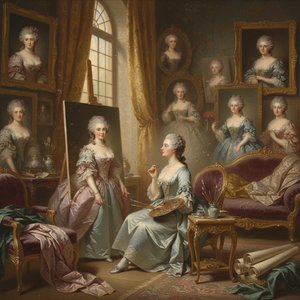
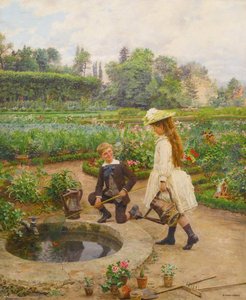
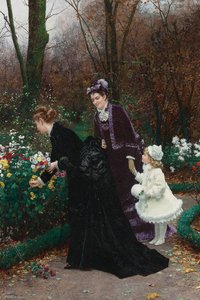
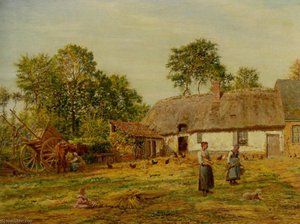
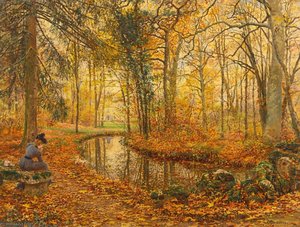
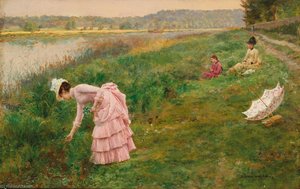
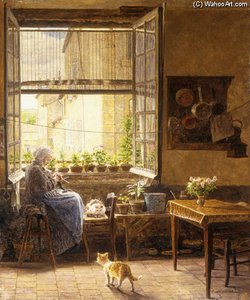
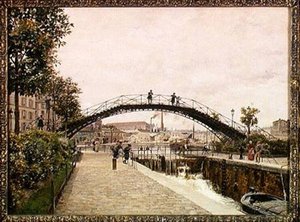
The true brilliance of Firmin-Girard lies in his ability to weave technical precision into a tapestry of profound emotion. His oeuvre is characterized by a remarkable versatility, ranging from the sweeping, salt-sprayed vistas of his seascapes to the intimate, quiet moments of Parisian life. In works such as "A Quiet Moment," one can feel the stillness of nature, rendered through warm colors and rich textures that invite the viewer into a state of peaceful contemplation. Conversely, his ability to capture human drama is equally potent; in "Marriage In Extremis," he utilizes intimate detail and poignant composition to evoke the heavy weight of human experience, proving that his brush was as capable of touching the soul as it was of documenting the earth.
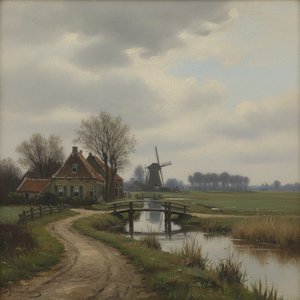
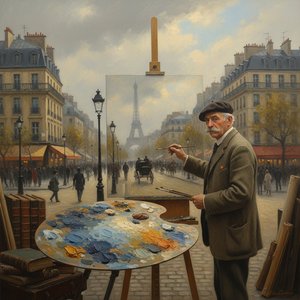
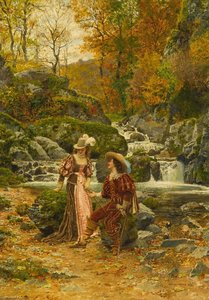
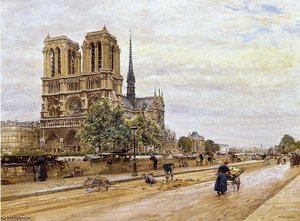
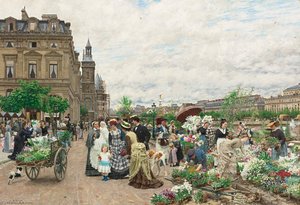
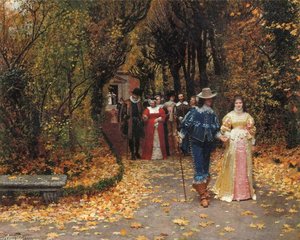
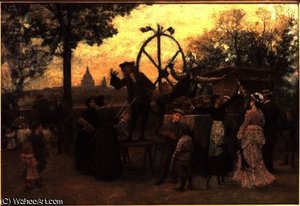
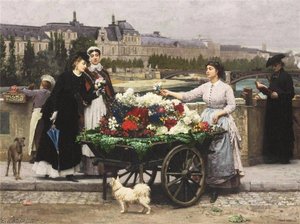
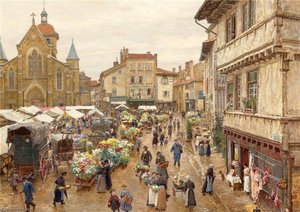
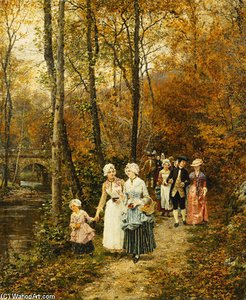
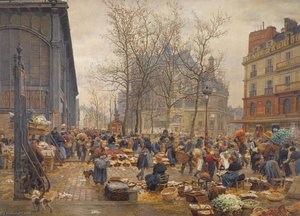
His landscapes often serve as a bridge between the terrestrial and the celestial. In "Au bord du Sichon," the artist employs autumnal tones and detailed brushwork to celebrate the fleeting beauty of the changing seasons, creating a sense of movement within a static frame. This talent for capturing atmospheric shifts is perhaps most evident in his more Impressionistic endeavors, such as "Notre Dame de Paris & Flower Market." Here, the iconic cathedral becomes part of a living, breathing urban ecosystem, where light and shadow dance across the bustling streets, reflecting the vibrant energy of a city in flux. Through these varied subjects, Girard maintained a consistent thread of reverence for the natural and man-made worlds alike.
Legacy and Historical Significance
Though history occasionally casts a shadow over artists who do not follow the most radical revolutionary paths, the significance of Marie François Firmin-Girard remains undeniable. He stood as a vital link in the evolution of French art, bridging the gap between the rigid academic traditions of his predecessors and the sensory-focused explorations of the later century. His contribution to the genre of seascape painting provided a much-needed synthesis of scientific observation and poetic expression, influencing how subsequent generations would approach the depiction of the maritime environment.
Today, the works of Girard continue to captivate collectors and historians, serving as windows into the spirit of late 19th-century France. His ability to find the extraordinary within the ordinary—whether in a crashing wave or a quiet street corner—ensures his place in the pantheon of masters who understood that art is not merely about what we see, but how we feel the world around us. His legacy lives on through:
- Technical Innovation: The seamless integration of geological and meteorological accuracy into Romantic compositions.
- Genre Versatility: A rare command over seascapes, landscapes, and intimate genre paintings.
- Cultural Documentation: Capturing the evolving essence of Parisian life and the French countryside during a period of immense social change.