The Chronicler of Paris: The Life and Vision of Nicolas Jean Baptiste Raguenet
In the heart of the eighteenth century, as the Enlightenment began to reshape the intellectual landscape of Europe, a different kind of revolution was unfolding within the streets of Paris. It was a period of architectural grandeur, bustling commerce, and a burgeoning sense of civic identity. Amidst this vibrant era, Nicolas Jean Baptiste Raguenet emerged not merely as a painter, but as a visual historian whose brush captured the very soul of the French capital. Born in Paris in 1715 to an artistic lineage—his father, Jean-Baptiste Raguenet, was both a painter and an actor—Nicolas was destined to weave the drama of the stage into the precision of the canvas. His early training at the Académie royale de peinture et de sculpture Saint-Luc provided him with a rigorous technical foundation, instilling in him a mastery of oil painting that would later allow him to render the complexities of light and stone with almost scientific fidelity.
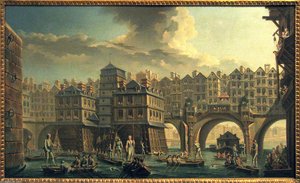
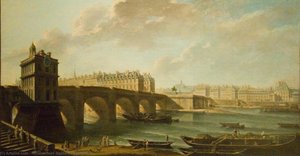
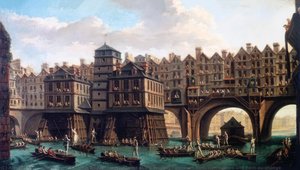
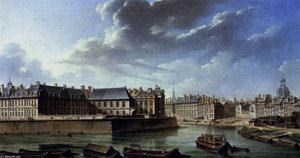
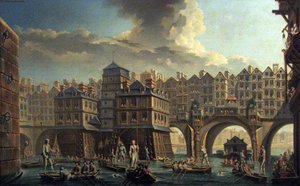
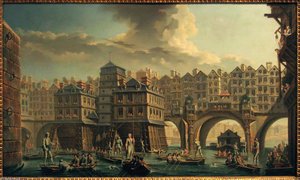
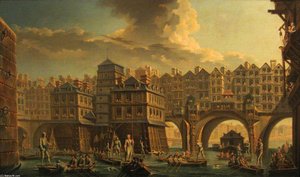
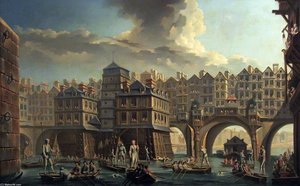
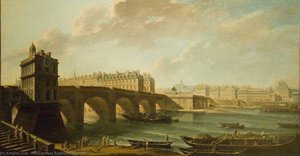
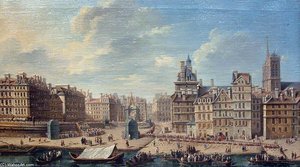
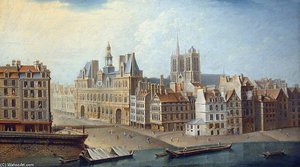
Raguenet’s artistic journey was defined by an extraordinary devotion to the vues de Paris, or views of Paris. While many of his contemporaries sought to idealize landscapes through romanticized or mythological lenses, Raguenet turned his gaze toward the tangible, the lived-in, and the structural. He possessed a rare, almost photographic ability to document the city's evolving topography. His work serves as an unparalleled window into the reign of Louis XV, offering us glimpses of the Seine River as a bustling thoroughway, the iconic Pont Neuf teeming with horse-drawn carriages, and the quiet dignity of the Île Saint-Louis. Through his eyes, we see the Louvre standing sentinel on the right bank and the distant, majestic dome of the Hôtel des Invalides rising above the horizon, creating a sense of depth and permanence that transcends the fleeting nature of time.
A Master of Light and Architectural Precision
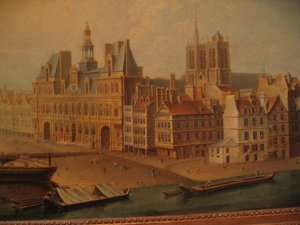
What truly distinguishes Raguenet from the landscape painters of his era is his unique synthesis of technical precision and atmospheric storytelling. He approached the cityscape with the meticulousness of an architect, yet he never allowed the rigidity of structure to overshadow the ephemeral beauty of the moment. His canvases are masterclasses in the interplay of light and shadow; one can almost feel the cool mist rising from the Seine or witness the warmth of sunlight reflecting off the stone facades of the city's monuments. This dedication to realism was not merely a stylistic choice but a profound commitment to truth, capturing the movement of boats tied along the riverbanks, the lively energy of mariners engaged in jousting matches, and the festive atmosphere of public celebrations like the fireworks at Place de Grève.
Beyond his technical prowess, Raguenet’s work carries a deep sense of social documentation. His paintings are populated by the rhythms of daily life—strolling couples, merchants, and laborers—all moving through a landscape that was simultaneously a stage for grand historical events and a backdrop for mundane existence. This ability to blend the monumental with the minute is what gives his oeuvre such enduring emotional resonance. He did not just paint buildings; he painted the breath and pulse of a civilization. His small shop on the Rue de la Cité, where he sold these detailed views, became a point of connection between the artist and a public eager to possess a piece of their own changing world.
Legacy and Historical Significance
The historical significance of Nicolas Jean Baptiste Raguenet lies in his role as a pioneer of the topographical genre. By eschewing the fanciful for the factual, he laid the groundwork for a tradition of urban landscape painting that values observation over invention. His works have become invaluable primary sources for historians and art lovers alike, providing a visual record of a Paris that has since been transformed by centuries of upheaval and modernization. To look upon a Raguenet painting is to engage in a dialogue with the past, feeling the weight of history in every meticulously placed brushstroke.
As we reflect on his contributions, several key elements of his legacy become clear:
- Unparalleled Accuracy: His ability to document architectural landmarks like the Pont Neuf and the Île Saint-Louis with remarkable fidelity.
- Atmospheric Realism: The masterful use of light and shadow to evoke the specific moods of Parisian days and seasons.
- Social Documentation: Capturing the dynamic social fabric of 18th-century France, from grand festivities to everyday river life.
- Artistic Lineage: Carrying forward the traditions of the Académie Saint-Luc into a new era of observational excellence.
Though he passed away in Gentilly in 1793, at the dawn of a new and turbulent age for France, Raguenet’s vision remains undimmed. He left behind a treasury of images that continue to inspire awe, reminding us that there is profound beauty to be found in the careful, loving observation of the world around us.