A Life Immersed in Baroque Splendor: Pedro Núñez de Villavicencio
Pedro Núñez de Villavicencio, a name resonating with the vibrant energy of 17th-century Spanish painting, was more than just an artist; he was a product of his time—a gentleman scholar turned painter who seamlessly blended aristocratic refinement with a keen observation of everyday life. Born in Seville in 1635 into a family of standing, Villavicencio’s early path seemed destined for military service. However, fate, or perhaps a deeper calling, steered him towards the captivating world of art. He embarked on his artistic journey around 1660, becoming one of the founding members of Seville's Academia de Pintura alongside the celebrated Bartolomé Esteban Murillo. This early association proved pivotal, shaping his initial style and providing a crucial network within the burgeoning Sevillian art scene.
Villavicencio’s life took an intriguing turn when he joined the Order of Jerusalem Knights of Malta in 1661. This wasn't merely a change of profession; it was a transformative experience that led him to Malta, where he received both religious and military training. It was here, amidst the rich cultural tapestry of the island, that he encountered Mattia Preti, an Italian master whose dramatic use of light and shadow—tenebrism—would profoundly influence Villavicencio’s own artistic development. The friendship forged with Preti wasn't simply a professional exchange; it was a period of intense learning and collaboration, evident in the increasingly dynamic compositions and heightened realism that began to characterize Villavicencio’s work.
The Artistic Evolution: From Murillo’s Influence to Personal Expression
Initially, Villavicencio’s style bore the unmistakable imprint of his mentor, Murillo. His early paintings reflect Murillo's characteristic sweetness and delicate rendering of figures, often depicting religious scenes with a gentle grace. However, his time in Malta and subsequent travels throughout Italy sparked a shift in his artistic approach. The influence of Preti introduced a new level of drama and intensity to his palette and compositions. He began experimenting with bolder colors, more pronounced chiaroscuro, and a greater emphasis on capturing the emotional weight of his subjects.
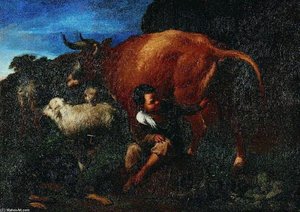
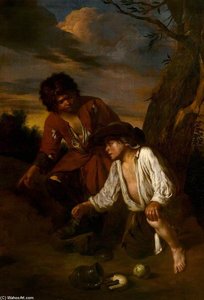
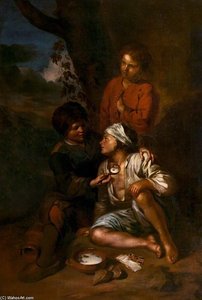
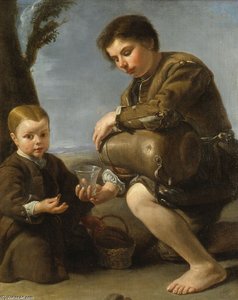
Villavicencio wasn’t content merely replicating the styles he encountered; he synthesized these influences into something uniquely his own. His paintings increasingly focused on scenes of daily life—children at play, pastoral landscapes, and intimate portraits—rendered with a remarkable degree of realism. He possessed an exceptional ability to capture fleeting moments, imbuing his figures with a sense of spontaneity and genuine emotion. This focus on the everyday, combined with his mastery of light and shadow, set him apart from many of his contemporaries.
Major Works and Lasting Legacy
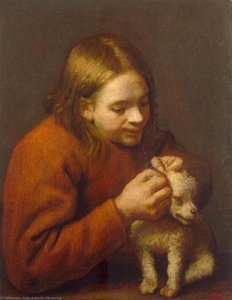
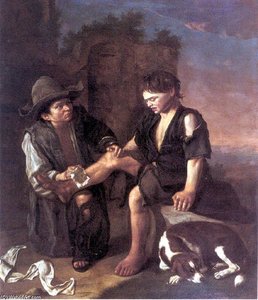
Villavicencio’s oeuvre, while not extensive, is rich in quality and offers a fascinating glimpse into 17th-century Spanish society. Niño espulgando a un perro (Boy Cleaning a Dog), housed in the Hermitage Museum in Saint Petersburg, exemplifies his ability to capture both the innocence of childhood and the subtle interplay of light and texture. The painting’s dynamic composition and realistic depiction of the boy and dog are particularly striking.
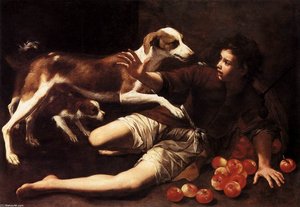
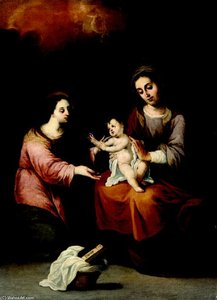
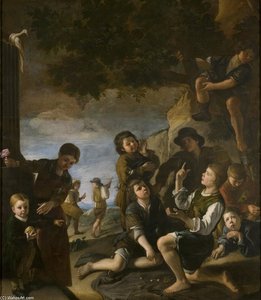
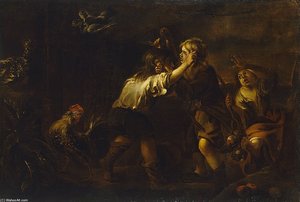
Other notable works include Saint Anne, the Virgin and Child, completed in 1677 for the Museo de Bellas Artes de Valencia, which showcases his skill in religious iconography, and Boy Attacked by a Dog at the Museum of Fine Arts in Budapest—a scene brimming with energy and emotion. His Juegos infantiles (Children’s Games) from 1686, now in the Prado Museum, is a delightful depiction of youthful exuberance, capturing the carefree spirit of childhood.
Villavicencio's contributions extended beyond his paintings. He actively participated in establishing artistic institutions and fostering a sense of community among artists in Seville. His travels between Spain and Italy facilitated an exchange of ideas and styles, enriching the cultural landscape of both countries. Though he passed away in 1700, his legacy endures through his captivating works—testaments to a life dedicated to capturing the beauty and complexity of the human experience.
Historical Significance: A Bridge Between Styles
Pedro Núñez de Villavicencio occupies a unique position within the history of Spanish Baroque painting. He wasn’t simply a follower of Murillo or Preti; he was a skilled synthesist, capable of absorbing diverse influences and forging his own distinct artistic voice. His paintings offer valuable insights into the social customs, religious beliefs, and everyday life of 17th-century Spain.
He represents a bridge between the earlier, more idealized forms of Baroque art and the later, more realistic styles that would emerge in the following century.
- His mastery of tenebrism
- his focus on capturing genuine emotion
- and his ability to depict scenes of daily life with remarkable realism