The Soul of Antwerp: The Life and Legacy of Pieter Scheemaeckers
In the vibrant, golden age of the Flemish Baroque, few artists captured the intersection of human mortality and divine devotion as poignantly as Pieter Scheemaeckers. Hailing from the illustrious art hub of Antwerp, Scheemaeckers emerged during a period when the city was a crucible of creative genius, breathing the same air as Rubens and Van Dyck. While history often reserves its brightest spotlights for the most monumental masters, Scheemaeckers carved out a profound niche through his mastery of memorial portraits and the sacred art of the predella. His work serves as a silent, painted witness to the lives, lineages, and spiritual aspirations of the Antwerp elite, blending the meticulous realism of the Flemish tradition with an evocative emotional depth that transcends the mere recording of faces.
The foundations of his artistry were laid in the workshops of his contemporaries, most notably under the guidance of Jan Baptist van Delft. This apprenticeship was transformative; from Van Delft, Scheema precepted the ability to render naturalistic environments and the subtle, fleeting nuances of human emotion. This training provided him with a technical toolkit characterized by dramatic chiaroscuro and a rich, saturated color palette—hallmarks of the Baroque style. As his skill matured, the influence of Peter Paul Rubens became increasingly evident in his compositions. One can observe the echoes of Rubens’ monumental energy within Scheemaeckers' ability to imbue even the most intimate portrait with a sense of grandeur and psychological weight, ensuring that every subject possessed a commanding presence.
Sacred Narratives and the Art of the Predella
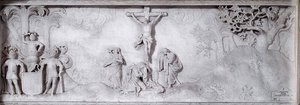
Beyond the private chambers of the wealthy, Scheemaeckers found his most significant calling within the sacred architecture of the Church. He gained widespread renown for his predella paintings—the intricate, horizontal panels that adorn the base of altarpieces. These were not merely decorative elements but vital narrative windows designed to guide the faithful through complex theological journeys. To paint a predella was to master the art of visual shorthand; Scheemaeckers had to distill profound religious doctrines into accessible, striking imagery that could accompany the rhythm of liturgical celebrations and sermons.
His ability to weave symbolism and storytelling into these smaller formats allowed him to communicate with both the literate clergy and the common devotee. In these works, the artist demonstrated a sophisticated grasp of:
- Symbolic Iconography: Utilizing objects and gestures to represent divine truths and saintly virtues.
- Narrative Compression: Capturing pivotal moments of biblical significance within a limited physical space.
- Emotional Resonance: Using light and shadow to evoke the piety and reverence required for altar-side contemplation.
A Legacy of Lineage and Remembrance
Perhaps the most enduring aspect of Scheemaeckers' oeuvre is his role as a chronicler of Antwerp’s social fabric. His memorial portraits functioned as much more than likenesses; they were enduring monuments to family identity and historical continuity. Through his brushes, prominent dynasties such as the Van Delft and Keurlinckx families achieved a form of immortality. These paintings captured not just the physical features of the deceased, but the dignity, status, and spiritual legacy of their lineages.
The historical significance of Pieter Scheemaeckers lies in this unique duality: he was both a master of the grand Baroque aesthetic and an intimate observer of the human condition. His work bridges the gap between the public spectacle of religious art and the private sanctity of family remembrance. Today, his paintings remain vital touchstones for understanding the cultural landscape of 17th-century Flanders, offering a window into a world where art, faith, and family were inextricably intertwined.