Bartolomeo Ramenghi detto Bagnacavallo: A Bolognese Master of the Renaissance
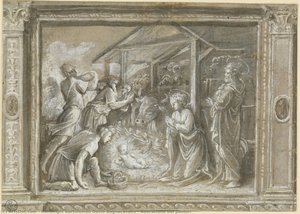
Bartolomeo Ramenghi, more commonly known as Bagnacavallo (1484 – circa 1542), stands as a significant figure in the artistic landscape of 15th and early 16th century Italy. Born in Bologna, his life’s work reflects a fascinating synthesis of influences—the rigorous training under Lorenzo Costa, tempered by the ethereal beauty of Raphael and the dynamic energy of Giulio Romano—resulting in a distinctive style characterized by serene grace and meticulous detail. His legacy primarily resides in his religious paintings and engravings, most notably exemplified by the captivating “Adorazione dei Pastori,” a work that continues to resonate with viewers today.
Early Life and Artistic Training
Ramenghi’s artistic journey began within the bustling workshop of Francesco Francia in Bologna, a pivotal experience that instilled in him a deep understanding of local color and a commitment to naturalism. Francia's influence is readily apparent in Ramenghi’s early works, particularly his use of light and shadow to create a sense of volume and depth. However, it was his apprenticeship with Lorenzo Costa, a leading figure of the Bolognese school, that truly shaped his artistic trajectory. Costa’s emphasis on clarity, balanced composition, and refined elegance provided a crucial foundation for Ramenghi's subsequent development. Notably, he accompanied Primaticcio to France during the late 1520s, an experience which exposed him to the innovations of the Fontainebleau School, though he ultimately maintained his own distinct artistic identity.
Style and Influences
Bagnacavallo’s style is often described as a harmonious blend of several key influences. He inherited from Francia a meticulous attention to detail and a masterful command of color, while the influence of Raphael is evident in his graceful figures, balanced compositions, and idealized beauty. The dynamism and theatricality of Giulio Romano, particularly his use of perspective and dramatic lighting, also played a significant role in shaping Ramenghi’s artistic vision. However, unlike Romano, he resisted adopting the more overtly Mannerist tendencies that characterized some of his contemporaries. Instead, he maintained a sense of classical restraint and elegance, creating works imbued with a quiet dignity and spiritual depth. His paintings frequently feature pyramidal arrangements, reminiscent of Raphael's compositions, and are distinguished by their soft, luminous quality.
Notable Works
Among Ramenghi’s most celebrated achievements is the “Adorazione dei Pastori” (Adoration of the Shepherds), a monumental painting housed in the Pinacoteca Nazionale di Bologna. This work exemplifies his mastery of composition and his ability to convey profound emotion through subtle gestures and expressions. The scene depicts the biblical event of the shepherds’ encounter with the infant Jesus, rendered with remarkable tenderness and grace. Other significant works include “Madonna e Bambino con San Giovanni Battista” (Madonna and Child with Saint John the Baptist), a poignant depiction of the Virgin Mary holding her son and the young saint, showcasing his skill in portraying intimate familial relationships. His engravings, though less frequently studied than his paintings, demonstrate a similar attention to detail and a refined sense of line.
Legacy and Historical Significance
Bartolomeo Ramenghi’s contribution to the artistic heritage of Bologna is undeniable. He represents a crucial link between the early Renaissance masters and the subsequent developments in Bolognese painting. His work embodies the ideals of humanism, emphasizing beauty, harmony, and spiritual contemplation. While he may not be as widely recognized as some of his contemporaries—such as Raphael or Titian—Ramenghi’s paintings continue to be admired for their elegance, grace, and profound emotional resonance. He stands as a testament to the enduring power of classical ideals within the context of the Italian Renaissance, offering a glimpse into the artistic sensibilities of a remarkable Bolognese master. His work is frequently studied for its subtle use of color, balanced compositions, and ability to evoke a sense of serene contemplation.