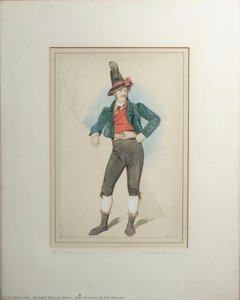
The Dublin Master of Watercolor: The Life and Legacy of Richard Thomas Bone
Born in the vibrant cultural heart of Dublin in 1841, Richard Thomas Bone emerged as a defining voice in the watercolor traditions of the Victorian era. His journey began amidst the burgeoning artistic energy of Ireland, where he cultivated a profound sensitivity to the nuances of light and shadow. As a painter, Bone was not merely a recorder of faces but a storyteller of the soul, developing a distinctive style that married meticulous detail with expressive tonal harmonies. This dedication to the medium allowed him to transform the delicate nature of watercolor into a vehicle for profound psychological depth and dramatic intensity.
The essence of Bone’s artistry is perhaps most vividly realized in his celebrated portraiture, where he captured the theatrical luminaries and literary figures of his age. His ability to convey the weight of a moment is epitomized in his masterful depiction of John Braham as Fra Diavolo. In this work, Bone transcends the boundaries of a simple portrait, utilizing layered tones and a sophisticated command of color to evoke the atmospheric tension of Shakespearean drama. Through his brush, the viewer does not just see a character; they feel the palpable electricity of the stage, a testament to his ability to weave visual dynamism with narrative power.
Romanticism and the Influence of Delacroix
While rooted in the traditions of his Dublin upbringing, Bone’s technical evolution was profoundly shaped by the winds of European Romanticism. He drew significant inspiration from the legendary French painter Eugène Delacroix, whose emotive brushwork and vibrant, sweeping palettes offered a new way to approach the watercolor medium. Following this influence, Bone moved away from rigid, precise delineation in favor of capturing fleeting emotions and atmospheric shifts. By prioritizing tonal gradations over sharp outlines, he achieved a sense of immediacy that makes his subjects feel as though they are caught in a living, breathing moment.
This stylistic choice allowed him to master the subtle interplay of light and pigment, blending colors to achieve delicate nuances that suggest movement and mood. His work serves as a bridge between the disciplined realism of early 19th-century portraiture and the more expressive, emotive qualities of the late Victorian period. Through this synthesis, Bone secured his place in art history, leaving behind a body of work that continues to resonate with its ability to capture both the grandeur of the theatrical world and the intimate, quiet truths of the human countenance.