A Quiet Voice Amidst Edo Elegance: The Legacy of Sekiten Dōrin
In the vibrant and often tumultuous landscape of the late Edo period, where grand narratives and opulent commissions frequently captured the public eye, there existed a more subtle, contemplative form of expression. Sekiten Dōrin, a figure whose presence remains softly etched within the annals of Japanese art history, embodied this quietude. Born in Tokyo, Dōrin’s life was not merely one of administrative duty but a profound journey through the spiritual and aesthetic landscapes of Zen Buddhism. As he ascended to the abbatial leadership of the Shisenin Kosen temple in Kyoto, he carried with him a sacred lineage, having inherited the Dharma from his predecessor, Banjin Dōtan. This connection to a long tradition of monastic scholarship and artistic practice provided the foundation for a life dedicated to the pursuit of inner reflection and spiritual enlightenment.
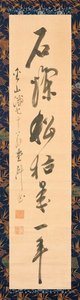
The artistry of Dōrin was inextricably linked to his monastic discipline, finding its most potent expression in the realms of calligraphy and poetry. For Dōrin, these were not merely decorative pursuits but essential vehicles for transmitting the profound tenets of Buddhist philosophy. His calligraphic work served as a bridge between the physical and the metaphysical, where every precise stroke of the brush was intended to convey complex concepts such as sunyata, or emptiness, and the intricate web of interconnectedness that defines existence. The deliberate spacing between his characters was far from accidental; it mirrored the stillness found in deep meditation, creating a visual harmony and balance that became a hallmark of his unique aesthetic.
The Mastery of Ink and Verse
Dōrin’s technical approach to calligraphy was characterized by a restrained elegance, eschewing the flamboyant for the profound. He mastered the subtle nuances of ink density and brush pressure, using them to breathe life into each character with unwavering focus. This meticulousness reflected the Zen ideal of mindful action, where the act of creation is itself a form of prayer. To observe his work is to witness a disciplined mind translating the stillness of the soul onto paper, creating a rhythmic flow that guides the viewer toward a state of contemplation.
Complementing his visual mastery was his poetic output, which distilled the vast wisdom of Buddhist teachings into lyrical beauty. His poems often explored the poignant themes of anicca (impermanence), karuna (compassion), and the grace of acceptance. Through his verse, Dōrin utilized recurring natural motifs to ground spiritual truths in the physical world:
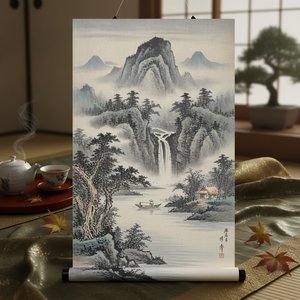
- Mountains and Waterfalls: Representing the enduring yet ever-changing nature of reality.
- Blossoming Cherry Trees: Serving as a poignant symbol of the fleeting beauty of life.
- The Natural Landscape: Acting as a mirror for the internal landscape of the meditating mind.
Historical Significance and Spiritual Resonance
While Dōrin may not have sought the widespread fame of his contemporaries, his historical significance lies in his ability to embody the intersection of art and asceticism. He represents a vital thread in the tapestry of Japanese culture, where the boundaries between religious practice and artistic expression are beautifully blurred. His work remains a testament to the power of simplicity and the profound impact that can be achieved through a life of dedicated focus. In an era of shifting social structures, Dōrin’s art offered a sanctuary of stability, reminding his audience of the eternal truths found within the quiet moments of existence. Today, his legacy continues to resonate with those who seek beauty in restraint and meaning in the subtle vibrations of the brush and the written word.