The Melodic Legacy of a Victorian Maestro
In the heart of the nineteenth century, amidst the industrial crescendo of Victorian England, lived a man whose life was composed of much more than mere notes on a page. William Spark, born in the historic city of Exeter in 1823, was a figure of profound musical significance, weaving his artistry into the very fabric of Leeds' cultural identity. His journey began within the sacred, echoing halls of Exeter Cathedral, where as a young chorister, he breathed in the ancient traditions of liturgical music. It was here that he encountered the legendary Samuel Sebastian Wesley, a mentorship that would serve as the foundational movement of his life’s symphony. Under Wesley’s tutelage, Spark did not merely learn technique; he inherited a passion for the spiritual and communal power of choral excellence.
The year 1842 marked a pivotal transition, as Spark followed his mentor from the tranquil surroundings of Devon to the burgeoning, soot-stained energy of Leeds. This migration was more than a change in geography; it was an entry into a landscape ripe for musical innovation. As the deputy organist at Leeds Parish Church, Spark began to establish himself not just as a performer, but as a vital architect of sound. His career was characterized by a relentless pursuit of excellence, whether through his role as organist and choirmaster at Chapeltown Church or his later appointment to St George's Church. He possessed a rare ability to bridge the gap between the sacred traditions of the past and the technological advancements of the modern age.
Innovation in Timber and Pipe
One of Spark’s most enduring contributions to the musical world lay in his visionary approach to instrument design. He understood that for music to evolve, the tools of its creation had to advance alongside human imagination. This realization culminated in one of the most magnificent achievements of the era: the design of the grand organ for Leeds Town Hall in 1859. Working in collaboration with the esteemed Henry Smart, Spark helped conceive an instrument that was a marvel of Victorian engineering. This organ was not merely a machine of pipes and bellows, but a living, breathing entity capable of profound emotional depth, standing as a testament to his ability to marry technical precision with artistic soul.
His influence extended far beyond the organ loft, reaching into the very social structures of his adopted home. Spark was a tireless community builder, recognizing that music flourished best when it was shared among the people. Through his leadership, he founded several institutions that would define the city's musical character for generations:
- The Leeds Madrigal and Motet Society, which preserved the delicate beauty of Renaissance-style vocal music.
- The Leeds Recreation Society, an initiative that brought "People's Concerts" to the masses, ensuring that high art was not the sole province of the elite.
- The Leeds Triennial Musical Festivals, where he played a key role in organizing orchestral subscription concerts that elevated the city's international standing.
A Scholar’s Resonance and Final Cadence
Beyond the physical presence of his instruments and societies, Spark left behind a rich literary legacy that captured the essence of his era. He was a man of letters as much as a man of music, documenting the fleeting moments of greatness he witnessed. In his published works, such as Musical Memories and Musical Reminiscences: Past and Present, he provided intimate portraits of legendary figures like Felix Mendelssohn and Adelina Patti. His writing served as a bridge between generations, preserving the anecdotes, textures, and spirits of the nineteenth-century musical landscape for future scholars.
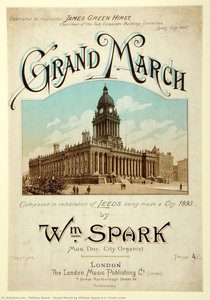
As the 1890s approached, Spark’s role as the Leeds Municipal Organist remained a cornerstone of the city's identity until his passing in 1897. He left behind a world that sounded different because he had lived in it—a world where the grandeur of the organ and the intimacy of the madrigal were woven into the daily lives of citizens. His life remains a beautiful composition of devotion, innovation, and an unwavering belief in the transformative power of music.