



A Sanctuary of Spirit and Science: The Legacy of Pinacoteca Ambrosiana
In the beating heart of Milan, tucked away from the modern rush of Piazza Pio XI, lies a sanctuary where the boundaries between art, science, and spirituality dissolve into a singular, breathtaking experience. The Pinacoteca Ambrosiana is not merely a museum; it is a living testament to the visionary intellect of Cardinal Federico Borromeo, who in the early seventeenth century sought to create a crucible for human excellence. Founded as an extension of the venerable Biblioteca Ambrosiana, this institution was conceived as a space where the pursuit of knowledge and the contemplation of beauty could exist in perfect harmony. To walk through its halls is to step into a historical continuum that stretches from the profound depths of Renaissance humanism to the dawn of modern scientific inquiry, offering a rare glimpse into an era when the discovery of a new celestial movement was seen as being as sacred as the brushstroke of a master.
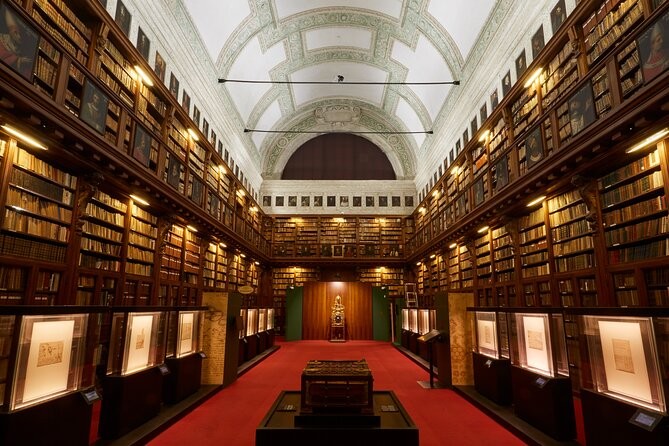
The architecture of the Ambrosiana serves as a silent narrator to its storied past. The building itself holds the weight of centuries, its historic structure acting as a vessel for one of Italy’s most precious cultural legacies. As visitors navigate its corridors, they encounter a space that feels both intimate and monumental. The museum’s layout, while partially constrained by its ancient bones, offers a curated journey through time. From the light-drenched rooms on the upper floors to the solemn dignity of the ground floor, the atmosphere is one of quiet reverence. It is a place where the air seems thick with the whispers of great thinkers—from the scientific rigor of the Codex Atlanticus to the poetic inspirations of the great literary figures who once sought refuge within these walls.
For the connoisseur of fine art, the collection offers an unparalleled encounter with the absolute geniuses of art history. The Pinacoteca is a treasure trove where the dramatic chiaroscuro of Caravaggio meets the ethereal grace of Botticelli . One might find themselves captivated by the visceral reality of the Basket of Fruit , a work that redefines the boundaries of still life, before moving toward the divine serenity of the Madonna of the Pavilion . The collection does not merely display paintings; it presents a dialogue between masters. The presence of Raphael ’s preparatory studies for the School of Athens allows the viewer to witness the very mechanics of Renaissance thought, while the intricate, detailed worlds of Jan Brueghel the Elder invite a slower, more meditative gaze. This is a collection designed for those who seek depth, where every pigment and every shadow tells a story of human aspiration.
Beyond the canvases, the Ambrosiana remains a unique intersection of disciplines, making it an essential destination for collectors and designers alike who find inspiration in the marriage of form and function. The museum’s ability to host exhibitions that bridge the gap between the artistic and the scientific—such as the celebrated displays of Leonardo da Vinci ’s drawings—ensures that its narrative remains dynamic and ever-evolving. It is a place where the tactile beauty of a Renaissance manuscript is given equal weight to the anatomical precision of a scientific sketch. For anyone looking to understand the soul of Milanese culture, or for those seeking to bring the profound elegance of historical mastery into a contemporary aesthetic vision, the Pinacoteca Ambrosiana stands as an eternal beacon of human creativity.