

 プレビュー
プレビュー
 プリントを購入
 シェアする
シェアする シェアする
シェアする
 詳細を見る
詳細を見る

 ダウンロード
 似ている作品
 X線調査
X線調査 スライドショー
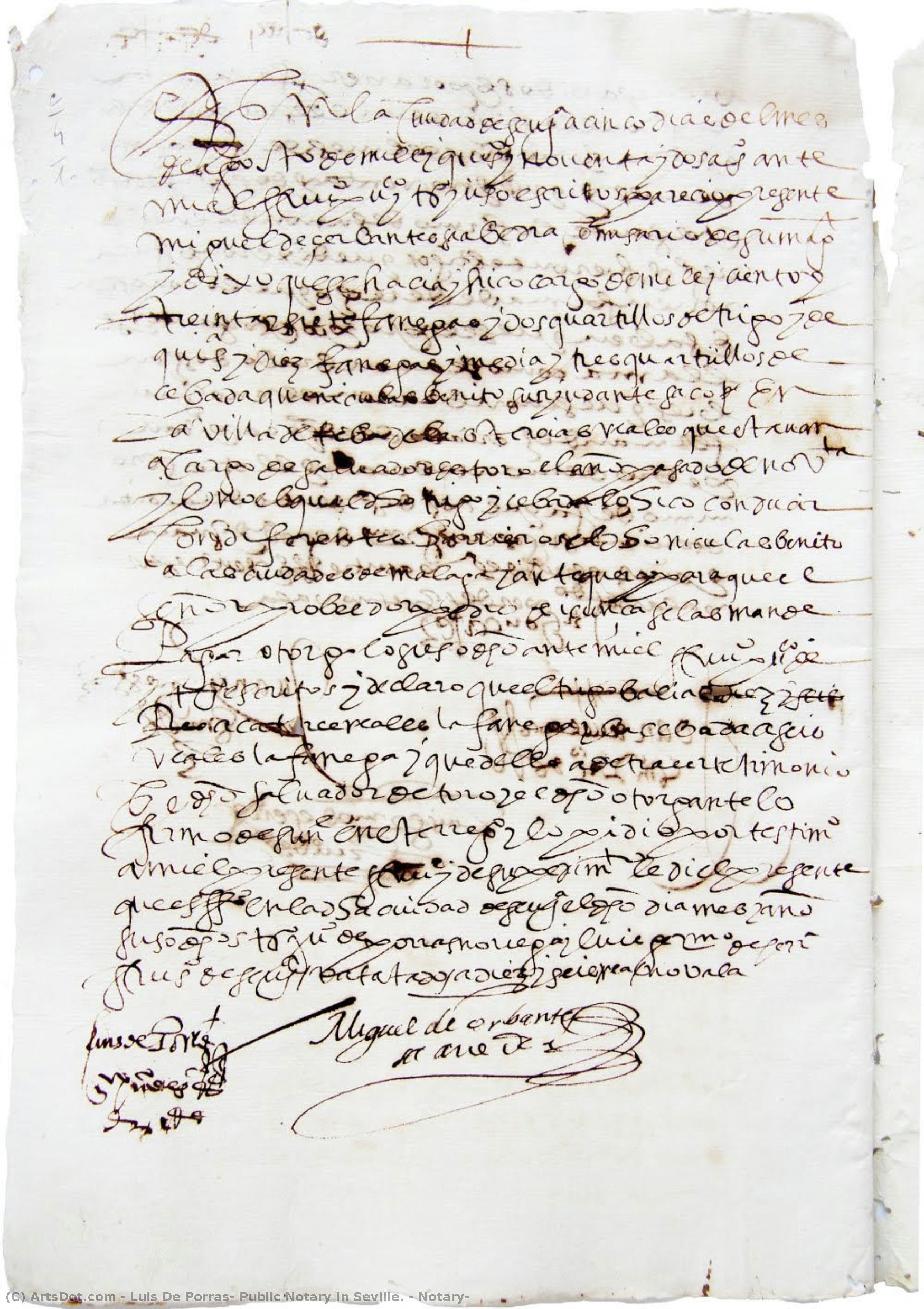
Notary
 Other
Other 1592
1592 22.0 x 32.0 cm
 Archivos Estatales
 詳細を見る
詳細を見る
オンラインプレビューをはるかに凌ぐ、高解像度で鮮明なデジタル画像をご購入いただけます。
各ファイルは、社内の専門家が高度なツールと熟練した手作業によるレタッチを用いて、細心の注意を払って準備されています。すべての画像において、卓越した鮮明度、正確な色彩再現性、そして繊細なディテールを保証いたします。
最終ファイルは、プロフェッショナルな編集・印刷環境ですぐにご利用いただけるよう最適化された状態で、72時間以内にメールにてお届けいたします。これは、一流のデザインスタジオ、出版社、ギャラリーから信頼されているものと同等の品質です。
デジタル画像のご注文に付随する特典
高品質なデジタル画像配信を、確かな品質で。
ArtsDot.com を選ぶことは、単に画像を手に入れることではありません。それは、プロの手によって精密に仕上げられ、満足保証が付いた高品質なデジタルアートワークを受け取ることを意味します。ご注文いただいた際に自動的に付随する内容は、以下の通りです:

メールですぐにお届け
ご注文から72時間以内に、高解像度のデジタル画像ファイルがメールでお手元に届きます。すぐにそのままご利用いただけます。

AI技術で最適化されたデジタルファイル
お客様の作品は、高度なAIツールと専門家による手作業の編集を組み合わせてプロフェッショナルに最適化されており、細部のディテール、鮮明さ、そして正確な色再現性を最大限に引き出しています。

一生涯無料の再送サービス
ファイルを誤って削除したり、紛失してしまったりしましたか?ご安心ください。いつでも無料で再送いたします。

輸入手数料は一切かかりません
関税や手数料、配送料を気にすることなく、お気に入りのアートワークをすぐにお楽しみいただけます。デジタルダウンロードは常に免税です。

色彩再現の保証
プロ仕様のツールとカラーマネジメント技術を用いることで、デジタル画像が元の色を最大限に忠実に再現することを保証いたします。

60日間満足保証
ご購入いただいたデジタル画像にご満足いただけない場合は、60日以内であれば、修正または100%の返金(理由を問う必要はありません)をさせていただきます。

100% 返金保証
ご満足いただけない場合は、デジタルファイルを受け取ってから60日以内であれば、理由を問わず全額返金いたします。

まとめ買い割引
3枚購入で10%OFF - 5枚購入で15%OFF - 10枚以上購入で20%OFF。クリエイティブなプロジェクト、ギャラリー、エージェンシーに最適です。
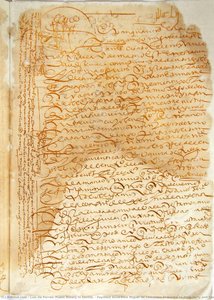
A Glimpse into 17th-Century Legal Spain: "Notary" by Luis de Porras
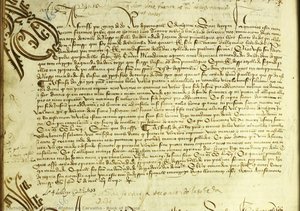
This remarkable document, titled “Notary,” offers a rare and intimate window into the legal world of 16th-century Seville. Created in 1592 by Luis de Porras, a Spanish public notary, this isn't merely a record; it’s a tangible link to a pivotal moment in history – a time when Miguel de Cervantes Saavedra, the celebrated author of *Don Quixote*, was navigating legal complexities and documenting his life through official channels. The piece itself is not a painting or sculpture but an original document meticulously transcribed by Porras, making it a unique form of historical art. Its significance lies in its direct connection to one of Spain’s most important literary figures.Style & Technique: Calligraphy and Parchment
The style is inherently that of historical documentation – a testament to the meticulous record-keeping practices of the era. The script, rendered in elegant Latin calligraphy with varying line weights and flourishes, speaks to the notary’s skill and attention to detail. Iron gall ink, commonly used at the time, has imparted a rich, dark tone that contrasts beautifully with the aged parchment, crafted from animal skin. The technique is entirely manual; each letter painstakingly formed by hand, resulting in subtle imperfections and variations that add to its authenticity and charm. The lack of perspective and flat composition are characteristic of documents intended for legal purposes – clarity and legibility were paramount.Historical Context & Cervantes' Connection
Luis de Porras’s role as a notary extended beyond routine paperwork; he was instrumental in documenting key events in the life of Miguel de Cervantes Saavedra. As evidenced by other documents recorded by Porras (see related artworks and artist page), including payment bonds, power of attorney records, and agreements for theatrical works, this "Notary" document likely relates to one of Cervantes’ legal dealings or transactions. The year 1592 places the document within a period of significant personal and professional challenges for Cervantes, adding another layer of intrigue to its historical importance. The archival record reveals Porras's involvement in documenting Cervantes' financial affairs and legal representations, providing invaluable insights into the author's life beyond his literary achievements.Symbolism & Emotional Impact
Beyond its literal function as a legal record, "Notary" carries profound symbolic weight. The aged parchment, stained and creased by time, represents the passage of centuries and the enduring power of documentation. The Latin script itself symbolizes authority, legality, and the preservation of knowledge. Viewing this document evokes a sense of connection to the past – a tangible link to 17th-century Spain and the world of Miguel de Cervantes Saavedra. The piece inspires contemplation on themes of history, law, literature, and the enduring human need to record and preserve our experiences. It’s a quiet yet powerful testament to the importance of meticulous record-keeping in shaping our understanding of the past.関連作品
![Vida De Miguel De Cervantes Saavedra (life Of Miguel De Cervantes Saavedra). Book V Of The Edition Of Don Quixote (biblioteca Nacional De España)\n\n[7] — Martín Fernández De Navarrete Y Ximénez De Tejada, Academic Art](/media/artworks/images-thumb/8c/b6/8cb67a4dd450447373a546c8dd039e57.jpg)
![La Verdadera Patria De Miguel De Cervantes (miguel De Cervantes’s True Homeland) (biblioteca Nacional De España)\n\n[4][fol.1] — Pedro José García Balboa, Baroque Rococo Revival](/media/artworks/images-thumb/a6/d8/a6d842058b3ffb23732e0ff43fd89aac.jpg)
作家の略歴
The Silent Witness of Seville: The Legacy of Luis de Porras
In the golden, sun-drenched streets of 17th-century Seville, where the scent of orange blossoms mingled with the heavy atmosphere of Spanish imperial grandeur, there existed a man whose life was defined by the precision of the pen and the weight of the seal. Luis de Porras, a public notary of profound diligence, occupied a unique position within the social fabric of the Spanish Habsburg monarchy. While history often reserves its highest honors for the poets and conquerors, De Porras operated in the vital, quiet spaces between them, serving as the essential custodian of truth during the reign of Philip II. His existence was not merely one of administrative routine; rather, he acted as a bridge between the ephemeral spoken word and the enduring permanence of the written record.
Born in Seville sometime before 1592, De Porras ascended through the rigorous legal hierarchies of his era to secure a position that granted him unparalleled access to the heartbeat of Sevillian society. As a notary, he was more than a clerk; he was an architect of legality, tasked with documenting the transactions, disputes, and agreements that fueled the economic engine of one of Europe's most prosperous cities. His work provided the structural integrity required for a complex society to function, ensuring that every shipment of grain and every transfer of property was anchored in unshakeable proof. Through his eyes, we glimpse a world of intense legal drama and meticulous social order, where the stroke of a quill could alter the fortunes of families and the stability of the royal treasury.
A Literary Intersection: Cervantes and the Notarial Record
The true historical magic of De Porras’s career lies in his unexpected intersection with the giants of Spanish literature. To study his archives is to walk alongside Miguel de Cervantes Saavedra, the master of the Spanish Golden Age. De Porras was not merely a bystander to the era of Don Quixote; he was the official hand that authenticated the very existence of Cervantes’s earthly struggles. One of the most breathtaking fragments of history preserved through his office is the authentication of documents regarding wheat and barley shipments destined for the royal treasury—a record that bears the unmistakable signature of Cervantes himself. This connection transforms De Porras from a mere bureaucrat into a vital participant in the literary landscape, providing the physical evidence that grounds the legendary author in the gritty, economic reality of his time.
Beyond these singular moments of contact, De Porras’s contribution to the cultural memory of Spain is cemented by his authorship of the Historia de Sevilla. This comprehensive chronicle serves as a monumental achievement, weaving together the foundational myths and the lived realities of Seville from its inception through the mid-17th century. In this work, the notary transitioned from a recorder of private contracts to a chronicler of public destiny. His writing reflects a deep engagement with the urban life and social customs of his city, capturing the essence of a period marked by both immense wealth and profound transition. The Historia stands as a testament to his intellectual breadth, proving that the same eye capable of spotting a discrepancy in a payment bond was equally capable of perceiving the grand narrative of a civilization.
The Artistry of the Archive
While we may not categorize De Porras as a painter of canvases, his professional output possesses an undeniable aesthetic and artistic merit. The documents he produced were masterpieces of calligraphic precision and formal elegance. In an age where the visual presentation of a document signaled its authority, De Porras employed a distinctive style characterized by ornate script and meticulous attention to detail. His use of Latin script and the careful arrangement of text on aged parchment created a visual language of power and permanence. To look upon a payment bond or a letter of agreement documented by his hand is to experience the Baroque sensibility—a fascination with complexity, texture, and the dramatic interplay of light and shadow found within the very structure of the letters themselves.
The historical significance of Luis de Porras extends far beyond the borders of Seville. He represents the essential role of the intellectual middle class in maintaining the continuity of history. His life reminds us that the grand narratives of kings and poets are built upon a foundation of smaller, meticulously recorded truths. Through his legal precision and his historical passion, De Porras ensured that the triumphs and transactions of 17th-century Spain would not vanish into the mists of time, but would remain etched in the indelible ink of the archives for all future generations to discover.
プロフィール概要
- Artistic Movement Or Style: Documentary Art
- Full Name: Luis de Porras
- Nationality: Spanish
- Notable Artworks: ['Payment bond from Miguel de Cervantes Saavedra to Vicente Orzuche']
- Place Of Birth: Seville, Spain

