

 プレビュー
プレビュー
 シェアする
シェアする シェアする
シェアする
 詳細を見る
詳細を見る

 ダウンロード
 似ている作品
 X線調査
X線調査 スライドショー
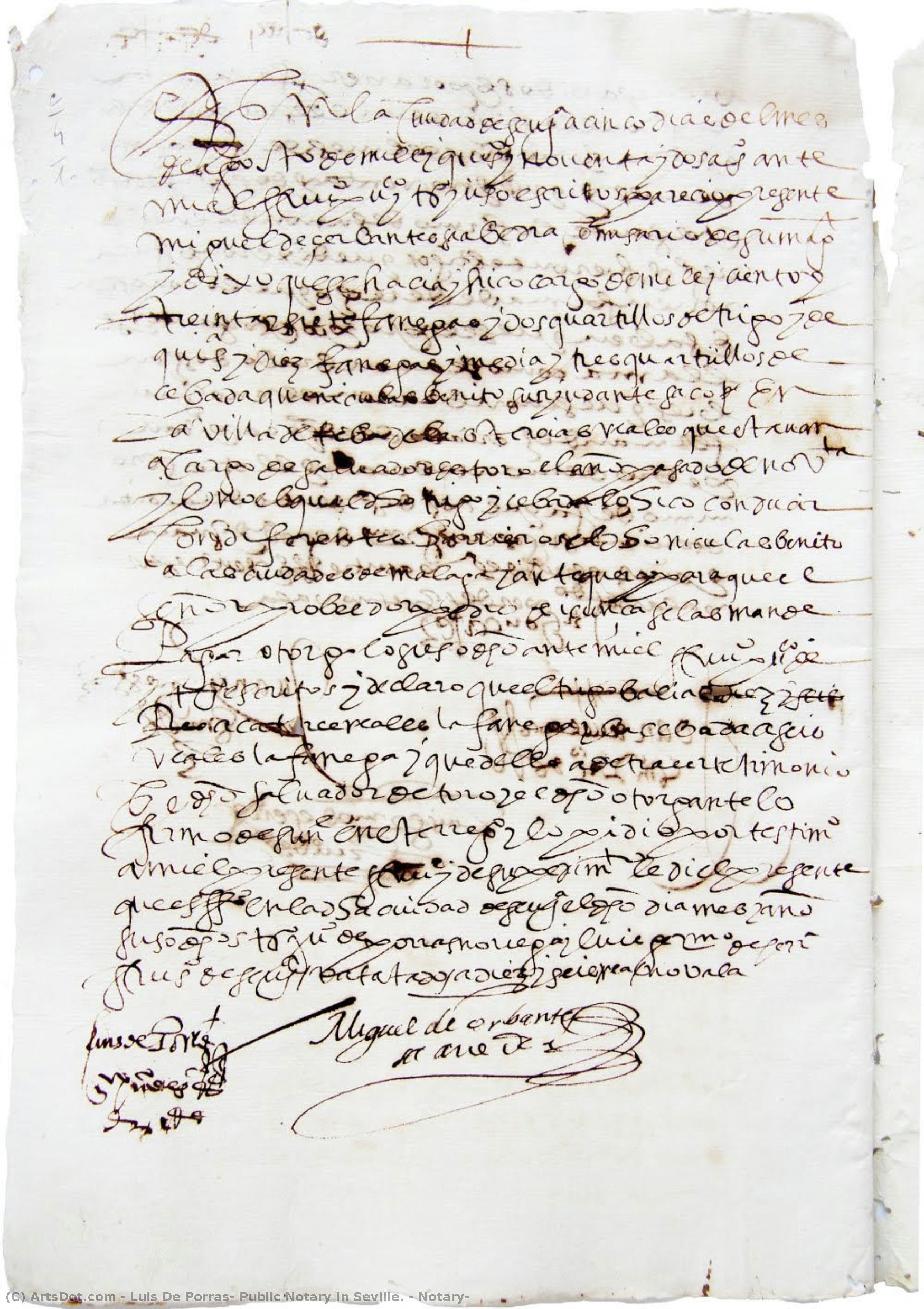
Notary
 Other
Other 1592
1592 22.0 x 32.0 cm
 Archivos Estatales
 詳細を見る
詳細を見る
ジークレー/アートプリント
迅速な制作と多彩な仕上げオプションを備えた、ミュージアムクオリティのジークレーまたはキャンバスプリント。 ( 手描きの絵画を購入 画像を購入)




































作品のオリジナル比率に合わせた、当店の規定サイズからお選びください。

特定のフレームやスペースに合わせて、ご自身でサイズを指定することも可能です。選択されたサイズが元の画像の比率と一致しない場合、作品をトリミングするか、鏡面反射または単色での塗りつぶしによって画像を拡張いたします。制作を開始する前に、ご確認用のデジタルモックアップをお送りいたします。
画面上のプレビューには、実際のトリミングや拡張は反映されませんのでご注意ください。最終的な構図を正確に確認できるのは、モックアップのみとなります。
カスタムサイズも承っておりますが、元の比率を維持するためには、あらかじめ用意されたリストからサイズを選択することをお勧めいたします。


 ガラスオプションは、110cm未満のサイズでのみご利用いただけます。

Notary
ジークレー/アートプリント
複製画のサイズ
-


合計金額
$ 62
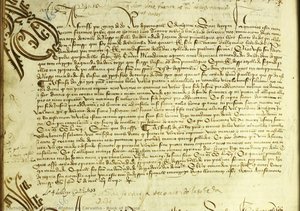
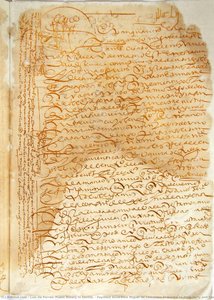
A Glimpse into 17th-Century Legal Spain: "Notary" by Luis de Porras
This remarkable document, titled “Notary,” offers a rare and intimate window into the legal world of 16th-century Seville. Created in 1592 by Luis de Porras, a Spanish public notary, this isn't merely a record; it’s a tangible link to a pivotal moment in history – a time when Miguel de Cervantes Saavedra, the celebrated author of *Don Quixote*, was navigating legal complexities and documenting his life through official channels. The piece itself is not a painting or sculpture but an original document meticulously transcribed by Porras, making it a unique form of historical art. Its significance lies in its direct connection to one of Spain’s most important literary figures.Style & Technique: Calligraphy and Parchment
The style is inherently that of historical documentation – a testament to the meticulous record-keeping practices of the era. The script, rendered in elegant Latin calligraphy with varying line weights and flourishes, speaks to the notary’s skill and attention to detail. Iron gall ink, commonly used at the time, has imparted a rich, dark tone that contrasts beautifully with the aged parchment, crafted from animal skin. The technique is entirely manual; each letter painstakingly formed by hand, resulting in subtle imperfections and variations that add to its authenticity and charm. The lack of perspective and flat composition are characteristic of documents intended for legal purposes – clarity and legibility were paramount.Historical Context & Cervantes' Connection
Luis de Porras’s role as a notary extended beyond routine paperwork; he was instrumental in documenting key events in the life of Miguel de Cervantes Saavedra. As evidenced by other documents recorded by Porras (see related artworks and artist page), including payment bonds, power of attorney records, and agreements for theatrical works, this "Notary" document likely relates to one of Cervantes’ legal dealings or transactions. The year 1592 places the document within a period of significant personal and professional challenges for Cervantes, adding another layer of intrigue to its historical importance. The archival record reveals Porras's involvement in documenting Cervantes' financial affairs and legal representations, providing invaluable insights into the author's life beyond his literary achievements.Symbolism & Emotional Impact
Beyond its literal function as a legal record, "Notary" carries profound symbolic weight. The aged parchment, stained and creased by time, represents the passage of centuries and the enduring power of documentation. The Latin script itself symbolizes authority, legality, and the preservation of knowledge. Viewing this document evokes a sense of connection to the past – a tangible link to 17th-century Spain and the world of Miguel de Cervantes Saavedra. The piece inspires contemplation on themes of history, law, literature, and the enduring human need to record and preserve our experiences. It’s a quiet yet powerful testament to the importance of meticulous record-keeping in shaping our understanding of the past.関連作品
![Vida De Miguel De Cervantes Saavedra (life Of Miguel De Cervantes Saavedra). Book V Of The Edition Of Don Quixote (biblioteca Nacional De España)\n\n[7] — Martín Fernández De Navarrete Y Ximénez De Tejada, Academic Art](/media/artworks/images-thumb/8c/b6/8cb67a4dd450447373a546c8dd039e57.jpg)
![La Verdadera Patria De Miguel De Cervantes (miguel De Cervantes’s True Homeland) (biblioteca Nacional De España)\n\n[4][fol.1] — Pedro José García Balboa, Baroque Rococo Revival](/media/artworks/images-thumb/a6/d8/a6d842058b3ffb23732e0ff43fd89aac.jpg)
アーティストの略歴
The Silent Witness of Seville: The Legacy of Luis de Porras
In the golden, sun-drenched streets of 17th-century Seville, where the scent of orange blossoms mingled with the heavy atmosphere of Spanish imperial grandeur, there existed a man whose life was defined by the precision of the pen and the weight of the seal. Luis de Porras, a public notary of profound diligence, occupied a unique position within the social fabric of the Spanish Habsburg monarchy. While history often reserves its highest honors for the poets and conquerors, De Porras operated in the vital, quiet spaces between them, serving as the essential custodian of truth during the reign of Philip II. His existence was not merely one of administrative routine; rather, he acted as a bridge between the ephemeral spoken word and the enduring permanence of the written record.
Born in Seville sometime before 1592, De Porras ascended through the rigorous legal hierarchies of his era to secure a position that granted him unparalleled access to the heartbeat of Sevillian society. As a notary, he was more than a clerk; he was an architect of legality, tasked with documenting the transactions, disputes, and agreements that fueled the economic engine of one of Europe's most prosperous cities. His work provided the structural integrity required for a complex society to function, ensuring that every shipment of grain and every transfer of property was anchored in unshakeable proof. Through his eyes, we glimpse a world of intense legal drama and meticulous social order, where the stroke of a quill could alter the fortunes of families and the stability of the royal treasury.
A Literary Intersection: Cervantes and the Notarial Record
The true historical magic of De Porras’s career lies in his unexpected intersection with the giants of Spanish literature. To study his archives is to walk alongside Miguel de Cervantes Saavedra, the master of the Spanish Golden Age. De Porras was not merely a bystander to the era of Don Quixote; he was the official hand that authenticated the very existence of Cervantes’s earthly struggles. One of the most breathtaking fragments of history preserved through his office is the authentication of documents regarding wheat and barley shipments destined for the royal treasury—a record that bears the unmistakable signature of Cervantes himself. This connection transforms De Porras from a mere bureaucrat into a vital participant in the literary landscape, providing the physical evidence that grounds the legendary author in the gritty, economic reality of his time.
Beyond these singular moments of contact, De Porras’s contribution to the cultural memory of Spain is cemented by his authorship of the Historia de Sevilla. This comprehensive chronicle serves as a monumental achievement, weaving together the foundational myths and the lived realities of Seville from its inception through the mid-17th century. In this work, the notary transitioned from a recorder of private contracts to a chronicler of public destiny. His writing reflects a deep engagement with the urban life and social customs of his city, capturing the essence of a period marked by both immense wealth and profound transition. The Historia stands as a testament to his intellectual breadth, proving that the same eye capable of spotting a discrepancy in a payment bond was equally capable of perceiving the grand narrative of a civilization.
The Artistry of the Archive
While we may not categorize De Porras as a painter of canvases, his professional output possesses an undeniable aesthetic and artistic merit. The documents he produced were masterpieces of calligraphic precision and formal elegance. In an age where the visual presentation of a document signaled its authority, De Porras employed a distinctive style characterized by ornate script and meticulous attention to detail. His use of Latin script and the careful arrangement of text on aged parchment created a visual language of power and permanence. To look upon a payment bond or a letter of agreement documented by his hand is to experience the Baroque sensibility—a fascination with complexity, texture, and the dramatic interplay of light and shadow found within the very structure of the letters themselves.
The historical significance of Luis de Porras extends far beyond the borders of Seville. He represents the essential role of the intellectual middle class in maintaining the continuity of history. His life reminds us that the grand narratives of kings and poets are built upon a foundation of smaller, meticulously recorded truths. Through his legal precision and his historical passion, De Porras ensured that the triumphs and transactions of 17th-century Spain would not vanish into the mists of time, but would remain etched in the indelible ink of the archives for all future generations to discover.
基本情報
- Artistic Movement Or Style: Documentary Art
- Full Name: Luis de Porras
- Nationality: Spanish
- Notable Artworks: ['Payment bond from Miguel de Cervantes Saavedra to Vicente Orzuche']
- Place Of Birth: Seville, Spain
関連記事

ゴヤ傑作25選:スペインの魂を揺さぶる、深遠な芸術の世界 | ArtsDot
ゴヤ傑作25選:ロマン主義を代表するスペインの巨匠、フランシスコ・デ・ゴヤの世界へ。黒衣の女からマハまで、魂を揺さぶる絵画の物語と技法を紐解きます。ArtsDotで高品質なアートレプリカを見つけ、インテリアに深みと風格を。今すぐコレクションをご覧ください。

About Us
Discover our story! We bring world-class art into your life through expert curation, personalized creations, and free previews. Trusted by individuals and businesses since 2000.
Pieter de Hooch: Illuminating Dutch Domestic Life & Golden Age Charm
Explore the captivating world of Pieter de Hooch, a master of Dutch Golden Age painting. Discover his innovative use of light, intimate domestic scenes, and lasting influence on art history. Learn more at ArtsDot.
Philip de László: A Portrait of Aristocratic Society & the Cosmopolitan Painter's Evolution
Explore the life & art of Philip de László, master portraitist of European aristocracy. Discover his stunning paintings, royal commissions, and enduring legacy. A guide for discerning collectors.
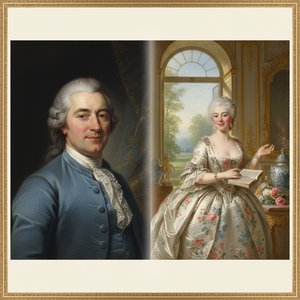
Maurice Quentin de La Tour: Light, Shadow & the Rococo Portrait
Explore the captivating world of Maurice Quentin de La Tour, a master of Rococo portraiture. Discover his innovative pastel techniques, intimate depictions of French aristocracy, and lasting artistic legacy. Learn more at ArtsDot.

