

 シェアする
シェアする シェアする
シェアする
 詳細を見る
詳細を見る

 ダウンロード
 似ている作品
 スライドショー
 Stats
StatsMusic Cabinet
 Furniture Art
- Decor
- Arts and Crafts
 1880
1880- 19th Century
 241.0 x 115.0 cm
 William Morris Gallery
 詳細を見る
詳細を見る
手描き油彩複製画
当社のアーティストが、お客様のご希望のサイズと額縁に合わせて、キャンバスに手描きで制作する油彩画です。 ( Switch to Print Switch to Digital Image)




































作品のオリジナル比率に合わせた、当店の規定サイズからお選びください。

特定のフレームやスペースに合わせて、ご希望のサイズをご入力いただけます。選択されたサイズが元の画像の比率と異なる場合、アートワークをトリミングするか、手描きで要素を追加して絵画を拡張いたします。デジタルモックアップ を制作し、制作開始前にご確認(承認)をいただきます。
画面上のプレビューは、実際のトリミングや拡張を正確に反映しているものではありません。最終的な構図は、モックアップによってのみ正確にご確認いただけます。
カスタムサイズもご利用いただけますが、元の比率を維持するためには、あらかじめ用意されたリストからサイズを選択することをお勧めいたします。
ご注文後、ArtsDot.com チームより詳細な指示をお送りするとともに、仕上がりイメージ(モックアップ)をご提供いたします。


 ガラスオプションは、110cm未満のサイズでのみご利用いただけます。

Music Cabinet
複製技法
複製画のサイズ
-


合計金額
$ 263
A Symphony in Wood and Pigment
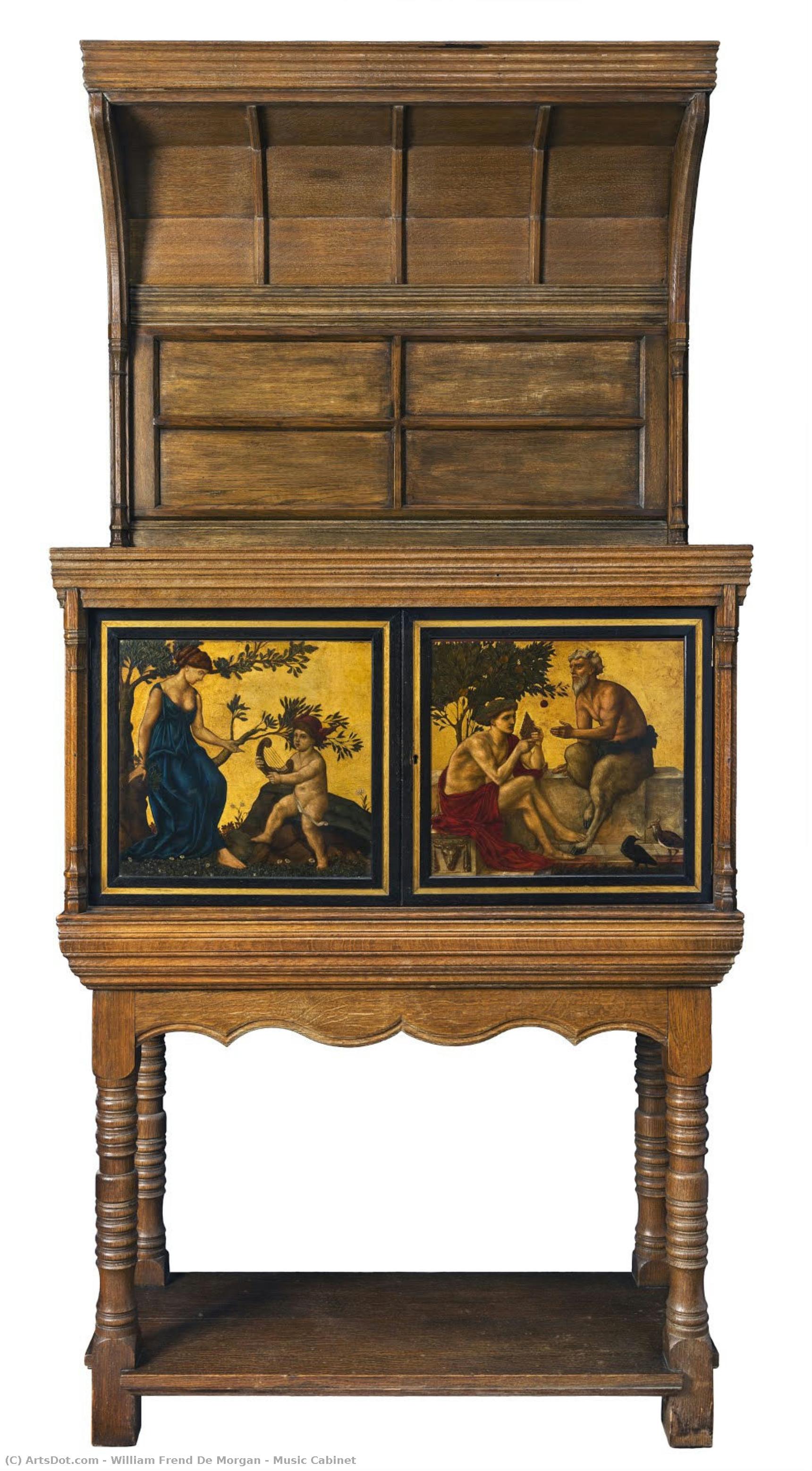
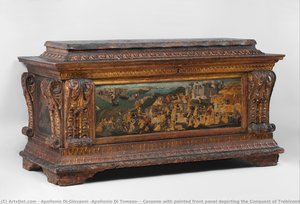
In the quiet corners of the William Morris Gallery, there exists a masterpiece that transcends the boundary between functional furniture and fine art: the Music Cabinet. Created in 1880, this exquisite piece is not merely a storage vessel but a lyrical dialogue between two titans of the Arts and Crafts movement, Philip Webb and William Frend De Morgan. As one gazes upon its imposing 241 x 115 cm frame, one does not simply see a cabinet; one encounters a visual composition where the structural integrity of Webb’s design provides a stage for De Morgan’s evocative storytelling. The cabinet serves as a profound testament to an era when every domestic object was envisioned as a vessel for beauty and spiritual elevation.
The artistry of the piece lies in its seamless integration of classical narrative and organic craftsmanship. The upper panels, rendered with a delicate touch, depict figures lost in the rhythmic trance of musical performance, while the lower doors ground the composition with scenes of figures resting upon the earth. Through De Morgan’s brush, the movement of melody becomes visible, captured in the graceful postures and the soft, atmospheric light that seems to emanate from within the painted scenes themselves. The interplay between the rich, dark wood and the luminous, gilded accents creates a sense of depth that invites the viewer to linger, searching for the subtle connection between the terrestrial world and the ethereal realm of sound.
The Legacy of the Arts and Crafts Movement
To understand the Music Cabinet is to understand the heart of the late Victorian aesthetic revolution. Born from the collaborative spirit of Morris, Marshall, Faulkner and Co., this work embodies the movement's rejection of industrial soullessness in favor of hand-wrought excellence. The cabinet was originally part of a pair, intended for the private residence of Isabel Olga Lucas, representing a bespoke luxury that prioritized artistic integrity over mass production. De Morgan, a polymath whose talents spanned ceramics, stained glass, and painting, brought a unique mythological and spiritual depth to the work, likely influenced by his upbringing in an intellectually vibrant household.
For the discerning collector or interior designer, this piece offers more than historical significance; it offers a profound emotional resonance. The cabinet acts as a focal point of "living art," capable of transforming a contemporary space into a sanctuary of classical elegance. Whether reimagined as a high-quality reproduction in a grand library or used as inspiration for bespoke cabinetry, the Music Cabinet continues to inspire those who seek to surround themselves with objects that possess a soul. It remains a timeless symbol of how design can harmonize the practical needs of a home with the boundless imagination of the human spirit.
関連作品

アーティストの略歴
A Life Immersed in Pattern and Innovation
William Frend De Morgan, born in London in 1839, was a figure who defied easy categorization. He wasn’t simply a potter, nor merely a tile designer, or even solely a novelist—he was a polymath whose artistic spirit permeated multiple disciplines. Born into an intellectually stimulating environment – his father, Augustus De Morgan, was a renowned mathematician, and his mother, Sophia Elizabeth Frend, a progressive thinker and writer – young William received encouragement to pursue his creative inclinations. Though he initially enrolled at the Royal Academy Schools, a sense of disillusionment soon set in, leading him toward a more collaborative and aesthetically aligned path. This pivotal shift came with his introduction to William Morris, a meeting that would profoundly shape De Morgan’s artistic trajectory and immerse him within the burgeoning Arts and Crafts movement.From Stained Glass to Ceramic Revelation
De Morgan's early explorations centered on stained glass, working alongside Morris & Co., contributing designs imbued with medieval and mythological narratives. However, it was a fascination with lustre – that shimmering, iridescent quality found in ancient Hispano-Moresque pottery and Italian maiolica – that truly ignited his artistic passion. He dedicated himself to rediscovering the lost techniques of lustreware, meticulously experimenting with glazes and firing processes. This pursuit wasn’t merely about replicating an aesthetic; it was a scientific investigation driven by an insatiable curiosity. By 1872, De Morgan had fully committed to ceramics, establishing his own pottery in Chelsea. The decade that followed proved remarkably fruitful, though marked by technical challenges. He skillfully combined commercially produced tiles with his own creations, notably developing a high-quality biscuit tile celebrated for its irregularities and durability. His designs during this period began to coalesce around recurring motifs: fantastical creatures, galleons, fish, and intricate floral patterns, all rendered in a distinctive “Persian” palette of deep blues, turquoise, manganese purple, greens, Indian red, and lemon yellow.Eastern Influences and Artistic Flourishing
De Morgan’s artistic vision was deeply informed by his profound interest in Eastern art, particularly Islamic tilework. This fascination wasn't superficial imitation but a genuine appreciation for the complex geometric patterns, vibrant colors, and symbolic richness of these traditions. He absorbed these influences, translating them into a unique visual language that blended medieval aesthetics with Oriental motifs. Between 1882 and 1900, De Morgan received significant commissions, most notably producing elaborate tile panels for twelve P&O liners under the direction of T.E. Colcutt, as well as earlier work for Tsar Alexander II’s yacht, Livadia. These large-scale projects showcased his ability to translate intricate designs into expansive decorative schemes. His pottery also flourished, encompassing chargers, rice dishes, and vases, often brought to life through the skilled hands of decorators like Charles Passenger, Fred Passenger, Joe Juster, and Miss Babb – artists who faithfully executed De Morgan’s visionary concepts.A Legacy Beyond Ceramics
Though his pottery and tile designs remain his most celebrated achievements, William De Morgan's creative energy extended into the realm of literature. In his later years, he embarked on a second career as a novelist, publishing nine works between 1906 and 1917. His novels, characterized by realistic dialogue and insightful social commentary, were well-received during his lifetime. De Morgan’s impact resonates through the enduring appeal of his art. He wasn't simply replicating historical styles; he was innovating, experimenting, and forging a unique aesthetic that continues to captivate audiences today. The De Morgan Centre in London stands as a testament to his legacy, preserving and showcasing his remarkable contributions to Victorian decorative arts. His work embodies the spirit of the Arts and Crafts movement – a commitment to craftsmanship, artistic integrity, and the harmonious integration of art into everyday life.Key Dates & Notable Works
- 1839: Born in Gower Street, London.
- 1863: Began experimenting with stained glass and ventured into pottery.
- 1872: Established his own pottery in Chelsea.
- 1882-1900: Commissioned to produce tile panels for P&O liners and the Tsar’s yacht.
- 1906-1917: Published nine novels.
- 1917: Passed away in London.
- The Annunciation (featured on ArtsDot.com)
- Sunrise, Inverness Copse (by Paul Nash, featured on ArtsDot.com)
- Music Cabinet
- The Welsh Bible
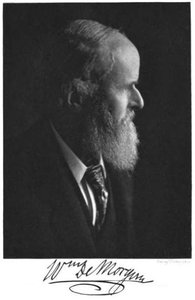
William Frend De Morgan
1839 - 1917 , United Kingdom
基本情報
- Artistic Movement Or Style: Arts and Crafts
- Artists Who Influenced This Artist: ['William Morris']
- Date Of Birth: November 16, 1839
- Date Of Death: January 15, 1917
- Full Name: William Frend De Morgan
- Nationality: British
- Notable Artworks:
- The Annunciation
- Music Cabinet
- The Welsh Bible
- Place Of Birth: London, UK
関連記事
The Enduring Legacy of Classicism: Principles, Evolution & Influence in Western Art
Explore the enduring legacy of Classicism in Western art! Discover its historical context, key principles, iconic masterpieces & lasting influence. Learn about Renaissance and Neoclassical movements with ArtsDot.
Harmonies on Canvas: Exploring the Visual Representation of Music in Art History
Explore the fascinating history of music's visual representation in art! From ancient symbolism to modern abstraction, discover how artists have captured sound and emotion on canvas. Expert insights & stunning examples.
Neo-Classicism's Greatest Hits: 10 Masterpieces for Your Home |
Journey through Neo-Classicism's finest! Explore 10 iconic masterpieces by David, Ingres & Canova. Discover art history, techniques & timeless beauty – perfect for inspiring your home decor. Find museum-quality reproductions at
Timeless Resonance: Exploring Classic Vibe in Art – A Historical & Aesthetic Analysis
Explore the rich history & enduring aesthetic of Classicism art! Discover key movements, iconic artists like Raphael & David, and its lasting influence on Western art. Deepen your appreciation today.
The Enduring Legacy of Classical Style: Form, Narrative & Influence in Art
Explore the enduring legacy of classical art – from ancient Greece & Rome to Neoclassicism. Discover key artists, philosophical roots & build a timeless collection with ArtsDot's expert guidance.