

 シェアする
シェアする シェアする
シェアする
 詳細を見る
詳細を見る

 ダウンロード
 似ている作品
 スライドショー
 Stats
StatsMusic Cabinet
 Furniture Art
- Decor
- Arts and Crafts
 1880
1880- 19th Century
 241.0 x 115.0 cm
 William Morris Gallery
 詳細を見る
詳細を見る
オンラインプレビューをはるかに凌ぐ、高解像度で鮮明なデジタル画像をご購入いただけます。
各ファイルは、社内の専門家が高度なツールと熟練した手作業によるレタッチを用いて、細心の注意を払って準備されています。すべての画像において、卓越した鮮明度、正確な色彩再現性、そして繊細なディテールを保証いたします。
最終ファイルは、プロフェッショナルな編集・印刷環境ですぐにご利用いただけるよう最適化された状態で、72時間以内にメールにてお届けいたします。これは、一流のデザインスタジオ、出版社、ギャラリーから信頼されているものと同等の品質です。
デジタルアート
個人での鑑賞、印刷、クリエイティブなプロジェクト用に、高解像度ファイルをダウンロードできます。 ( Switch to Print 手描きの絵画を購入)
デジタル画像のご注文に付随する特典
高品質なデジタル画像配信を、確かな品質で。
ArtsDot.com を選ぶことは、単に画像を手に入れることではありません。それは、プロの手によって精密に仕上げられ、満足保証が付いた高品質なデジタルアートワークを受け取ることを意味します。ご注文いただいた際に自動的に付随する内容は、以下の通りです:

メールですぐにお届け
ご注文から72時間以内に、高解像度のデジタル画像ファイルがメールでお手元に届きます。すぐにそのままご利用いただけます。

AI技術で最適化されたデジタルファイル
お客様の作品は、高度なAIツールと専門家による手作業の編集を組み合わせてプロフェッショナルに最適化されており、細部のディテール、鮮明さ、そして正確な色再現性を最大限に引き出しています。

一生涯無料の再送サービス
ファイルを誤って削除したり、紛失してしまったりしましたか?ご安心ください。いつでも無料で再送いたします。

輸入手数料は一切かかりません
関税や手数料、配送料を気にすることなく、お気に入りのアートワークをすぐにお楽しみいただけます。デジタルダウンロードは常に免税です。

色彩再現の保証
プロ仕様のツールとカラーマネジメント技術を用いることで、デジタル画像が元の色を最大限に忠実に再現することを保証いたします。

100日間満足保証
ご購入いただいたデジタル画像にご満足いただけない場合は、100日以内であれば、理由を問わず修正または100%の返金対応をさせていただきます。

100% 返金保証
ご満足いただけない場合は、デジタルファイルを受け取ってから100日以内であれば、理由を問わず全額返金いたします。

まとめ買い割引
3枚購入で10%OFF - 5枚購入で15%OFF - 10枚以上購入で20%OFF。クリエイティブなプロジェクト、ギャラリー、エージェンシーに最適です。
A Symphony in Wood and Pigment
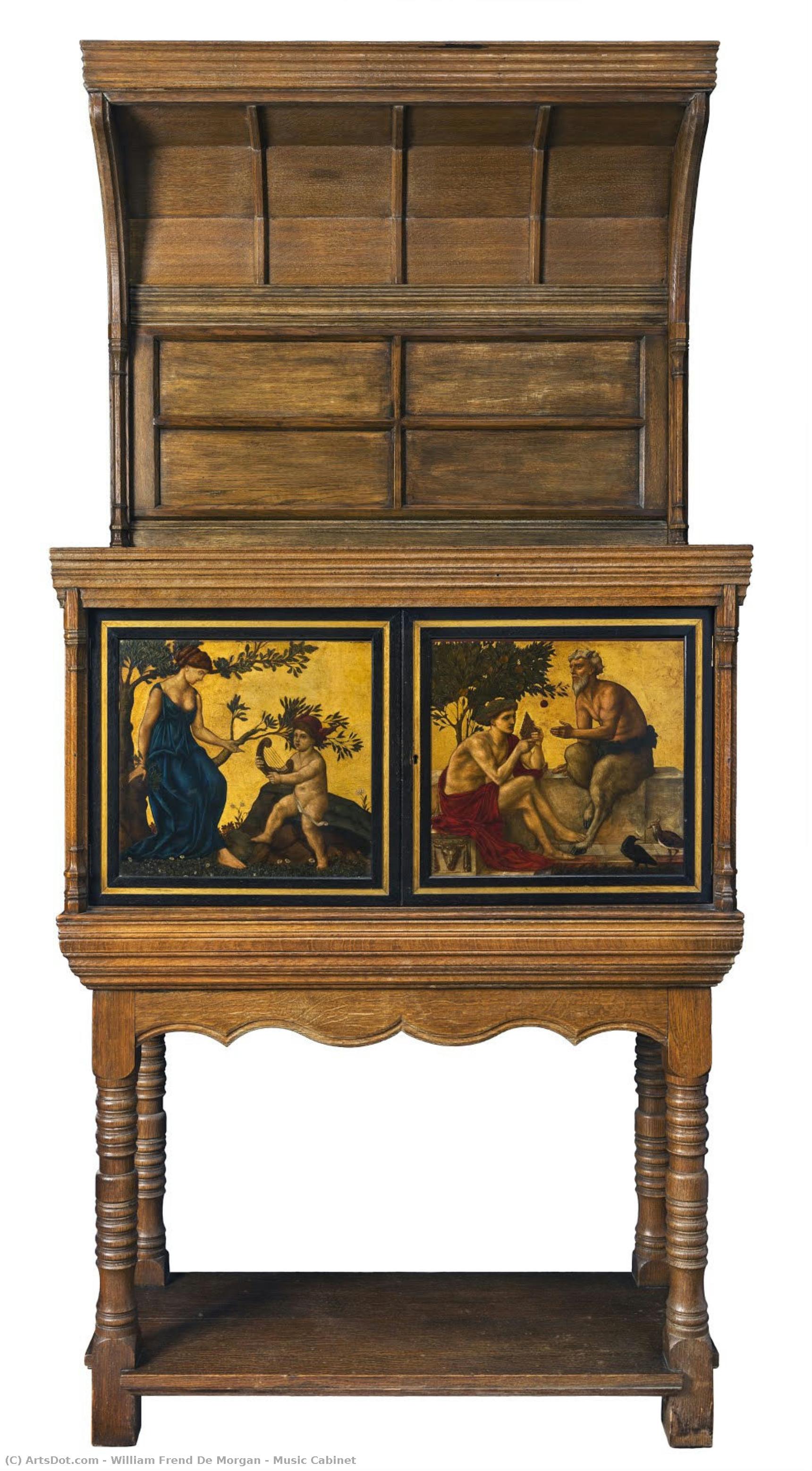
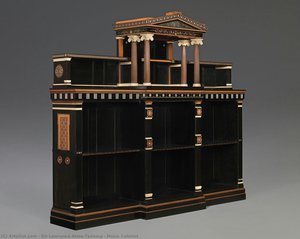
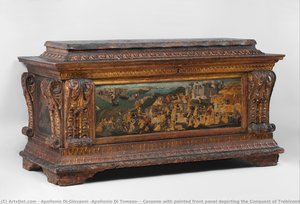
In the quiet corners of the William Morris Gallery, there exists a masterpiece that transcends the boundary between functional furniture and fine art: the Music Cabinet. Created in 1880, this exquisite piece is not merely a storage vessel but a lyrical dialogue between two titans of the Arts and Crafts movement, Philip Webb and William Frend De Morgan. As one gazes upon its imposing 241 x 115 cm frame, one does not simply see a cabinet; one encounters a visual composition where the structural integrity of Webb’s design provides a stage for De Morgan’s evocative storytelling. The cabinet serves as a profound testament to an era when every domestic object was envisioned as a vessel for beauty and spiritual elevation.
The artistry of the piece lies in its seamless integration of classical narrative and organic craftsmanship. The upper panels, rendered with a delicate touch, depict figures lost in the rhythmic trance of musical performance, while the lower doors ground the composition with scenes of figures resting upon the earth. Through De Morgan’s brush, the movement of melody becomes visible, captured in the graceful postures and the soft, atmospheric light that seems to emanate from within the painted scenes themselves. The interplay between the rich, dark wood and the luminous, gilded accents creates a sense of depth that invites the viewer to linger, searching for the subtle connection between the terrestrial world and the ethereal realm of sound.
The Legacy of the Arts and Crafts Movement
To understand the Music Cabinet is to understand the heart of the late Victorian aesthetic revolution. Born from the collaborative spirit of Morris, Marshall, Faulkner and Co., this work embodies the movement's rejection of industrial soullessness in favor of hand-wrought excellence. The cabinet was originally part of a pair, intended for the private residence of Isabel Olga Lucas, representing a bespoke luxury that prioritized artistic integrity over mass production. De Morgan, a polymath whose talents spanned ceramics, stained glass, and painting, brought a unique mythological and spiritual depth to the work, likely influenced by his upbringing in an intellectually vibrant household.
For the discerning collector or interior designer, this piece offers more than historical significance; it offers a profound emotional resonance. The cabinet acts as a focal point of "living art," capable of transforming a contemporary space into a sanctuary of classical elegance. Whether reimagined as a high-quality reproduction in a grand library or used as inspiration for bespoke cabinetry, the Music Cabinet continues to inspire those who seek to surround themselves with objects that possess a soul. It remains a timeless symbol of how design can harmonize the practical needs of a home with the boundless imagination of the human spirit.
関連作品

作家の略歴
A Life Immersed in Pattern and Innovation
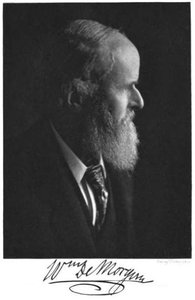
William Frend De Morgan, born in London in 1839, was a figure who defied easy categorization. He wasn’t simply a potter, nor merely a tile designer, or even solely a novelist—he was a polymath whose artistic spirit permeated multiple disciplines. Born into an intellectually stimulating environment – his father, Augustus De Morgan, was a renowned mathematician, and his mother, Sophia Elizabeth Frend, a progressive thinker and writer – young William received encouragement to pursue his creative inclinations. Though he initially enrolled at the Royal Academy Schools, a sense of disillusionment soon set in, leading him toward a more collaborative and aesthetically aligned path. This pivotal shift came with his introduction to William Morris, a meeting that would profoundly shape De Morgan’s artistic trajectory and immerse him within the burgeoning Arts and Crafts movement.From Stained Glass to Ceramic Revelation
De Morgan's early explorations centered on stained glass, working alongside Morris & Co., contributing designs imbued with medieval and mythological narratives. However, it was a fascination with lustre – that shimmering, iridescent quality found in ancient Hispano-Moresque pottery and Italian maiolica – that truly ignited his artistic passion. He dedicated himself to rediscovering the lost techniques of lustreware, meticulously experimenting with glazes and firing processes. This pursuit wasn’t merely about replicating an aesthetic; it was a scientific investigation driven by an insatiable curiosity. By 1872, De Morgan had fully committed to ceramics, establishing his own pottery in Chelsea. The decade that followed proved remarkably fruitful, though marked by technical challenges. He skillfully combined commercially produced tiles with his own creations, notably developing a high-quality biscuit tile celebrated for its irregularities and durability. His designs during this period began to coalesce around recurring motifs: fantastical creatures, galleons, fish, and intricate floral patterns, all rendered in a distinctive “Persian” palette of deep blues, turquoise, manganese purple, greens, Indian red, and lemon yellow.Eastern Influences and Artistic Flourishing
De Morgan’s artistic vision was deeply informed by his profound interest in Eastern art, particularly Islamic tilework. This fascination wasn't superficial imitation but a genuine appreciation for the complex geometric patterns, vibrant colors, and symbolic richness of these traditions. He absorbed these influences, translating them into a unique visual language that blended medieval aesthetics with Oriental motifs. Between 1882 and 1900, De Morgan received significant commissions, most notably producing elaborate tile panels for twelve P&O liners under the direction of T.E. Colcutt, as well as earlier work for Tsar Alexander II’s yacht, Livadia. These large-scale projects showcased his ability to translate intricate designs into expansive decorative schemes. His pottery also flourished, encompassing chargers, rice dishes, and vases, often brought to life through the skilled hands of decorators like Charles Passenger, Fred Passenger, Joe Juster, and Miss Babb – artists who faithfully executed De Morgan’s visionary concepts.A Legacy Beyond Ceramics
Though his pottery and tile designs remain his most celebrated achievements, William De Morgan's creative energy extended into the realm of literature. In his later years, he embarked on a second career as a novelist, publishing nine works between 1906 and 1917. His novels, characterized by realistic dialogue and insightful social commentary, were well-received during his lifetime. De Morgan’s impact resonates through the enduring appeal of his art. He wasn't simply replicating historical styles; he was innovating, experimenting, and forging a unique aesthetic that continues to captivate audiences today. The De Morgan Centre in London stands as a testament to his legacy, preserving and showcasing his remarkable contributions to Victorian decorative arts. His work embodies the spirit of the Arts and Crafts movement – a commitment to craftsmanship, artistic integrity, and the harmonious integration of art into everyday life.Key Dates & Notable Works
- 1839: Born in Gower Street, London.
- 1863: Began experimenting with stained glass and ventured into pottery.
- 1872: Established his own pottery in Chelsea.
- 1882-1900: Commissioned to produce tile panels for P&O liners and the Tsar’s yacht.
- 1906-1917: Published nine novels.
- 1917: Passed away in London.
- The Annunciation (featured on ArtsDot.com)
- Sunrise, Inverness Copse (by Paul Nash, featured on ArtsDot.com)
- Music Cabinet
- The Welsh Bible
William Frend De Morgan
1839 - 1917 , United Kingdom
プロフィール概要
- Artistic Movement Or Style: Arts and Crafts
- Artists Who Influenced This Artist: ['William Morris']
- Date Of Birth: November 16, 1839
- Date Of Death: January 15, 1917
- Full Name: William Frend De Morgan
- Nationality: British
- Notable Artworks:
- The Annunciation
- Music Cabinet
- The Welsh Bible
- Place Of Birth: London, UK