Introduction
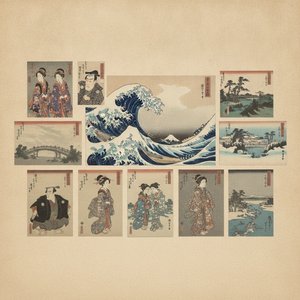
To step into the world of Katsushika Hokusai is to witness a lifetime of restless, beautiful observation. It is not merely an encounter with ink and paper, but a journey through the very soul of Edo-period Japan—a voyage that captures the ephemeral dance of waves, the silent majesty of Mount Fuji, and the rhythmic pulse of everyday human existence. As we prepare to traverse his most significant works, we do not just look at prints; we witness a master attempting to grasp the infinite through the finite strokes of a brush.
Born in the bustling streets of Edo (modern-day Tokyo) around 1760, Hokusai lived through an era of profound cultural flowering. He was a pioneer of the ukiyo-e genre, often referred to as 'pictures of the floating world.' While his predecessors focused heavily on the transient pleasures of urban life—the theater, the tea houses, and the courtesans—Hokusai expanded the horizon of the medium. He looked outward toward the landscape, infusing woodblock printing with a sense of spiritual depth and structural precision that had never before been seen. His work bridged the gap between the delicate traditions of Japanese craftsmanship and a burgeoning global fascination with the sublime power of nature.
These twenty-five selected masterpieces remain profoundly meaningful today because they speak to a universal truth: our shared relationship with the natural world. In the crest of a crashing wave or the soft light hitting a distant peak, we find reflections of our own struggles and triumphs. Hokusai’s ability to balance meticulous detail with sweeping, emotional movement allows his art to transcend its 19th-century origins, making it feel as immediate and vital in a modern gallery as it did in an Edo marketplace.
In the pages that follow, we will guide you through a curated selection of his most iconic achievements. From the breathtaking compositions of the Thirty-six Views of Mount Fuji to his more intimate sketches, each piece serves as a window into a mind that never ceased to evolve. Whether you are a scholar of Japanese history, an admirer of fine printmaking, or a collector seeking to bring the timeless elegance of the East into your own home through a hand-painted oil reproduction , this collection promises to leave you transformed.
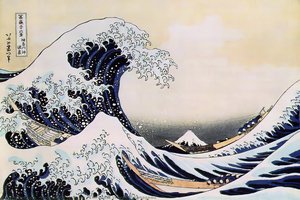
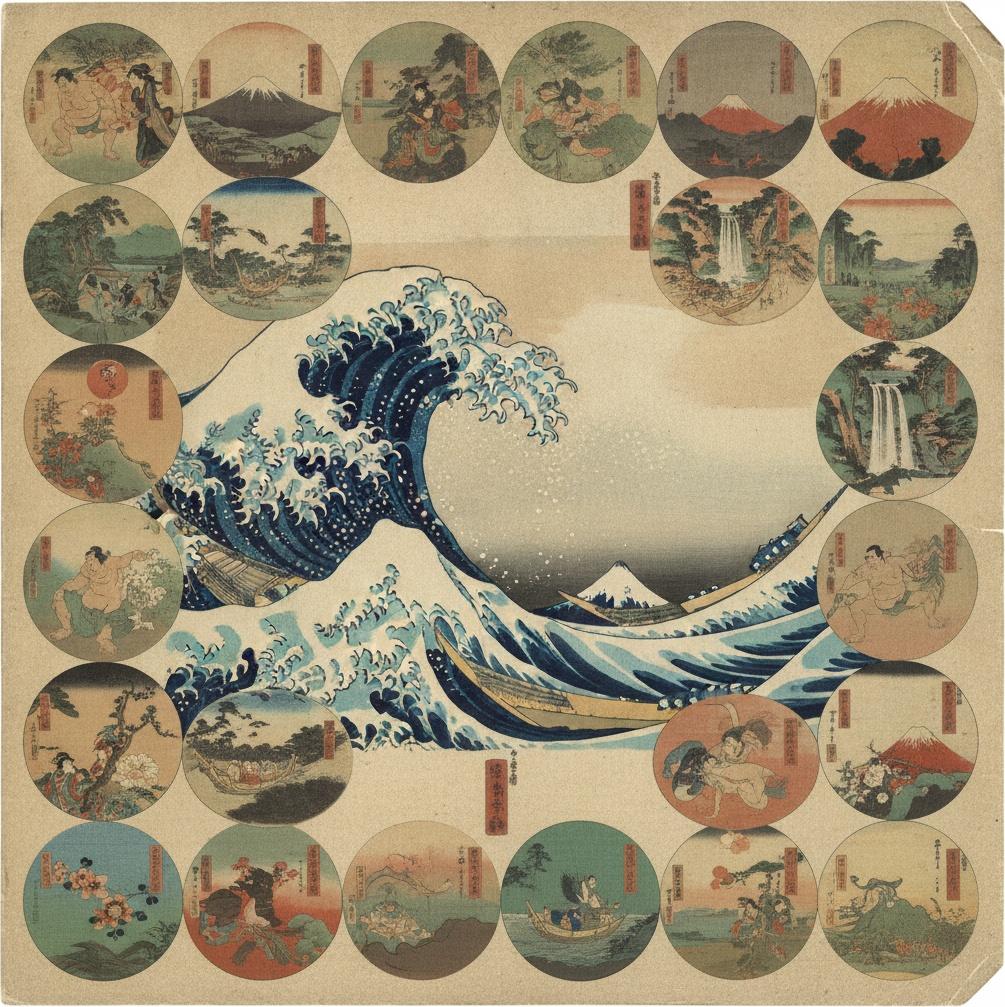
The Great Wave off Kanagawa - Katsushika Hokusai
A singular, breathtaking moment of tension captured in ink and pigment, The Great Wave off Kanagawa by Katsushika Hokusai stands as a profound meditation on the sublime power of the natural world. At ArtsDot.com, we believe that such monumental beauty should not be confined to distant museums; our mission is to democratize these masterpieces, making their transformative energy accessible to every collector.
As a cornerstone of our Top 25 Hokusai collection, this 1831 woodblock print is irreplaceable due to its revolutionary use of Prussian blue and its masterful command of the ukiyo-e technique. The composition—a towering, claw-like wave poised to engulf fragile boats while Mount Fuji remains stoically in the distance—creates a rhythmic dance between chaos and permanence. This striking interplay of deep blues and frothing whites offers an unparalleled aesthetic for modern interiors, providing a focal point of movement and strength. Whether adorning a minimalist office or a traditional study, you can bring this iconic vision of resilience into your own space through our high-fidelity, hand-painted oil reproductions, ensuring the spirit of the Edo period lives on in your personal gallery.
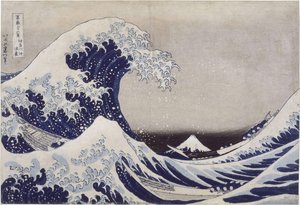
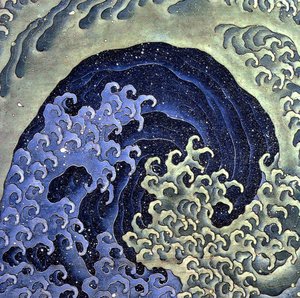
Femenine wave - Katsushika Hokusai
 Femenine wave - Katsushika Hokusai
To encounter Feminine Wave by Katsushika Hokusai is to witness the very breath of the ocean captured in a moment of eternal motion. As one of the most profound entries in our collection of the top 25 artworks of Katsushika Hokusai, this masterpiece transcends simple woodblock printing to offer a meditative study on the duality of nature: its terrifying power and its ethereal grace. The composition is anchored by a towering, sculptural crest of Prussian blue, where the artist’s use of bold outlines creates a swirling vortex that seems to defy the stillness of the paper.
The subtle interplay of white foam against deep, oceanic tones evokes a sense of profound tranquility and movement, making it an exquisite focal point for a refined, modern interior. Whether admiring the delicate flight of a solitary bird above the spray or the rhythmic layering of the tides, one feels the artist's mastery over light and shadow. For the discerning collector, owning a high-quality oil reproduction of this work brings the legacy of the Edo period into the contemporary home, serving as a timeless testament to the enduring beauty of the floating world.
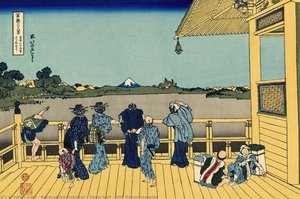
Sazai hall - 500 Rakan temples - Katsushika Hokusai
 Sazai hall - 500 Rakan temples - Katsushika Hokusai
In the vast canon of the top 25 artworks of Katsushika Hokusai , Sazai Hall – 500 Rakan Temples stands as a profound meditation on the intersection of the spiritual and the mundane. This piece captures a serene gathering upon a wooden deck, where the presence of figures amidst the shadow of Buddhist Rakan temples evokes a sense of pilgrimage and quiet enlightenment. Hokusai masterfully balances the grand scale of distant mountains with intimate details, such as a small dog resting near the center, humanizing a scene steeped in religious symbolism.
The artwork’s placement among Hokusai's greatest achievements stems from his ability to weave ukiyo-e tradition with a revolutionary use of perspective and depth. The subtle ripples on the water and the weathered textures of the architecture invite viewers to contemplate our own connection to the natural world. For the modern collector, this masterpiece offers more than mere decoration; it provides a window into Edo-period tranquility. Integrating such a culturally significant work into a contemporary space creates a timeless dialogue between historical Japanese aesthetics and modern interior design, serving as a permanent anchor of peace and beauty.
Cranes on pine tree - Katsushika Hokusai
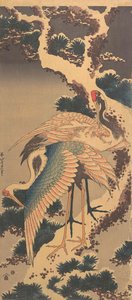 Cranes on pine tree - Katsushika Hokusai
In Cranes on Pine Tree , Katsushika Hokusai invites us into a profound meditation on longevity and the enduring harmony of the natural world. This work stands as a vital entry in our collection of the top 25 artworks of Katsushika Hokusai because it transcends mere depiction; it captures the very soul of East Asian symbolism. Through the delicate bokashi technique—layering sumi ink washes on washi paper—Hokusai creates a misty, atmospheric depth where the elegant cranes and resilient pine tree emerge from a soft, ethereal void.
The painting is a symphony of serenity, utilizing fluid lines and organic shapes to evoke a sense of peace that remains strikingly modern. At ArtsDot.com, we believe such masterpieces should not be confined to museum archives but should serve as living decor for your personal sanctuary. Imagine this exquisite scene rendered as a hand-painted oil reproduction in your home, where the visible brushstrokes and rich textures bring the timeless grace of the Edo period into a contemporary setting, turning any wall into a profound statement of cultural elegance.
Fuji, Mountains in clear Weather (Red Fuji) - Katsushika Hokusai
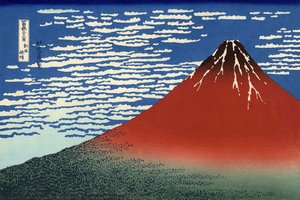 Fuji, Mountains in clear Weather (Red Fuji) - Katsushika Hokusai
In the hallowed halls of Japanese art history, few images command as much reverence as Fuji, Mountains in Clear Weather , popularly known as Red Fuji . Created in 1831 as part of Hokusai’s monumental series, Thirty-Six Views of Mount Fuji , this woodblock print is a masterclass in the ukiyo-e tradition. As you stand before it, the eye is immediately arrested by the striking, vermilion warmth of the mountain's slopes, which glow with an almost spiritual intensity against the crisp, cool atmosphere of the morning sky.
Hokusai utilizes bold, definitive outlines and flat planes of color to strip the landscape down to its most potent essence. The composition is a delicate balance of power and serenity; the massive, triangular silhouette of the peak provides a sense of eternal endurance, while the horizontal bands of clouds suggest the fleeting nature of time. To possess a high-quality oil reproduction of this masterpiece is to invite a profound sense of tranquility and strength into your own sanctuary. It is more than a mere depiction of a landmark; it is an invitation to experience the sublime harmony between the earth and the heavens.
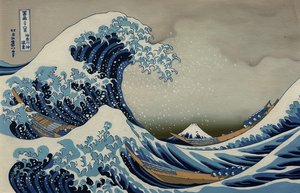
Suruga-chô - Katsushika Hokusai
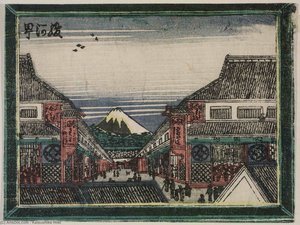 Suruga-chô - Katsushika Hokusai
In the vast canon of Japanese art, few images possess the quiet authority of Katsushika Hokusai’s Suruga-chô . This masterpiece serves as a profound meditation on the relationship between the eternal and the ephemeral, capturing Mount Fuji rising above the restless Suruga Bay with a sense of spiritual constancy. Its inclusion in our top 25 artworks is essential; it represents a pinnacle of the ukiyo-e woodblock tradition, utilizing the revolutionary Prussian blue to create a depth that feels less like a flat print and more like a window into a living landscape.
The work achieves a breathtaking harmony between the turbulent, churning waves and the silent, unshakeable peak. To possess such a piece is to invite a moment of profound tranquility into your own environment. At ArtsDot.com, we believe these historical echoes should not be confined to museums. We transform this delicate mastery into hand-painted oil reproductions , allowing you to bring the atmospheric haze and rhythmic energy of Hokusai’s vision into your home or office as a sophisticated, living statement of cultural depth.
Ceiling Of Ganshoin Temple At Obuse - Katsushika Hokusai
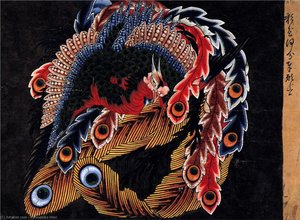 Ceiling Of Ganshoin Temple At Obuse - Katsushika Hokusai
Acquiring a piece as profound as the Ceiling Of Ganshoin Temple At Obuse by Katsushika Hokusai is more than an aesthetic choice; it is an investment in a legacy of unparalleled Japanese mastery. As one of the top 25 artworks of Katsushika Hokusai, this monumental mural transcends the boundaries of traditional woodblock printing, showcasing the artist's ability to command vast, architectural scales. The composition is a breathtaking symphony of contrast, where a magnificent peacock, draped in vibrant azure and deep midnight blacks, perches amidst a delicate thicket of pine and laurel. These elements, steeped in Buddhist symbolism of longevity, create a meditative atmosphere that has captivated scholars for centuries.
The sheer technical brilliance required to execute such a large-scale vision places this work in the highest echelon of ukiyo-e history. For the modern connoisseur, bringing this masterpiece into a contemporary space offers an unparalleled sense of prestige. A high-quality, hand-painted oil reproduction of this temple ceiling serves as a commanding focal point, imbuing luxury interiors with the same historical authority and serene elegance found in the great galleries of the world.
Phoenix - Katsushika Hokusai
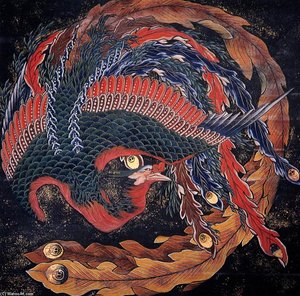 Phoenix - Katsushika Hokusai
In Phoenix by Katsushika Hokusai, the interplay of light does not merely illuminate; it breathes life into the mythical creature. The artwork radiates an internal glow, as if the fiery reds and oranges of the bird's plumage are fueled by a celestial source. This masterful command of luminosity creates a soft, ethereal chiaroscuro, where the golden highlights on the wings contrast delicately against the shadowed, intricate foliage. Such sophisticated use of light was instrumental in securing this piece among the top 25 artworks of Katsushika Hokusai , as it transcends traditional woodblock flatness to achieve a profound, three-dimensional vitality.
When brought into a modern interior, a high-quality oil reproduction of this masterpiece introduces a sense of quiet prestige and warmth. The way the light catches the visible brushstrokes on canvas adds a layer of luxury and depth that a mere print cannot replicate. Featuring this phoenix allows the cyclical themes of renewal and resilience to anchor your space with an aura of timeless elegance and transformative beauty.
Cherry Blossoms On Asuka Hill In Edo - Katsushika Hokusai
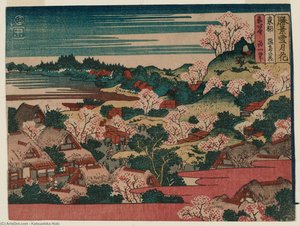 Cherry Blossoms On Asuka Hill In Edo - Katsushika Hokusai
In Cherry Blossoms On Asuka Hill In Edo , Katsushika Hokusai captures more than a seasonal event; he preserves the very heartbeat of the Edo period's philosophy regarding transience. This masterpiece stands within the top 25 artworks of Katsushical Hokusai because it masterfully balances the delicate, ephemeral beauty of the sakura with the structured permanence of the Asuka Shrine landscape. The viewer is invited into a serene world where soft pink petals drift over a bustling hillside, punctuated by the rhythmic presence of figures and traditional architecture.
Hokusai’s use of bold outlines and a sophisticated color palette creates a window into a lost era of Japanese tranquility. The composition serves as a profound meditation on mono no aware —the pathos of things—reminding us that beauty is most poignant because it is fleeting. For the modern collector, bringing this piece into a curated space offers a timeless conversation between historical reverence and contemporary decor, allowing the light-drenched atmosphere of Hokusai’s Japan to breathe life into any sophisticated interior.
The Fuji seen from the Mishima pass - Katsushika Hokusai
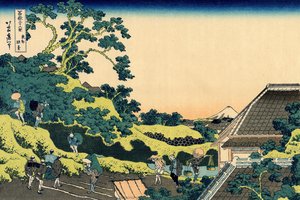 The Fuji seen from the Mishima pass - Katsushika Hokusai
In The Fuji seen from the Mishima pass by Katsushika Hokusai, one is immediately struck by a profound sense of meditative stillness that settles over the soul. The viewer is invited to wander alongside travelers on a winding mountain path, where the rhythmic movement of figures—some sheltered by umbrellas, others navigating the rugged terrain—creates a delicate dance between human vitality and the eternal. This masterpiece from Hokusai's legendary repertoire captures a psychological depth that transcends time; it is a universal mirror of our own journeys, reflecting the quiet coexistence of the mundane and the divine.
The composition utilizes sophisticated ukiyo-e techniques, where lush verdant tones and earthy textures contrast beautifully against the crisp, snow-capped silhouette of Mount Fuji. Bringing this powerful emotional resonance into your home can transform a personal sanctuary into a space for profound reflection and calm. Whether you are seeking to anchor a room with its tranquil grandeur or looking to celebrate the top 25 artworks of Katsushika Hokusai, this piece offers a window into a world where nature and humanity remain harmoniously entwined.
Kinoe no komatsu - Katsushika Hokusai
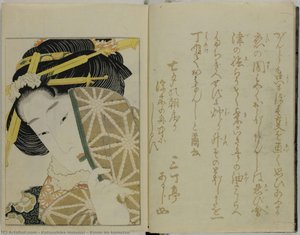 Kinoe no komatsu - Katsushika Hokusai
In the vast canon of the top 25 artworks of Katsushika Hokusai , Kinoe no Komatsu (1814) offers a profound departure from his celebrated landscapes, venturing into the intimate and psychologically complex realm of shunga . This meticulously crafted trilogy serves as a sensory exploration of human desire, utilizing the delicate precision of mokuhanga woodblock printing to weave tales of passion and folklore. The work begins with striking ōkubi-e portraits—large-head depictions of courtesans that capture nuanced emotional states through soft lines and evocative gazes.
Beyond mere eroticism, the series functions as a sophisticated narrative tapestry; it intertwines historical legends, such as the tale of Princess Tamatori, with surreal imagery like the iconic encounter between a woman and octopuses. This interplay of vulnerability and abundance continues to resonate in contemporary discussions regarding gender, intimacy, and the boundaries of art. For collectors seeking to bring the transformative power of Edo-period storytelling into a modern setting, a hand-painted oil reproduction of such intricate compositions can serve as a captivating focal point, preserving Hokusai's masterful use of line and symbolic depth.
The Dish Mansion - Katsushika Hokusai
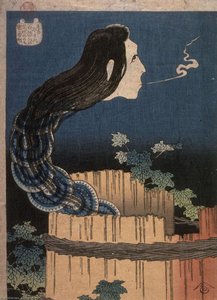 The Dish Mansion - Katsushika Hokusai
In the vast canon of the top 25 artworks of Katsushika Hokusai , The Dish Mansion stands as a hauntingly beautiful testament to the artist's ability to blend the terrestrial with the spectral. This piece captures a profound sense of melancholic solitude; a woman sits perched upon jagged rocks, her gaze lost in the heavens as she delicately smokes, surrounded by the deep, evocative tones of Prussian blue. The composition is a masterclass in ukiyo-e storytelling, where the movement of a soaring bird and the distant silhouette of a boat create a rhythmic tension between stillness and life.
The painting’s reliance on luminous blue pigments and stylized oriental aesthetics offers a timeless elegance that resonates deeply with modern interior design. Its serene yet dramatic atmosphere makes it an ideal focal point for contemporary spaces seeking a touch of historical soul and contemplative calm. For collectors looking to bring this era of Japanese mastery into their homes, our hand-painted oil reproductions capture every delicate brushstroke and the profound emotional depth of Hokusai's legendary vision.
Storm Below The Mountain - Katsushika Hokusai
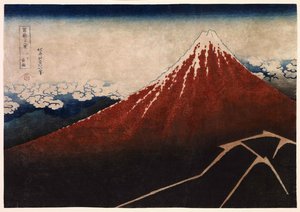 Storm Below The Mountain - Katsushika Hokusai
In Storm Below The Mountain by Katsushika Hokusai, the striking, earthen red of the mountain peak commands immediate attention, casting a somber yet powerful mood over the composition. This warmth is dramatically contrasted by the swirling, atmospheric clouds and the deep, turbulent tones of the sea below. Hokusai’s mastery lies in this tension; his innovative use of color—specifically the integration of vibrant pigments against more muted, tempestuous shades—is precisely why this piece earns its place among the top 25 artworks of Katsushika Hokusai . The palette does more than depict a storm; it captures the very essence of nature's duality.
For the modern collector, this artwork offers a profound way to curate emotional lighting within a home. The dramatic interplay of light and shadow, paired with that commanding red hue, can serve as a sophisticated focal point in a dining room or study, providing a sense of grounded stability amidst a dynamic aesthetic. Whether you are seeking a hand-made oil reproduction to bring this historical intensity to your walls or exploring the textures of his woodblock legacy, Hokusai’s ability to balance chaos with serenity remains unparalleled.
Basket-fishing In The Kinu River - Katsushika Hokusai
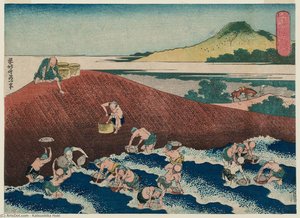 Basket-fishing In The Kinu River - Katsushika Hokusai
In Basket-fishing In The Kinu River , Katsushika Hokusai does not merely depict a landscape; he composes a rhythmic meditation on the harmony between humanity and the natural world. As you gaze upon this 1833 masterpiece from his One Thousand Views of the Ocean series, you feel the cool, flowing vitality of the Kinu River. The light here is not just illumination—it is a language of tranquility, captured through the revolutionary use of Prussian blue, which lends a profound depth to the water and distant hills.
The scene breathes with the quiet diligence of fishermen, their silhouettes balanced against the rolling topography of Edo-period Japan. Hokusai utilizes hokuyo-e , or atmospheric perspective, to pull your eyes through the misted valleys, turning a simple moment of sustenance into a spiritual encounter with seasonal ritual. This work is essential to any collection of the top 25 artworks of Katsushika Hokusai because it captures the very soul of the floating world. To bring this serene Edo-era atmosphere into your own space, consider one of our museum-quality handmade oil reproductions, where every brushstroke preserves the artist's original mastery.
A depiction of Sun Wukong wielding his staff - Katsushika Hokusai
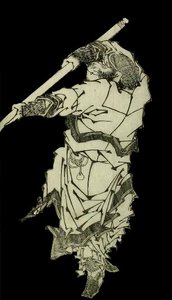 A depiction of Sun Wukong wielding his staff - Katsushika Hokusai
Imagine standing before a swirling vortex of myth where the boundaries between the divine and the earthly dissolve. In this striking 1830 sketch, Hokusai captures the electric tension of Sun Wukong, the legendary Monkey King, poised with his formidable staff. There is a profound, quiet power in the way the figure’s determined gaze meets the viewer, embodying a spirit of rebellion and spiritual transcendence that has captivated scholars for centuries.
This work earns its place among the top 25 artworks of Katsushika Hokusai through its masterful use of Ukiyo-e techniques, specifically the subtle tonal gradations that lend depth to the Monkey King's resolute posture. By mirroring the meditative stillness of Amitabha Buddha within a martial stance, Hokusai weaves Buddhist philosophy into a dynamic narrative of strength. Such a piece does more than depict folklore; it brings an aura of ancient wisdom and disciplined energy into a modern home. Owning a high-quality oil reproduction of this masterpiece allows you to invite this timeless sense of resilience and cultural prestige into your daily environment, transforming a simple wall into a gateway to the Edo period.
Mishima pass in Kai province - Katsushika Hokusai
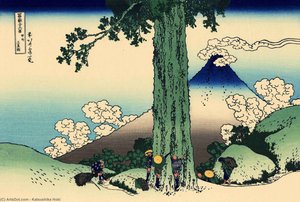 Mishima pass in Kai province - Katsushika Hokusai
To step into the world of 19th-century Japan is to encounter a profound stillness, where the breath of the mountains meets the rhythmic pulse of human travel. In Mishima Pass in Kai Province by Katsushai Hokusai, this equilibrium is captured with unparalleled grace. As one of the most evocative entries in our collection of the top 25 artworks of Katsushika Hokusai, this piece transcends mere landscape; it is a meditative study of presence. The composition is anchored by a commanding, ancient tree, its gnarled branches acting as a silent sentinel over travelers navigating the rugged terrain.
Hokusai utilizes the delicate precision of the ukiyo-e tradition to weave a tapestry of light and atmosphere. Subtle, harmonious tones evoke the hazy, ethereal morning mist of the mountain pass, while masterful use of perspective creates a sense of immense depth that draws the eye toward receding peaks. The juxtaposition of the enduring, rooted flora against the fleeting movement of the figures serves as a poignant reminder of nature's permanence. Today, such a masterpiece brings a Zen-like tranquility to any modern space, offering a window into a timeless era of natural equilibrium.
Battle Between Two Warriors - Katsushika Hokusai
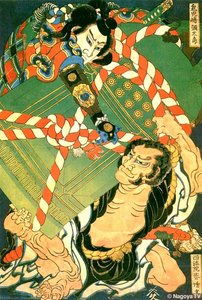 Battle Between Two Warriors - Katsushika Hokusai
In Battle Between Two Warriors , Hokusai captures a breathtaking moment of suspended animation, where the tension of combat meets a profound, spiritual stillness. One can almost feel the sharp intake of breath as the warrior on the left raises his blade, his focus locked in a gaze that transcends mere aggression to touch upon the very essence of destiny. This work stands as a vital entry in the top 25 artworks of Katsushika Hokusai because it masterfully balances the kinetic energy of the Edo period with a meditative, almost cosmic harmony.
The composition is a symphony of color; vibrant reds and deep blues dance against the muted, disciplined tones of samurai armor, while delicate motifs of birds and fish remind us of the eternal cycle of life amidst human conflict. To hang a hand-painted reproduction of this masterpiece in your home is to invite a sense of balanced power into your sanctuary. It transforms a room into a space for profound reflection, where the duality of strength and serenity can inspire quiet prestige and daily contemplation.
Watanabe No Gengo Tsuna And Inokuma Nyûdô Raiun - Katsushika Hokusai
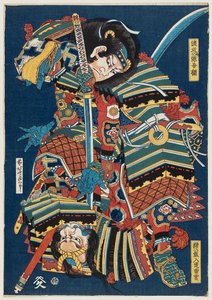 Watanabe No Gengo Tsuna And Inokuma Nyûdô Raiun - Katsushika Hokusai
In Watanabe no Gengo Tsuna and Inokuma Nyūdō Raiun , Katsushika Hokusai captures more than a moment of martial conflict; he encapsulates the very soul of Edo-period Japan, where the lines between historical legend and philosophical discipline blurred. This masterpiece stands within our collection of the top 25 artworks of Katsushika Hokusai due to its profound ability to translate the tension of samurai honor into a visual symphony of movement and color. The print is a masterclass in the use of Prussian blue , a pigment that brings a startling, modern depth to the traditional ukiyo-e style, creating a striking contrast against the warrior's intricate attire.
As you observe the dynamic arrangement of swords and the focused energy of the central figure, one cannot help but reflect on the universal themes of resolve and duty. This artwork serves as a timeless bridge between ancient tradition and contemporary aesthetics. For the discerning collector, a high-quality oil reproduction of this piece offers a powerful focal point, bringing the dramatic light and storied heritage of the Japanese floating world into a modern interior, sparking a continuous conversation between historical grandeur and sophisticated decor.
Canary and Peony - Katsushika Hokusai
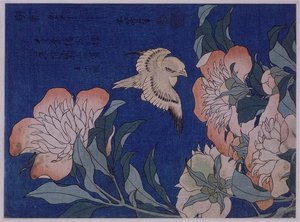 Canary and Peony - Katsushika Hokusai
In Canary and Peony , Katsushika Hokusai captures a moment of profound stillness, where the delicate gaze of a solitary bird meets the lush, velvety petals of a blooming peony. There is an intimate, quiet prestige in this composition; the vibrant pinks and soft textures of the flora contrast beautifully against a deep, atmospheric Prussian blue background. This piece transcends mere nature study, offering a psychological depth that mirrors the human experience—finding a sense of fragile peace amidst a vast, overwhelming world.
As one of the top 25 artworks of Katsushika Hokusai , this print serves as a masterclass in balance and symbolic resonance. The way the light seems to glow through the translucent petals invites the viewer into a state of Zen-like contemplation. Bringing such an evocative masterpiece into your home can transform a personal sanctuary into a space for profound reflection and calm. For those seeking to honor this legacy, our hand-painted oil reproductions capture every meticulous hatch mark and tonal nuance, allowing the luminous spirit of Hokusai’s ukiyo-e mastery to breathe life into your modern interior.
The Phantom of Kohada Koheiji - Katsushika Hokusai
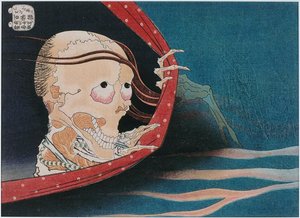 The Phantom of Kohada Koheiji - Katsushika Hokusai
Owning The Phantom of Kohada Koheiji by Katsushical Hokusai isn’t merely a purchase; it is an inheritance of Japan's most haunting theatrical legacies. Created in 1831, this masterpiece transcends the boundaries of ukiyo-e woodblock printing to explore the visceral anxieties of the Edo period. Hokusai masterfully captures the spectral essence of a Kabuki performer, utilizing a chilling skeletal visage and a deep, melancholic blue palette that pulls the viewer into a world of supernatural retribution.
The composition is thick with symbolism: the unfolding umbrella suggests both protection and vulnerability, while the presence of crows serves as an omen of misfortune. Every line reflects Hokusai’s technical brilliance, using meticulous hatching to create a sense of movement and dread. As you contemplate this work, you are participating in a lineage of taste that connects modern collectors to the ancient traditions of Japanese folklore. At ArtsDot.com, we allow you to bring this spectral beauty into your own space through our museum-quality oil reproductions, where every hand-painted brushstroke preserves the eerie depth and historical soul of Hokusai’s vision.
Bullfinch And Weeping Cherry - Katsushika Hokusai
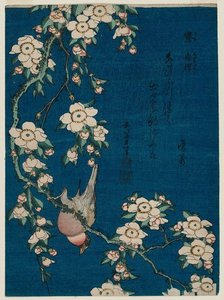 Bullfinch And Weeping Cherry - Katsushika Hokusai
In Bullfinch And Weeping Cherry , the deep, serene azure of the background establishes a profound sense of tranquility, acting as a celestial canvas that allows the subject to breathe. This striking use of blue does more than provide contrast; it creates an atmosphere of stillness, isolating the delicate interaction between the bird and the blossoms in a moment of eternal calm. Hokusai’s mastery of this palette—balancing the cool, expansive sky with the soft, organic textures of the cherry blossoms—is precisely why this work remains a cornerstone among the top 25 artworks of Katsushika Hokusai .
For the modern collector, integrating such a piece into a living space offers a unique opportunity to curate emotional lighting. The print’s cool tones can anchor a minimalist dining room, providing a focal point of meditative peace, or serve as a sophisticated accent in a study where soft, natural light can highlight the intricate woodblock details. Whether you are seeking a hand-painted oil reproduction to add tactile depth or a museum-quality print, this masterpiece brings the timeless elegance of the Edo period into the contemporary home.
Guan Yu, Chinese God of War - Katsushika Hokusai
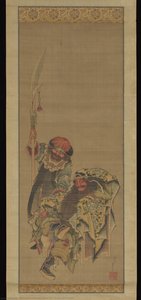 Guan Yu, Chinese God of War - Katsushika Hokusai
While many recognize Hokusai for the crashing tides of his landscapes, his ability to capture the divine stillness of a legend is perhaps most profound in Guan Yu, Chinese God of War . Beyond the mere depiction of a warrior, this silk masterpiece serves as a spiritual meditation on Confucian virtues. Hokusai utilized the delicate technique of bokashi —a method of masterful tonal gradation—to breathe life into the earthy ochres and deep browns of the composition, creating a luminous quality that seems to radiate from within the fabric itself.
The painting captures the legendary general not in the heat of battle, but in a moment of poised, righteous authority, his hand resting firmly on his sword to symbolize unwavering loyalty. This technical precision and conceptual depth are why this work remains a cornerstone among the top 25 artworks of Katsushika Hokusai . For the modern professional, hanging a high-quality oil reproduction of such a commanding figure can transform a home office into a sanctuary of focus, evoking the same disciplined strength and monumental presence found in the heart of the Edo period.
Women Carrying Pots for the Tsukuma Festival - Katsushika Hokusai
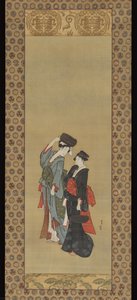 Women Carrying Pots for the Tsukuma Festival - Katsushika Hokusai
In the delicate strokes of Women Carrying Pots for the Tsukuma Festival by Katsushika Hokusai, a fleeting moment of Edo-period ritual is suspended in an eternal, rhythmic grace. This work earns its place among the top 25 artworks of Katsushika Hokusai through its profound ability to blend social documentation with a lyrical, almost musical, visual flow. The scene captures the vibrant energy of the Tsukuma Festival near Lake Biwa, where women balance auspicious pots upon their heads—a movement that symbolizes fertility and the deep-seated traditions of Shinto customs.
The composition breathes with life; the subtle interplay of hand-painted pigments and precise woodblock outlines creates a texture that feels both historical and remarkably present. The soft tones of the traditional attire and the lively background figures evoke a sense of communal harmony that transcends centuries. For the modern collector, integrating such a piece into a contemporary interior offers more than mere decoration; it introduces a sophisticated narrative of cultural resilience and a serene, meditative focus on the beauty found in everyday human connection.
Kannon Temple - Katsushika Hokusai
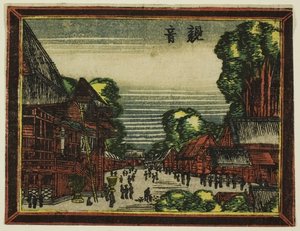 Kannon Temple - Katsushika Hokusai
While many recognize Hokusai for the crashing waves of his most famous works, Kannon Temple reveals a different facet of his genius: the ability to find the divine within the mundane. In this 1832 masterpiece, Hokusai moves away from dramatic landscapes to capture the rhythmic pulse of Asakusa. He does not merely paint architecture; he orchestrates a symphony of Edo-period life, where the heavy scent of incense might meet the bustling energy of merchants carrying goods through the streets.
The technical brilliance lies in his ukiyo-e mastery, using bold outlines and a palette of deep indigo, ochre, and crimson to bridge the gap between the spiritual Kinryūzan Temple and the transient human movement below. This piece stands as a vital entry in the top 25 artworks of Katsushika Hokusai because it captures the 'floating world' in its most intimate form. For the modern professional, displaying a high-quality oil reproduction of this scene brings a sense of disciplined observation and historical depth to a study, fostering an atmosphere of focused, sophisticated contemplation.
Fuji And Ascending Dragon - Katsushika Hokusai
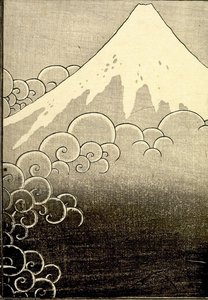 Fuji And Ascending Dragon - Katsushika Hokusai
In Fuji And Ascending Dragon by Katsushika Hokusai, the viewer is met with a breathtaking geometric equilibrium that defines the pinnacle of his ukiyo-e mastery. The composition is anchored by the stoic, triangular silhouette of Mount Fuji, whose snow-capped peak provides a stable vertical axis against the fluid, serpentine movement of the dragon. This structural harmony—the tension between the mountain's immovable weight and the dragon's ethereal ascent—creates a sense of timeless perfection that secures its place among the top 25 artworks of Katsushika Hokusai .
The swirling clouds and rhythmic lines of the dragon’s body evoke a profound internal balance, mirroring the principles of modern minimalist design through clean, purposeful shapes and a focused palette of Prussian blue and stark whites. This aesthetic simplicity allows the spiritual drama to resonate deeply within a contemporary space, offering a quiet prestige that grounds any room. For those seeking to bring this legendary atmosphere home, our hand-painted oil reproductions capture every meticulous woodblock detail and textured brushstroke, transforming this historical masterpiece into a tactile, living piece of art.
Conclusion
To wander through the works of Katsushika Hokusai is to embark on a journey that transcends time, moving from the crest of a crashing wave to the silent, snow-capped majesty of Mount Fuji. These masterpieces are far more than mere relics of the Edo period; they are living presance, breathing textures of ink and spirit that continue to shape our visual language and stir the human soul. They remind us of our profound connection to the natural world—a connection that remains as vital today as it was when Hokusai first pressed woodblock to paper.
As the sun sets on this exploration of his most iconic creations, we invite you to bring this sense of wonder into your own sanctuary. At ArtsDot.com , we believe that such profound beauty should not be confined to museum glass. Every legendary print and painting in our full collection can be reborn as a meticulous, hand-painted oil reproduction. Our skilled artists honor the original's soul, translating the delicate precision of Japanese woodblock aesthetics into the tactile depth of visible brushstrokes and rich, layered pigments on canvas. Whether you are seeking to anchor a room with the power of The Great Wave or find quiet contemplation in a landscape, we offer the opportunity to touch history, making the timeless legacy of Hokusai a tangible part of your everyday life.