 Preview
 Send
Send Share
Share
 Details

 Download
 Similars
 X-Ray
X-Ray Diaporama
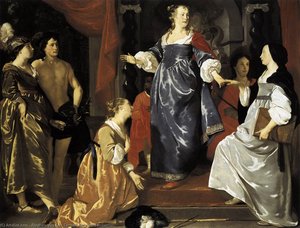
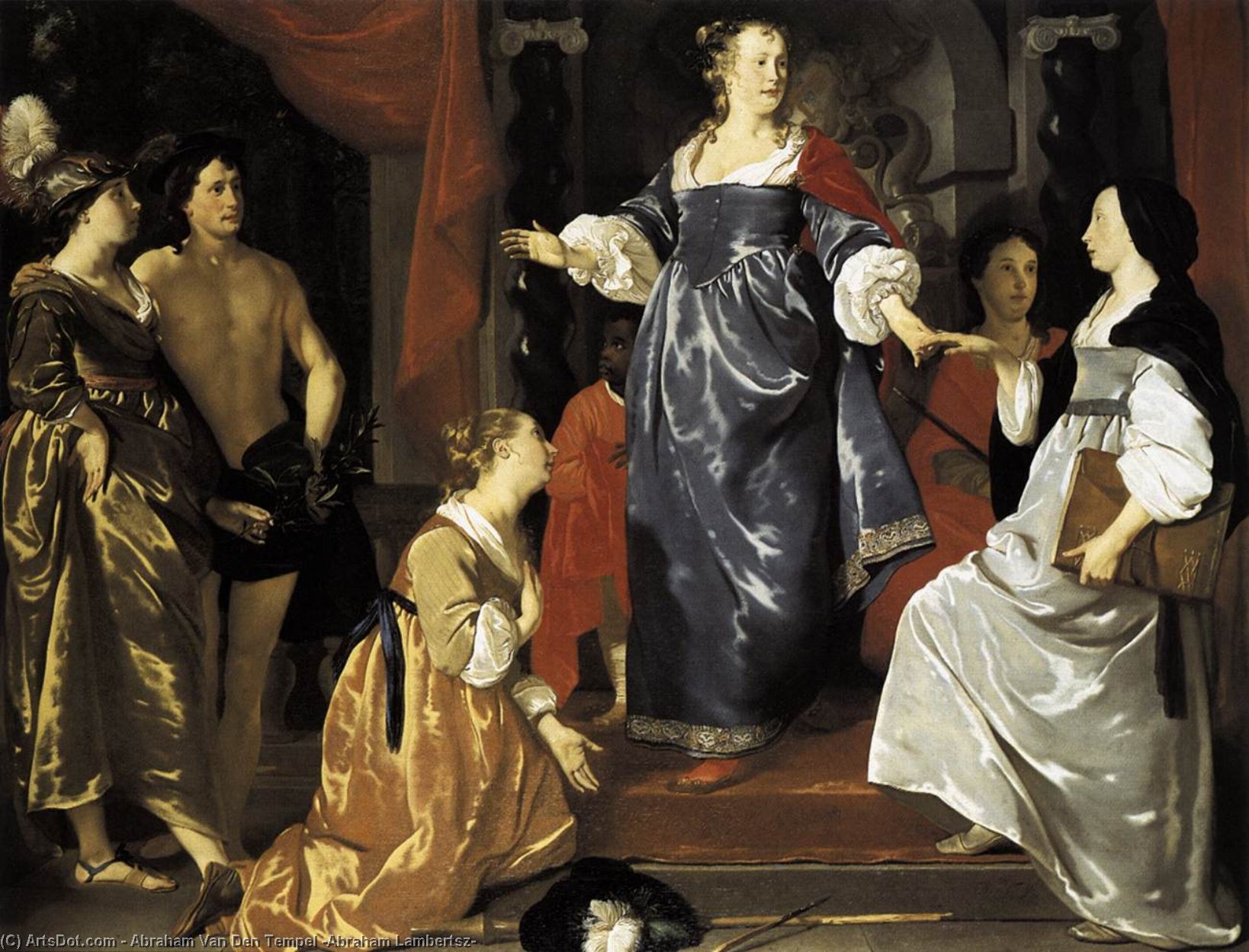
The Maid of Leiden Welcomes 'Nering'
 Acrylic On Canvas
- WallArt
- Dutch Baroque
 1651
1651 207.0 x 267.0 cm
 Stedelijk Museum De Lakenhal
 Read More
Giclée / Art Print
Museum-quality giclée or canvas print with fast production and flexible finish options. ( Buy Hand Made Painting Buy Image)




P118B $10

P118H $10

P118W $10

P438Z $10

P508JH $12

P508YH $12

P805H $10

P805Z $10

P919BZ $10

P919G $10

P919XJ $10

P959ZH $10

P968JZ $12

W106C $8

W218G $10

W218JH $8

W218Y $10

W307PJ $10

W316G $10

W316PJ $8

W316Y $10

W398PJ $8

W4111J $10

W500HY $15

W500JH $15

W692G $12

W849H $8

W940BG $15

W953PJ $8




Pick from our preset sizes that match the artwork's original proportions.

You may enter your own dimensions to fit a specific frame or space. If your selected size does not match the original image's proportions, we will either crop the artwork or extend the image with a mirrored or solid-fill edge. A digital mockup will be sent for your approval before production begins.
Please note that the on-screen preview does not reflect the actual cropping or extension. Only the mockup will accurately show the final composition.
While custom sizes are available, we recommend selecting a dimension from the predefined list to preserve the original proportions.
Worldwide Delivery () in 2 weeks instead of standard 4/5 weeks. (29 August)

Free Worldwide Express Shipping

High-Quality Linen Canvas

Full Shipping Insurance

Customs Tax Refund Guarantee

True Color Matching Guarantee

60-Day Return Policy (Defects Only)

100% Money-Back Guarantee

Bulk Discount Offer
 Glass option is only available in size under 110 CM

The Maid of Leiden Welcomes 'Nering'
Giclée / Art Print
Reproduction Size
-


Total Price
$ 63
Abraham Lambertz van den Tempel: A Portrait of Resilience Amidst Historical Significance
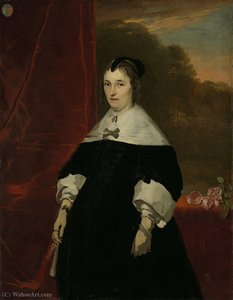
Abraham Lambertz van den Tempel’s “The Maid of Leiden Welcomes ‘Nering’” stands as more than just a beautiful depiction of a woman; it embodies the spirit of Frisian identity and commemorates a pivotal moment in Dutch history – the arrival of Prince Willem III, marking the end of the Eighty Years' War.
Painted in 1651 during the Golden Age of Dutch art, this portrait exemplifies the meticulous realism characteristic of Haarlem Baroque style. Van den Tempel skillfully employs chiaroscuro—the dramatic interplay of light and shadow—to sculpt the figure’s form and convey a palpable sense of solemnity. The artist's masterful brushwork captures subtle nuances in texture and drapery, demonstrating an unwavering dedication to capturing the essence of his subject.
The woman portrayed is identified as ‘Nering,’ a young Frisian noblewoman who bravely welcomed Prince Willem III upon his return from exile – a triumphant occasion for the Dutch Republic after decades of struggle against Spanish rule. This gesture symbolizes resilience and determination, values deeply ingrained in Frisian culture at the time.
Beyond its historical narrative, “The Maid of Leiden Welcomes ‘Nering’” is laden with symbolic meaning. The woman’s raised hand signifies eloquence and leadership—a testament to her role as a representative of Frisian pride. Surrounding her are books, representing knowledge and erudition – reflecting the importance placed on education and intellectual pursuits during the Baroque period.
The muted palette of blues and browns contributes to the painting’s contemplative mood, inviting viewers to contemplate themes of dignity, perseverance, and national unity. It's a piece that speaks volumes about its time, capturing not only an individual portrait but also the broader cultural landscape of 17th-century Holland.
“The Maid of Leiden Welcomes ‘Nering’” remains a captivating artwork for interior designers seeking to infuse their spaces with elegance and historical resonance. Its masterful technique and evocative symbolism continue to inspire admiration, cementing Van den Tempel’s legacy as one of the most accomplished portraitists of his era.
Related Artworks

Artist Biography
Early Life and Influences (1887-1905)
- Born Sybren van Haersma Buma on January 13, 1887, in Leeuwarden, Netherlands.
- Came from a noble Frisian family with historical ties to the region's governance and land ownership.
- Early exposure to Frisian culture, language, and history significantly shaped his worldview and artistic interests. Frisian identity became central to his work.
- Initially showed an aptitude for law but ultimately pursued a career in politics and public service.
- Influenced by the rise of Dutch nationalism and the growing desire for greater autonomy within the Kingdom of Netherlands.
Political Career and Public Service (1905-1940)
- Began his political career as a member of the conservative Protestant Union party in Leeuwarden's city council.
- Rapidly ascended through the ranks, gaining recognition for his strong leadership skills and commitment to traditional values.
- Served as a member of the Frisian States (provincial parliament) from 1918 onwards, representing the Protestant Union.
- Became known for advocating for policies that supported agriculture, small businesses, and rural communities. Rural interests were paramount.
- Held various positions within the provincial government, including serving as a deputy governor (vice-governor) from 1933 to 1940.
Role During World War II and Occupation (1940-1945)
- During the German occupation of the Netherlands (1940-1945), Buma faced a difficult situation as a public official.
- Attempted to navigate the complex political landscape while resisting collaboration with the occupying forces. Resistance was subtle but present.
- Played a role in supporting Frisian cultural institutions and organizations that were threatened by German censorship and suppression.
- Reportedly helped individuals who were persecuted for their religious beliefs or political affiliations.
- His actions during the occupation remain subject to historical debate, with some scholars arguing that he could have done more to actively oppose the Germans.
Post-War Career and Legacy (1945-1978)
- After the liberation of the Netherlands in 1945, Buma resumed his political career.
- Served as a member of the Dutch House of Representatives (national parliament) from 1946 to 1962, representing the Protestant Union.
- Became a prominent voice for conservative and Christian-democratic values in Dutch politics.
- Advocated for policies that supported family values, religious freedom, and economic stability.
- Retired from active political life in 1962 but remained involved in various civic organizations.
- Died on December 28, 1978, in Leeuwarden, leaving behind a legacy as a respected politician and public servant who dedicated his life to serving the people of Friesland and the Netherlands. Frisian service defined his career.
Historical Significance
- Represented a generation of conservative politicians who sought to preserve traditional values in a rapidly changing world.
- Played a role in shaping Dutch politics during a period of significant social and economic transformation.
- His actions during World War II remain subject to historical debate, but he is generally regarded as having resisted collaboration with the occupying forces.
- Remembered for his commitment to serving the people of Friesland and the Netherlands, and for his dedication to upholding Christian-democratic values. Christian values were central.
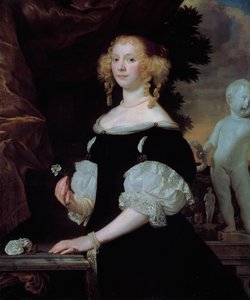
abraham lambertsz. van den tempel
1622 - 1672 , Netherlands
Quick Facts
- Artistic Movement Or Style: Governing coalition
- Full Name: Sybrand van Haersma Buma
- Nationality: Dutch
Related Articles

Dutch Baroque Masters: 10 Paintings That Shaped an Era | ArtsDot
Journey through the Golden Age with our guide to the Top 10 Dutch Baroque masterpieces! Explore iconic paintings by Rembrandt, Vermeer & Frans Hals. Find museum-quality art reproductions and elevate your home decor at ArtsDot.com.

Rembrandt's Masterpieces: Explore 25 Iconic Paintings & Prints | ArtsDot
Journey through Rembrandt van Rijn's 25 most iconic paintings & etchings. Explore Dutch Golden Age masterpieces, dramatic chiaroscuro, and timeless portraits. Find museum-quality art reproductions to elevate your home decor on ArtsDot.com.
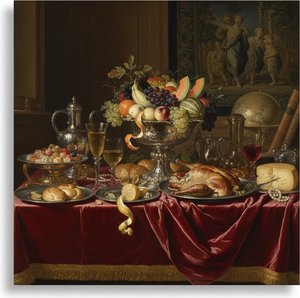
Abraham Hendricksz van Beyeren: Pioneering Dutch Still Life & the Banquet Tradition
Explore the captivating world of Dutch Golden Age still life with Abraham van Beyeren. Discover his innovative techniques, symbolic banquet scenes & lasting influence on art history. Learn about collecting these masterpieces.
Cornelis van Poelenburch: Bridging Mannerism & the Dutch Baroque Landscape
Discover Cornelis van Poelenburch, a pivotal Dutch Baroque landscape painter bridging Mannerism & Italianate styles. Explore his life, key works, and lasting influence on 17th-century art with ArtsDot.

Golden Age Reflections: Dutch Baroque Painting & Cultural Innovation
Explore the Dutch Golden Age of painting! Discover key artists like Vermeer & ter Borch, their innovative techniques, and the rich cultural context behind these Baroque masterpieces. Learn about collecting & appreciating this iconic art period.