 Preview
 Send
Send Share
Share
 Details

 Download
 Similars
 X-Ray
X-Ray Diaporama
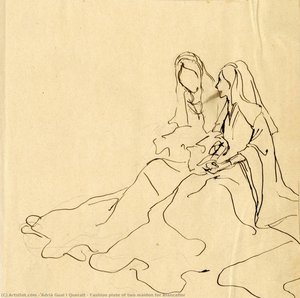
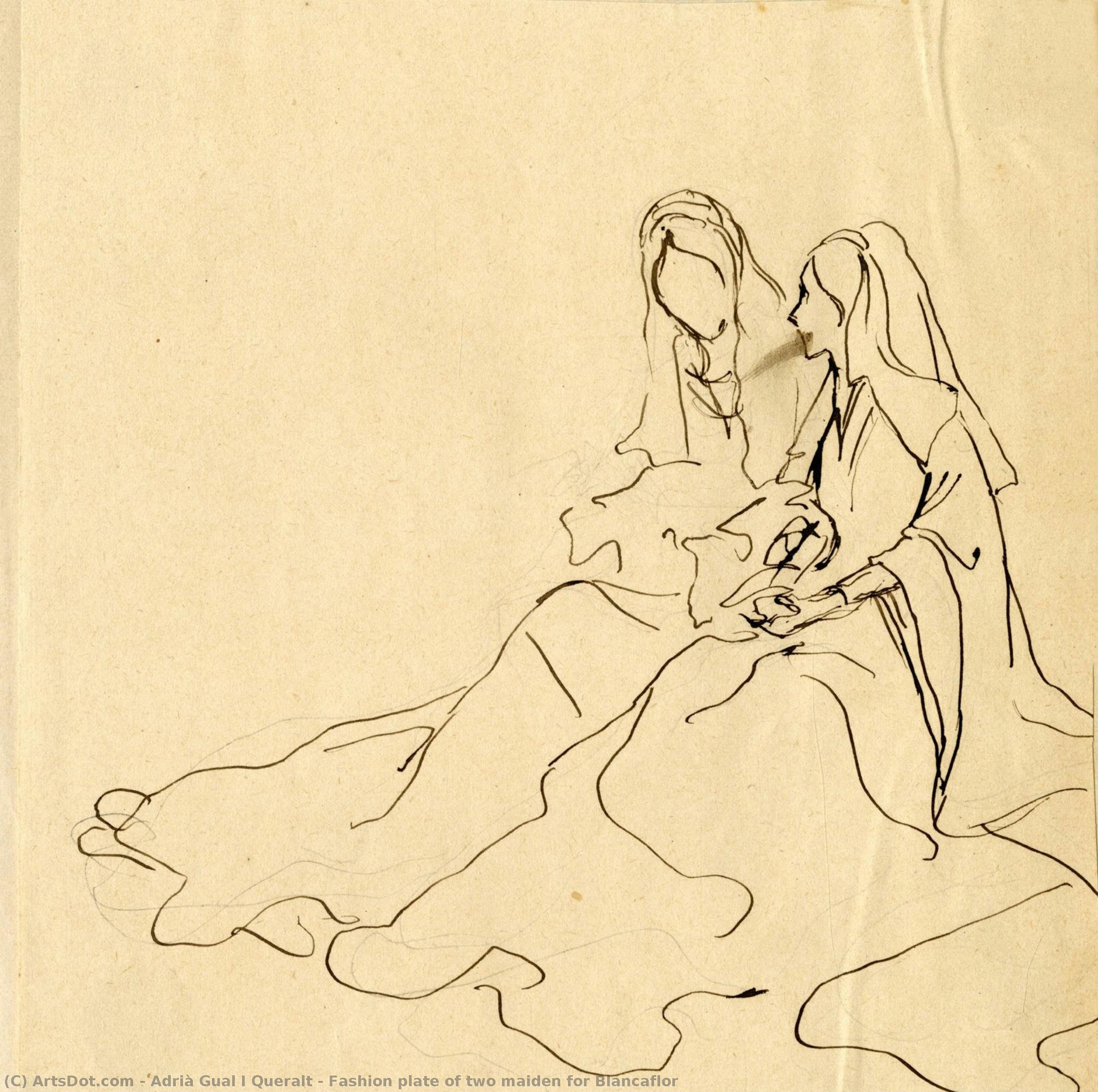
Fashion plate of two maiden for Blancaflor
 Acrylic
- WallArt
- Symbolist Modernism
 18.0 x 18.0 cm
 Museum of Music of Barcelona
 Read More
Hand Made Oil Reproduction
Hand-painted oil on canvas in your size and frame, made to order by our artists. ( Buy Print Buy Image)




P118B $10

P118H $10

P118W $10

P438Z $10

P508JH $12

P508YH $12

P805H $10

P805Z $10

P919BZ $10

P919G $10

P919XJ $10

P959ZH $10

P968JZ $12

W106C $8

W218G $10

W218JH $8

W218Y $10

W307PJ $10

W316G $10

W316PJ $8

W316Y $10

W398PJ $8

W4111J $10

W500HY $15

W500JH $15

W692G $12

W849H $8

W940BG $15

W953PJ $8




Pick from our preset sizes that match the artwork's original proportions.

You may enter your own dimensions to fit a specific frame or space. If your selected size does not match the original image's proportions, we will either crop the artwork or extend the painting with additional hand-painted elements. A digital mockup will be sent for your approval before production begins.
Please note that the on-screen preview does not reflect the actual cropping or extension. Only the mockup will accurately show the final composition.
While custom sizes are available, we recommend selecting a dimension from the predefined list to preserve the original proportions.
After order, ArtsDot.com team will email client for instructions and provide a mockup preview
Worldwide Delivery () in 3/4 weeks instead of standard 5 weeks. (5 September). No compromise on quality.

Free Worldwide Express Shipping

High-Quality Linen Canvas

Full Shipping Insurance

Customs Tax Refund Guarantee

True Color Matching Guarantee

60-Day Return Policy (Defects Only)

100% Money-Back Guarantee

Bulk Discount Offer
 Glass option is only available in size under 110 CM

Fashion plate of two maiden for Blancaflor
Reproduction Medium
Reproduction Size
-


Total Price
$ 263
Adrià Gual i Queralt’s Fashion Plate: A Delicate Dance Between Symbolism and Line
- Subject Matter: This exquisite fashion plate depicts two women seated together, capturing a moment of quiet companionship. The artist meticulously portrays them in elegant dresses—one dress commanding more attention than the other—suggesting an interplay of social status or perhaps simply reflecting individual preferences within the fashionable milieu of the early 20th century.
- Artist’s Background: Adrià Gual i Queralt (1872-1943) was a multifaceted Catalan figure, primarily recognized as a playwright and theatre entrepreneur. However, he possessed considerable artistic talent, particularly in graphic arts, embracing the stylistic currents of Modernism and Symbolism. His involvement with cinema’s nascent stages in Barcelona cemented his legacy as an innovator, alongside establishing the Escola Catalana d'Art Dramàtic.
- Style & Technique: Gual i Queralt’s artistic style is distinctly modernist, imbued with symbolic elements characteristic of Symbolism. The fashion plate exemplifies this approach through its precise linework—a hallmark of his oeuvre—executed in black and white on paper. This technique lends an air of understated elegance and sophistication to the composition, prioritizing clarity of form over elaborate color palettes.
- Historical Context: Created around 1902, this piece reflects the broader artistic landscape of Barcelona during the Catalan Modernist movement. The Wagnerian Association commissioned twelve panels for their headquarters, showcasing Gual i Queralt’s versatility and demonstrating his engagement with influential cultural trends of the time. Fashion plates were popular visual mediums for disseminating stylistic ideas and celebrating beauty within the burgeoning era of haute couture.
- Symbolism & Emotional Impact: Beyond its depiction of two women, the fashion plate speaks to themes of intimacy and connection—a subtle yet powerful gesture conveyed through Gual i Queralt’s masterful use of line. The careful positioning of the figures contributes to a harmonious balance, inviting contemplation on notions of femininity and social grace. Viewing this reproduction evokes a sense of nostalgia for a bygone era, capturing the delicate beauty of artistic expression rooted in Symbolist principles.
Related Artworks
Artist Biography
The Visionary of Catalan Modernism
Born in the vibrant cultural landscape of Barcelona in 1872, Adrià Gual i Queralt emerged as a polymath whose influence rippled through the very fabric of Catalan identity. While history often remembers him as a titan of the stage, his soul was deeply rooted in the visual arts, where he navigated the delicate boundaries between reality and the ethereal. As a pioneer of the Modernisme movement, Gual i Queralty did not merely observe the changing tides of the early 20th century; he actively shaped them through a multidisciplinary approach that fused graphic design, theatricality, and symbolist painting.
His early life in Barcelona placed him at the epicenter of a cultural renaissance. Gual i Queralt possessed a rare ability to translate the atmospheric tension of Symbolism into tangible forms. His work as a graphic artist was particularly transformative, as he utilized the medium of the poster to bring high art into the streets. These posters, characterized by their flowing lines and evocative imagery, became iconic markers of the era, capturing the essence of Art Nouveau and establishing him as one of the leading graphic designers of his generation. His visual language was never static; it sought to evoke emotion and mystery, much like the very plays he would later direct.
A Synthesis of Stage and Canvas
The brilliance of Gual i Queralt lay in his refusal to separate the visual from the performative. To him, a painting and a theatrical set were part of the same continuous dreamscape. This synthesis is perhaps most beautifully realized in his connection to the Wagnerian Association around 1902, where his oil panels remain preserved in the Library of Catalonia as a testament to his ability to marry grand narrative with intimate detail. His artistic style was deeply steeped in Symbolist elements, often focusing on the delicate interplay of light, shadow, and mythic themes.
One of his most captivating contributions to the visual record can be found in his works related to Blancaflor. In pieces such as the Fashion Plate of Two Maidens for Blancaflor, held at the Museum of Music of Barcelona, we see a master at work with paper and pigment. These small-scale works, measuring roughly 18 x 18 cm, demonstrate an incredible ability to capture the grace and fashion of the early 20th century while imbuing the subjects with a sense of otherworldly beauty. Through his depictions of everyday life infused with poetic longing, he bridged the gap between the mundane and the sublime.
Legacy of the Escola Catalana d'Art Dramàtic
Beyond the canvas and the poster, Gual i Queralt’s most enduring legacy is found in the institutional foundations of Catalan culture. As a businessman and playwright, he recognized that for art to flourish, it required structure and education. He founded the Escola Catalana d'Art Dramàtic, an institution that served as a vital seed for what would eventually become the prestigious Institut del Teatre. This endeavor ensured that the avant-garde spirit of his era would be passed down to future generations of performers and designers.
His impact can be summarized through several key pillars of his career:
- Pioneering Cinema: He was an early adopter and promoter of cinema in Barcelona, recognizing the power of moving images as a new frontier for storytelling.
- Graphic Innovation: His mastery of poster art helped define the visual identity of Catalan Modernism.
- Theatrical Reform: Through his school, he revolutionized dramatic training and stagecraft in Catalonia.
- Symbolist Mastery: He successfully integrated the psychological depth of Symbolism into both fine art and graphic design.
Today, the name Adrià Gual i Queralt evokes a period of intense creativity and cultural rebirth. Whether through the sweeping gestures of his theatrical designs or the delicate precision of his paintings, he remains a central figure in the story of Barcelona—a man who saw the world not just as it was, but as it could be imagined through the lens of art.
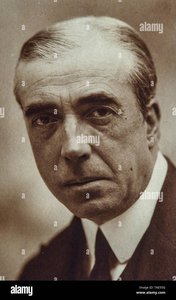
adrià gual i queralt
1872 - 1943 , Spain
Quick Facts
- Artistic Movement Or Style: Modernism
- Artists Or Movements Influenced By This Artist: ['Symbolist Painting']
- Artists Who Influenced This Artist:
- Richard Wagner
- Henrik Ibsen
- Maurice Maeterlinck
- Date Of Birth: Barcelona, Spain (1872)
- Date Of Death: 1943
- Full Name: Adrià Gual i Queralt
- Nationality: Catalan
- Notable Artworks:
- La rosada
- Fashion plate of two maiden for Blancaflor
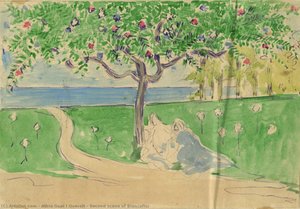
- Second scene of Blancaflor
- Place Of Birth: Barcelona
Related Articles
Gianfranco Ferré: Deconstructing Haute Couture – A Legacy of Architectural Form
Explore the revolutionary world of Gianfranco Ferré, 'the architect of fashion.' Discover his architectural approach to haute couture, iconic Dior designs, and lasting influence on luxury style. A deep dive for collectors & enthusiasts.
Draped Narratives: Fashion as Symbol & Subject in Historical Art
Explore the fascinating history of fashion as a symbol of power & status in art! Discover masterpieces from Gainsborough to Tissot and learn how clothing shaped societal narratives. Find museum-quality reproductions at ArtsDot.
Georges Barbier: A Synthesis of Art Nouveau Elegance & Early 20th-Century Fashion Illustration
Explore the exquisite world of Georges Barbier, a leading Art Nouveau illustrator celebrated for his opulent fashion designs & masterful pochoir technique. Discover his legacy and find collectible art at ArtsDot.
Cristóbal Balenciaga: Deconstructing Haute Couture's Architectural Legacy
Explore the revolutionary world of Cristóbal Balenciaga, the 'couturier's couturier'. Discover his architectural designs, lasting influence on haute couture, and guide to collecting rare pieces. A connoisseur’s resource.
Mariano Fortuny: A Fusion of Art, Fashion & Design – Exploring a Venetian Innovator's Legacy
Explore the captivating world of Mariano Fortuny – artist, designer & innovator. Discover his revolutionary textiles, iconic Delphos gown, and lasting influence on art, fashion & interiors. A collector's guide to a Venetian master.