 Preview
 Send
Send Share
Share
 Details

 Download
 Similars
 X-Ray
X-Ray Diaporama
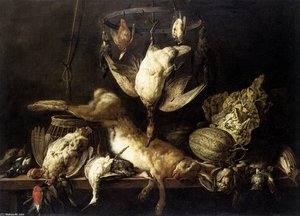
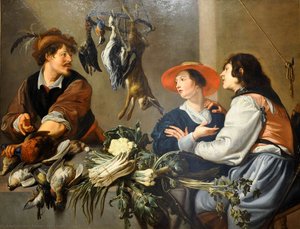
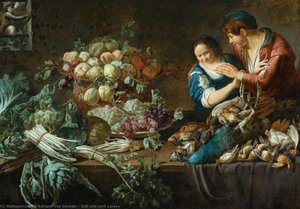
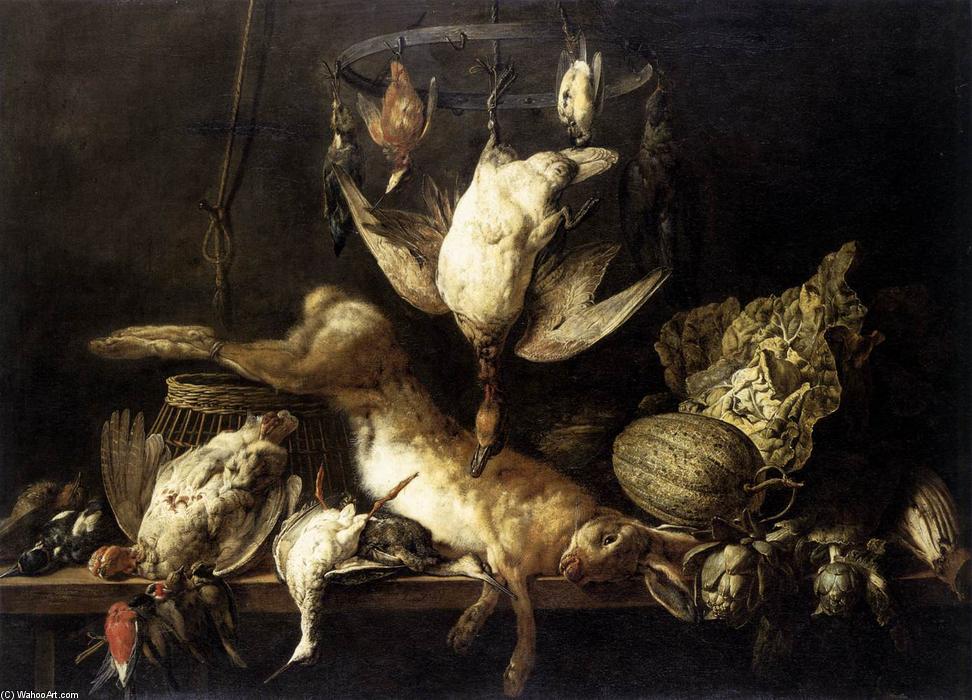
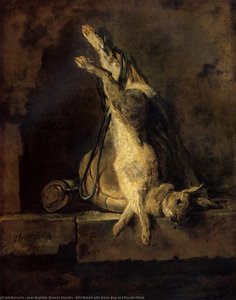
Still-Life with Hare and Birds on a Ring
 Oil On Canvas
- WallArt
- Baroque Abundance
 1646
1646 86.0 x 117.0 cm
 Gemäldegalerie
 Read More
Hand Made Oil Reproduction
Hand-painted oil on canvas in your size and frame, made to order by our artists. ( Buy Print Buy Image)




P118B $10

P118H $10

P118W $10

P438Z $10

P508JH $12

P508YH $12

P805H $10

P805Z $10

P919BZ $10

P919G $10

P919XJ $10

P959ZH $10

P968JZ $12

W106C $8

W218G $10

W218JH $8

W218Y $10

W307PJ $10

W316G $10

W316PJ $8

W316Y $10

W398PJ $8

W4111J $10

W500HY $15

W500JH $15

W692G $12

W849H $8

W940BG $15

W953PJ $8




Pick from our preset sizes that match the artwork's original proportions.

You may enter your own dimensions to fit a specific frame or space. If your selected size does not match the original image's proportions, we will either crop the artwork or extend the painting with additional hand-painted elements. A digital mockup will be sent for your approval before production begins.
Please note that the on-screen preview does not reflect the actual cropping or extension. Only the mockup will accurately show the final composition.
While custom sizes are available, we recommend selecting a dimension from the predefined list to preserve the original proportions.
After order, ArtsDot.com team will email client for instructions and provide a mockup preview
Worldwide Delivery () in 3/4 weeks instead of standard 5 weeks. (16 August). No compromise on quality.

Free Worldwide Express Shipping

High-Quality Linen Canvas

Full Shipping Insurance

Customs Tax Refund Guarantee

True Color Matching Guarantee

60-Day Return Policy (Defects Only)

100% Money-Back Guarantee

Bulk Discount Offer
 Glass option is only available in size under 110 CM

Still-Life with Hare and Birds on a Ring
Reproduction Medium
Reproduction Size
-


Total Price
$ 263
Artwork Description
A Symphony of Abundance: Exploring Adriaen van Utrecht’s Still Life with Hare and Birds
Adriaen van Utrecht (1599-1652) stands as a monumental figure in Flemish Baroque art, irrevocably linked to the genre of pronkstillevens – opulent banquet still lifes that ascended to unparalleled heights of artistic achievement. Born in Antwerp, he descended from a lineage steeped in artistic tradition, inheriting not merely familial influence but also an innate predisposition for meticulous observation and a masterful command of visual representation. His career unfolded during the zenith of the Dutch Golden Age, a period characterized by unprecedented economic prosperity fueled by maritime exploration and trade, fostering a cultural climate receptive to extravagant displays of wealth and sensory delight – themes that permeate his canvases with breathtaking vibrancy. Van Utrecht’s artistic apprenticeship commenced under Herman de Neyt, a respected Antwerp painter and astute art dealer whose collection served as an invaluable catalyst for broadening Van Utrecht's understanding of stylistic nuances and technical prowess. This formative period instilled within him a profound appreciation for the breadth of artistic expression prevalent at the time, undoubtedly shaping his subsequent creative endeavors. Following this foundational training, he embarked upon extensive travels throughout Europe – notably to Prague and Kassel – immersing himself in diverse artistic traditions and absorbing influences from masters such as Frans Snyders and Rubens’ circle, thereby enriching his stylistic repertoire and elevating the caliber of his work. The centerpiece of Van Utrecht's oeuvre is undoubtedly his mastery of pronkstillevens, a genre he essentially pioneered and subsequently perfected. Unlike earlier still lifes that prioritized restraint and idealized beauty, Van Utrecht’s compositions embraced maximalist tendencies – overflowing with meticulously rendered fruits, vegetables, meats, fowl, and decorative objects – creating immersive visual experiences that mirrored the grandeur of aristocratic feasts. His canvases pulsate with color—deep reds, opulent golds, luminous greens—captured with astonishing accuracy through the application of oil paint on canvas, utilizing glazing techniques to achieve unparalleled luminosity and depth. These masterful brushstrokes convey not merely visual information but also a palpable sense of atmosphere, transporting viewers into the heart of a sumptuous banquet scene. A particularly noteworthy aspect of Van Utrecht’s artistic vision is his incorporation of symbolic elements—a deliberate strategy designed to imbue his paintings with layers of meaning beyond mere aesthetic pleasure. The hare, positioned prominently in the center of ‘Still Life with Hare and Birds on a Ring,’ represents fertility and renewal – mirroring the cyclical rhythms of nature and symbolizing the promise of future harvests. Similarly, the birds scattered throughout the composition embody freedom and aspiration—suggesting an upward gaze towards divine grace. Furthermore, the carefully arranged objects—the bowl, cup, spoons—serve as reminders of earthly pleasures and underscore the transient nature of existence – a concept encapsulated in the pervasive motif of vanitas – reflecting on mortality and prompting contemplation about the ephemeral beauty of life. ‘Still Life with Hare and Birds on a Ring’ exemplifies Van Utrecht's unparalleled ability to synthesize artistic technique with profound symbolic resonance—resulting in artworks that transcend mere visual spectacle and engage viewers intellectually and emotionally. Currently housed at the Gemäldegalerie Dresden, Germany, this masterpiece continues to captivate audiences worldwide, serving as an enduring testament to the transformative power of Baroque art and its capacity to inspire awe and contemplation. Its meticulous detail, luminous color palette, and evocative symbolism solidify Van Utrecht’s legacy as one of the foremost practitioners of pronkstillevens—a genre that remains celebrated for its audacious ambition and breathtaking beauty.- Artist: Adriaen van Utrecht
- Born Year: 1599
- Death Year: 1652
- Birth City: Antwerp
- Birth Country: Belgium
Further Exploration:
- Still-Life with Hare and Birds on a Ring by UTRECHT, Adriaen van: Detailed Image Analysis
- OISEAUX DE BASSE COUR: A Vibrant Farmyard Scene
- Adriaen van Utrecht: Master of Abundance
- The Enduring Appeal of Still Life: A Historical & Contemporary Exploration
Recommended Reproduction:
Consider commissioning a high-quality reproduction from ArtsDot.com to bring the splendor of Van Utrecht’s ‘Still Life with Hare and Birds on a Ring’ into your home or workspace.
Related Artworks
Artist Biography
Adriaen van Utrecht: Master of Abundance
Adriaen van Utrecht (1599-1652) stands as a pivotal figure in the history of Flemish painting, largely recognized for his breathtaking banquet still lifes – pronkstillevens – that redefined the genre. Born in Antwerp, the son of Abel van Utrecht and Anne Huybrecht, he inherited not only a family legacy within the artistic community but also a keen eye for detail and an innate ability to capture the sumptuousness of life. His career unfolded against the backdrop of the Dutch Golden Age, a period marked by burgeoning wealth, international trade, and a fervent embrace of luxury, all themes powerfully reflected in his paintings.
Van Utrecht’s artistic journey began with apprenticeship under Herman de Neyt, a prominent Antwerp painter and art dealer. This formative experience exposed him to an extensive collection of artworks, undoubtedly broadening his understanding of technique and style. Following this foundational period, he embarked on travels through France, Germany, and Italy – crucial experiences that allowed him to immerse himself in diverse artistic traditions and hone his skills under the influence of local courts. Upon returning to Antwerp in 1625, following his father’s death, he secured his status as a free master within the Guild of Saint Luke, solidifying his position as a respected professional artist.
The Pronkstillevens: A Revolution in Still Life
Van Utrecht is inextricably linked to the development of the pronkstillevens – literally “abundance still lifes” – a genre that emerged during the early 17th century. Influenced profoundly by Frans Snyders, with whom he shared a significant artistic kinship, Van Utrecht elevated the still life beyond mere depictions of objects; he transformed it into a vibrant tableau of excess and delight. These compositions weren’t simply arrangements of fruit and game; they were carefully constructed narratives brimming with symbolism and an almost theatrical display of wealth and prosperity.
Unlike Snyders, who favored dramatic lighting and intense colors, Van Utrecht cultivated a more restrained palette, utilizing warm earthen tones – particularly shades of grey-green – to create a sense of depth and realism. He skillfully employed chiaroscuro, drawing inspiration from the techniques of Italian masters like Caravaggio, to heighten the drama and focus attention on key elements within the scene. The inclusion of live figures and animals further enriched these compositions, adding layers of narrative complexity and highlighting the connection between nature, abundance, and human enjoyment.
Collaborations and Artistic Circles
Van Utrecht’s artistic career was deeply intertwined with the vibrant artistic community of Antwerp. He consistently collaborated with leading painters who had been pupils or assistants to Peter Paul Rubens – a testament to his own talent and the influential network he navigated. Notable collaborators included Jacob Jordaens, David Teniers the Younger, Erasmus Quellinus II, Gerard Seghers, Theodoor Rombouts, and Abraham van Diepenbeeck. These partnerships fostered a dynamic exchange of ideas and techniques, contributing significantly to the evolution of Antwerp’s artistic style.
Perhaps the most significant collaboration was with his wife, Constancia van Nieulandt (also known as ‘van Nieuwlandt’). Constancia wasn't merely a domestic figure; she actively participated in her husband’s studio, contributing to the creation of numerous paintings. Remarkably, a signed and dated still life featuring fruit – dated 1647 – is believed to have been entirely executed by Constancia herself, demonstrating her considerable artistic skill and providing compelling evidence of her role as a co-creator within the studio. Her influence extended beyond mere assistance; she likely adapted and varied her husband’s compositions, creating subtle yet significant variations on his themes.
Themes, Techniques, and Legacy
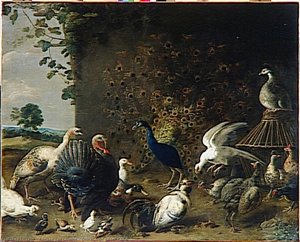
Van Utrecht's oeuvre encompasses a diverse range of still life subjects, including lavish banquet scenes featuring an abundance of game, fruit, flowers, and vegetables. He also produced captivating depictions of farmyards teeming with live poultry – chickens, turkeys, ducks, and peacocks – capturing the vitality and sensory richness of rural life. His early works were heavily influenced by Frans Snyders’ dramatic style, but he gradually developed a more refined and nuanced approach, characterized by meticulous detail, atmospheric lighting, and a subtle use of color.
Despite his considerable success and international commissions from the Emperor of Germany, King Philip IV of Spain, and the Prince of Orange, Van Utrecht's fortunes declined in the late 1640s. The exact reasons for this decline remain somewhat unclear, but it likely involved a combination of ill health and financial hardship. He died in Antwerp in 1652, leaving behind a remarkable body of work that continues to captivate viewers with its opulent beauty and masterful execution. Adriaen van Utrecht’s legacy lies not only in his individual achievements but also in his pivotal role in shaping the pronkstillevens genre, forever associating Antwerp with an era of unparalleled artistic abundance.
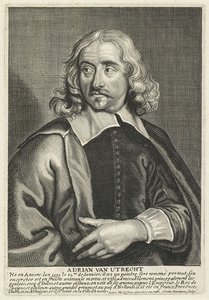
Adriaen van Utrecht
1599 - 1652 , Belgium
Quick Facts
- Artistic Movement Or Style: Baroque, Pronkstillevens
- Artists Or Movements Influenced By This Artist: ['Peter Paul Rubens']
- Artists Who Influenced This Artist: ['Frans Snyders']
- Date Of Birth: January 12, 1599
- Date Of Death: 1652
- Full Name: Adriaen van Utrecht
- Nationality: Flemish
- Notable Artworks:
- Still Life with Grapes
- Basse Cour
- The Pantry
- Fruit Hangers
- Place Of Birth: Antwerp, Belgium
Related Articles
Van Gogh's Masterpieces: Explore 25 Iconic Paintings & Art for Your Home
Journey through Vincent van Gogh's 25 most iconic paintings! Explore 'Starry Night', 'Sunflowers,' and more—discover the stories, techniques & emotions behind these Post-Impressionist masterpieces. Find museum-quality art reproductions for your home at ArtsDot.com.

Golden Age Reflections: Dutch Baroque Painting & Cultural Innovation
Explore the Dutch Golden Age of painting! Discover key artists like Vermeer & ter Borch, their innovative techniques, and the rich cultural context behind these Baroque masterpieces. Learn about collecting & appreciating this iconic art period.

Dutch Masters: 10 Golden Age Paintings That Still Inspire |
Journey into the Dutch Golden Age! Explore 10 iconic paintings by Rembrandt, Vermeer & Hals. Discover the stories behind these Baroque masterpieces and find museum-quality art reproductions to elevate your home decor on .
Adriaen van Ostade: A Master of Dutch Genre Painting & Social Commentary
Explore the life & work of Adriaen van Ostade, a leading Dutch Golden Age painter. Discover his realistic genre scenes, social commentary, and lasting influence on art history. Learn more at ArtsDot.

Dutch Baroque Masters: 10 Paintings That Shaped an Era | ArtsDot
Journey through the Golden Age with our guide to the Top 10 Dutch Baroque masterpieces! Explore iconic paintings by Rembrandt, Vermeer & Frans Hals. Find museum-quality art reproductions and elevate your home decor at ArtsDot.com.