 Preview
 Send
Send Share
Share
 Details

 Download
 Similars
 X-Ray
X-Ray Diaporama
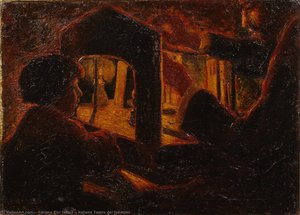
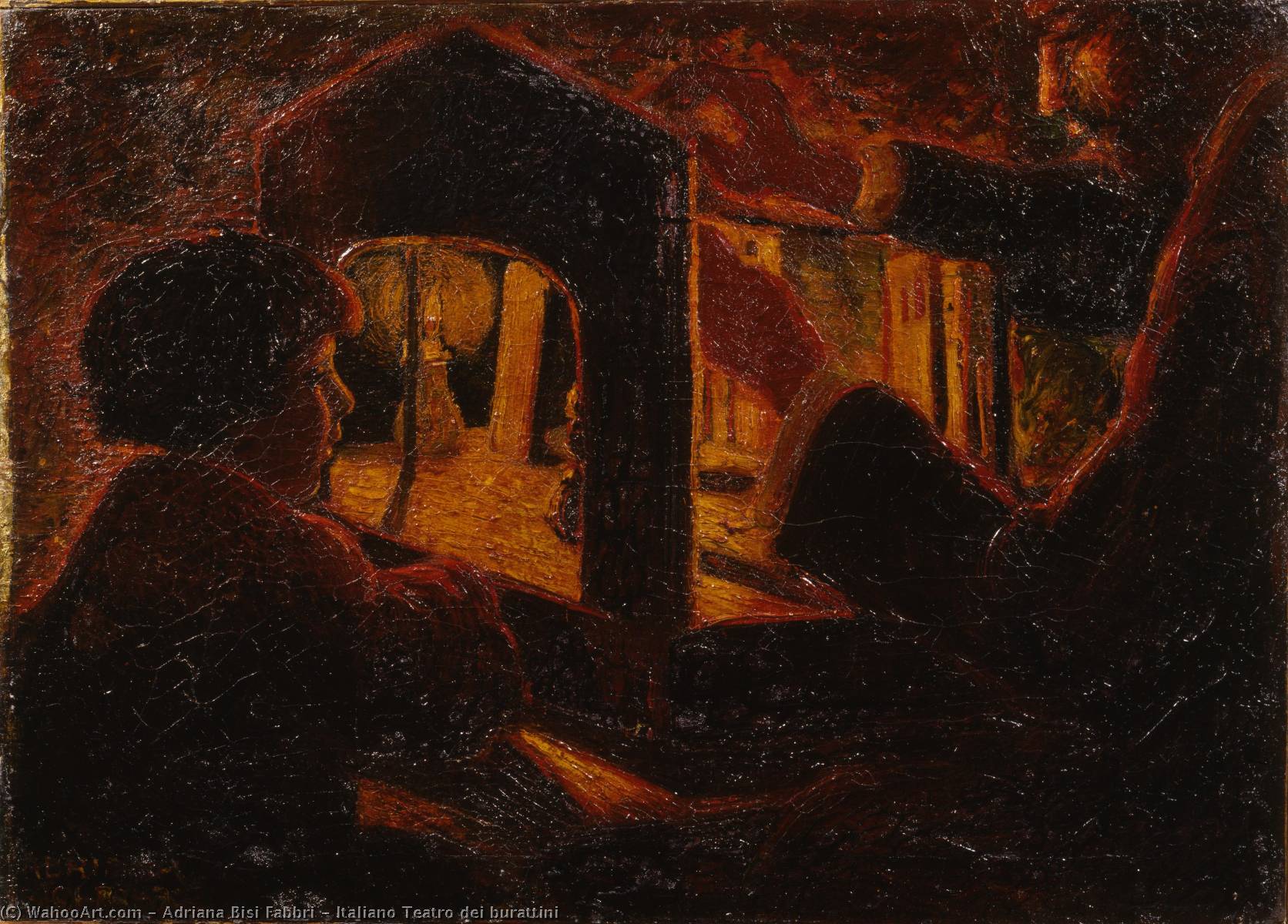
Italiano Teatro dei burattini
 Acrylic On Canvas
- WallArt
- Other
 1913
1913 100.0 x 71.0 cm
 Museum of Modern and Contemporary Art of Trento and Rovereto
 Read More
Hand Made Oil Reproduction
Hand-painted oil on canvas in your size and frame, made to order by our artists. ( Buy Print Buy Image)




P118B $10

P118H $10

P118W $10

P438Z $10

P508JH $12

P508YH $12

P805H $10

P805Z $10

P919BZ $10

P919G $10

P919XJ $10

P959ZH $10

P968JZ $12

W106C $8

W218G $10

W218JH $8

W218Y $10

W307PJ $10

W316G $10

W316PJ $8

W316Y $10

W398PJ $8

W4111J $10

W500HY $15

W500JH $15

W692G $12

W849H $8

W940BG $15

W953PJ $8




Pick from our preset sizes that match the artwork's original proportions.

You may enter your own dimensions to fit a specific frame or space. If your selected size does not match the original image's proportions, we will either crop the artwork or extend the painting with additional hand-painted elements. A digital mockup will be sent for your approval before production begins.
Please note that the on-screen preview does not reflect the actual cropping or extension. Only the mockup will accurately show the final composition.
While custom sizes are available, we recommend selecting a dimension from the predefined list to preserve the original proportions.
After order, ArtsDot.com team will email client for instructions and provide a mockup preview
Worldwide Delivery () in 3/4 weeks instead of standard 5 weeks. (28 August). No compromise on quality.

Free Worldwide Express Shipping

High-Quality Linen Canvas

Full Shipping Insurance

Customs Tax Refund Guarantee

True Color Matching Guarantee

60-Day Return Policy (Defects Only)

100% Money-Back Guarantee

Bulk Discount Offer
 Glass option is only available in size under 110 CM

Italiano Teatro dei burattini
Reproduction Medium
Reproduction Size
-


Total Price
$ 263
Adriana Bisi Fabbri’s Intriguing Portrait of Reflection
Adriana Bisi Fabbri's ‘Italiano Teatro dei burattini’ (1913) presents a captivating tableau—a monochrome depiction of a man contemplating his visage within a mirror, accompanied by two other figures and three chairs. This artwork transcends mere visual representation; it embodies the spirit of its time and speaks to themes of identity, observation, and perhaps even unspoken anxieties. Produced during the formative years of Futurism in Italy, Bisi Fabbri’s piece reflects the movement's fascination with dynamism and psychological depth—a departure from traditional artistic conventions.A Synthesis of Influences: Post-Impressionism Meets Futurist Vision
Bisi Fabbri honed her artistic skills through independent study alongside mentors like Gaetano Previati and Luigi Conconi, establishing herself as a formidable talent before gaining recognition at the Second Quadriennale in Turin in 1908. Her style demonstrates a compelling blend of Post-Impressionist expressive brushwork—particularly evident in the textured surface of the painting—with the pioneering principles of Futurism. The Futurist movement championed speed, technology, and urban life, aiming to shatter artistic norms and capture the energy of the modern world. Bisi Fabbri skillfully incorporates these influences into her composition, conveying a sense of immediacy and capturing fleeting moments of contemplation.Symbolic Layers Within Monochrome
The stark black and white palette contributes significantly to the artwork’s emotional resonance. Monochrome is frequently employed in art history as a tool for focusing attention on form and texture—a deliberate choice that underscores the psychological state of the central figure. The mirror itself serves as a potent symbol, representing introspection and self-awareness – concepts central to both artistic exploration and philosophical inquiry. Furthermore, the positioning of the figures around the chair adds an element of narrative complexity. It invites viewers to consider relationships between individuals and their surroundings, prompting contemplation on social dynamics and personal experience.Technical Mastery: Impressionistic Brushstrokes Convey Emotion
Bisi Fabbri’s technique is characterized by loose, visible brushstrokes—a hallmark of Impressionism—that imbue the painting with a palpable sense of movement despite its stillness. These strokes capture light and shadow with remarkable sensitivity, creating an illusion of depth and enhancing the overall visual impact. The artist's meticulous attention to detail ensures that every element contributes to the artwork’s expressive power. This masterful execution elevates ‘Italiano Teatro dei burattini’ beyond a simple depiction; it becomes a conduit for conveying profound emotions and stimulating intellectual engagement.A Legacy of Feminist Artistry
Adriana Bisi Fabbri's work aligns with broader artistic currents advocating for female representation and challenging societal expectations. Her portraits and caricatures often tackled social issues with courage and conviction, cementing her place as an important voice within the Italian art scene of its era. A reproduction of ‘Italiano Teatro dei burattini’ offers a beautiful opportunity to appreciate Bisi Fabbri's artistic vision and contribute to the preservation of this significant piece of cultural heritage.Related Artworks




Artist Biography
Adriana Bisi Fabbri: Life and Art
Early Life and Education
- Born: 1881 in Ferrera, Italy.
- Adriana Bisi Fabbri spent part of her youth in Padua as a guest of Umberto Boccioni’s mother, an early connection to the burgeoning Futurist movement.
- She moved to Milan with her family in 1905 and began developing her artistic skills through self-study and by frequenting the studios of Gaetano Previati and Luigi Conconi.
Artistic Development and Influences
- Initially a self-taught artist, Bisi Fabbri’s style evolved through exposure to various artistic circles.
- Umberto Boccioni played an indirect but significant role in her development due to the early connection and later participation in exhibitions he organized.
- Her work demonstrates influences from Post-Impressionism and early Futurism, blending expressive brushwork with a focus on modern life and social commentary.
Career and Major Achievements
- Bisi Fabbri debuted at the 2nd Quadriennale in Turin in 1908 with two drawings.
- In 1911, she won a bronze medal at the international humour exhibition Frigidarium and participated in the 1st Esposizione Libera organized by Boccioni and other Futurists.
- She became a member of the Nuove Tendenze group in 1914 and held a solo exhibition of 51 works at an art store in Milan.
- Bisi Fabbri was a sought-after portraitist, and her political caricatures were published in Il Popolo d'Italia during World War I. She also contributed to La Domenica Illustrata and created fashion plates.
Themes and Style
- Portraits: Bisi Fabbri’s portraits are characterized by expressive brushwork, psychological depth, and a direct engagement with the subject.
- Social Commentary: Her work often reflects social issues and political concerns of her time, particularly through her caricatures and illustrations.
- Modern Life: She depicted scenes from modern life, including theatrical performances and aviation, capturing the dynamism of the early 20th century.
Historical Significance and Legacy
- Adriana Bisi Fabbri represents a significant figure in Italian art during a period of rapid change and experimentation.
- Her connection to Futurism, combined with her unique artistic voice, positions her as an important contributor to the development of modern Italian painting.
- As a female artist working in a male-dominated field, she challenged gender norms and paved the way for future generations of women artists.
- Death: She died prematurely in 1918 in Travedona-Monate (Varese), Italy.

Adriana Bisi Fabbri
1881 - 1918 , Italy
Quick Facts
- Birth Date: 1881
- Birth Place: Ferrera, Italy
- Death Date: 1918
- Influenced By:
- Gaetano Previati
- Luigi Conconi
- Movement: Futurism
- Name: Adriana Bisi Fabbri
- Nationality: Italian
- Notable Works:
- Italiano Aviatore (Ricordo Géo Chávez)
- Italiano Teatro dei burattini
- Italiano Ritratto
- Italiano Chiesa di Sant'Alessandro
Related Articles

Dark Masterpieces: 10 Iconic Paintings Dominated by Black Tones |
Explore 10 iconic paintings dominated by black tones, from Rembrandt’s chiaroscuro to Goya's dark expressions. Discover the stories behind these masterpieces & find museum-quality art reproductions for your home at .

Mars Black Masterpieces: 10 Iconic Paintings & Timeless Art Decor Ideas
Delve into the power of 'Mars Black' with 10 iconic paintings by masters like Rembrandt & Caravaggio. Explore dramatic chiaroscuro, gothic art, and timeless beauty. Find museum-quality reproductions & elevate your home decor on .
Lamp Black & Masterpieces: 10 Paintings That Define Shadow & Light |
Delve into the captivating world of 'Lamp Black' tones with 10 iconic paintings by masters like Rembrandt & Caravaggio. Explore Baroque chiaroscuro, dramatic lighting & shadow in art history. Find museum-quality reproductions at
Ivory Black Masters: 10 Paintings That Define Dramatic Art |
Delve into the power of 'Ivory Black' with 10 iconic paintings by masters like Rembrandt & Caravaggio. Explore dramatic chiaroscuro, gothic moods & timeless art history. Find museum-quality reproductions and elevate your home decor at
Mario Sironi: A Poetic of Modern Italian Identity Through Symbolism & Social Commentary
Explore the profound works of Mario Sironi, a key figure in Italian Modernism. Discover his evolution from Futurism to Metaphysical painting and his powerful social commentary. Learn about his legacy at ArtsDot.