 Preview
 Send
Send Share
Share
 Details

 Download
 Similars
 X-Ray
X-Ray Diaporama
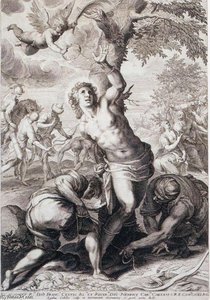
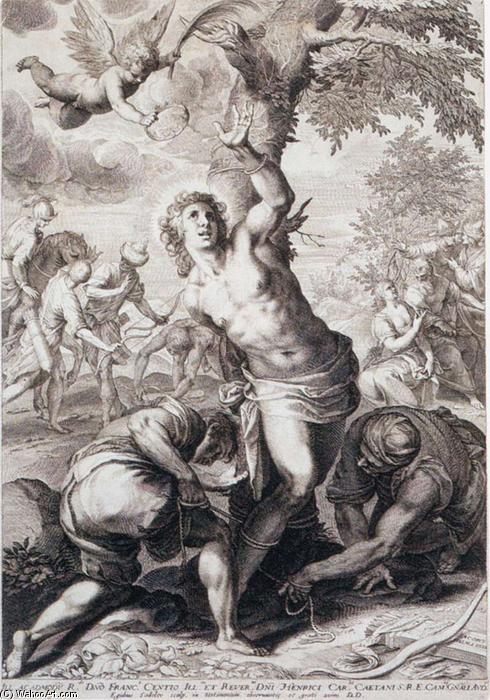
The Martyrdom of St Sebastian


 Read More
Hand Made Oil Reproduction
Hand-painted oil on canvas in your size and frame, made to order by our artists. ( Buy Print Buy Image)




P118B $10

P118H $10

P118W $10

P438Z $10

P508JH $12

P508YH $12

P805H $10

P805Z $10

P919BZ $10

P919G $10

P919XJ $10

P959ZH $10

P968JZ $12

W106C $8

W218G $10

W218JH $8

W218Y $10

W307PJ $10

W316G $10

W316PJ $8

W316Y $10

W398PJ $8

W4111J $10

W500HY $15

W500JH $15

W692G $12

W849H $8

W940BG $15

W953PJ $8




Pick from our preset sizes that match the artwork's original proportions.

You may enter your own dimensions to fit a specific frame or space. If your selected size does not match the original image's proportions, we will either crop the artwork or extend the painting with additional hand-painted elements. A digital mockup will be sent for your approval before production begins.
Please note that the on-screen preview does not reflect the actual cropping or extension. Only the mockup will accurately show the final composition.
While custom sizes are available, we recommend selecting a dimension from the predefined list to preserve the original proportions.
After order, ArtsDot.com team will email client for instructions and provide a mockup preview
Worldwide Delivery () in 3/4 weeks instead of standard 5 weeks. (26 August). No compromise on quality.

Free Worldwide Express Shipping

High-Quality Linen Canvas

Full Shipping Insurance

Customs Tax Refund Guarantee

True Color Matching Guarantee

60-Day Return Policy (Defects Only)

100% Money-Back Guarantee

Bulk Discount Offer
 Glass option is only available in size under 110 CM

The Martyrdom of St Sebastian
Reproduction Medium
Reproduction Size
-


Total Price
$ 263
Artwork Description
The Martyrdom of St Sebastian: A Baroque Echo of Suffering and Grace
Aegidius Sadeler’s “The Martyrdom of Saint Sebastian,” created in 1595, is more than just a meticulously rendered etching; it's a profound meditation on faith, sacrifice, and the enduring power of human resilience. This work, currently housed within the esteemed Rijksmuseum in Amsterdam, offers a captivating glimpse into the artistic sensibilities of the late Renaissance and early Baroque periods – a time when religious iconography held immense cultural significance and artists sought to visually communicate complex theological concepts.
The scene depicted is brutally direct: Saint Sebastian, a Roman soldier martyred for his Christian faith, lies prone on a simple landscape. His muscular form, sculpted with the precision characteristic of classical art, is contorted in agony as he’s pierced by an array of arrows – each strike a testament to the cruelty inflicted upon him. Yet, despite the evident suffering, there's an undeniable serenity about his posture; his arms are raised in a gesture that suggests both acceptance and defiance. The figures surrounding him—some holding arrows, others offering assistance—are rendered with a subtle dynamism, hinting at the unfolding drama of his final moments.
A Masterpiece of Mannerist Technique
Sadeler’s skill as an engraver is immediately apparent in the intricate detail and remarkable tonal range achieved through this medium. The etching demonstrates a masterful command of line, utilizing varying pressures to create subtle gradations of light and shadow. Notice how the lines converge to emphasize Sebastian's form, drawing the viewer's eye directly to his wounded body. The background landscape—a muted palette of blues, greens, and browns—provides a stark contrast to the vibrant reds of the arrows, further amplifying the scene’s emotional intensity. The use of *stiacciato*, a technique involving closely spaced lines to create a sense of depth and volume, is particularly evident in Sebastian's musculature, lending an almost sculptural quality to his depiction.
Symbolism and Context: Echoes of Roman Martyrdom
The story of Saint Sebastian’s martyrdom is deeply rooted in Christian tradition. Initially a soldier, he was captured by the proconsul Flavius Festus, who accused him of being a Christian. He was subjected to torture and then shot with arrows before being left to die. Legend holds that his wounds miraculously healed, and he eventually became a revered saint associated with protection against plagues and fever. Sadeler’s etching taps into this rich symbolism – the arrows represent not just physical pain but also the spiritual wounds inflicted by persecution. The act of martyrdom itself becomes an affirmation of faith in the face of adversity.
Furthermore, the composition draws parallels to classical depictions of Roman martyrs, particularly those found on ancient sarcophagi and reliefs. This deliberate connection underscores the universality of suffering and sacrifice across different cultures and eras. The scene resonates with a sense of timelessness, inviting viewers to contemplate the enduring themes of faith, courage, and redemption.
Emotional Resonance: A Study in Human Vulnerability
Despite its formal elegance and technical mastery, “The Martyrdom of St Sebastian” is profoundly moving. Sadeler doesn’t shy away from depicting the raw physicality of suffering; the wounds are visible, the expression on Sebastian's face conveys a mixture of pain and resignation. Yet, there’s also an underlying sense of dignity and grace—a testament to his unwavering faith. The etching invites us to contemplate our own vulnerabilities and the challenges we face in navigating a world often marked by hardship and injustice. It serves as a poignant reminder that even in moments of profound suffering, the human spirit can endure with remarkable strength and resilience.
This reproduction captures the essence of Sadeler’s original work, offering a beautiful and evocative representation of this iconic image for art enthusiasts and collectors alike.
Related Artworks
Artist Biography
The Master of the Burin: The Life and Legacy of Aegidius Sadeler II
In the vibrant, swirling currents of the late Renaissance and early Baroque periods, few artists possessed the ability to translate the monumental grandeur of painting into the intimate, precise language of printmaking as masterfully as Aegidius Sadeler II. Born in 1570 within the illustrious artistic dynasty of Antwerp, Sadeler was destined for a life steeped in the fine arts. As a member of the famed Sadeler family of engravers and print dealers, his very lineage was woven into the fabric of European visual culture. His early training under his uncle, Jan I, provided him with a rigorous foundation in the exacting techniques of the Antwerp Guild of St. Luke, instilling in him a discipline that would later allow him to capture the most delicate nuances of light and shadow through the sharp tip of a burin.
The trajectory of Sadeler’s career was as much a journey across Europe as it was an evolution of style. His wanderings took him through the intellectual hubs of Munich, Rome, and Naples, exposing him to the diverse aesthetic currents of the continent. This cosmopolitan upbringing allowed him to absorb the sophisticated elegance of Italian Mannerism and the robust realism of the Northern traditions. By the time he settled in Prague in 1597, he had become a versatile virtuoso, capable of navigating the complex visual vocabulary required by the most demanding patrons of the age.
At the Heart of the Imperial Court
The zenith of Sadeler’s professional life was undoubtedly his appointment as the court engraver to Rudolf II, the Holy Roman Emperor. The court in Prague was a glittering epicenter of Mannerist innovation, a place where art, alchemy, and intellect converged. Within this rarefied atmosphere, Sadeler found his greatest inspiration and his most significant subjects. He did not merely record the images of his era; he acted as a vital conduit for their dissemination. Through his meticulous reproductions, the masterpieces housed in the Emperor's private collections were liberated from the confines of palace walls and shared with the wider European intelligentsia.
His collaboration with the leading lights of the Mannerist movement was profound. Sadeler possessed a rare ability to translate the fluid, often elongated forms of Bartholomeus Spranger and the whimsical, transformative imagery of Giuseppe Arcimboldo into the monochromatic medium of engraving. His work after the sculptures of Giambologna and Adriaen de Vries demonstrated an uncanny ability to render the tactile quality of bronze and marble through nothing more than black ink and white paper. This period of his life was marked by a relentless pursuit of technical perfection, where every line served to heighten the theatricality and emotional depth characteristic of the era.
A Lasting Impression on Art History
The significance of Aegidius Sadeler II extends far beyond the individual prints he produced. He was a pivotal figure in the democratization of high art, playing a crucial role in the creation of a shared European visual language. By reproducing the works of masters like Albrecht Dürer and Raphael, he helped sustain the prestige of these Renaissance icons long after their original eras had passed. His engravings served as both a tribute to the past and a blueprint for the future, influencing generations of artists who looked to his prints for compositional guidance and technical inspiration.
Even today, when we examine his portraits or his dramatic religious scenes, such as his poignant etchings of The Martyrdom of St. Sebastian, we are struck by a sense of profound permanence. His work captures the tension between the physical and the spiritual, the human and the divine, with a clarity that remains undiminished by time. Through his mastery of the engraver's craft, Sadeler ensured that the fleeting brilliance of the Prague court would be etched into the enduring memory of art history.
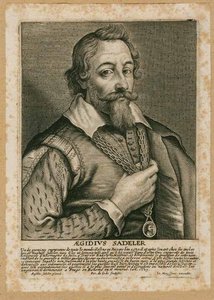
aegidius ii sadeler
1570 - 1629 , Belgium
Quick Facts
- Artistic Movement Or Style: Mannerism
- Artists Or Movements Influenced By This Artist: ['Rudolf II']
- Artists Who Influenced This Artist: ['Albrecht Dürer']
- Date Of Birth: Antwerp, Belgium (1570)
- Date Of Death: 1629
- Full Name: Aegidius Sadeler II
- Nationality: Flemish
- Notable Artworks:
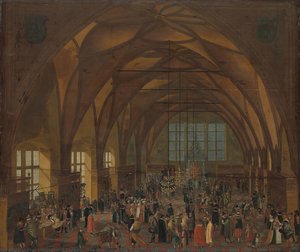
- The Interior of the Vladislav Hall, Prague
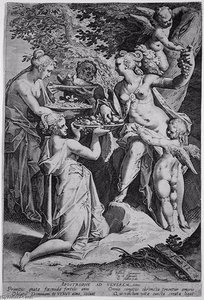
- Venus Receiving Gifts
- Place Of Birth: Antwerp
Related Articles
Etching Masters: 10 Legendary Prints That Revolutionized Art | ArtsDot
Journey through 10 legendary etching masterpieces by Rembrandt, Dürer & Goya. Explore the history of printmaking and discover timeless art for your home. Find museum-quality reproductions at ArtsDot.com.

Etching: A Historical Survey of Technique, Aesthetic Qualities & Enduring Artistic Significance
Explore the rich history of etching, from its origins to Rembrandt's masterful innovations. Discover the technique, aesthetic qualities & enduring legacy of this captivating art form. Expert insights for collectors and enthusiasts.

El Greco's Masterpieces: Explore 25 Iconic Paintings & Spiritual Visions | ArtsDot
Journey through El Greco's 25 most iconic paintings! Explore the spiritual depth & dramatic beauty of this Spanish Renaissance master. Discover art history, techniques & find museum-quality reproductions for your home at ArtsDot.com.
The Intricate World of Etching: A Historical Survey of Technique, Aesthetic Evolution, and Enduring Artistic Impact
Explore the rich history of etching, from its origins to modern practice. Discover techniques, key artists like Rembrandt, and insights for collectors. A comprehensive guide by ArtsDot.
Sacred Narratives Embodied: A Comprehensive Exploration of Religious Iconography in Art History
Explore the rich history of religious iconography in art! Discover symbolism, movements & masterpieces from Byzantine to Renaissance periods. Expert insights for collectors and enthusiasts at ArtsDot.