 Preview
 Send
Send Share
Share
 Details

 Download
 Similars
 X-Ray
X-Ray Diaporama
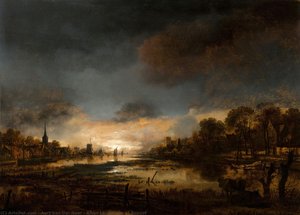
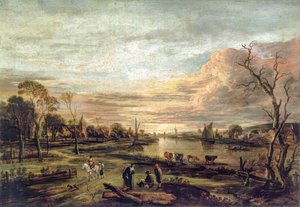
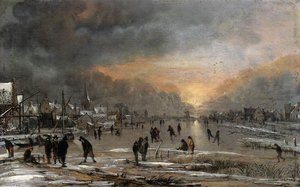
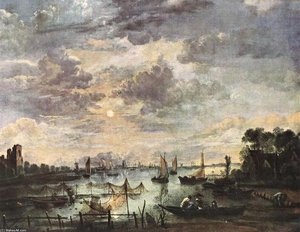
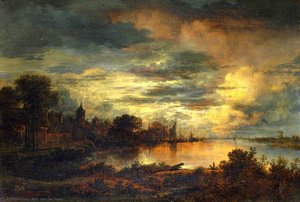
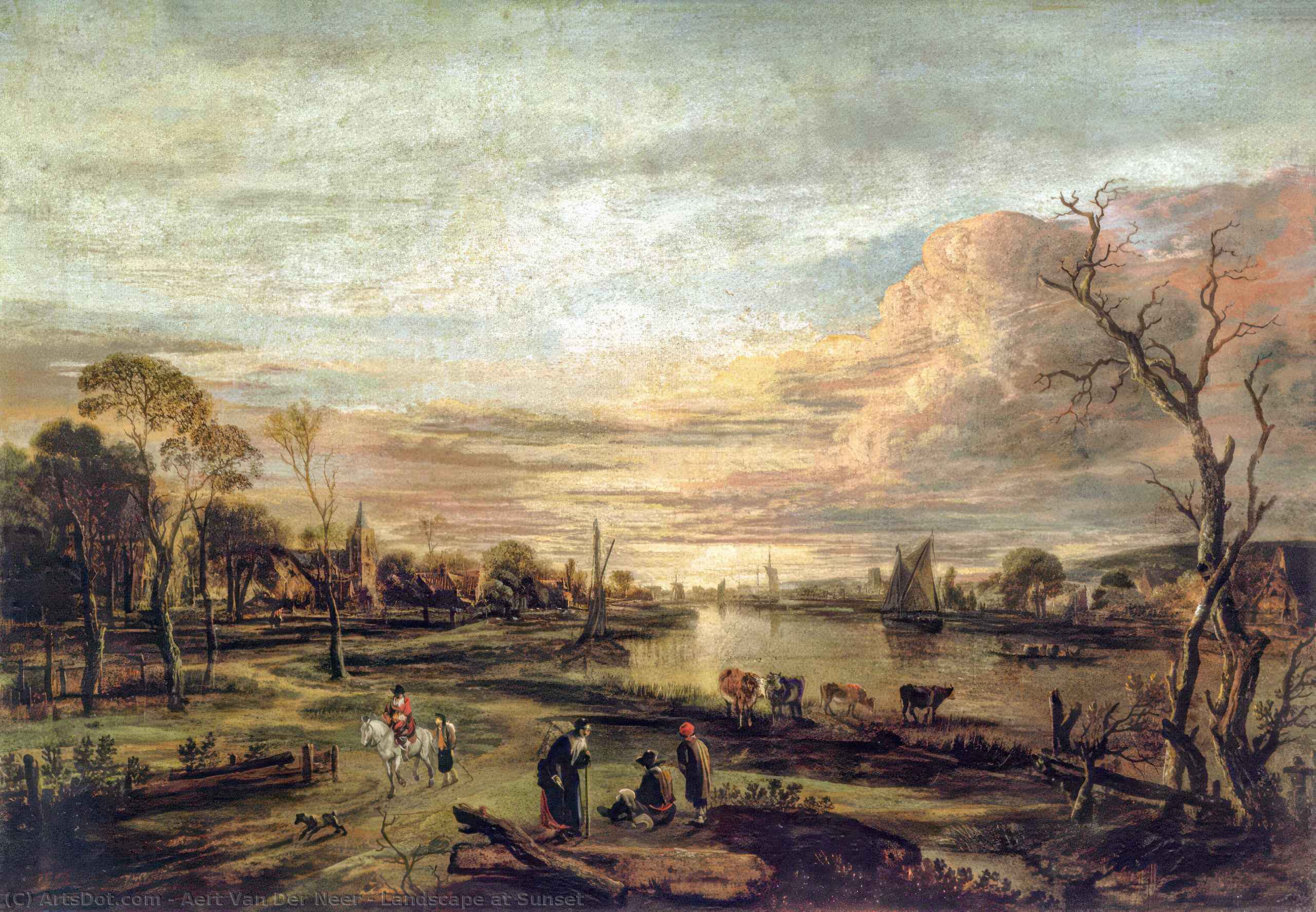
Landscape at Sunset
 Oil On Canvas
- WallArt
- Dutch Golden Age
 1650
1650 51.0 x 71.0 cm
 Metropolitan Museum of Art
 Read More
Hand Made Oil Reproduction
Hand-painted oil on canvas in your size and frame, made to order by our artists. ( Buy Print Buy Image)




P118B $10

P118H $10

P118W $10

P438Z $10

P508JH $12

P508YH $12

P805H $10

P805Z $10

P919BZ $10

P919G $10

P919XJ $10

P959ZH $10

P968JZ $12

W106C $8

W218G $10

W218JH $8

W218Y $10

W307PJ $10

W316G $10

W316PJ $8

W316Y $10

W398PJ $8

W4111J $10

W500HY $15

W500JH $15

W692G $12

W849H $8

W940BG $15

W953PJ $8




Pick from our preset sizes that match the artwork's original proportions.

You may enter your own dimensions to fit a specific frame or space. If your selected size does not match the original image's proportions, we will either crop the artwork or extend the painting with additional hand-painted elements. A digital mockup will be sent for your approval before production begins.
Please note that the on-screen preview does not reflect the actual cropping or extension. Only the mockup will accurately show the final composition.
While custom sizes are available, we recommend selecting a dimension from the predefined list to preserve the original proportions.
After order, ArtsDot.com team will email client for instructions and provide a mockup preview
Worldwide Delivery () in 3/4 weeks instead of standard 5 weeks. (17 August). No compromise on quality.

Free Worldwide Express Shipping

High-Quality Linen Canvas

Full Shipping Insurance

Customs Tax Refund Guarantee

True Color Matching Guarantee

60-Day Return Policy (Defects Only)

100% Money-Back Guarantee

Bulk Discount Offer
 Glass option is only available in size under 110 CM

Landscape at Sunset
Reproduction Medium
Reproduction Size
-


Total Price
$ 263
Artwork Description
A Portrait of Tranquility: Exploring Aert van der Neer’s Landscape at Sunset
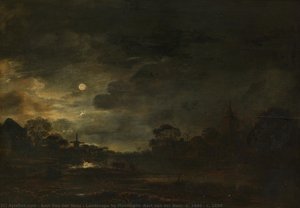
Aert van der Neer's "Landscape at Sunset" isn’t merely a depiction of a riverside scene; it’s an embodiment of Dutch Golden Age artistic philosophy—a profound meditation on the beauty of observation and the subtle power of atmosphere. Painted circa 1650, this canvas resides within the hallowed halls of The Metropolitan Museum of Art in New York, securing its place as one of van der Neer's most celebrated works and a cornerstone of landscape genre painting.Composition and Visual Narrative
The artist’s genius lies in his masterful orchestration of visual elements. At first glance, the scene presents a serene expanse of water reflecting the fiery hues of twilight—a quintessential sunset vista rendered with meticulous detail. However, Van Der Neer doesn't simply record what he sees; he actively guides the viewer’s gaze. The gently curving horizon line and the strategically positioned boats draw attention inward, creating a harmonious balance that reflects the artist’s belief in capturing not just external reality but also its emotional resonance. Scattered figures—farmers tending livestock, travelers enjoying the view—add a touch of human presence without disrupting the overarching tranquility. This deliberate compositional strategy speaks to van der Neer's commitment to psychological realism – conveying mood and emotion as much as visual accuracy.Technique: Light and Shadow - The Language of Feeling
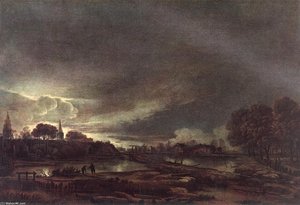
Van Der Neer’s technique is characterized by an extraordinary sensitivity to light and color, techniques that would become hallmarks of his oeuvre. He employs a distinctive approach—dark vertical strokes alongside the shoreline juxtaposed with luminous horizontal bands—to simulate the effects of moonlight filtering through trees and creating dramatic contrasts across the water surface. These subtle tonal variations aren’t merely decorative; they are integral to conveying the mood of the scene – a palpable stillness punctuated by hints of warmth and beauty. The artist's meticulous attention to detail extends beyond mere representation; he strives to capture the very essence of what it feels like to experience this particular moment in time.Historical Context: Reflecting Dutch Artistic Ideals
“Landscape at Sunset” exemplifies the prevailing artistic sensibilities of its era—the Dutch Golden Age (roughly 1600-1700). During this period, artists sought to elevate landscape painting beyond mere topographical accuracy, aiming instead for a profound engagement with nature’s sublime qualities. Van Der Neer's work aligns perfectly with this movement's preoccupation with capturing the emotional impact of natural beauty—a desire to evoke contemplation and inspire awe. He was part of a group of painters who championed "gezichtsheid," or “sight,” prioritizing observation and rendering atmospheric conditions as faithfully as possible, rejecting idealized representations in favor of honest depictions of reality.Symbolism: Beyond Representation – An Invitation to Reflection
The painting transcends its visual surface, inviting viewers into a realm of contemplation. The sunset itself symbolizes the passage of time—a reminder of mortality and an encouragement to appreciate the fleeting beauty of existence. Similarly, the tranquil river represents purity and serenity—a refuge from the anxieties of daily life. These symbolic elements contribute to the artwork’s enduring appeal, resonating with audiences across centuries who recognize its profound connection to human experience.Emotional Impact: Capturing a Moment of Sublime Beauty
Ultimately, “Landscape at Sunset” succeeds in transporting us back to a time when art served as a conduit for spiritual contemplation. The painting's luminous palette and masterful execution evoke feelings of peace, wonder, and nostalgia—a testament to van der Neer’s ability to capture the sublime beauty of nature and translate it into an unforgettable visual experience. It remains a powerful reminder that true artistry lies not merely in replicating what we see but in conveying what we feel.Related Artworks
Artist Biography
Aert van der Neer: Master of Moonlight and Winter Landscapes
Aert van der Neer (c. 1603 – 9 November 1677) stands as a singular figure in Dutch Golden Age landscape painting, celebrated for his hauntingly beautiful depictions of nocturnal scenes bathed in ethereal moonlight and the crisp stillness of winter landscapes—particularly those overlooking canals and rivers. Unlike many of his contemporaries who favored grand vistas or idealized pastoral views, van der Neer focused on capturing subtle atmospheric effects and intimate moments within nature, establishing him as a pioneer of psychological realism within genre painting. His ability to evoke the biting chill of a frozen canal or the silvered glow of a midnight sky allows the viewer to step directly into the quietude of the seventeenth-century Netherlands.Early Life and Artistic Foundations
Information regarding van der Neer’s formative years remains shrouded in the mists of history, yet his artistic essence is deeply rooted in the Dutch soil. While biographical accounts suggest he was born in Gorinchem around 1604, his true lineage is found in the brushstrokes of his contemporaries. His artistic education likely stemmed from exposure to influential painters like Rafael and Jochem Govertsz Camphuysen, whose stylistic sensibilities undoubtedly impacted his own burgeoning talent. This connection to a prominent artistic family fostered an environment conducive to honing skills and exploring innovative approaches to visual representation. Through this early immersion, he began to develop a unique eye for the interplay between light and shadow, a trait that would become his lifelong signature.The Language of Moonlight and Technique
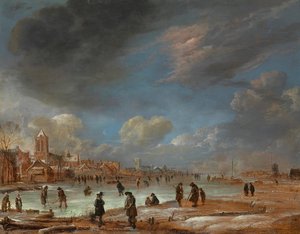
Van der Neer's distinctive style is immediately recognizable by his masterful manipulation of light—specifically moonlight—and its delicate interplay with firelight. He eschewed dramatic, sweeping compositions in favor of understated landscapes populated by figures engaged in the rhythmic activities of everyday life. In his works, one might find:- Skaters gliding gracefully across frozen waterways during the height of winter.
- Kolf players pursuing their shots amidst soft snowdrifts.
- Fishermen patiently awaiting their catch under the watchful eye of a rising moon.
- Horse-drawn sleighs navigating the quiet, icy paths of a sleeping town.
Legacy and Historical Significance
The historical significance of Aert van der Neer lies in his ability to elevate the "small" landscape into a realm of high emotional resonance. While other masters sought the monumental, van der Neer found greatness in the fleeting and the quiet. His works, such as the breathtaking Landscape at Sunset or his lively winter scenes near Dutch towns, serve as timeless glimpses into seventeenth-century life. He remains a cornerstone of the Dutch Golden Age, remembered not just for his technical prowess, but for his ability to capture the very soul of the nocturnal world. His influence persists in the way we perceive the beauty of the night, reminding us that even in the darkest hours, there is a profound and luminous grace to be found in the natural world.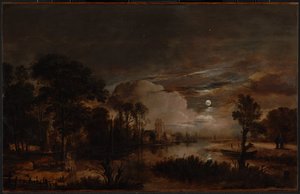
Aert van der Neer
1604 - 1677 , Netherlands
Quick Facts
- Artistic Movement Or Style: Dutch Golden Age Landscape Painting
- Artists Or Movements Influenced By This Artist: ['Albert Cuyp']
- Artists Who Influenced This Artist:
- Rafael
- Jochem Govertsz Camphuysen
- Date Of Birth: Amsterdam, Netherlands (1604)
- Date Of Death: 1677
- Full Name: Aert van der Neer
- Nationality: Dutch
- Notable Artworks:
- Winter in Holland: Skating Scene
- River landscape by moonlight
- Moonlit landscape with bridge
- Place Of Birth: Gorinchem
Related Articles
Van Gogh's Masterpieces: Explore 25 Iconic Paintings & Art for Your Home
Journey through Vincent van Gogh's 25 most iconic paintings! Explore 'Starry Night', 'Sunflowers,' and more—discover the stories, techniques & emotions behind these Post-Impressionist masterpieces. Find museum-quality art reproductions for your home at ArtsDot.com.

Rembrandt's Masterpieces: Explore 25 Iconic Paintings & Prints | ArtsDot
Journey through Rembrandt van Rijn's 25 most iconic paintings & etchings. Explore Dutch Golden Age masterpieces, dramatic chiaroscuro, and timeless portraits. Find museum-quality art reproductions to elevate your home decor on ArtsDot.com.

Dutch Masters: 10 Golden Age Paintings That Still Inspire |
Journey into the Dutch Golden Age! Explore 10 iconic paintings by Rembrandt, Vermeer & Hals. Discover the stories behind these Baroque masterpieces and find museum-quality art reproductions to elevate your home decor on .

Golden Age Reflections: Dutch Baroque Painting & Cultural Innovation
Explore the Dutch Golden Age of painting! Discover key artists like Vermeer & ter Borch, their innovative techniques, and the rich cultural context behind these Baroque masterpieces. Learn about collecting & appreciating this iconic art period.
Adriaen van Ostade: A Master of Dutch Genre Painting & Social Commentary
Explore the life & work of Adriaen van Ostade, a leading Dutch Golden Age painter. Discover his realistic genre scenes, social commentary, and lasting influence on art history. Learn more at ArtsDot.