 Preview
 Send
Send Share
Share
 Details

 Download
 Similars
 X-Ray
X-Ray Diaporama
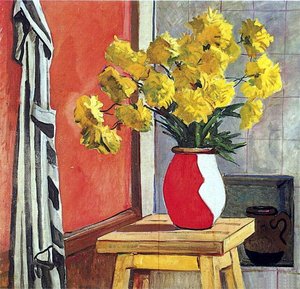
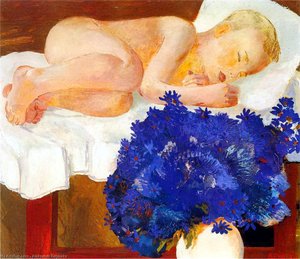
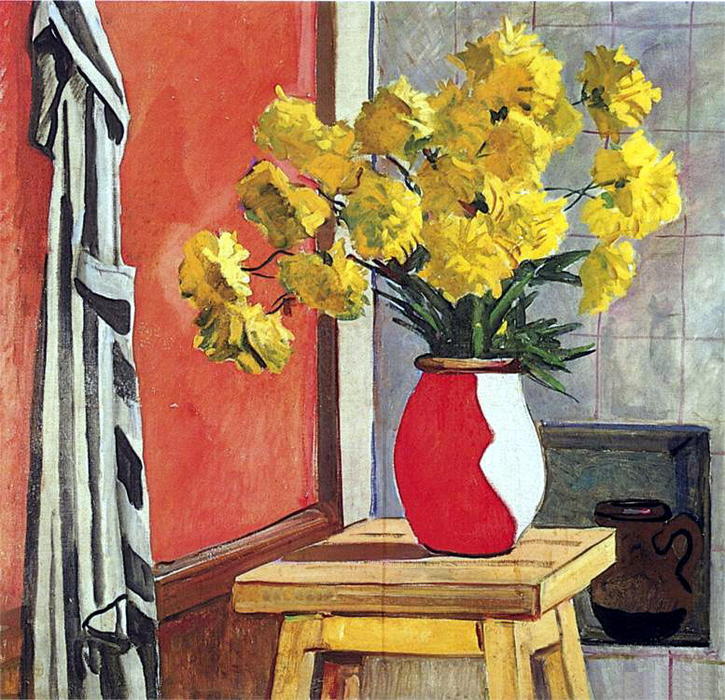
Still Life. Yellow flowers
 Oil On Canvas
- WallArt
- Socialist Realism
 1954
1954- Modern
 94.0 x 100.0 cm
 Read More
Hand Made Oil Reproduction
Hand-painted oil on canvas in your size and frame, made to order by our artists. ( Buy Print Buy Image)




P118B $10

P118H $10

P118W $10

P438Z $10

P508JH $12

P508YH $12

P805H $10

P805Z $10

P919BZ $10

P919G $10

P919XJ $10

P959ZH $10

P968JZ $12

W106C $8

W218G $10

W218JH $8

W218Y $10

W307PJ $10

W316G $10

W316PJ $8

W316Y $10

W398PJ $8

W4111J $10

W500HY $15

W500JH $15

W692G $12

W849H $8

W940BG $15

W953PJ $8




Pick from our preset sizes that match the artwork's original proportions.

You may enter your own dimensions to fit a specific frame or space. If your selected size does not match the original image's proportions, we will either crop the artwork or extend the painting with additional hand-painted elements. A digital mockup will be sent for your approval before production begins.
Please note that the on-screen preview does not reflect the actual cropping or extension. Only the mockup will accurately show the final composition.
While custom sizes are available, we recommend selecting a dimension from the predefined list to preserve the original proportions.
After order, ArtsDot.com team will email client for instructions and provide a mockup preview
Worldwide Delivery () in 3/4 weeks instead of standard 5 weeks. (17 August). No compromise on quality.

Free Worldwide Express Shipping

High-Quality Linen Canvas

Full Shipping Insurance

Customs Tax Refund Guarantee

True Color Matching Guarantee

60-Day Return Policy (Defects Only)

100% Money-Back Guarantee

Bulk Discount Offer
 Glass option is only available in size under 110 CM

Still Life. Yellow flowers
Reproduction Medium
Reproduction Size
-


Total Price
$ 263
Artwork Description
Still Life. Yellow Flowers: A Celebration of Soviet Optimism
The painting Still Life. Yellow Flowers by Aleksandr Deyneka is a stunning example of Socialist Realism, a style that emerged in Russia in the early 20th century. Created in 1954, this oil on canvas piece measures 94 x 100 cm and showcases the artist's skill in capturing everyday life with remarkable precision. As a prominent Soviet Russian painter, graphic artist, and sculptor, Aleksandr Deyneka is highly regarded for his attention to detail and ability to convey the ideals of communism through his art.
Composition and Style: Simplicity and Socialist Ideals
The painting features a still life of flowers in a vase on a table, with a red vase adorned with white stripes holding vibrant yellow flowers. The composition is simple yet elegant, focusing on the beauty of commonplace objects. Several yellow flowers are scattered throughout the scene, adding to the overall visual appeal and creating a sense of abundance. A wooden table provides a sturdy base for the arrangement, while a chair placed nearby suggests a domestic setting. The style is characteristic of Socialist Realism, which combines elements of realism with socialist ideology to create art that served the interests of the working class. This movement aimed to depict everyday life in a positive and uplifting manner, promoting the ideals of communism.
Socialist Realism: An Artistic Movement
Socialist Realism was an artistic movement that emerged in Russia during the reign of Soviet leader Vladimir Lenin. It aimed to create art that promoted the ideals of communism and served the interests of the working class. Aleksandr Deyneka's work is a prime example of this style. The movement emphasized clarity, accessibility, and optimism, rejecting abstract or experimental forms in favor of representational art that resonated with the masses. Deyneka’s “Still Life. Yellow Flowers” exemplifies this approach by presenting a familiar scene—flowers in a vase—in a way that evokes feelings of warmth, prosperity, and contentment.Symbolism and Emotional Impact: A Burst of Optimism
Beyond its aesthetic appeal, "Still Life. Yellow Flowers" carries symbolic weight within the context of Socialist Realism. The vibrant yellow flowers themselves can be interpreted as representing joy, optimism, and vitality – qualities highly valued in Soviet society. The red vase, a prominent element in the composition, adds a dramatic touch and may symbolize passion or energy. The overall effect is one of simple beauty and quiet contentment, reflecting a sense of stability and progress within the socialist state. Deyneka’s masterful use of color and light creates an inviting atmosphere that resonates with viewers even today.
Own a Piece of History: Handmade Reproductions
Handmade oil paintings reproductions of Aleksandr Deyneka's works, including Still Life. Yellow Flowers, can be found on https://ArtsDot.com, allowing art lovers to own a piece of history and appreciate the beauty of Socialist Realism. These reproductions are meticulously crafted by skilled artists using traditional techniques, ensuring that each piece captures the essence and detail of Deyneka’s original masterpiece.
Related Artworks
Artist Biography
A Life Forged in Revolution: The Artistic Journey of Aleksandr Deyneka
Aleksandr Aleksandrovich Deyneka, born in 1899 in the provincial Russian city of Kursk, was an artist inextricably linked to the tumultuous currents of the twentieth century. His life and work mirrored the dramatic shifts of his nation – from the waning days of Tsarist Russia through the fervor of revolution, the industrialization of the Soviet era, and the shadow of war. Deyneka wasn’t merely a recorder of these events; he was an active participant, shaping and being shaped by the ideological forces that swept across his homeland. His early life offered little hint of the artistic prominence to come. He initially pursued studies at a railway college, simultaneously attending art workshops – a practical grounding that would later inform the dynamic energy and structural clarity present in his compositions. This period was cut short by the upheaval of 1917, propelling him towards Moscow and enrollment at Vkhutemas, the Higher State Artistic and Technical Workshops, a crucible of avant-garde thought and experimentation. It was here, under the tutelage of Vladimir Favorsky, that Deyneka honed his skills in graphic arts and printmaking, absorbing the principles of constructivism and developing a keen understanding of form and space.The Rise of Socialist Realism and Defining an Era
Deyneka’s artistic development unfolded alongside the evolving aesthetic demands of the Soviet state. Initially aligned with groups like OST (Society of Easel Artists), he embraced modernist principles, exploring dynamic compositions and a bold visual language. However, as Stalin consolidated power and Socialist Realism became the officially sanctioned style, Deyneka adapted – not by abandoning his artistic vision entirely, but by channeling it into forms acceptable to the regime. This wasn’t simply capitulation; rather, it was a strategic negotiation that allowed him to continue creating impactful work while navigating a politically fraught landscape. His paintings of the 1930s, such as Collective Farmer on a Bicycle (1935), became iconic representations of Soviet ideals – celebrating labor, athleticism, and the promise of a new socialist society. The painting is not merely a depiction of rural life; it’s an embodiment of forward momentum, a visual manifesto of progress and optimism. This period also saw his involvement with the *Windows of ROSTA* project, creating powerful propaganda posters that disseminated revolutionary messages throughout the country. He wasn't just painting pictures; he was actively constructing a new cultural narrative.Beyond Propaganda: Monumentality and Mosaic Mastery
While often categorized as a Socialist Realist painter, to limit Deyneka to this label is to overlook the breadth of his artistic talent. His ambition extended beyond easel paintings into monumental works and public art. He created large-scale canvases depicting historical events – The Defense of Petrograd (1928) being a prime example – imbued with dramatic intensity and a sense of epic scale. These weren’t simply illustrations of battles; they were attempts to capture the spirit of revolutionary struggle, transforming historical moments into mythic narratives. Perhaps less known but equally significant is his work in mosaics. Deyneka's designs for the Mayakovskaya metro station in Moscow are breathtaking examples of public art seamlessly integrated with architecture. These vibrant, dynamic compositions – depicting scenes of Soviet life and aspirations – transformed a utilitarian space into a palace of the people, demonstrating his versatility and mastery of different artistic mediums. These mosaics stand as enduring testaments to his ability to elevate everyday themes into grand visual statements.Legacy and Enduring Influence
Aleksandr Deyneka passed away in 1969, leaving behind a vast body of work that continues to resonate today. His paintings, mosaics, and graphic designs offer a compelling window into the Soviet experience – its aspirations, contradictions, and artistic achievements. While his association with Socialist Realism has sometimes led to critical reassessment, his technical skill, compositional dynamism, and ability to capture the energy of his time remain undeniable. He is categorized as a “1A - world famous artist” in the United Artists Rating, a testament to his enduring international recognition. Exhibitions dedicated to his work, such as those held at the Gallery for Russian Arts and Design in London, continue to introduce new audiences to his art. Deyneka’s influence can be seen in subsequent generations of artists who sought to engage with social and political themes through powerful visual imagery. His ability to blend modernist techniques with socially conscious subject matter makes him a uniquely important figure in the history of twentieth-century art, a golden boy whose work continues to provoke thought and inspire awe.A Complex Artistic Identity
Ultimately, Aleksandr Deyneka’s artistic identity is one of compelling complexity. He was an artist who navigated a shifting political landscape with both pragmatism and passion, adapting his style while maintaining a distinctive visual voice. His work wasn't simply propaganda; it was a reflection of the hopes and anxieties of a nation undergoing radical transformation.- He embraced modernity but also sought to connect with the traditions of Russian art.
- He celebrated collective ideals yet retained a sense of individual artistic expression.
- His work continues to spark debate about the relationship between art, politics, and ideology.
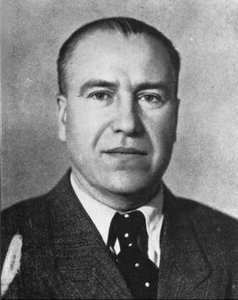
Aleksandr Deyneka
1899 - 1969 , Russia
Quick Facts
- Artistic Movement Or Style: Socialist Realism
- Date Of Birth: May 20, 1899
- Date Of Death: June 12, 1969
- Full Name: Aleksandr Aleksandrovich Deyneka
- Nationality: Russian
- Notable Artworks:
- Collective Farmer on a Bicycle
- Defense of Petrograd
- Basketball
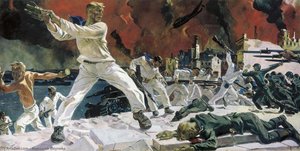
- The Battle of Sevastopol
- Place Of Birth: Kursk, Russia
Related Articles
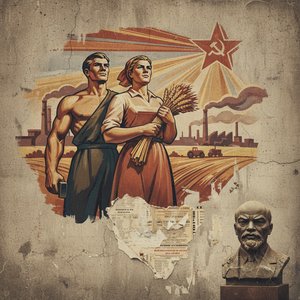
Socialist Realism: Ideology, Aesthetics & Enduring Legacy of Soviet Art
Explore the fascinating world of Socialist Realism! Discover its historical context, key artists like Deyneka & Brodsky, defining aesthetics, and lasting impact on Soviet culture. A comprehensive guide for art lovers.
Romantic Realism's Finest: 10 Masterpieces for Your Home | ArtsDot
Explore 10 defining masterpieces of Romantic Realism! Discover Courbet, Millet & Daumier's powerful paintings—capturing emotion and social realities. Find museum-quality reproductions for your home at ArtsDot.com.
Silent Narratives: Exploring the Enduring Appeal of Still Life Painting Across Centuries
Explore the rich history of still life painting with ArtsDot. Discover Dutch Masters, decode vanitas symbolism & learn about collecting timeless art. Expert insights and museum-quality reproductions.
Echoes of Society: Exploring Social Realism's Enduring Legacy in Art
Explore the powerful world of Social Realism art! Discover key artists, masterpieces & its profound social commentary. Expert insights into this influential movement's history and enduring legacy.
Golden Hues: Top 10 Paintings Dominated by Yellow Ochre |
Explore 10 iconic paintings bathed in golden yellow ochre! From Van Gogh's sunflowers to Monet’s haystacks, discover the stories behind these masterpieces. Find museum-quality art reproductions & elevate your home decor on .