 Preview
 Send
Send Share
Share
 Details

 Download
 Similars
 X-Ray
X-Ray Diaporama
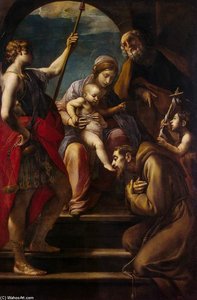
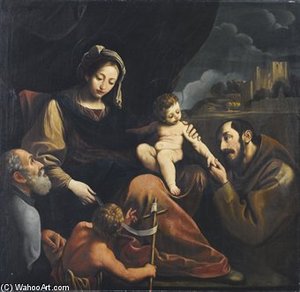
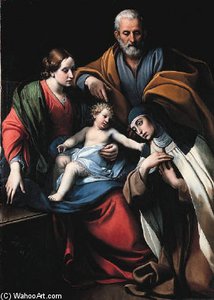
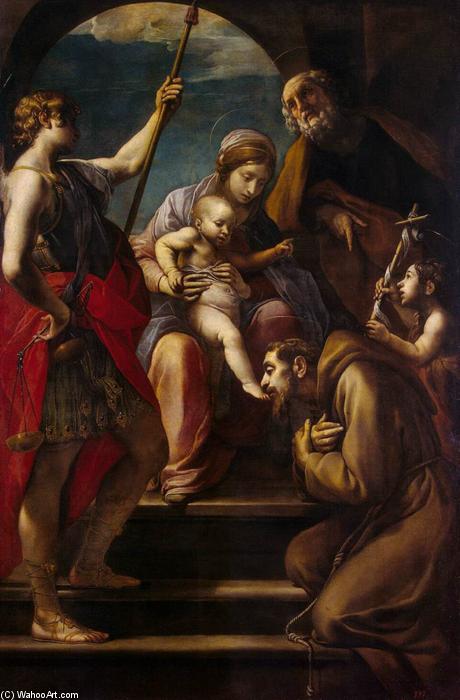
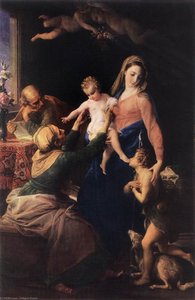
Holy Family with Saints


 Read More
Giclée / Art Print
Museum-quality giclée or canvas print with fast production and flexible finish options. ( Buy Hand Made Painting Buy Image)




P118B $10

P118H $10

P118W $10

P438Z $10

P508JH $12

P508YH $12

P805H $10

P805Z $10

P919BZ $10

P919G $10

P919XJ $10

P959ZH $10

P968JZ $12

W106C $8

W218G $10

W218JH $8

W218Y $10

W307PJ $10

W316G $10

W316PJ $8

W316Y $10

W398PJ $8

W4111J $10

W500HY $15

W500JH $15

W692G $12

W849H $8

W940BG $15

W953PJ $8




Pick from our preset sizes that match the artwork's original proportions.

You may enter your own dimensions to fit a specific frame or space. If your selected size does not match the original image's proportions, we will either crop the artwork or extend the image with a mirrored or solid-fill edge. A digital mockup will be sent for your approval before production begins.
Please note that the on-screen preview does not reflect the actual cropping or extension. Only the mockup will accurately show the final composition.
While custom sizes are available, we recommend selecting a dimension from the predefined list to preserve the original proportions.
Worldwide Delivery () in 2 weeks instead of standard 4/5 weeks. (21 August)

Free Worldwide Express Shipping

High-Quality Linen Canvas

Full Shipping Insurance

Customs Tax Refund Guarantee

True Color Matching Guarantee

60-Day Return Policy (Defects Only)

100% Money-Back Guarantee

Bulk Discount Offer
 Glass option is only available in size under 110 CM

Holy Family with Saints
Giclée / Art Print
Reproduction Size
-


Total Price
$ 63
Collectible Description
A Baroque Embrace: Alessandro Tiarini’s “Holy Family with Saints”
Alessandro Tiarini's "Holy Family with Saints," painted around 1620 and currently residing in the Hermitage Museum in St. Petersburg, is a captivating tableau of faith, familial devotion, and masterful Baroque artistry. More than simply a depiction of Christ, Mary, and Joseph, it’s a carefully constructed dialogue between figures – both within the central family group and those observing from a distance – that invites contemplation on piety, lineage, and the divine presence in human life. The painting immediately draws the eye with its dramatic use of light and shadow, a hallmark of the Baroque style, creating an atmosphere of solemn reverence and highlighting the rich textures of the figures’ garments and the architectural backdrop.
Tiarini's skill lies not just in his technical proficiency but also in his ability to imbue each character with distinct personality and purpose. The central family is rendered with a remarkable sense of realism, yet retains an idealized quality characteristic of religious art. Mary, holding the infant Jesus, exudes serenity and maternal grace, while Joseph stands as a steadfast protector, his Roman armor – a symbol of earthly authority and divine service – subtly juxtaposed against the tenderness of his familial role. The two figures kneeling on either side, clad in classical robes and medieval attire respectively, represent the continuity of faith across generations and cultures; one embodies ancient wisdom, the other echoes the burgeoning Renaissance spirit. Their gazes, directed towards the infant Jesus, speak volumes about their reverence and devotion.
The Language of Baroque Composition
The painting’s composition is a testament to the principles of Baroque art – dynamism, theatricality, and emotional intensity. The dark archway framing the scene serves as a powerful visual anchor, drawing the eye into the intimate family group while simultaneously suggesting an infinite expanse beyond. Above them, the cloudy sky hints at both divine intervention and earthly vulnerability. Note the careful arrangement of figures; they are not simply placed within the space but actively engage with it, creating a sense of movement and interaction. The use of diagonal lines – particularly in the positioning of the kneeling figures – further enhances this dynamism, preventing the composition from feeling static or overly formal.
Tiarini’s attention to detail is remarkable. From the intricate folds of the drapery to the subtle nuances of expression on each face, every element contributes to the painting's overall impact. The muted color palette – dominated by earth tones and punctuated by the rich reds and blues of the figures’ robes – creates a sense of solemnity and gravitas. The artist’s choice of materials—likely oil on canvas—allowed for layering and blending, contributing to the depth and luminosity of the work. The signature “Alessandro Tiarini” in the lower right corner confirms its authorship and places it firmly within the artistic landscape of Bologna during the early Baroque period.
Symbolism and Historical Context
Beyond its aesthetic qualities, "Holy Family with Saints" is rich in symbolic meaning. The inclusion of figures like Saint Francis of Assisi, the Archangel Michael, and John the Baptist speaks to the universality of Christian faith and the interconnectedness of different saints within the Church’s hierarchy. The presence of classical Roman armor on one figure suggests a connection between earthly power and divine grace – a theme frequently explored in Baroque art. The inclusion of figures like Mary Magdalene, often depicted as a repentant sinner, highlights the possibility of redemption and forgiveness through faith.
Painted in 1620, the work reflects the burgeoning interest in domestic piety during the Counter-Reformation. The emphasis on family values – particularly the sanctity of marriage and motherhood – was a key element of Catholic propaganda aimed at reinforcing traditional religious beliefs. Tiarini’s painting serves as both a devotional image for private contemplation and a powerful statement about the importance of faith within the broader social context of his time. It's a poignant reminder of the enduring appeal of this timeless subject matter, skillfully rendered by a master of the Baroque.
A Timeless Masterpiece – Reproduction Possibilities
ArtsDot offers meticulously crafted hand-painted reproductions of Alessandro Tiarini’s “Holy Family with Saints,” allowing art lovers to experience the beauty and emotional depth of this iconic work in their own homes. Our skilled artists replicate every detail, from the subtle nuances of light and shadow to the intricate textures of the figures' clothing, ensuring an authentic representation of Tiarini’s original masterpiece. Whether you seek a large-scale statement piece for your living room or a smaller, more intimate addition to your bedroom, our reproductions provide a stunning way to connect with this remarkable work of art.
Related Artworks




Artist Biography
The Visionary of Bologna: The Life and Legacy of Alessandro Tiarini
Alessandro Tiarini (1577–1668) stands as a pivotal figure within the vibrant artistic landscape of Bologna during the Baroque period, embodying the spirit of innovation and devout religious expression characteristic of his time. Born in Bologna, Italy, his early life was marked by tragedy—the untimely death of his mother leaving him under the care of an aunt who struggled to steer him toward a clerical vocation. Despite these initial challenges, Tiarini’s artistic talent shone through, finding its formative influence in the mentorship of Lavinia Fontana and her father Prospero Fontana, establishing a connection with one of Bologna's most celebrated painters. He subsequently honed his skills under Bartolomeo Cesi, though crucially eschewed membership in the Carracci Academy—a decision that arguably fostered his independent artistic vision.
The trajectory of Tiarini's life was not without its dramatic upheavals. A contentious dispute resulting in the unfortunate demise of another artist forced him to flee Bologna, a turning point described by contemporary chroniclers Malvasia and Amorini as a profound shift in his career. Seeking refuge in Florence, he embraced opportunities to collaborate with prominent masters such as Domenico Passignano, Bernardino Punicetti, and Jacopo da Empoli. It was during this Florentine period that Tiarini undertook ambitious fresco commissions, including the Adoration of the Shepherds at Palazzo Pitti, a testament to his mastery of monumental painting and classical ideals. This era solidified his reputation as a skilled craftsman and cemented his allegiance to humanist principles.
Mastery of Emotion and Baroque Devotion
Upon returning to Bologna and Reggio Emilia under the patronage of Ludovico Carracci, Tiarini experienced a resurgence of artistic fervor, producing works that would define the emotional depth of the Bolognese School. His ability to weave together dramatic lighting, rich textures, and profound religious sentiment allowed him to capture the very essence of Baroque piety. One of his most poignant achievements is ‘Grieving over a Dead Jesus’, housed in the Pinacoteca Nazionale of Bologna, which serves as a hauntingly beautiful depiction of the sorrow inherent in religious devotion.
Tiarini's repertoire was remarkably diverse, ranging from intimate devotional scenes to grand, complex compositions. His work often featured:
- The Holy Family with Saints (1620): A masterpiece showcasing Baroque drama through the figures of Joseph, Mary, and Jesus, surrounded by the presence of St. Francis and John the Baptist in a richly detailed setting.
- The Mystic Marriage of St. Catherine: An exquisite display of dynamic composition and dramatic lighting that captures the intense religious fervor of the era.
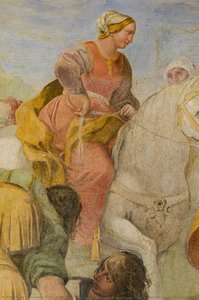
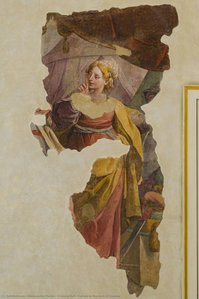
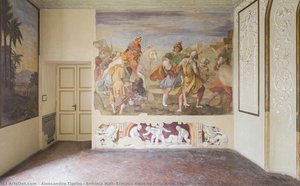
- Narrative Frescoes: Such as his depiction of Erminia’s journey towards Jerusalem, which blends nobility and faith with a serene, classical grace.
Historical Significance and Artistic Heritage
The significance of Alessandro Tiarini lies in his unique position between the classical traditions of the late Renaissance and the emotive intensity of the high Baroque. By maintaining an independent path away from the strictures of the Carracci Academy, he brought a personal, often more somber and introspective quality to his religious subjects. His works do not merely illustrate scripture; they invite the viewer into a shared experience of sanctity and human suffering.
Throughout his long life, which spanned nearly nine decades, Tiarini enriched the Bolognese artistic heritage with an unparalleled ability to render texture and light. His legacy remains etched in the great galleries of Italy, where his altarpieces and frescoes continue to serve as profound examples of how art can bridge the gap between the earthly and the divine. Through his mastery of oil on canvas and monumental fresco, Tiarini ensured that the spirit of the Bolognese School would endure as a cornerstone of 17th-century European art.
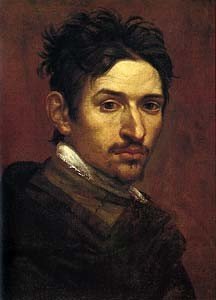
Alessandro Tiarini
1577 - 1668 , Italy
Quick Facts
- Artistic Movement Or Style: Baroque
- Artists Or Movements Influenced By This Artist: ['Bernardino Poccetti']
- Artists Who Influenced This Artist:
- Lavinia Fontana
- Bartolomeo Cesi
- Ludovico Carracci
- Date Of Birth: 1577 Bologna Italy
- Date Of Death: 1668 Bologna Italy
- Full Name: Alessandro Tiarini
- Nationality: Italian
- Notable Artworks:
- Grieving over a Dead Jesus
- Erminia Hall
- Raising the Cross
- Place Of Birth: Bologna Italy
Related Articles

The Dramatic Flourish: Exploring the Baroque Movement's Enduring Legacy in Art History
Explore the dramatic world of Baroque art! Discover iconic artists like Caravaggio & Rubens, defining techniques, and its lasting impact on art history. Expert insights for collectors & enthusiasts at ArtsDot.

Baroque Masterpieces: 10 Paintings That Defined an Era |
Journey through the drama & grandeur of Baroque art! Explore 10 masterpieces by Caravaggio, Rembrandt, Rubens & more. Discover stunning oil paintings, rich colors & timeless stories. Find museum-quality reproductions at .

The Visceral Stage: Exploring Dramatic Narratives & Emotional Intensity in Baroque Art
Explore the dramatic world of Baroque art! Discover iconic masters like Caravaggio & Rembrandt, their techniques, and the movement's lasting impact. Expert insights for collectors & enthusiasts at ArtsDot.

Baroque Drama: Bringing Opulence & Emotion into Contemporary Interiors
Explore the opulent world of Baroque interior design! Discover key elements, modern applications & how to bring dramatic elegance into your home with 's authentic reproductions.

Theatricality & Triumph: Baroque Drama in Painting & Sculpture
Explore the dramatic world of Baroque art! Discover its history, defining characteristics, & lasting influence on painting & sculpture. Expert insights into Caravaggio, Zurbarán, and Bernini – plus high-quality reproductions at ArtsDot.