 Preview
 Send
Send Share
Share
 Details

 Download
 Similars
 X-Ray
X-Ray Diaporama
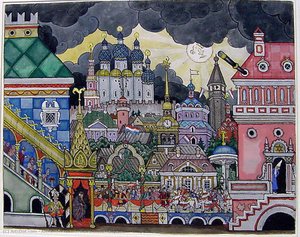
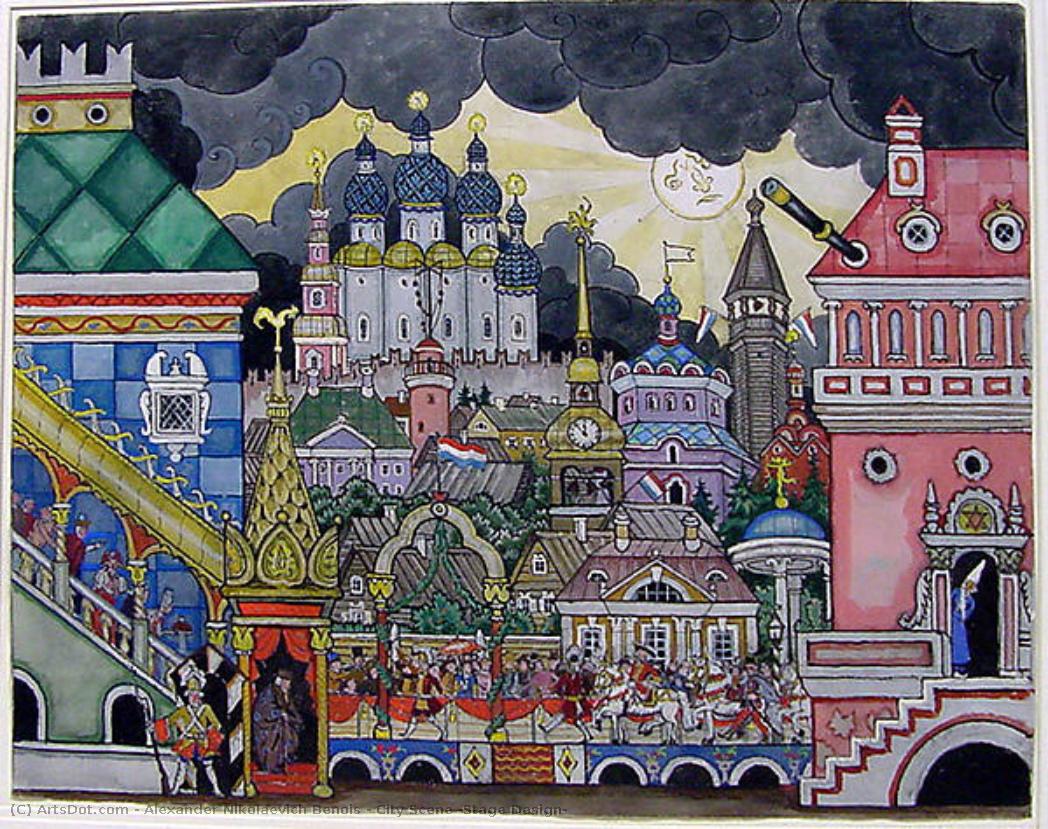
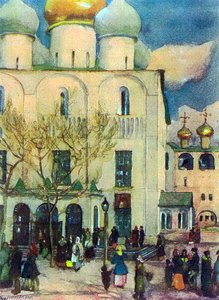
City Scene (Stage Design)
 Neo-Classicism
 1927
1927 48.0 x 59.0 cm
 Read More
Giclée / Art Print
Museum-quality giclée or canvas print with fast production and flexible finish options. ( Buy Hand Made Painting Buy Image)




































Pick from our preset sizes that match the artwork's original proportions.

You may enter your own dimensions to fit a specific frame or space. If your selected size does not match the original image's proportions, we will either crop the artwork or extend the image with a mirrored or solid-fill edge. A digital mockup will be sent for your approval before production begins.
Please note that the on-screen preview does not reflect the actual cropping or extension. Only the mockup will accurately show the final composition.
While custom sizes are available, we recommend selecting a dimension from the predefined list to preserve the original proportions.
Worldwide Delivery () in 2 weeks instead of standard 4/5 weeks. (25 August)

Free Worldwide Express Shipping

High-Quality Linen Canvas

Full Shipping Insurance

Customs Tax Refund Guarantee

True Color Matching Guarantee

60-Day Return Policy (Defects Only)

100% Money-Back Guarantee

Bulk Discount Offer
 Glass option is only available in size under 110 CM

City Scene (Stage Design)
Giclée / Art Print
Reproduction Size
-


Total Price
$ 63
Related Artworks
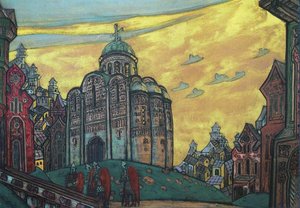
Artist Biography
The Visionary World of Alexandre Benois: A Pioneer of Modern Russian Art
Alexandre Nikolaevich Benois, a name synonymous with the Silver Age of Russian art, was far more than just an artist; he was a cultural architect who profoundly reshaped the landscape of ballet, stage design, illustration, and painting. Born into a prominent artistic family in St. Petersburg – his father was a renowned engineer and amateur artist, and his mother descended from Italian sculptors – Benois inherited a rich aesthetic sensibility that would fuel his lifelong pursuit of beauty and innovation. From an early age, he immersed himself in the world of art, receiving private lessons and developing a keen eye for historical detail and architectural form. This upbringing instilled in him not only technical skill but also a deep reverence for the past, which would become a defining characteristic of his work.From Academic Roots to the Birth of *Mir iskusstva*
Benois’s formal training at the Imperial Academy of Arts initially steered him towards traditional academic painting. However, he soon found himself chafing against its constraints, yearning for a more expressive and intellectually stimulating artistic environment. He traveled extensively throughout Europe, absorbing influences from Italian Renaissance masters, Venetian landscapes, and the burgeoning Art Nouveau movement. These experiences broadened his perspective and fueled his dissatisfaction with the prevailing artistic norms in Russia. In 1897, alongside artists like Konstantin Somov, Dmitri Filosofov, and Léon Bakst, Benois co-founded *Mir iskusstva* (The World of Art), a revolutionary artistic association that challenged the rigid conventions of Russian realism. *Mir iskusstva* wasn’t merely a stylistic rebellion; it was a holistic vision encompassing painting, sculpture, architecture, theater, and literature, aiming to create a unified aesthetic experience. Benois became its driving force, editing the influential journal *The World of Art*, which served as a platform for new ideas and artistic experimentation.Redefining Ballet: Sets and Costumes that Transformed the Stage
Perhaps Benois’s most enduring legacy lies in his groundbreaking contributions to ballet design. Prior to his involvement, Russian ballet sets were often elaborate but lacked historical accuracy and dramatic coherence. Benois revolutionized this approach, meticulously researching period costumes, architectural settings, and social customs to create productions that were both visually stunning and historically authentic. His designs for ballets such as *Swan Lake* (1901), *The Sleeping Beauty* (1921), and particularly *Petrushka* (1911) – in collaboration with Igor Stravinsky and Sergei Diaghilev – are iconic examples of his artistry. He didn’t simply create backdrops; he constructed entire worlds, imbuing them with atmosphere, character, and emotional depth. His sets were characterized by a delicate balance between realism and stylization, evoking a sense of nostalgia and romanticism. The influence of 18th-century engravings and the commedia dell'arte is readily apparent in his work, adding layers of complexity and symbolism to the narratives unfolding on stage. He understood that ballet wasn’t just about dance; it was about creating a total artistic experience.Beyond the Stage: Illustrations and Artistic Exploration
While celebrated for his theatrical designs, Benois was also a prolific illustrator and painter. His illustrations of Pushkin's poems, particularly *The Bronze Horseman*, are considered masterpieces of Russian book illustration. He captured the spirit of Pushkin’s verse with remarkable sensitivity, blending historical detail with poetic imagination. His paintings often depicted scenes from 18th-century St. Petersburg, reflecting his fascination with the city’s architectural grandeur and social life. These works weren't simply nostalgic recreations; they were imbued with a subtle sense of melancholy and critique, hinting at the fragility of beauty and the passage of time. He also explored Hellenistic art, incorporating classical motifs into his compositions and demonstrating a lifelong commitment to artistic scholarship.- His architectural studies informed his stage designs.
- Pushkin’s poetry provided rich subject matter for his illustrations.
- Hellenistic influences added depth to his paintings.
A Lasting Impact: Benois and the Evolution of Russian Aesthetics
Alexandre Benois's influence extended far beyond the confines of Russia. His work inspired generations of artists, designers, and scholars, shaping the course of modern art and theater. Despite facing political upheaval throughout his life – including exile during the Soviet era – he remained a steadfast advocate for artistic excellence and cultural preservation. He returned to Russia in 1944 and continued to work until his death in 1960. Benois’s legacy is one of innovation, scholarship, and unwavering dedication to beauty. He demonstrated that art wasn't merely about technical skill; it was about creating a world that resonated with emotion, intellect, and historical understanding. His pioneering spirit continues to inspire artists today, reminding us of the power of art to transform our perceptions and enrich our lives.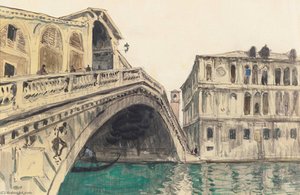
Related Articles
Watercolor Wonders: 10 Masterpieces That Redefined Art History | ArtsDot
Journey through 10 legendary watercolor masterpieces by Sargent, Turner & Homer! Explore iconic landscapes, portraits & floral art that redefined history. Find museum-quality reproductions and curated decor ideas at ArtsDot.com.
Ephemeral Visions: Exploring the Artistic Legacy & Contemporary Practice of Watercolor Painting
Explore the captivating world of watercolor painting! Discover its rich history, essential techniques, influential artists & collecting tips. A comprehensive guide for art enthusiasts from ArtsDot.
Ephemeral Visions: Exploring the History & Emotional Resonance of Watercolor Painting
Explore the captivating history of watercolor painting, from ancient techniques to modern masters like Kandinsky & Blake. Discover essential artists, collecting tips & the emotional power of this luminous medium. Expert insights for art enthusiasts.
Ephemeral Visions: Exploring the Artistic Legacy & Nuances of Watercolor Painting
Explore the captivating world of watercolor painting! Discover its rich history, essential techniques, influential artists & collecting tips from art experts. A comprehensive guide for enthusiasts.
The Enduring Appeal of Watercolor: History, Techniques & Contemporary Practice
Explore the captivating world of watercolor painting! Discover its rich history, essential techniques, influential artists, and collecting tips. A comprehensive guide for art enthusiasts.