 Preview
 Send
Send Share
Share
 Details

 Download
 Similars
 X-Ray
X-Ray Diaporama
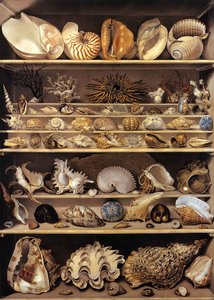
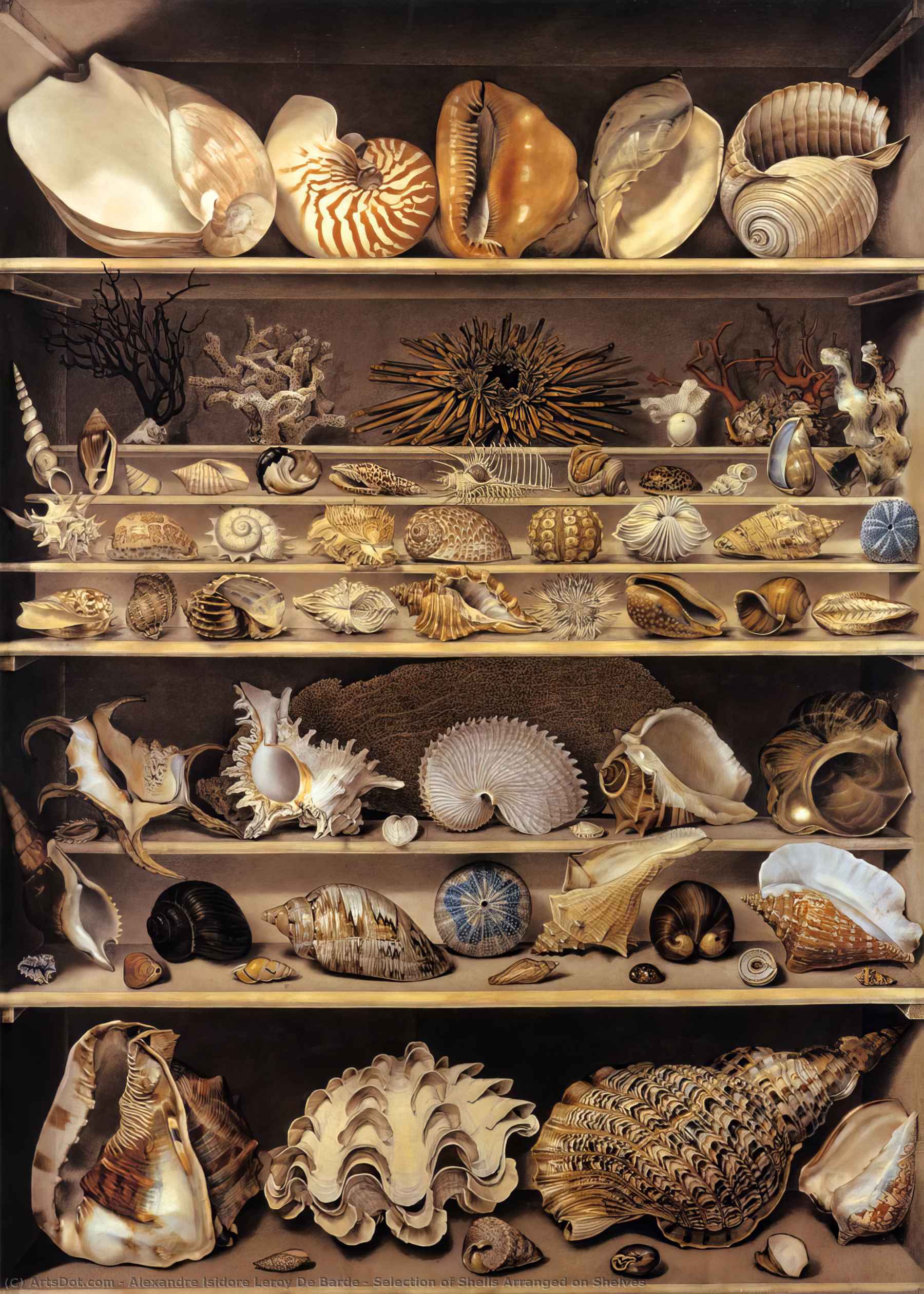
Selection of Shells Arranged on Shelves
 Acrylic On Canvas
- WallArt
- Neoclassicism
 19th Century
 125.0 x 90.0 cm
 The Louvre
 Read More
Hand Made Oil Reproduction
Hand-painted oil on canvas in your size and frame, made to order by our artists. ( Buy Print Buy Image)




P118B $10

P118H $10

P118W $10

P438Z $10

P508JH $12

P508YH $12

P805H $10

P805Z $10

P919BZ $10

P919G $10

P919XJ $10

P959ZH $10

P968JZ $12

W106C $8

W218G $10

W218JH $8

W218Y $10

W307PJ $10

W316G $10

W316PJ $8

W316Y $10

W398PJ $8

W4111J $10

W500HY $15

W500JH $15

W692G $12

W849H $8

W940BG $15

W953PJ $8




Pick from our preset sizes that match the artwork's original proportions.

You may enter your own dimensions to fit a specific frame or space. If your selected size does not match the original image's proportions, we will either crop the artwork or extend the painting with additional hand-painted elements. A digital mockup will be sent for your approval before production begins.
Please note that the on-screen preview does not reflect the actual cropping or extension. Only the mockup will accurately show the final composition.
While custom sizes are available, we recommend selecting a dimension from the predefined list to preserve the original proportions.
After order, ArtsDot.com team will email client for instructions and provide a mockup preview
Worldwide Delivery () in 3/4 weeks instead of standard 5 weeks. (24 August). No compromise on quality.

Free Worldwide Express Shipping

High-Quality Linen Canvas

Full Shipping Insurance

Customs Tax Refund Guarantee

True Color Matching Guarantee

60-Day Return Policy (Defects Only)

100% Money-Back Guarantee

Bulk Discount Offer
 Glass option is only available in size under 110 CM

Selection of Shells Arranged on Shelves
Reproduction Medium
Reproduction Size
-


Total Price
$ 263
Artwork Description
A Symphony in Shells: Alexandre Leroy de Barde’s “Selection of Shells Arranged on Shelves”
Within the hallowed halls of the Musée du Louvre, nestled amongst masterpieces spanning centuries and continents, resides a deceptively simple yet profoundly captivating artwork: Alexandre Isidore Leroy de Barde's "Selection of Shells Arranged on Shelves." More than just a still life, this 19th-century watercolour is an intimate meditation on nature’s artistry, meticulously rendered with the precision of a scientific observer and imbued with the quiet beauty of a contemplative soul. The painting invites us into a miniature world – a carefully curated collection of marine treasures presented against a backdrop of dark wood shelves, creating a scene both familiar and utterly enchanting.
Leroy de Barde’s artistic vision was deeply rooted in his era's fascination with natural history. Born in Montreuil during a period of burgeoning scientific exploration, he combined an education in mathematics, botany, and zoology with a remarkable talent for capturing the delicate nuances of the natural world. Unlike many artists of the time who focused on grand landscapes or historical narratives, Leroy de Barde chose to elevate the commonplace – transforming humble seashells into objects of exquisite beauty through his masterful technique.
The Art of Observation: Technique and Detail
Executed in watercolour, a medium renowned for its luminosity and ability to capture subtle tonal variations, “Selection of Shells Arranged on Shelves” is a testament to Leroy de Barde’s technical skill. Each shell – from the spiraled elegance of a nautilus to the textured ridges of a whelk – is rendered with painstaking detail. The artist doesn't simply depict their forms; he seems to have dissected them, revealing the intricate patterns and textures hidden within their surfaces. Notice how light catches on the pearlescent sheen of one shell, while another is shadowed, creating a dynamic interplay of highlights and darks that brings the composition to life.
The arrangement itself is carefully considered – not random but governed by principles of balance and visual harmony. The shells are grouped in clusters, their varying sizes and shapes creating a sense of organized chaos, mirroring the inherent complexity and beauty found within nature’s designs. The dark background serves to accentuate the vibrant colors and textures of the shells, drawing the viewer's eye into this miniature world.
A Window into the 19th Century: Context and Symbolism
“Selection of Shells Arranged on Shelves” offers a fascinating glimpse into the artistic and intellectual landscape of the 19th century. The painting’s inclusion in the Louvre, one of the world's most prestigious museums, speaks to its significance as an example of French academic art – characterized by meticulous detail, classical composition, and a focus on representing the natural world with scientific accuracy. The influence of Johann Wolfgang Goethe’s philosophical explorations into nature is evident in Leroy de Barde’s approach; he wasn’t merely copying what he saw but striving to understand and capture its underlying essence.
Shells themselves carry rich symbolic weight. Throughout history, they have been associated with themes of abundance, fertility, protection, and the passage of time. In this painting, they represent not just their physical beauty but also a connection to the vastness and mystery of the ocean – a reminder of nature’s boundless creativity.
A Timeless Appeal: Emotional Impact and Legacy
Despite its technical sophistication, “Selection of Shells Arranged on Shelves” possesses an undeniable emotional resonance. The painting evokes a sense of quiet contemplation, inviting us to slow down and appreciate the beauty of the small things in life. The meticulous detail and harmonious composition create a feeling of serenity and order, while the shells themselves whisper tales of distant shores and hidden depths.
Today, reproductions of this exquisite artwork continue to captivate audiences worldwide. Its timeless appeal lies not only in its technical brilliance but also in its ability to connect us with the natural world and remind us of the enduring beauty that can be found in even the most humble of subjects. It stands as a testament to Leroy de Barde’s artistic vision – a symphony in shells, meticulously arranged on shelves for all to admire.
Related Artworks

Artist Biography
A Visionary of the Natural World
Alexandre Leroy de Barde (1777-1828) stands as a singular figure in the landscape of French art, distinguished not merely by his prolific output but also by an unwavering dedication to meticulous observation and artistic precision. Born in Montreuil, France, he emerged from a period marked by burgeoning scientific inquiry—particularly within the realm of natural history—yet he transcended mere documentation to craft artworks imbued with profound aesthetic beauty and symbolic resonance. His life was a testament to the harmonious intersection of the empirical and the ethereal, where the rigid lines of science met the fluid grace of fine art.
His formative years were spent immersed in the intellectual currents of his time, receiving a comprehensive education that encompassed mathematics, botany, and zoology. These disciplines would profoundly shape his artistic sensibilities and inform his approach to depicting the natural world. Notably influenced by Johann Wolfgang Goethe's philosophical explorations into the relationship between art and science, Leroy de Barde embraced a humanist perspective that prioritized understanding and appreciating the intricacies of existence. He adopted Goethe’s concept of Weltanschauung—a holistic worldview encompassing philosophy, science, and aesthetics—as his guiding framework, striving to capture not just the outward appearance of his subjects but their underlying essence.
The Art of Scientific Precision
Leroy de Barde’s oeuvre comprises hundreds of paintings and drawings, predominantly focused on still lifes and natural studies that serve as a bridge between the laboratory and the studio. His distinctive style is characterized by an unparalleled level of detail, most notably evident in his astonishingly accurate representations of seashells and minerals. In works such as Selection of Shells Arranged on Shelves, one can witness a masterclass in texture and form, where each specimen is rendered with a scientific rigor that honors its biological reality while elevating it to the status of high art.
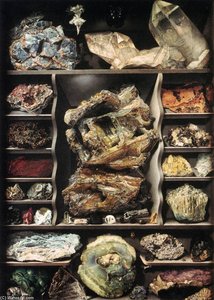
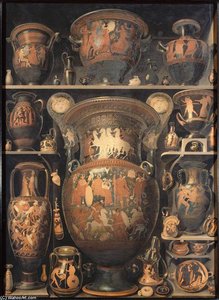
This commitment to accuracy extended far beyond the marine world. His explorations into the mineral kingdom, seen in pieces like Crystallised Minerals, reveal an artist obsessed with the structural geometry of the earth. Furthermore, his versatility allowed him to move between the organic and the classical; he frequently turned his gaze toward antiquity, producing exquisite studies of Vases Grecs Et Etrusques. In these works, the delicate precision used for a seashell is applied to the weathered surfaces of ancient ceramics, creating a dialogue between the fleeting beauty of nature and the enduring legacy of human civilization.
Legacy of Observation
The historical significance of Alexandre Leroy de Barde lies in his ability to embody the spirit of an era that sought to categorize and celebrate every facet of the known universe. He did not merely paint objects; he curated visual encyclopedias of the natural world. His work remains a vital touchstone for those interested in the history of natural history art, offering a window into a time when the act of seeing was deeply intertwined with the act of knowing.
Through his meticulous technique and philosophical depth, Leroy de Barde achieved several lasting milestones:
- Mastery of Texture: His ability to differentiate between the calcified surface of a shell, the crystalline structure of a mineral, and the smooth glaze of an ancient vase.
- Integration of Disciplines: Successfully merging the rigorous demands of zoology and botany with the expressive potential of watercolor and oil.
- Scientific Contribution: Creating a visual record of species and specimens that serves as both art and historical documentation of 19th-century natural collections.
Today, his works continue to captivate collectors and historians alike, standing as enduring monuments to the beauty found in the smallest details of our planet.
alexandre isidore leroy de barde
1777 - 1828 , France
Quick Facts
- Artistic Movement Or Style: Classical
- Date Of Birth: 1777
- Full Name: Alexandre Isidore Leroy de Barde
- Nationality: French
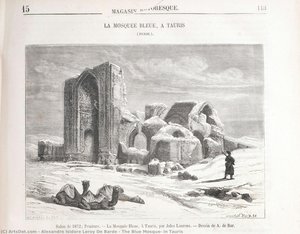
- Notable Artworks: ['The Blue Mosque']
- Place Of Birth: Montreuil, France
Related Articles

Goya's Masterpieces: Explore 25 Iconic Paintings & Art Prints | ArtsDot
Delve into the world of Francisco Goya with ArtsDot. Explore 25 iconic paintings – from 'The Third of May' to his haunting Black Paintings. Discover the stories, techniques & emotions behind these Spanish masterpieces. Find museum-quality art reproductions for your home at ArtsDot.com!

Watercolor Wonders: 10 Masterpieces That Redefined Art History | ArtsDot
Journey through 10 legendary watercolor masterpieces by Sargent, Turner & Homer! Explore iconic landscapes, portraits & floral art that redefined history. Find museum-quality reproductions and curated decor ideas at ArtsDot.com.

Ephemeral Visions: Exploring the Artistic Legacy & Contemporary Practice of Watercolor Painting
Explore the captivating world of watercolor painting! Discover its rich history, essential techniques, influential artists & collecting tips. A comprehensive guide for art enthusiasts from ArtsDot.

Ephemeral Visions: Exploring the History & Emotional Resonance of Watercolor Painting
Explore the captivating history of watercolor painting, from ancient techniques to modern masters like Kandinsky & Blake. Discover essential artists, collecting tips & the emotional power of this luminous medium. Expert insights for art enthusiasts.
Ephemeral Visions: Exploring the Artistic Legacy & Nuances of Watercolor Painting
Explore the captivating world of watercolor painting! Discover its rich history, essential techniques, influential artists & collecting tips from art experts. A comprehensive guide for enthusiasts.