 Preview
 Send
Send Share
Share
 Details

 Download
 Similars
 X-Ray
X-Ray Diaporama
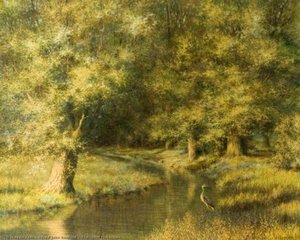
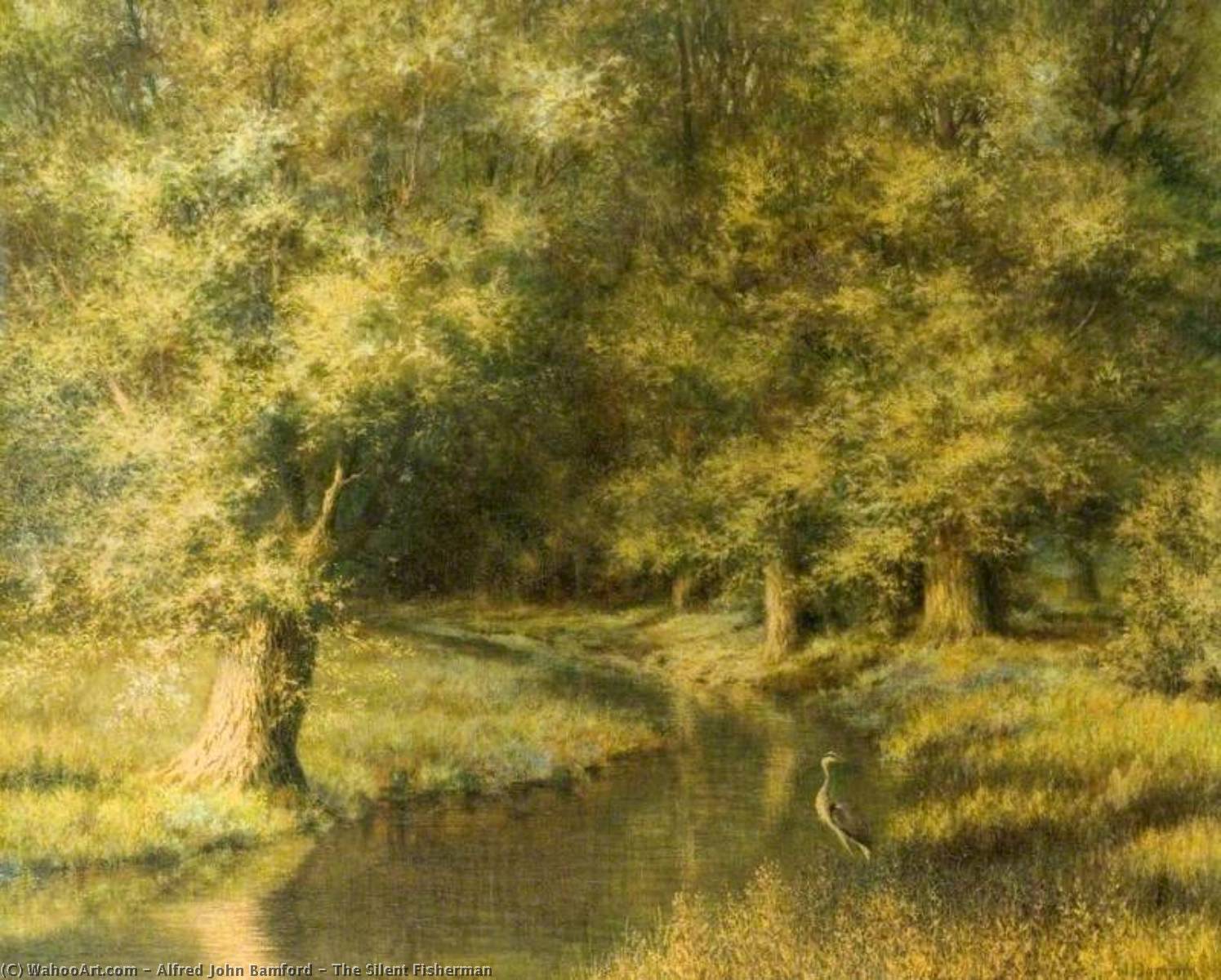
The Silent Fisherman
 Romanticism
 51.0 x 61.0 cm
 Read More
Hand Made Oil Reproduction
Hand-painted oil on canvas in your size and frame, made to order by our artists. ( Buy Print Buy Image)




































Pick from our preset sizes that match the artwork's original proportions.

You may enter your own dimensions to fit a specific frame or space. If your selected size does not match the original image's proportions, we will either crop the artwork or extend the painting with additional hand-painted elements. A digital mockup will be sent for your approval before production begins.
Please note that the on-screen preview does not reflect the actual cropping or extension. Only the mockup will accurately show the final composition.
While custom sizes are available, we recommend selecting a dimension from the predefined list to preserve the original proportions.
After order, ArtsDot.com team will email client for instructions and provide a mockup preview
Worldwide Delivery () in 3/4 weeks instead of standard 5 weeks. (16 August). No compromise on quality.

Free Worldwide Express Shipping

High-Quality Linen Canvas

Full Shipping Insurance

Customs Tax Refund Guarantee

True Color Matching Guarantee

60-Day Return Policy (Defects Only)

100% Money-Back Guarantee

Bulk Discount Offer
 Glass option is only available in size under 110 CM

The Silent Fisherman
Reproduction Medium
Reproduction Size
-


Total Price
$ 263
Related Artworks
Artist Biography
Alfred John Bamford: A Rural English Visionary
Alfred John Bamford (1850-1929) remains a quietly significant figure in 19th and early 20th century British art, an artist whose prolific output and evocative landscapes often go unnoticed outside specialist circles. Born in Romford, Essex, his life was inextricably linked to the evolving social and artistic landscape of rural England, and his work offers a poignant glimpse into the changing relationship between humanity and the natural world. Bamford’s story is one of a man who skillfully navigated the demands of both military service and artistic expression, ultimately forging a distinctive style deeply rooted in observation and a profound appreciation for the subtle beauty of the countryside.
Bamford's early life was shaped by his family’s connection to the East Anglian mercantile world. His father, Daniel Bamford, was a successful manager at Kemsley’s auctioneers, exposing young Alfred to the rhythms of commerce and the importance of detailed observation – skills that would later inform his artistic practice. Following a brief education at Manchester Grammar School, he entered the military service, joining the First Volunteer Battalion Regiment around 1875. This commitment to duty continued throughout his life, punctuated by periods of civilian art production. It’s crucial to understand that Bamford rarely considered himself solely an artist; rather, painting was often a means of managing the dual demands of his existence – a soldier and, increasingly, a keen observer of rural life.
The Influence of Cotman and the Rise of Watercolour
Bamford’s artistic development is inextricably linked to John Sell Cotman, a leading watercolourist of the early 19th century. Like Cotman, Bamford was captivated by the medium's unique ability to capture fleeting moments and atmospheric effects. He admired Cotman’s mastery of light and colour, particularly his skill in conveying the sense of stillness and tranquility that he sought in his own work. This influence is evident in Bamford’s compositions – often characterized by a quiet stillness, a careful rendering of detail, and an emphasis on capturing the subtle nuances of light and shadow. The prevalent use of watercolour reflects this approach; it allowed for delicate washes and atmospheric effects, perfectly suited to depicting the soft, diffused light of the English countryside.
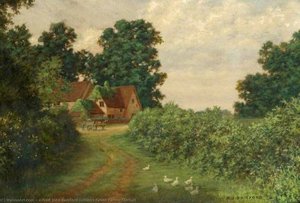
Furthermore, Bamford’s artistic journey coincided with a broader shift in British art towards landscape painting. The Romantic movement had championed dramatic vistas and sublime landscapes, but by the mid-19th century, there was growing interest in more intimate depictions of rural life. Bamford's work aligns with this trend, focusing on scenes from everyday life – farmers tending their fields, children playing in meadows, and glimpses of charming village interiors. He wasn’t interested in grand narratives or heroic figures; instead, he sought to capture the quiet dignity and inherent beauty of the ordinary.
Norton Common and a Distinctive Style
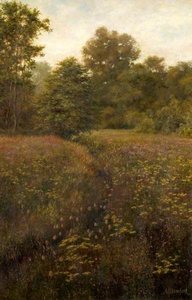
Bamford's most celebrated work undoubtedly revolves around his depictions of Norton Common in Hampshire. This vast expanse of heathland became a recurring subject throughout his career, providing him with endless opportunities to explore light, texture, and colour. The common’s undulating landscape, dotted with ancient trees and punctuated by patches of vibrant wildflowers, offered a rich tapestry for his artistic eye. His paintings of Norton Common are not merely topographical representations; they are imbued with a sense of atmosphere and mood – capturing the feeling of solitude, contemplation, and connection to the natural world.
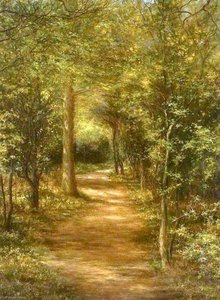
A key element of Bamford’s style is his meticulous attention to detail. He carefully observed the textures of grass, heather, and soil, rendering them with remarkable accuracy. His use of colour was equally subtle and nuanced, employing a wide range of tones to create a sense of depth and realism. While influenced by Cotman's approach, Bamford developed a distinctive style characterized by a quiet confidence and an understated elegance. His paintings possess a serene quality that invites the viewer to linger and contemplate the beauty of the scene.
A Legacy of Observation
Alfred John Bamford’s artistic output is remarkably extensive – over 120 works are attributed to him, many of which can be found in public collections across the UK. His prolificness speaks to a deep-seated passion for observation and a commitment to capturing the beauty of his surroundings. Despite often being overshadowed by more celebrated contemporaries, Bamford’s work offers a valuable insight into the artistic sensibilities of Victorian England and the evolving relationship between art and rural life.
Today, Bamford's paintings are appreciated for their quiet dignity, technical skill, and evocative portrayal of the English countryside. His legacy lies not in grand pronouncements or revolutionary innovations, but rather in his unwavering dedication to observing and representing the beauty of the world around him – a testament to the power of simple observation and a profound appreciation for the subtle wonders of nature.
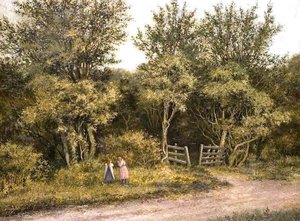
alfred john bamford
1850 - 1929
Quick Facts
- Artistic Movement Or Style: English Landscape Painting
- Artists Or Movements Influenced By This Artist: ['British Impressionism']
- Artists Who Influenced This Artist: ['John Sell Cotman']
- Date Of Birth: 1850
- Date Of Death: 1929
- Full Name: Alfred John Bamford
- Nationality: British
- Notable Artworks:
- In Norton Common
- The Chapel of St Erasmus
- Various rural scenes
- Place Of Birth: Romford, Essex, UK
Related Articles

John Constable's Masterpieces: Explore 25 Iconic Landscapes for Your Home
Journey through John Constable's 25 most celebrated landscapes. Explore Romanticism, Dedham Vale & his masterful use of light in iconic paintings like 'Hay Wain'. Find museum-quality art reproductions and elevate your home decor on ArtsDot.com.

Sir Alfred Munnings' Masterpieces: 25 Paintings That Define Equine Art | ArtsDot
Explore 25 iconic Sir Alfred Munnings paintings! Discover the beauty of British Impressionism, equine art & rural England. Find museum-quality reproductions and elevate your home decor with ArtsDot. Explore the full collection online.

John Singer Sargent's 25 Masterpieces: Portraits & Beyond | ArtsDot
Explore 25 iconic John Singer Sargent paintings – from dazzling portraits to Impressionist landscapes. Discover the stories behind Madame X, El Jaleo & more! Find museum-quality art reproductions and elevate your home decor with ArtsDot.com.
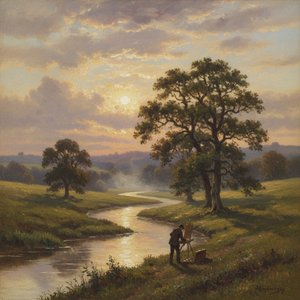
Alfred East: Pioneering Plein Air & Evoking Atmospheric Landscapes
Explore the life & work of Alfred East, a pioneer of British plein air painting. Discover his techniques for capturing atmospheric landscapes, Barbizon influences, and lasting legacy. Learn more at ArtsDot.

Romantic Landscapes: 10 Masterpieces for Your Home | ArtsDot
Journey through 10 Romantic landscape masterpieces by Friedrich, Turner & Cole. Explore emotional art, sublime nature scenes & iconic 19th-century paintings. Find museum-quality reproductions for your home at ArtsDot.com – discover the full collection online!